Visiting the Nam June Paik exhibition at the Tate Modern has been a very insightful experience.
His work stretches across a large spectrum from experimenting with technology and objects, to sound and large installations. Every piece carries deep meaning and causes fascination (or infant confusion) for the viewer.
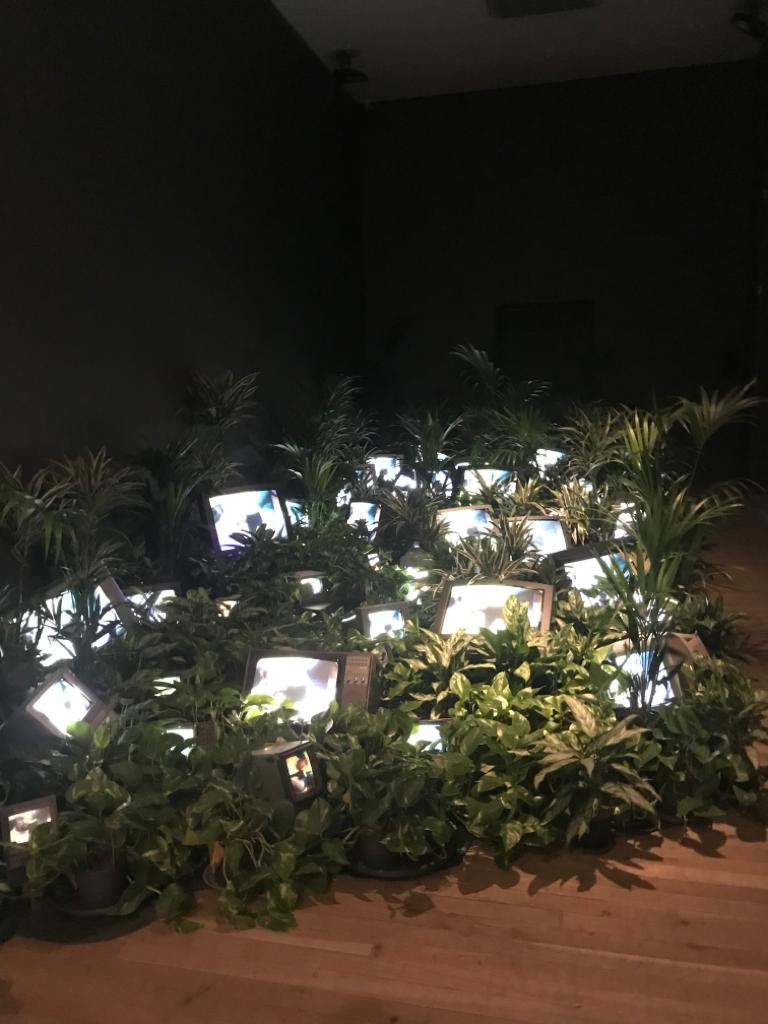
The first piece was ‘TV garden’ where Paik pictured the ‘future landscape’ and how technology would become a part of our ‘natural world’. This installation, made in 1974-77, with its bright colours and comforting natural greens draws the viewer into understanding its meaning.
What I personally found overwhelming was the fast-paced colours and movements from the screen, and how they contrasted with the calm mutual colours of the surrounding plants. It created a sense of sadness and disturbance, I felt the need to separate the two worlds. Paik follows the Buddhist belief that everything is connected, and yet in this art piece I found it difficult to accept the two art forms together.

Photo: Harmut Rekort
Courtesy Kunsthalle Bremen © The Estate of Nam June Paik
Taken from The Tate page
The exhibition continued by showcasing many contrasting pieces of work ranging from misshaped musical instruments to more quirky pieces such as the ‘Zen for head’ 1962.
‘Zen for Head’ is a long roll of paper smeared with ink which Paik made by dipping his head, hands and tie into ink and running them down the page.
This piece was performed in front of an audience and was displayed on an old TV at the exhibition. Paiks movements were very agitated and restless when he performed, he seemed to be holding a lot of sadness inside of him. He gripped and ran his tie down the paper, and then immersed his head in the ink and dragged it down the work. It seemed as though it was an act of desperation.
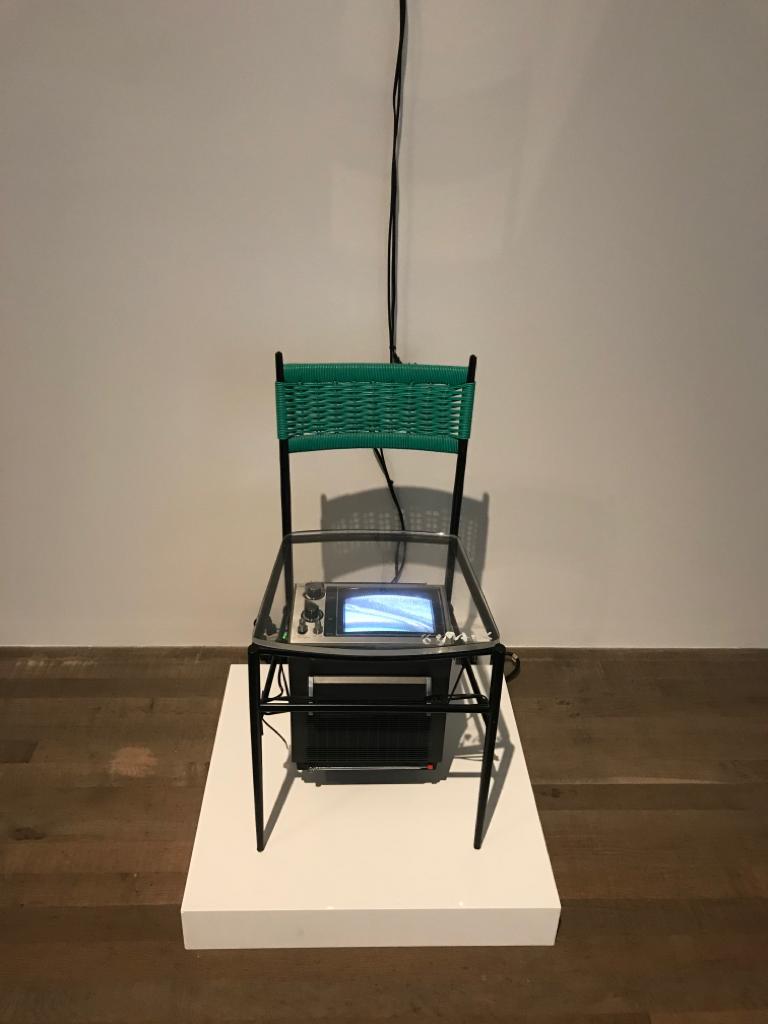
‘TV Chair’ is a fascinating piece of art. High above the chair is a security camera facing down, and under it is a TV with its screen facing up towards the base. When observing this installation, there was a sense of discomfort caused by the thought of sitting on the chair and being ‘watched’ from above and below. The colour green in this case wasn’t comforting like the previous installation, but instead unsettling
The ‘One Candle’ is of a flickering flame which is recorded by a CCTV camera and projected in multiple images on walls surrounding it. The colours of the flame are hot and alive, but once projected, they become cold and parallel to the original piece.
Paik’s intentions were to represent the Buddhist belief of connection and process of continual change. He concentrates how visitors’ movement affects the flames form and rhythm.
Initially I interpreted the piece as portraying of how technology can only create a replica of the real thing, and will never be the original. Whereas after, when having studied the artists intended meaning, the piece has taken another form.
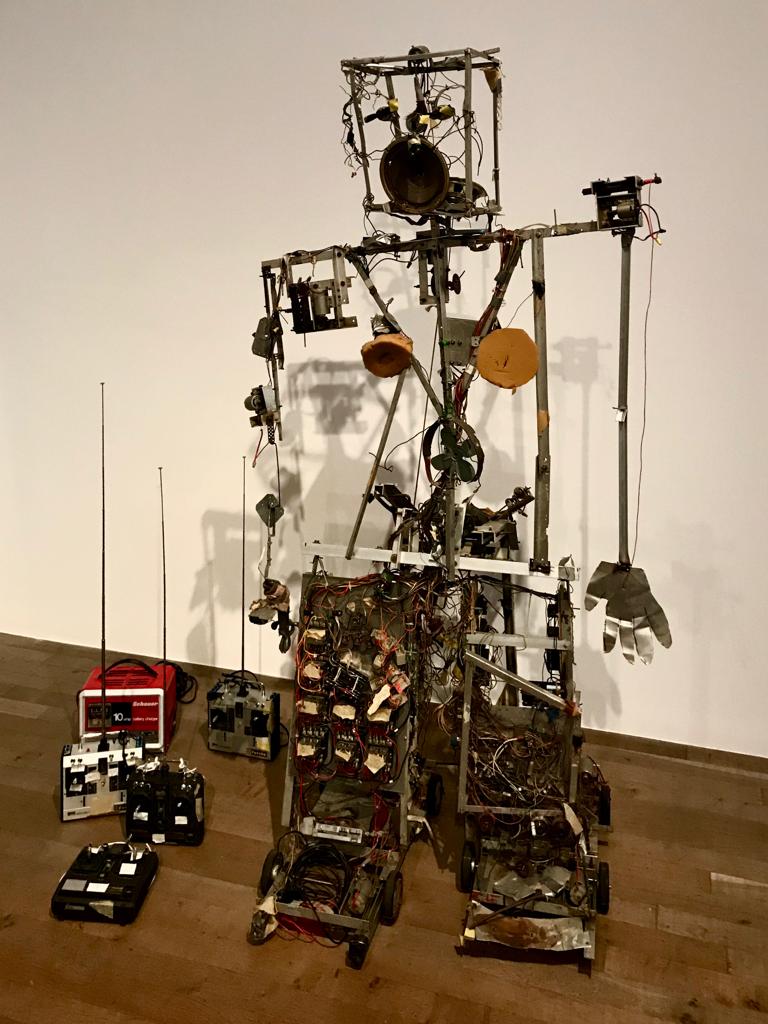
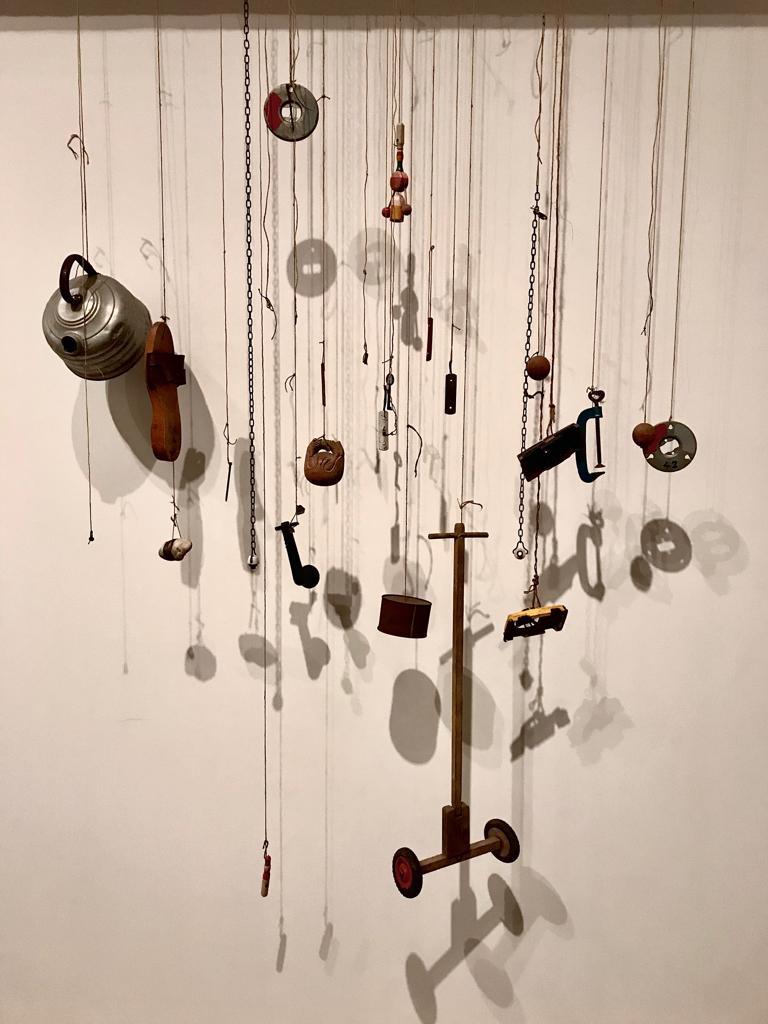
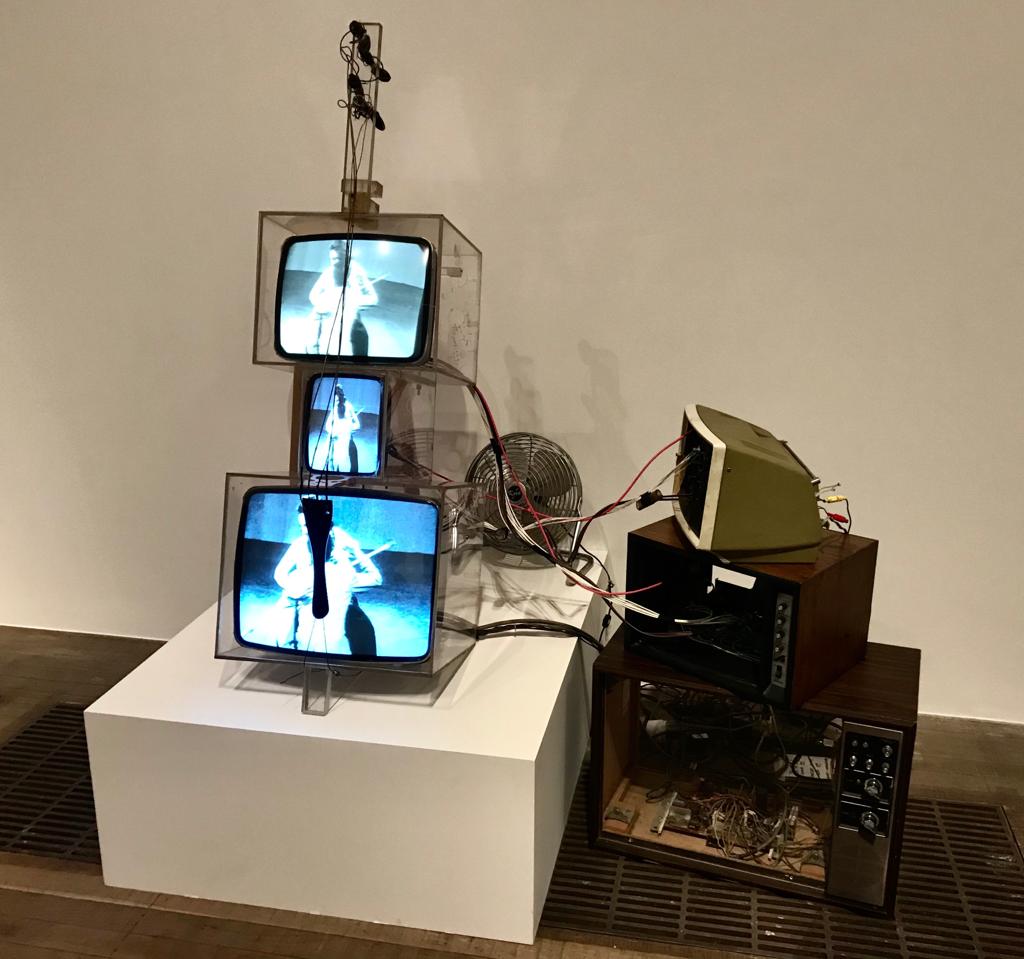
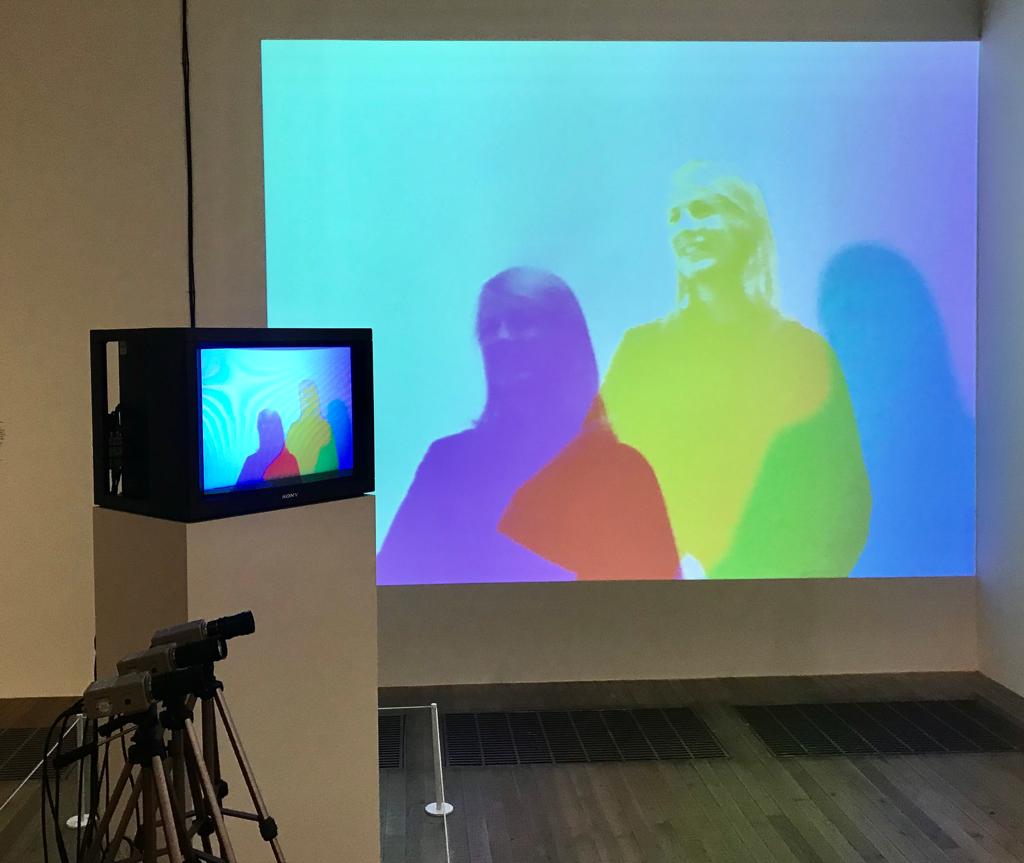
Every art piece was enriching and inspiring. The installations with music and audio were the most memorable for me, as I was able to have a full emersion into the art. All the surrounding noise and distractions were cancelled out, and I was able to concentrate on the visuals ahead of me.
The colours, movement, sounds, fabrics and shapes were all a part of the wonder in Paik’s art work, and as a result will be an inspiration for future work and development.











 KatiesBlog