Adidas Campaign

The Brief

Change the lives of young female athletes in Adidas’ key cities. Build them a future in their city’s pitches, fields and courts of play

My initial thoughts when approaching this brief was to highlight the main objectives and brainstorm possible ideas to ‘Get young women from 14 – 18 into sport’.

To begin the process, all the possible routes to take were evaluated and considered by mind-mapping thoughts and ideas and by conducting further research to find out how young women are involved with sports today.

Having an interest in boxing and badminton myself, I investigated women who are influential in the sports as well as how they make an impact in their communities. This research inspired me to chose both sports to base my initial ideas around for the campaign.

Strategy for Approaching Target Demographic

The insight on this target audience has shown me that 14 – 18 year old females stop playing sports mainly due to being insecure about their body changes, or to having a lack of confidence in their athletic capabilities. Whereas Gen Z males are more likely to continue playing sports after school. Considering this information, I decided to dive deeper into the reason why women stop at a certain age and to find a possible solution.

Compared to older demographics (Baby Boomers to Millennials), Gen Z’s are generally more focused on the values, interaction and experience of a brand. They are a generation that have grown up online, and have little motivation to act on anything unless there is a strong ethos behind it. Considering this, the campaign needs to encourage interaction and involvement between Gen Z’s and the activity/ product.

Furthermore, the intention (to get women to practice sports) has to be very clear to the audience without having a subliminal message.

Typically the attention span of a Gen Z is up to 8 seconds, so creating an engaging campaign with eye-catching visuals is very important.

Facts and further studies on this topic can be found on: https://www.campaignmonitor.com/resources/guides/guide-to-gen-z-marketing-2019/
https://www2.deloitte.com/us/en/insights/industry/telecommunications/media-consumption-behavior-across-generations.html

Mood Board of Research and Inspiration
Target Research/ History of Women in Sport

After having carried out further research on the target audience, I decided to ask women in person about their opinions and experience with sport.

After having asked a wide range of women across my university campus, I discovered that most women gained mental and bodily insecurities around 14 – 18 which resulted in adopting a negative approach towards practicing sports.

‘My body grew in areas which made me insecure when I moved, so I felt I couldn’t continue without feeling humiliated’

‘I had no motivation to continue after school. I ended up concentrating on my university studies rather than sport’

These answers show that a change needs to be made in order to encourage women to get back into sport which focuses on entertainment rather than amplifying insecurities.

Research Board

In a Design Marketing lecture, we analyzed our target audience findings and discovered patterns regarding insecurities with sports and the reason for stopping.

Demographic Online Connectivity

Gen Z’s have constant access to their phones and rely on an easy Customer Journey when buying products or interacting with a brand. No campaign can succeed with this demographic if their online experience has any form of confusion. Therefore creating direct links from website platforms to social media is key. Gen Z’s are notorious for having low attention spans, so having quick/ simple transitions between the process steps is crucial.

https://www.campaignmonitor.com/resources/guides/guide-to-gen-z-marketing-2019/

Initial Ideas
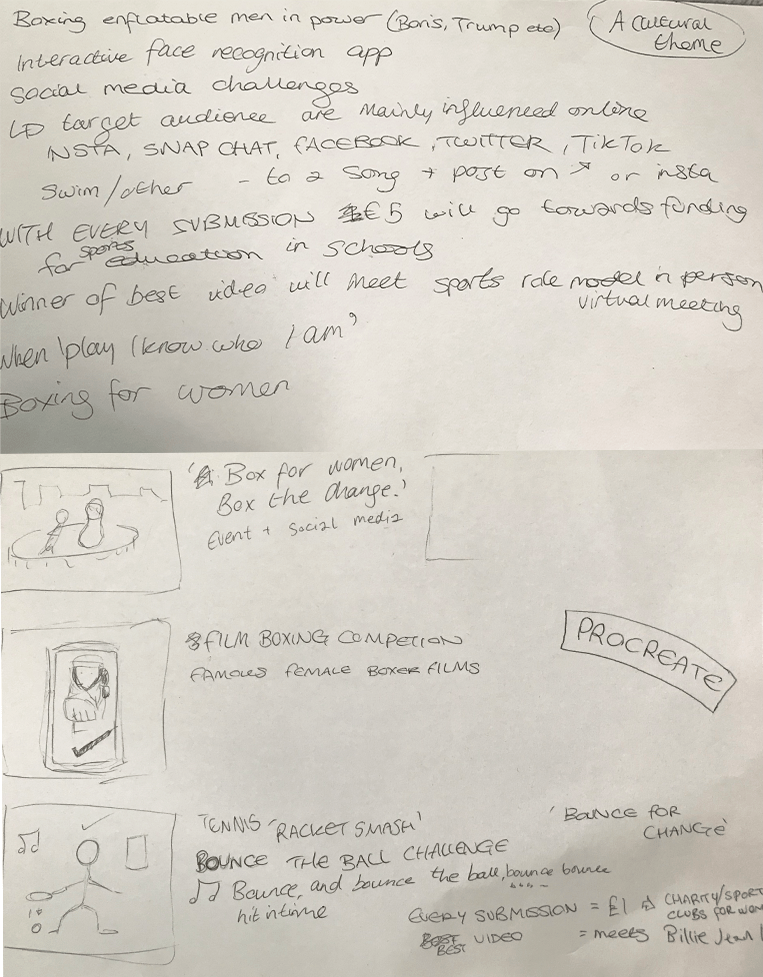
IDEA 1

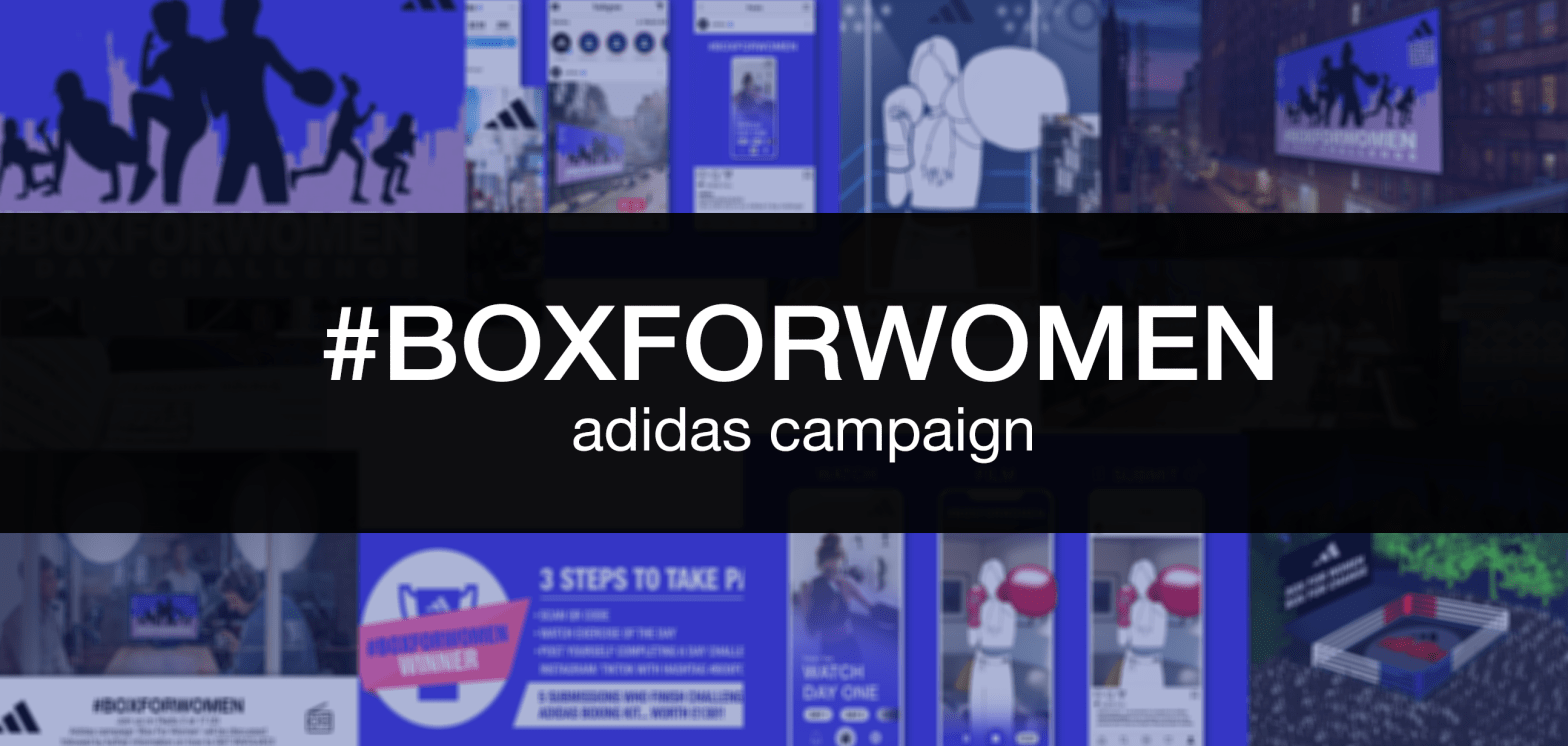
‘BOX FOR WOMEN’ Social Media Campaign
  • Young women take part in an Instagram/ TikTok challenge where they have to show themselves boxing with an added filter on video. The filter has an American flag background, red boxing gloves on hands (which follow hand movement) and boxing music in background
  • Every hash-tag #BOXFORWOMEN per clip will equate to a $3 donation from Adidas to support women in sport
  • This idea is interactive and sparks interest for a very entertainment orientated demographic
IDEA 2

‘Box for women, box the change’ – Boxing Arena Event
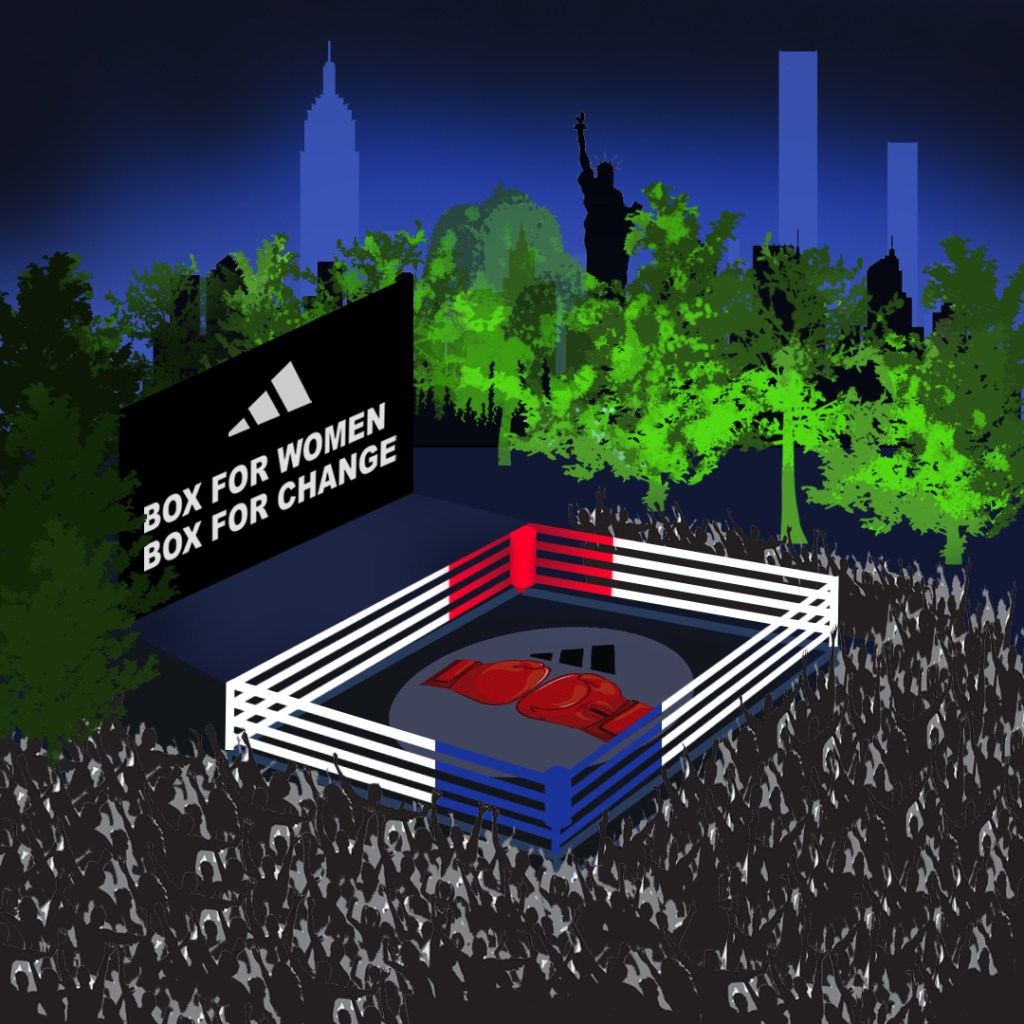
  • A similar concept to idea 1, however this involves an event in chosen capital New York, which is based around going viral on social media
  • Have two famous female famous boxers from NYC fighting in ring to start the event, followed by a speech talking about women in sports
  • After this is a COMPETITION involving young female members of the public boxing and the famous boxers commentating the event
  • Event will have lights, loud music, and a boxing theme.
  • Set in Central Park
  • Will attract attention of the news, radio, social media
Audience
  • The boxing area will only be dedicated to the female teens. The surrounding park area will be open to the public.
  • Schools will be invited to event (for young female teens).
  • Hired Adidas boxing gloves available
  • The winners of challenge will get to meet celebrity boxers after competition, and speak about their experience of sports as a female
IDEA 3

Tennis ‘RACKET SMASH’ – Bounce the Ball Challenge

  • Based around a video of famous American teenagers 14-18 in New York dribbling a tennis ball in time with the music ‘Bounce, bounce, bounce the ball’ which gets progressively faster until they lose the momentum.
  • The call to action will be ‘Bounce for Women’
  • Young females 14-18 have to post a video of themselves completing the challenge with the hash-tag #BOUNCEFORWOMEN on social media
  • For every video with #bounceforwomen across platforms TikTok, Instagram and Facebook, Adidas will donate $1 to a charity that supports young females in sport.
  • The idea – ‘Because you shouldn’t be ashamed to bounce in sport (bouncing body parts)’. All women can be involved in regardless of different body types.

    Inspiration taken from Rafael Nadal’s #WIMBJUGGLEDON  https://www.youtube.com/watch?v=qgvdDZ7o9Ng 

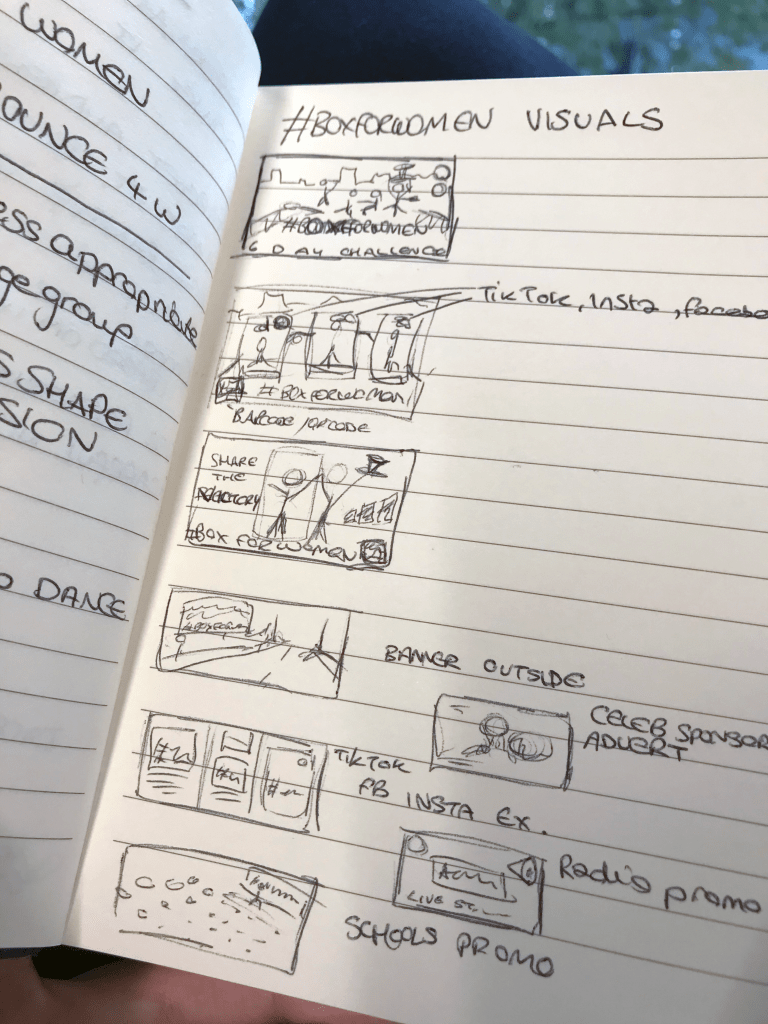
After having presented and discussed the ideas behind these three visuals with my class, I decided to pursue the idea of #BOXFORWOMEN due to being the strongest idea.

Why New York/ Boxing?

“Fighters cannot enter the sport of boxing and become a fighter and make a living at it,” he said. “Professional boxing has basically left New York.” – The New York Times, ‘How New York City Lost Boxing’

After researching the different cities mentioned in the campaign brief, I decided to base my Box for Women campaign in New York City. Having previously read numerous articles on boxing, I discovered there is a desperate need to reintroduce boxing into the community. The boxing scene seems to have faded out over the years due to people not seeing a future in the sport and consequently not practicing it.

THE CAMPAIGN

Final Idea – BOX FOR WOMEN

Box for Women is an entertaining and impacting campaign to get young females from 14 – 18 into the ring and discover a passion for boxing.

The campaign is an interactive 6 day challenge where young women watch 6 prerecorded training sessions across 6 days and post videos of themselves completing the training and showing there results. Each video posted with #BOXFORWOMEN in the description on social platforms Instagram and TikTok counts as a submission for the end prize!

Starting from New York, this bright, energetic campaign will reach a wide online audience, and will be advertised throughout NYC. With bold visuals and an inspirational core motive, Box for Women will strike quick attention and will consequently become an addictive trend for young women across the world!

Creating the 8 Visuals

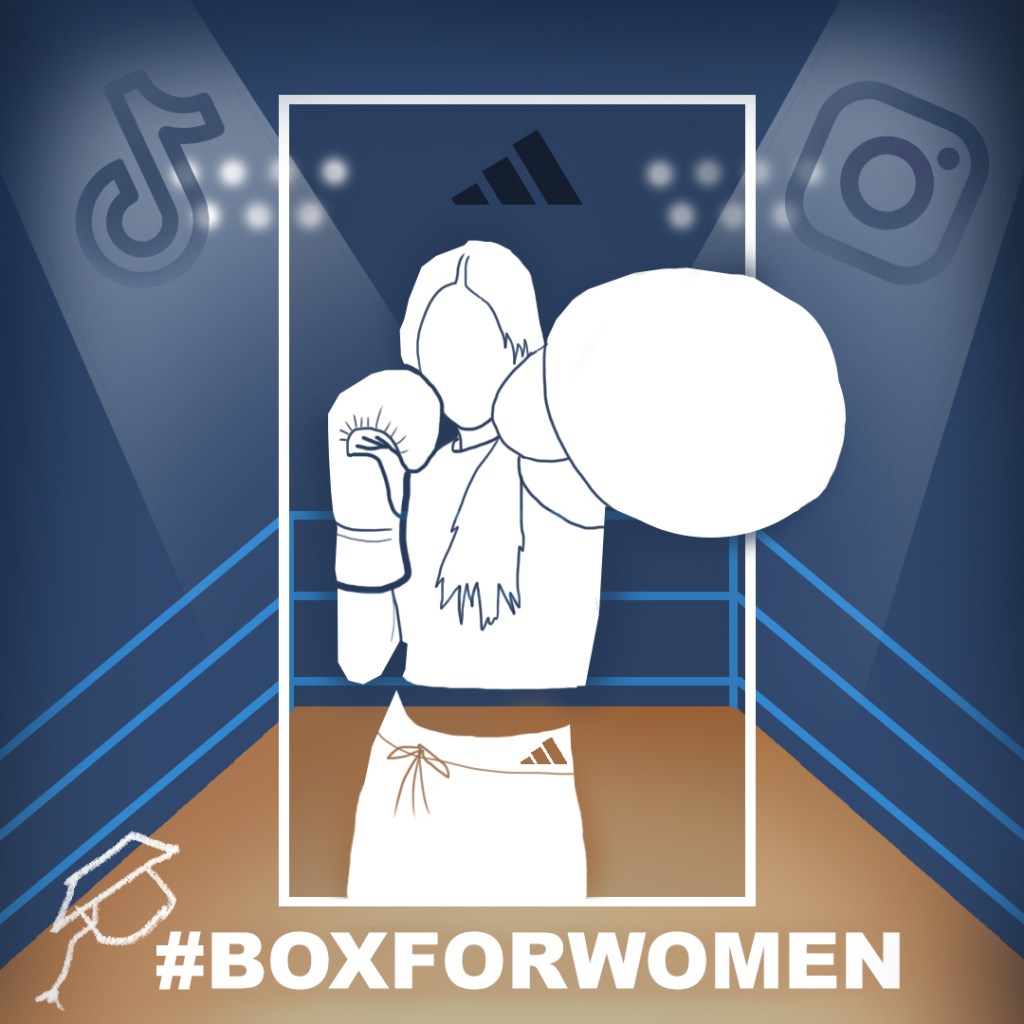
Visual 1

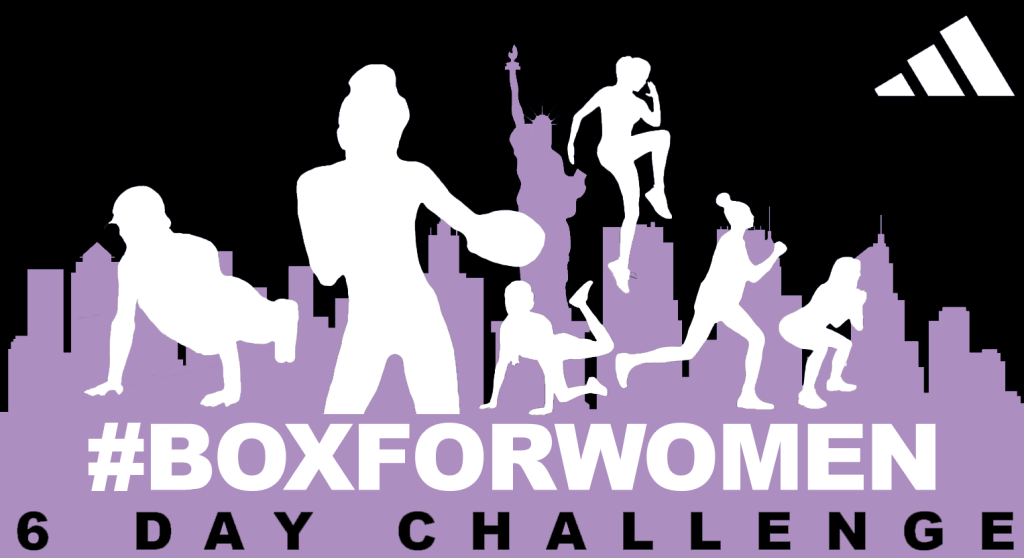
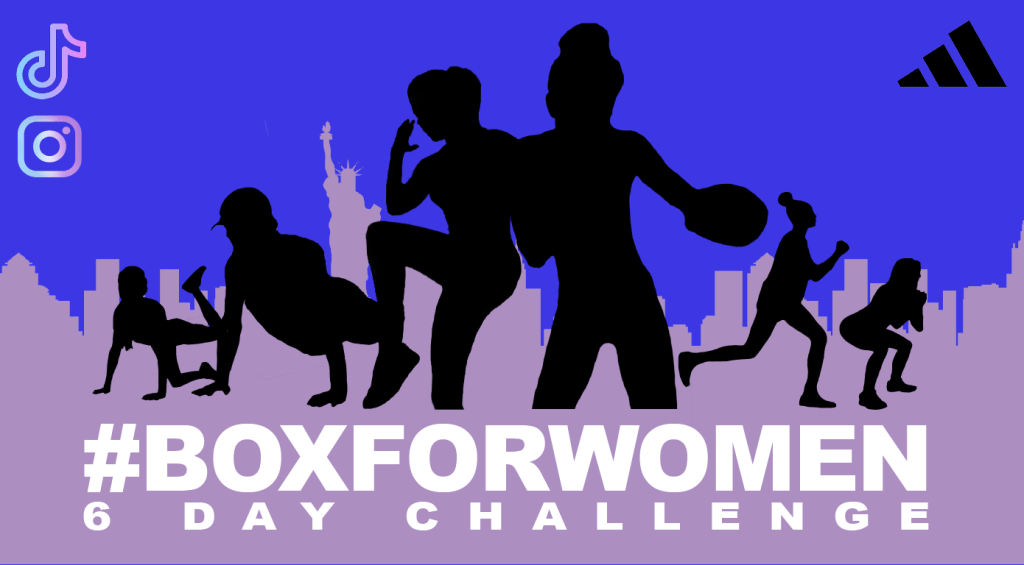
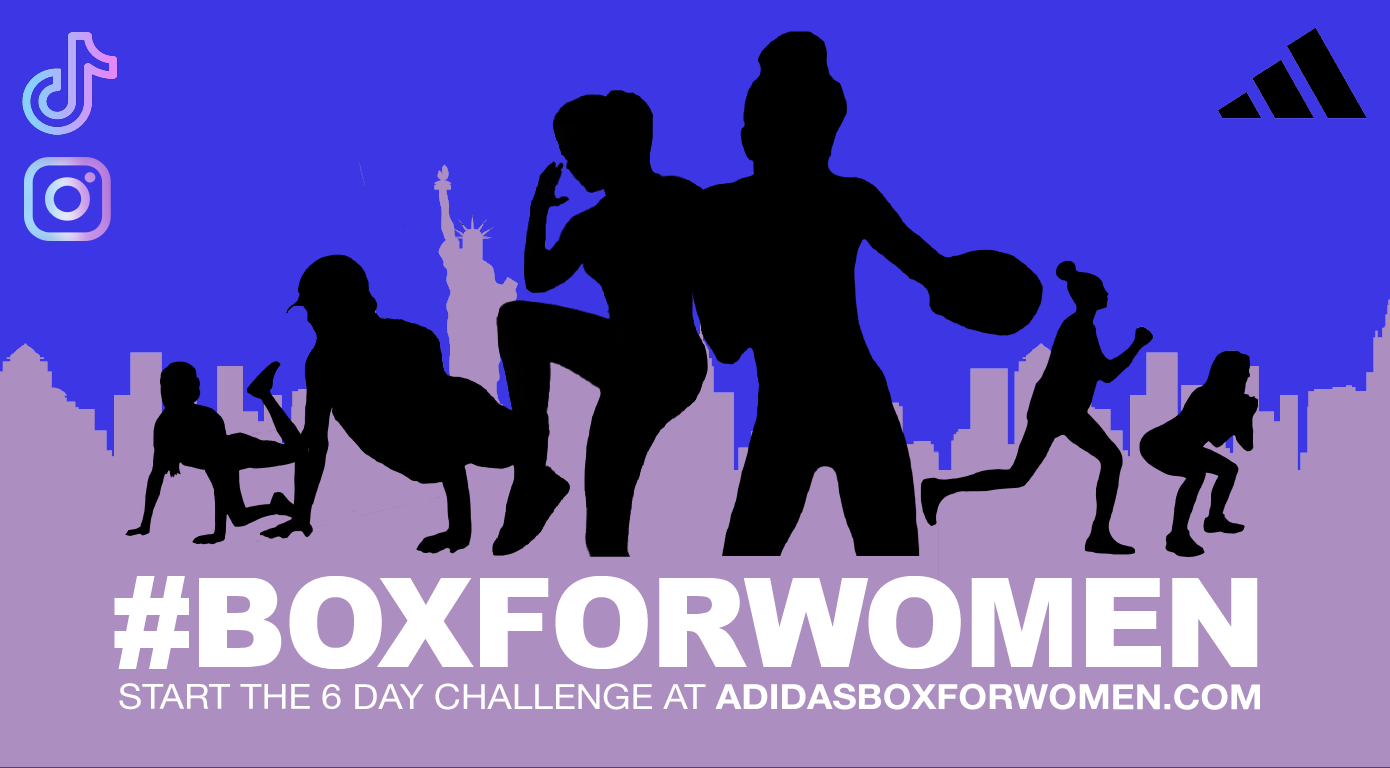
For the primary campaign visual, I created an informative, aesthetically appealing image with a colorful boxing theme. When researching boxing adverts online, I discovered a common theme of using the colour pink when connecting women with sports.

As a women myself, and after having asked other women to further question my opinion, I find using the colour pink ironic and sexually discriminating. The colour pink isn’t offensive in itself, however the past intentions behind it (pink being for women and blue for men) is past its time. When looking at adverts for male boxing however, I found darker more intense colours such as red, black and orange. So to explore this idea further, I created this visual with many different colours in order to see which worked the best (without using the colour pink).
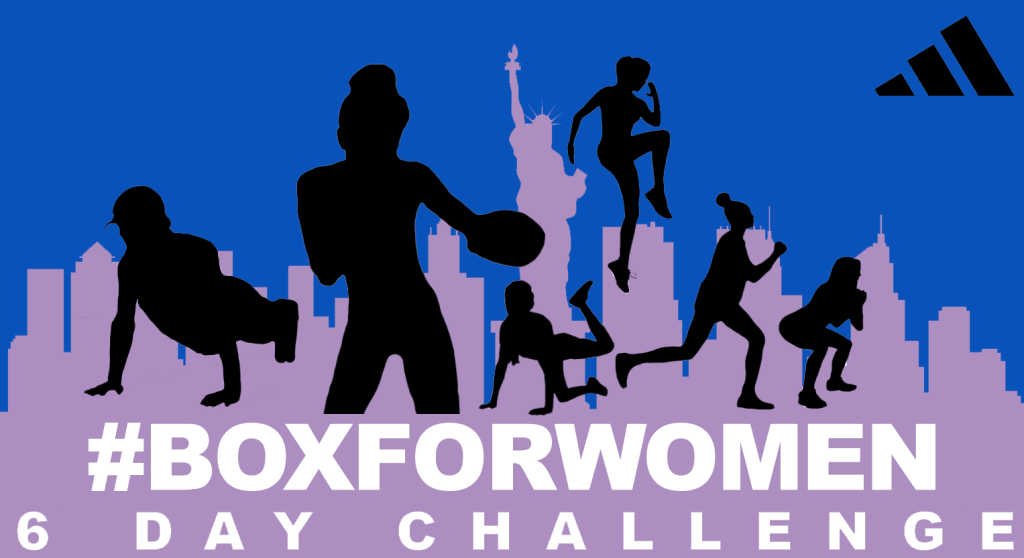
After having asked members of family and friends within the target demographic which coloured visual they preferred, the results showed that having a bright blue background with a purple NYC silhouette, the white text and the exercising female figures in black was the most eye-catching and visually appealing out of the other options.

From my own experience, I find seeing adverts with bright colours and a clear message the most memorable. The text in white draws the eye to the main message and then onto the background (which includes the information of the sport and city).

The reason behind having silhouettes instead of real women on the advert was to have the viewer refer to the concept of ‘being a woman’ rather than comparing themselves to other women in the photos. Many women find looking at women in sports intimidating when they don’t practice it themselves, so the silhouettes are catered to that factor. Confidence is the target, not jealousy/ negative comparison.

The social media logos TikTok and Instagram are also included in the background to connect to the call to action of posting the video content online. When Gen Z’s see the logos, it will generate a sense of familiarity and interest to take the next step of connecting with the campaign.
Visual 2

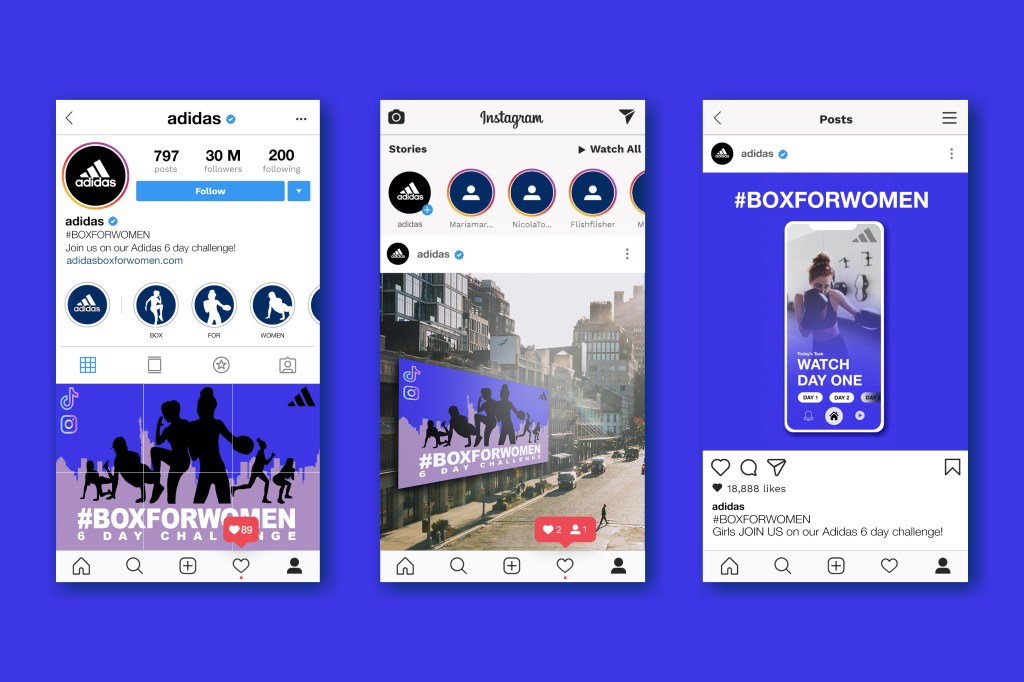
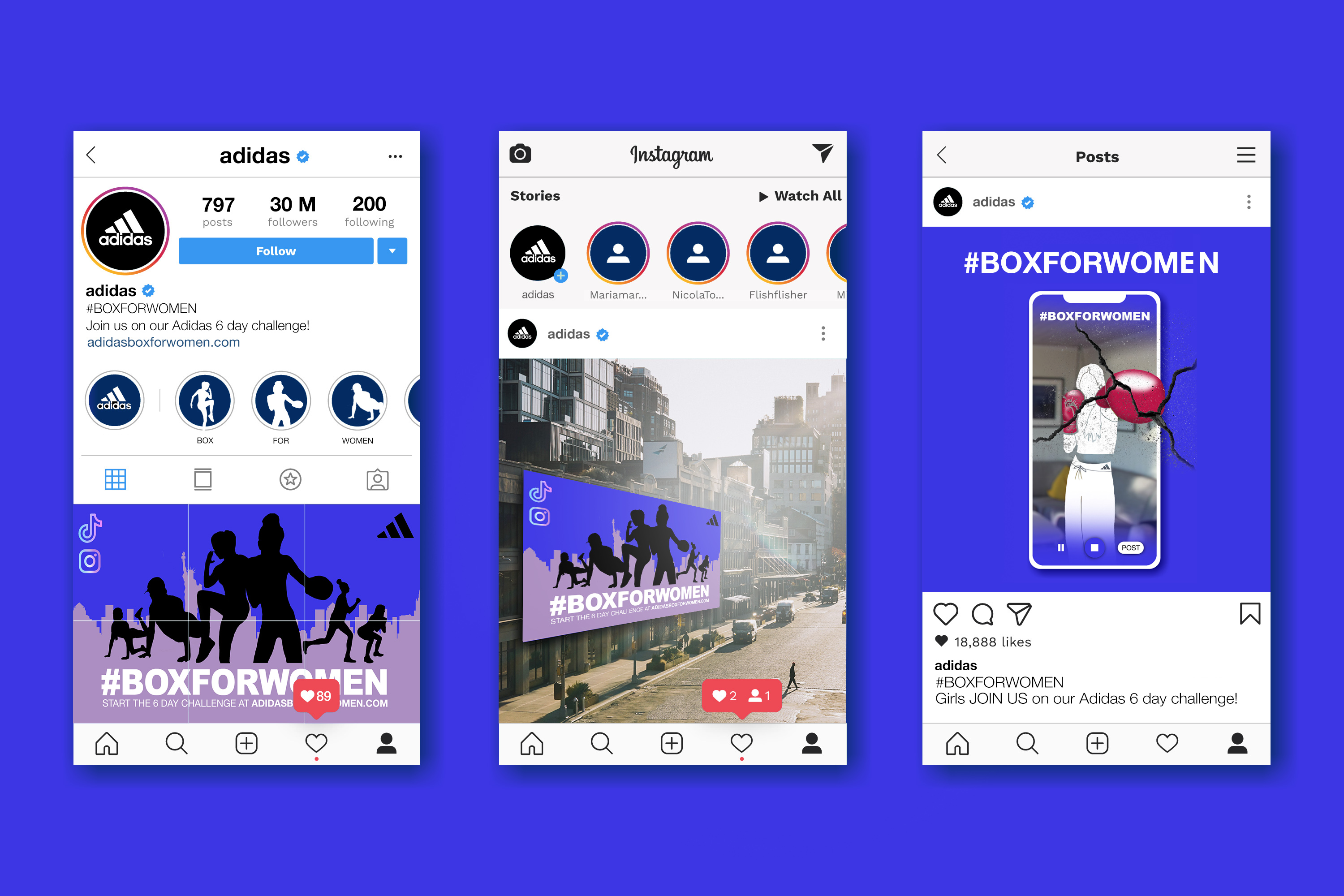
Visual 2 shows an example of how the campaign will look on social platforms, and in this case on Instagram. The decision for the campaign to be on the main Adidas platform was made so that #BOXFORWOMEN would reach an existing larger audience rather than having to create a new following on a separate page.

The campaign will be advertised for a month, including posting the main visuals of the campaign and examples of billboards/ posters etc displayed around New York city.

Examples of the platform (as seen on the right) will be posted in order to give the target audience a taster of what to expect when clicking on the link in the description.

#BOXFORWOMEN has a vibrant blue/ black and purple colour scheme which will stop scrollers on social media, and introduce huge interest across major platforms.
Instagram social media fonts

When creating this key visual, I researched into the framework of recreating the Instagram pages by looking at the font (Neue Helvetica), shapes and colours used as a base. This process was enjoyable, and the research payed off as you can see by the results.

Visme’s ‘Instagram Marketing Guide’, written by Anand Srinivasan, inspired further research regarding social media styles and image formats/ sizes to use.

The Adidas Logo

Instead of creating a new logo for this campaign, I decided to use Adidas’s in order to not bring the focus off of the brand. The target is to bring awareness to women, and inspire them to do sports, so the emphasis should be on the activity and experience, not solely on the branding of the campaign.

This demographic looks for the meaning behind the brand

Visual 3 and 4

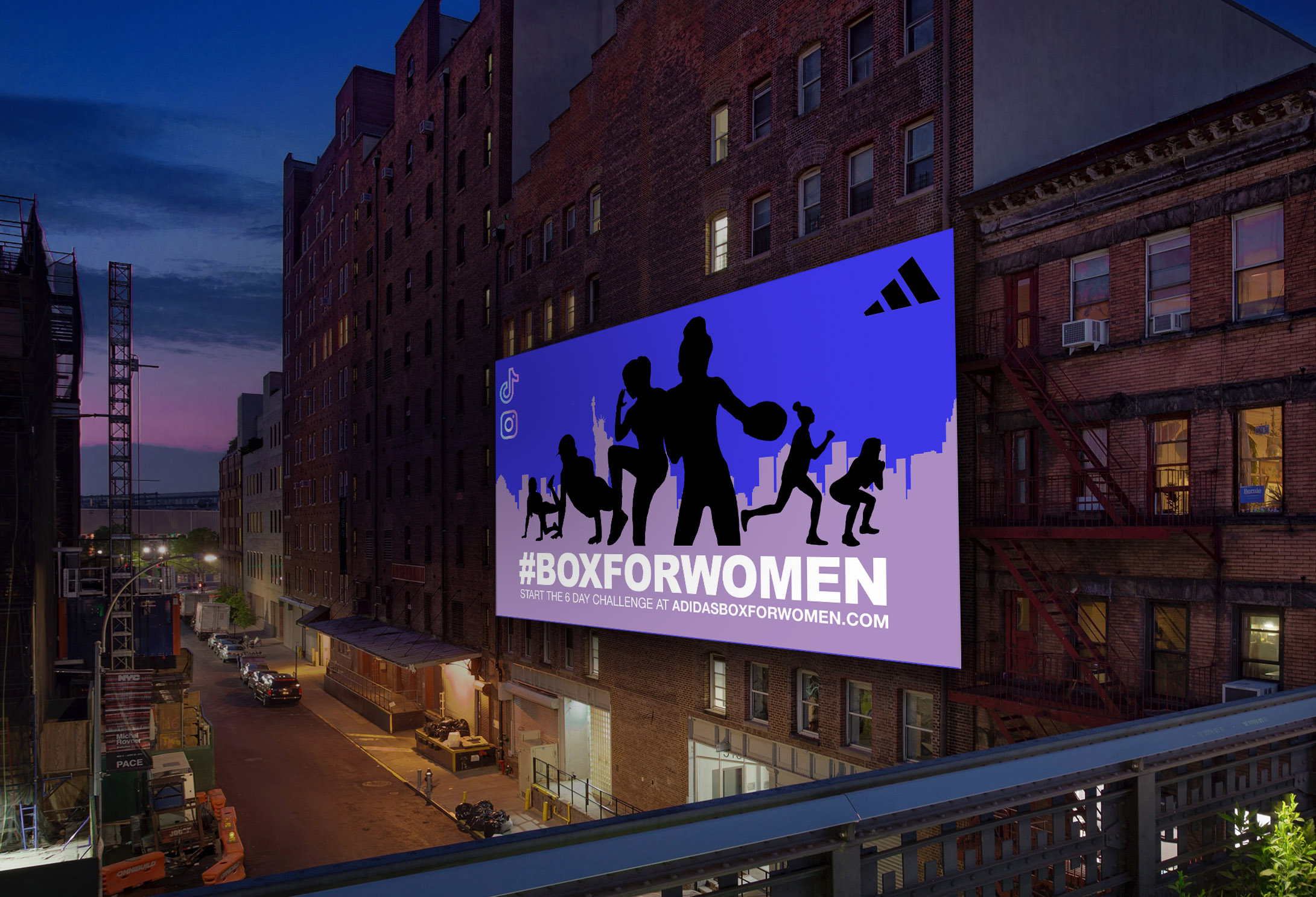
Visual 3 and 4 both show billboards of Box for Women displayed in different locations in New York. These adverts will have a fixed lighting screen behind them to gain 24h visibility. A QR code is available to viewers to scan with their mobile devices which will send them directly to the Box for Women platform.
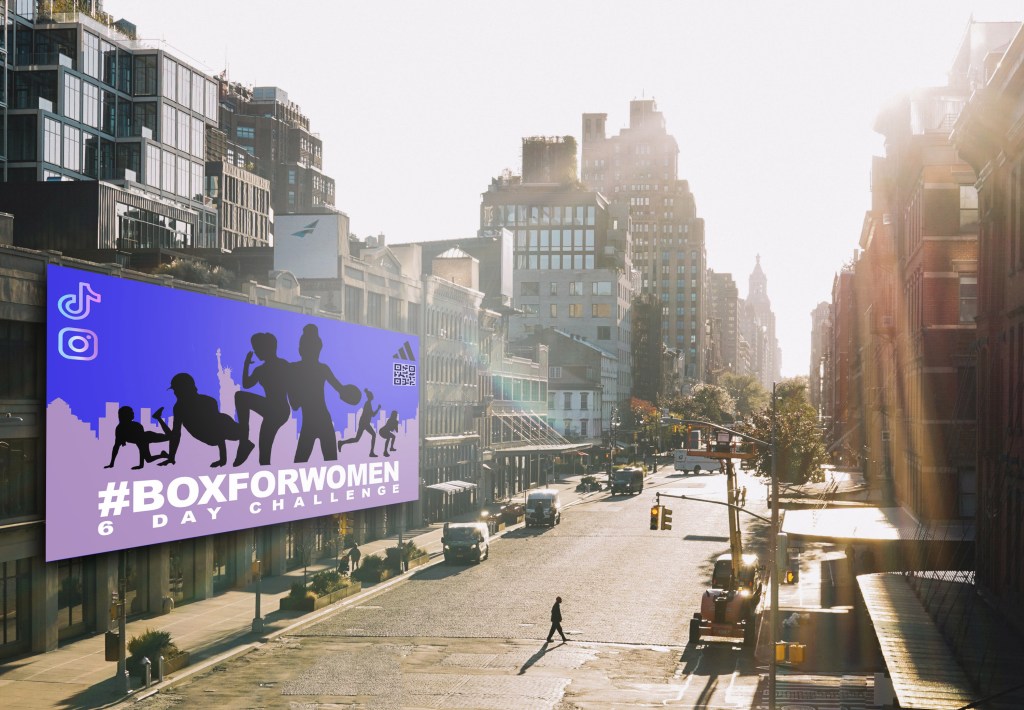
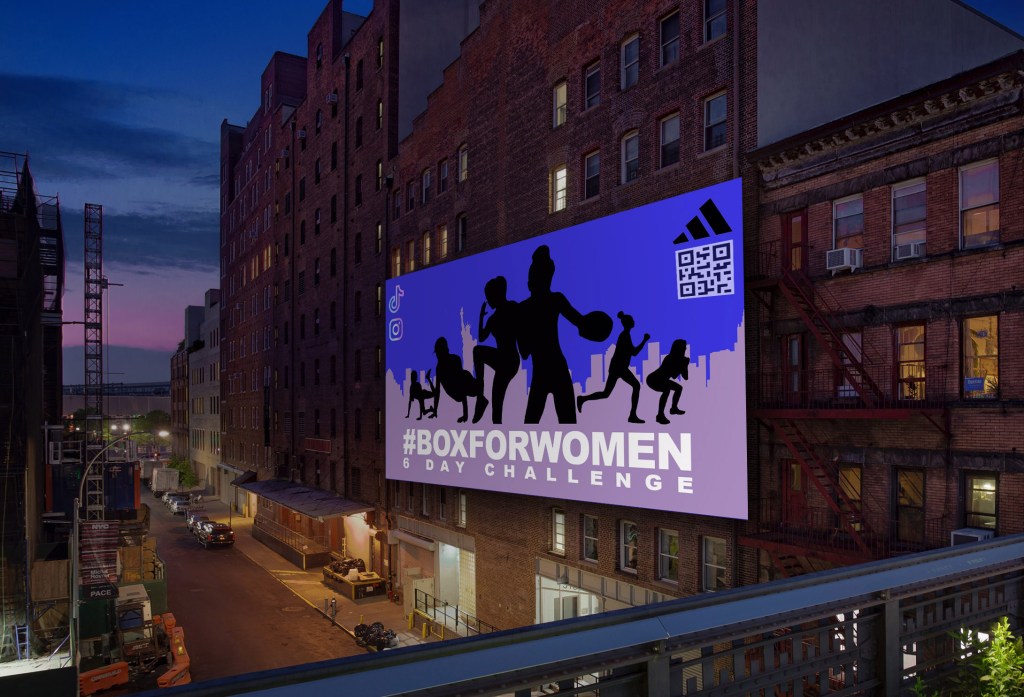
Gen Z’s appreciate quick access to websites without having to navigate too much. Therefore this QR code simplifies the customer journey and effectively strikes interaction between the campaign and the viewer.

Visual 5

Visual 5 shows a live radio broadcast of Box for Women which will attract a larger audience than Gen Z’s, and pushes the advertisement even further through explaining the purpose behind the campaign, and the activity for the audience to get involved with.
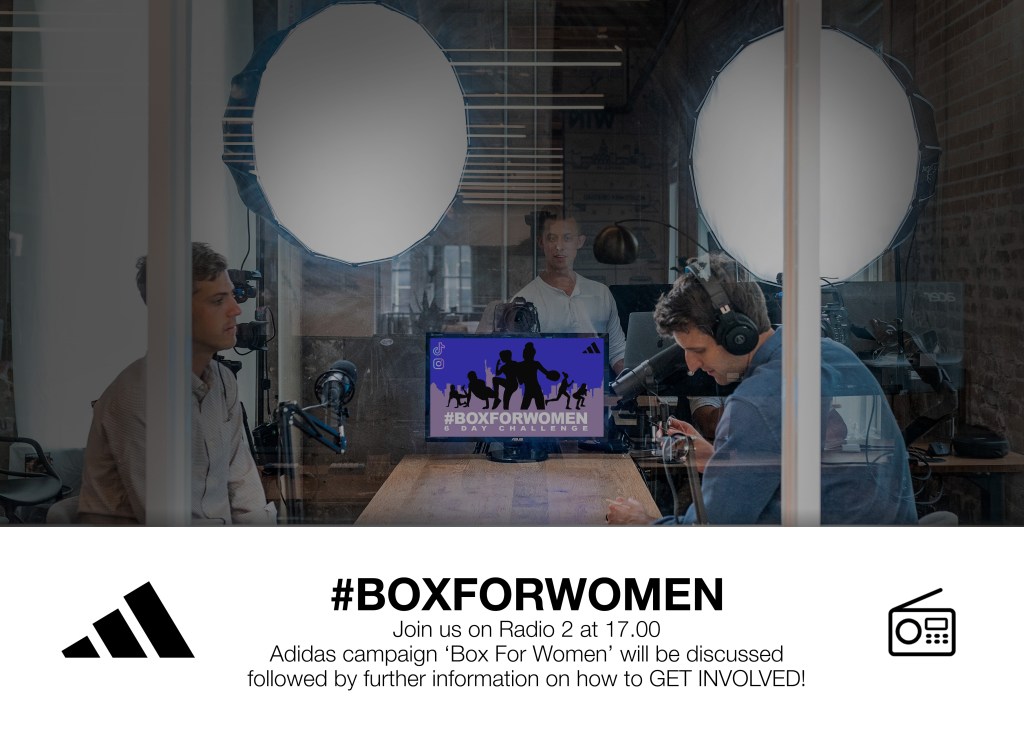
To push this approach further, a podcast containing guest speakers such as famous female boxers and important women in sport will be available to listen to on Spotify and BBC Podcasts.

https://www.bbc.co.uk/sounds/play/live:bbc_radio_two
https://www.spotify.com/uk/

Visual 6

Visual 6 shows the customer journey from watching the training videos, to filming themselves completing the same routine, to submitting the video by posting the progress online (on TikTok or Instagram) with the hash-tag #BOXFORWOMEN.

Each participant will complete the 6-day-challenge with the linking hash-tag each day until the end in order to win/ complete the contest.
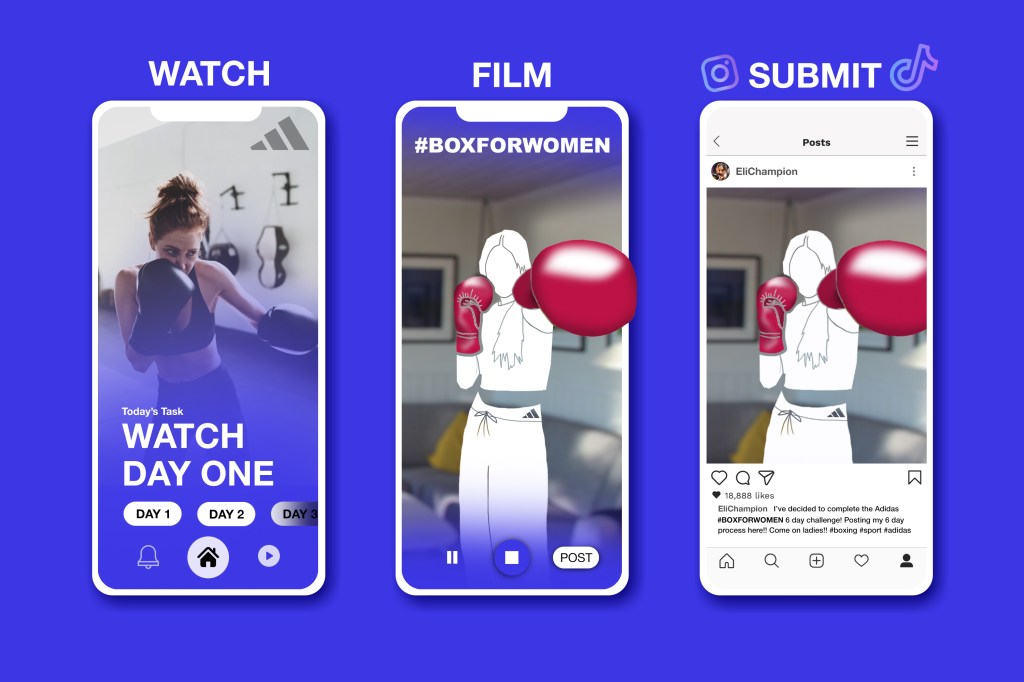
The Box for Women page is clean, easy to use, and links all stages of the process with buttons rather than links (which is preferred by Gen Z’s).

Visual 7

Visual 7 is a banner which explains the 6-day-challenge along with the prize, and a QR code to start the journey.

This banner will be posted across all social media platforms including Instagram, Facebook, Twitter and on the main Adidas website.

Visual 8

Visual 8 shows an example of the influence the campaign can have on the streets of New York. When visiting the city myself, I remember seeing lots of graffiti, street art and stickers posted everywhere, even on the main high streets. In order to connect more to the Gen Z demographic, I thought giving out stickers for female teens/ young adults to stick around the city would also be a fun interactive activity for them to socialize and spread the awareness of the campaign.
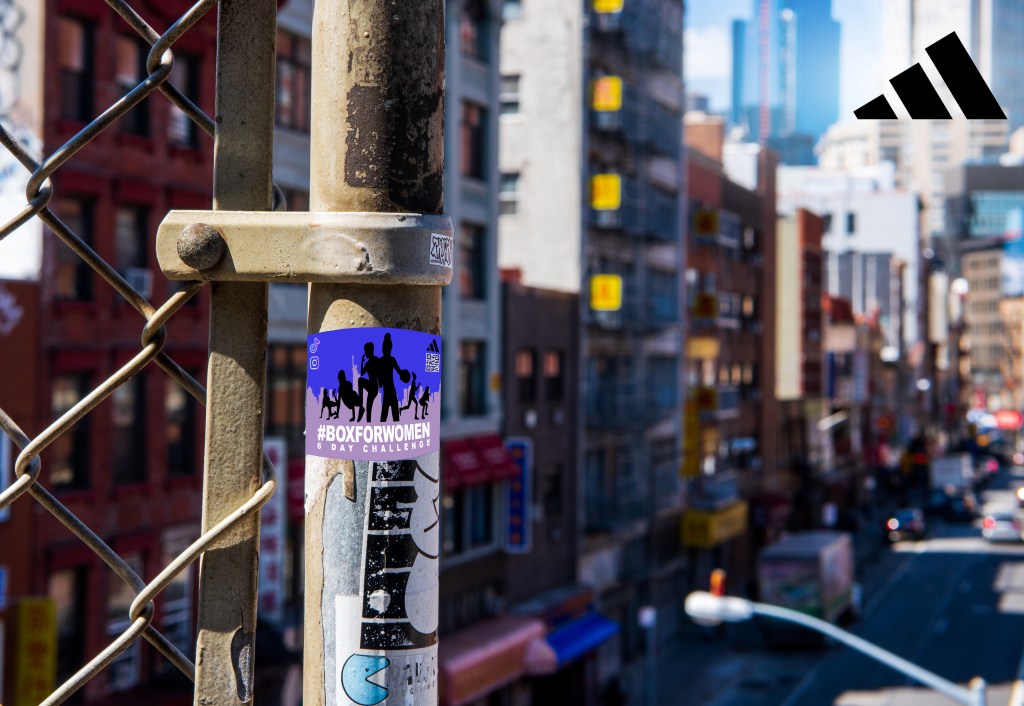
Gen Z’s are influenced by trends and are obsessed with being entertained, so having a product as little as a sticker is an effective way of having the target audience interact with the product on a first level basis.

Presentation

The campaign pitch was successful due to the insight and the strategy being clearly explained from the beginning, and having striking clear visuals to present the concept.

While presenting, further ideas came to mind for developing this campaign and strengthening the overall plan. The following feedback was very beneficial as I was able to take into consideration both positive/ negative comments and understand what improvements can be made.

Feedback

‘This idea could be re-framed into something bigger than winning a bit of kit. It feels like a big idea being squashed at the moment’

‘The radio part is very good. Think about how a mix by DJ/ Sportsman could motivate the training.’

‘Another name for campaign could be ‘BOXING BANGERS’’

After having presented my idea, I realized that this campaign could be pushed even further whilst keeping its main objective ‘Get young women into sports’. When creating my final idea, I wanted to keep the main concept simple and clear rather than over complicating it with many different objectives.

Considering the feedback given, I decided to stretch my idea further by having the reward be meeting a professional female boxer instead of winning a boxing kit. This was one of the primary ideas thought of at the beginning of the project which wasn’t pursued.

During my primary research on female athletes, I came across boxing champion Claressa Shields who sparked my attention and is known famously for winning numerous global awards in boxing and being a successful woman in sport.

https://www.teamusa.org/usa-boxing/athletes/claressa-shields

Having the winners of the ‘6 day challenge’ meet a famous woman in sport (such as Claressa Shields) gives them not only the encouragement to continue practicing sports, but influences other young women at the same time.
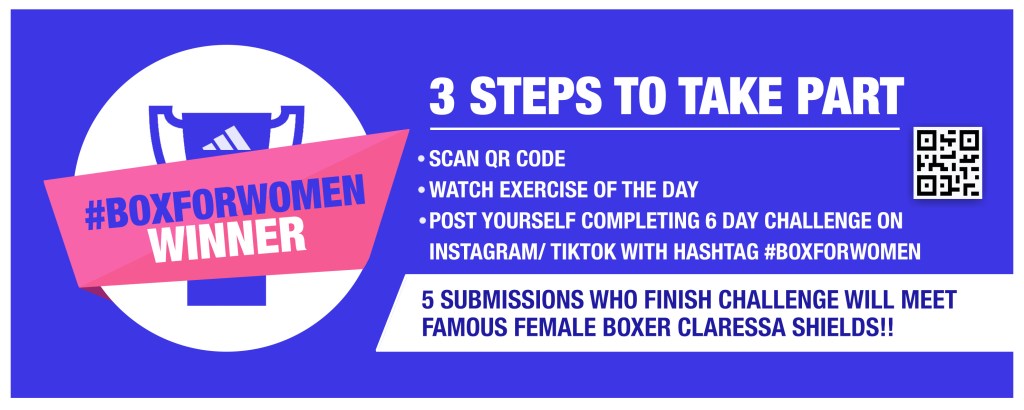
Updated Banner (post feedback)

Further Improvements

After having received this valuable feedback, I decided to further develop the project by making the following adjustments.

I deleted the unnecessary visuals and replaced them with more constructive/ informative ones which has made the overall presentation more digestible. The  street visual has been replaced with a step by step visual explaining the campaign process.

The QR codes have been replaced with a call to action on the outdoor advertisement due to likelihood of the code not working when being scanned at a distance.

Cracked effects were added to the main visuals to create further curiosity for the viewer, and a few of the visuals have been adjusted to create more impact. When creating the crack, I followed a useful video which opened my eyes to new tools and ways of using Photoshop.

Photo link reference – https://rb.gy/bvh0kw

On the step-by-step visual, I was apprehensive to use a photo of Claressa Shields as I could have copy-right issues as a result. However, having seen other projects use photos taken from the internet, I decided to use it to show an example of what the project would look like if the permission was granted.
Reflection

Overall this project has been thoroughly enjoyable and has stretched my capabilities by learning to think outside of the box and concentrate on the targets views in order to create a successful campaign which fits the brief.

Not being a hugely sporty woman myself, I could relate on many levels with the target research and discovering that many young women think similarly towards sport.

Following on from this brief, I aim to be even bolder and creative when confronted by tasks such as this, and will use the knowledge I have gained from this experience into my future work.


POEM Campaign – Critika

Superhero Product – CRITIKA

Critika is a platform that helps you to:

  • Create links between ideas
  • Build arguments to strengthen ideas/ decisions
  • Identify inconsistencies/ errors and find possible solutions in everyday/ business situations

Strength in brand

Critika can be used to create a critical analysis of problems/ ideas and create incredible intelligent decisions. There isn’t another platform that critically analyzes and solves issues as efficiently as Critika. It’s the perfect solution for people who are indecisive or find problem solving and thinking clearly an issue. Critika takes the pressure off its clients and allows a pathway for future opportunities.
The platform asks a series of questions about the issue (to filter the correct sector) and then a live bot gives possible solutions for the issue and directs client to the main platform home page where client can analyze issue further and is offered a number of practical solutions. For paying clients, live chats with real-life professionals from relevant sectors are available 24/7 to offer practical advice (mentoring schemes).

Demographic

The target audience for Critika is students and working people in all sectors ranging from detectives to accountants, teachers to lawyers etc.

This platform is mainly for clients from Gen X to Gen Z, those who are studying or are already in the working world and who need real solutions to complicated issues. The platform can also be used for leisure, and analyzing personal issues, however its primary use is for solving practical work-related issues.

POEM CAMPAIGN – Fake News Smasher

‘Be a hero. Smash the lies’

DEMOGRAPHIC – Millennials and Gen Z, superhero fans

TAGLINE – Be a hero. Smash the lies

Using gamification and witty advertisement, Fake News Smasher will go viral with this smashing campaign…

The concept is based on having the customer become the hero by using the app to obliterate fake news. Every time an article is filtered on the app, the customer will be rewarded with a higher ranking in the Smasher Ranking Board. Essentially the player that spots more fake news will be awarded with a higher ranking. The winner with the highest score by the end of the year wins not only the ‘Fake News Smasher of the Year’ title but will also meet Mark Ruffalo (Hulk, who will feature in advert).

Furthermore, the famous truth heroes featured the app will change every season to keep the app fresh, e.g. Hulk (with fist), Thor (with hammer) etc.

PAID

The Hulk Smash Advert – Advert of Hulk smashing phone screen (20 seconds)

Narrative
Character Bruce Banner (the scientist/ human version of hulk) swipes phone, and comments ‘fake, fake, fake…’ his hand becomes green, until he gets so angry, he turns into the hulk and smashes the phone to the ground. He is given another phone by cameraman with the Fake-News Smasher app on screen and he taps the submission button until his body goes back to normal and sighs.

The advert ends with slogan ‘Be a hero. Smash the lies’

This captivating advert will shock the viewer with its extreme narrative, visuals and casting. Having Mark Ruffalo as the Hulk will attract Millennials/ Gen z viewers and entice them into watching the further 15 seconds of the advert (without skipping).

This will be a PAID advertisement as the costing will cover casting Ruffalo as the Hulk, hiring graphic designers behind the visuals, and having the advert displayed across major social media platforms such as YouTube, Instagram, Facebook, TikTok, Twitter etc.

OWNED

Considering the campaign will be posted on Instagram/ Facebook, the extra ‘free’ advertisement, such as still images from the advert, will be posted without further costs across all social media platforms. The still frames from the video can involve the hulk holding a slightly smashed phone towards the camera with brand on screen, and with a medal around his neck to show his winner status. The description can include ‘Beat the hulk by eradicating FAKE NEWS in one click’ followed by a link to the app.

Top ten fake news heroes will be posted each week on social media, leading up to the final champion reveal by the end of the year alongside the ‘Top Ten’ fake news spotted.

The main idea is to eradicate fake news, so the focus will be primarily on the fake news found, and then the gamification side of the campaign will follow.

EARNED

This video will go viral by peoplere-posting the content and through word of mouth.

Superhero fans will definitely take interest, which will have a domino effect over fan page platforms across the internet.

The gamification side of the app (winning the Fake News Smasher title) will have a huge influence over Gen Z users especially as they look for primarily the experience side of products and showcasing their success online.

The interaction with the app will cause conversation, discussions and will influence people across the world in how we perceive and deal with fake news.

THE FUTURE OF GEN Z

Our Future Customer

Marketers shiver at the thought of facing the Gen Z demographic, however this shouldn’t be the case. This actively online group of people are the future, and therefore we need to be more informed as to how to approach them when selling our brands.

The Feeling/ Experience Generation

Compared to Baby Boomers to Millenials, Gen Z’s are more focussed on the values, interaction and experience of the brand than simply the product. The ethos behind the brand carries a high level of importance for this generation, and if expectations aren’t met, instant disinterest would result in immediate customer disconnection. The reason behind this is due to growing up with a higher awareness about social activism and serving a just cause. If the brand can’t sell a positive message, Gen Z’s believe they are contributing to a negative cause which is against their values as a person. Therefore the experience and feeling emitted from a brand are very important factors to gaining successful customer engagement.

The Personal Connection

Giving your brand a personal touch by explaining the ethos of the product and showing your commitment to your audience will go a long way.

Older generations are more persuaded by being given a direct informative approach when being sold a product, being told to ‘buy this product’ was very effective for Gen Y’s to Millennials. Instead, Gen Z’s look for the ‘soul’ of a brand, and to have a connection with a strong ethos behind products (cruelty free, environmentally friendly etc).

When your IDENTITY of the brand is communicated clearly (and presented in a modern, clean cut way), this audience feel drawn to find out more about and potentially purchase the brands products.

Clean Presentation

The majority of Gen Z’s filter what they want to see arriving through email/ social media and don’t want to be spammed with useless information. Considering this audiences’ attention span is a lot shorter in comparison to other demographics, marketers need to concentrate on CLEAN PRESENTATION and CLEAR COMMUNICATION.

‘Less noise means more space for your message to grab their attention, pass their 8 second filter mentioned earlier, and engage your audience.’

https://www.campaignmonitor.com/resources/guides/guide-to-gen-z-marketing-2019/

Less is more when it comes to having an affect on this audience. However, the information given shouldn’t be simplified, but rather more concise and informative.

Short Attention Spans – Compelling Visuals

Gen Z love to experience colour, vibrancy and most importantly MOVING IMAGES.

Compared to older age groups, this younger generations’ interest are for GIFs and videos. Using moving imagery on adverts and social media intrigues the viewers to stay on the page and to acknowledge the brand.

‘Video is not the way to engage young people, rather it is one of many formats that can engage.’

http://www.digitalnewsreport.org/survey/2019/how-younger-generations-consume-news-differently/

Using both static imagery as well as videos creates a more digestible approach to a marketing campaign. If the viewer is bombarded with hundreds of videos about one brand, interest fades and the advertisement turns into ‘noise’ which defeats its objective.

Linking Platforms

The future of Gen Z involves having easy access to everything. Accessibility and fluidity in the Customer Journey is crucial, having a clear path from seeing the brand/ product to purchasing is the only way of targeting this future demographic.

The less movement, the better. When Gen Z’s have an advert that they’re interested in, they don’t want to be directed to many different sites, or complete different tasks in order to buy the product. An informative, clean-looking website which works well is the way to go.

‘Optimize your conversion process’

https://www.campaignmonitor.com/resources/guides/guide-to-gen-z-marketing-2019/

Create direct links from social media to the main purchase page to enable a quicker buying process.

Phone Activity

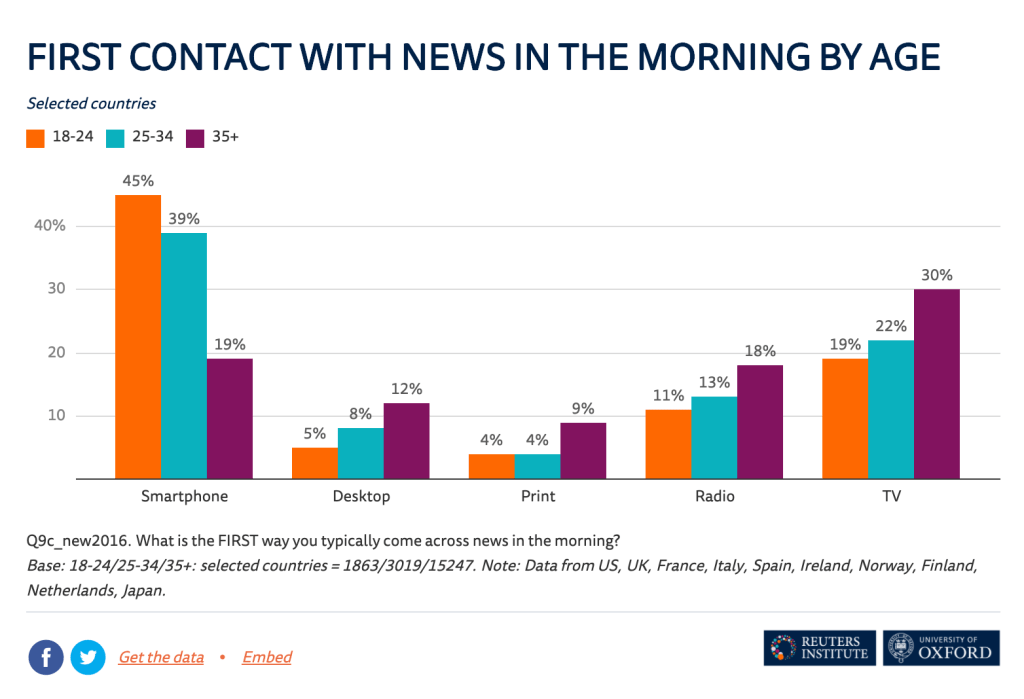
According to the University of Oxford, 18-24 year olds are most likely to wake up and look at their phones than any other device in the morning.

The main devices used by Gen Z are mobile phones and laptops, therefore we need to be very active online!

Be Active Online!

This is the online generation, one which is constantly on social media and looking for compelling, and in many cases shocking, news/ visuals/ information which can gage their attention. The involvement of the brand with the customer is essential; sending promo-codes, posting updates on the brand journey, challenges/ quizzes on the brand etc.

Gen Z’s want to INTERACT with the brand, so get them talking!

  • Use #hashtags to be featured on pages
  • Give weekly/ daily updates on brands activity
  • Don’t spam, but inform
  • Create easily digestible/ relatable content

‘Young people have a very low threshold for apps that don’t provide a great experience’

You shouldn’t have to work hard to be sold a product, so precise advertisement is the key with a meaningful and informative message. Use all social media platforms to promote the brand (Facebook, Twitter, Instagram etc) as Gen Z’s jump across many platforms.

Future Predictions

Considering the importance of having the audience interact with the product, there could be more holograms/ gaming aspects added more frequently in campaigns. Having a visually stimulating brand approach is an easy way to draw Gen Z’s into buying a product, so I can see future generations interacting even more with brands even when unaware.

Remember – the experience and the ‘feeling’ of a brand is crucial.

References

https://www.campaignmonitor.com/resources/guides/guide-to-gen-z-marketing-2019/

https://www2.deloitte.com/us/en/insights/industry/telecommunications/media-consumption-behavior-across-generations.html

http://www.digitalnewsreport.org/survey/2019/how-younger-generations-consume-news-differently/Images

https://www.convinceandconvert.com/content-marketing/generational-marketing/

Images

https://pixabay.com/photos/computer-pc-workplace-home-office-1185626/

https://unsplash.com/photos/XkKCui44iM0

https://unsplash.com/photos/Zyx1bK9mqmA

The Winter King – Arduino Installation Project

Arduino is an ‘open-source electronics board’ that you can program to create electronics/ installations/ environments and more. 

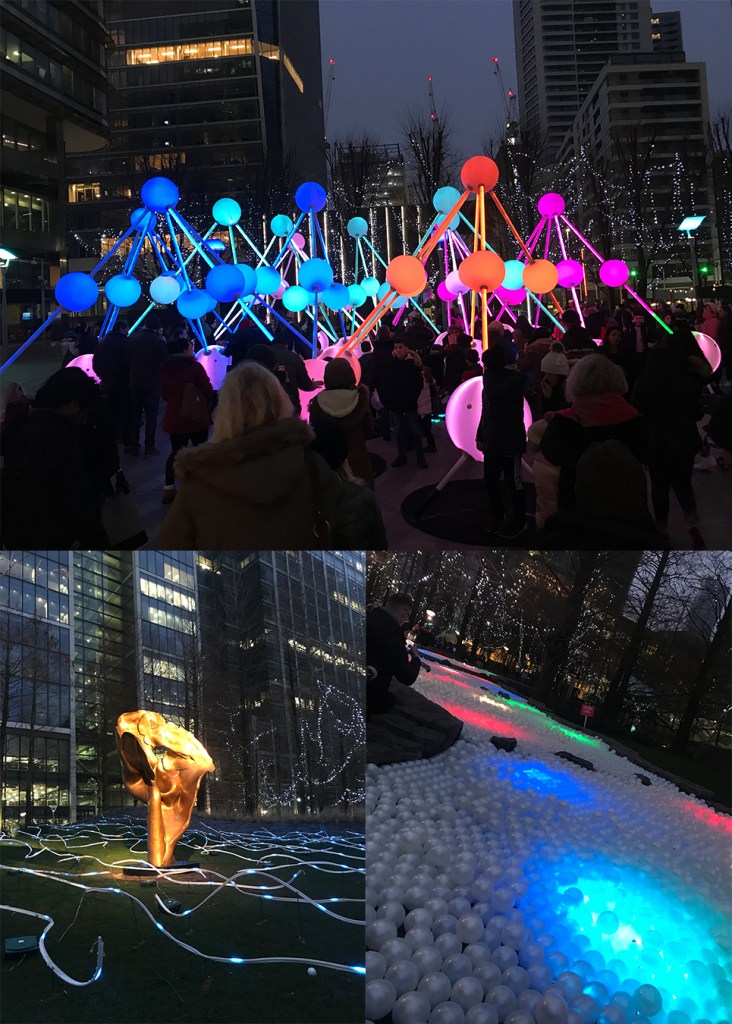
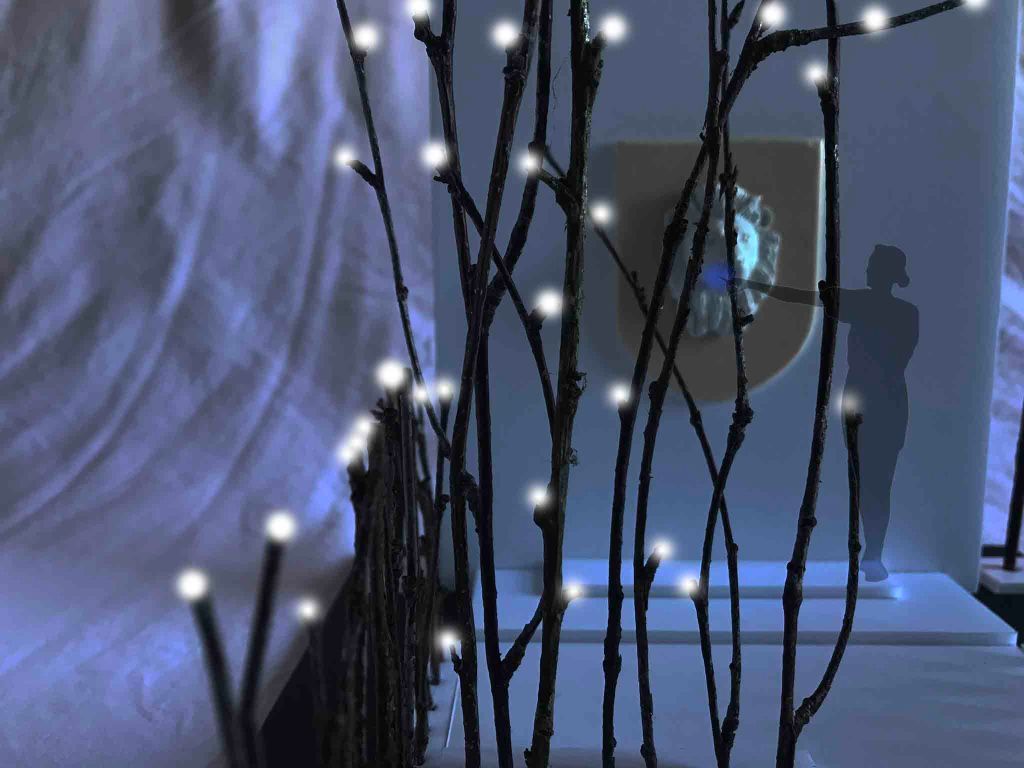
In order to experiment with this interesting and crucial tool, as a group of three, we have created a project built on the foundations of an Arduino circuit, whilst fueling the ideas and inspirations from the Canary Wharf Winter Lights display. 

Every year this mesmerising festival surprises its onlookers with new and innovative installations with glimmering lights and diverse mediums of interactivity. These installations have been made with a vast range of tools such as sensors, LED lights, and most importantly… Arduino circuits. 

To begin this project, we spent a period of time researching about the Winter Lights festival and looking at other similar events in the world. When we found projects that we appreciated, we looked into the anatomy of the pieces to examine how they were built and how they were used in their environments. 

Brainstorming for the Project / Initial Ideas 

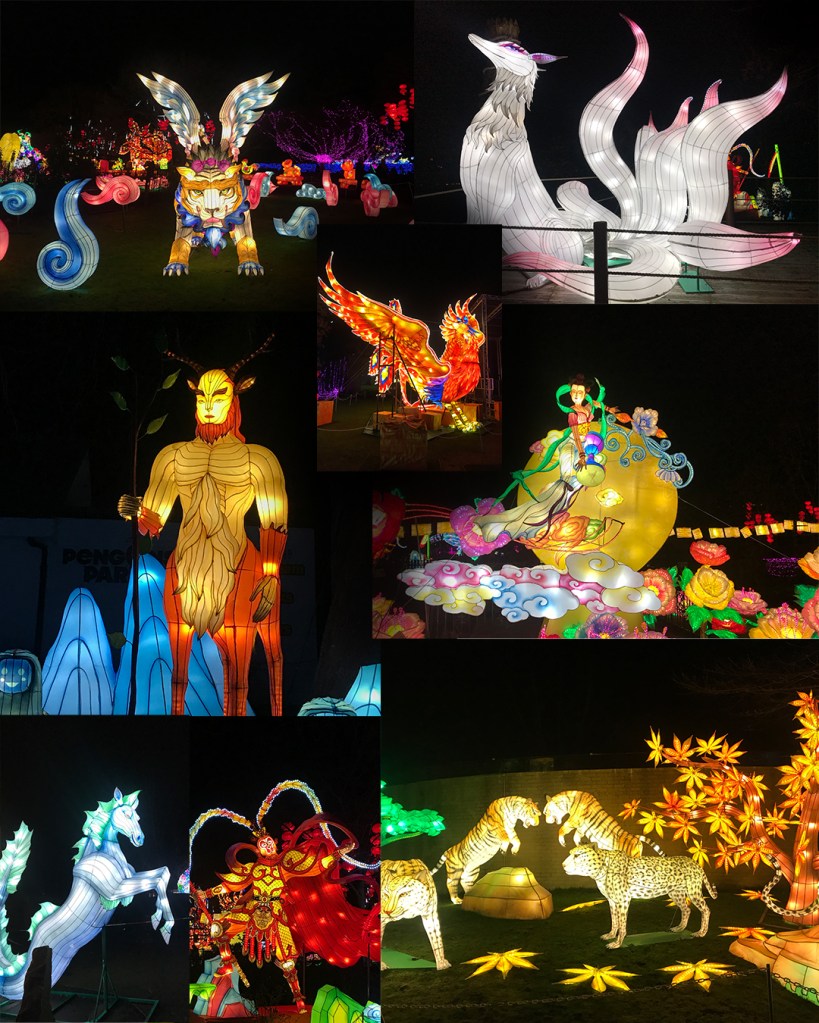
When creating my initial mind maps and notes, The Giant Lanterns of China came to mind from a trip to Edinburgh. The whole experience was immersive and aesthetically fascinating, but more importantly very informative about Chinese and Scottish folklore, and also informing us about endangered animals across the world. Walking down an open path and taking in the beauty of these huge animals made out of translucent fabric was a breathtaking experience. 

To take this idea further, I thought about how as humans we like to touch and stroke animals. So, I wanted to include this element of ‘touch’ in the project. When brainstorming different possible animals to choose from, a Lion came to mind. Lions are strong, ferocious creatures which humans also have a soft side for. In Books such as the Chronicles of Narnia, the Lion is portrayed as a heroic animal, with a tough yet personable character. 

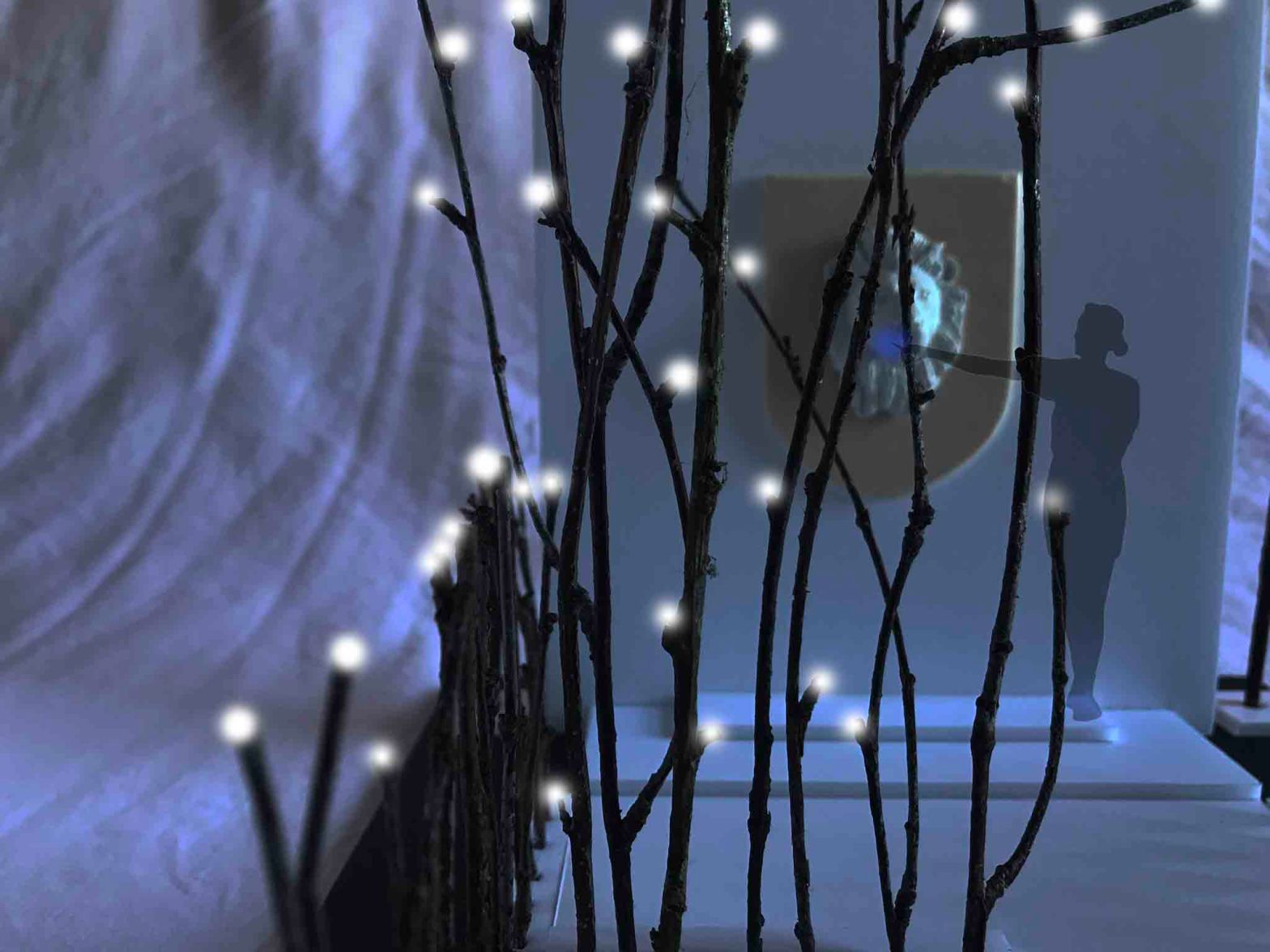
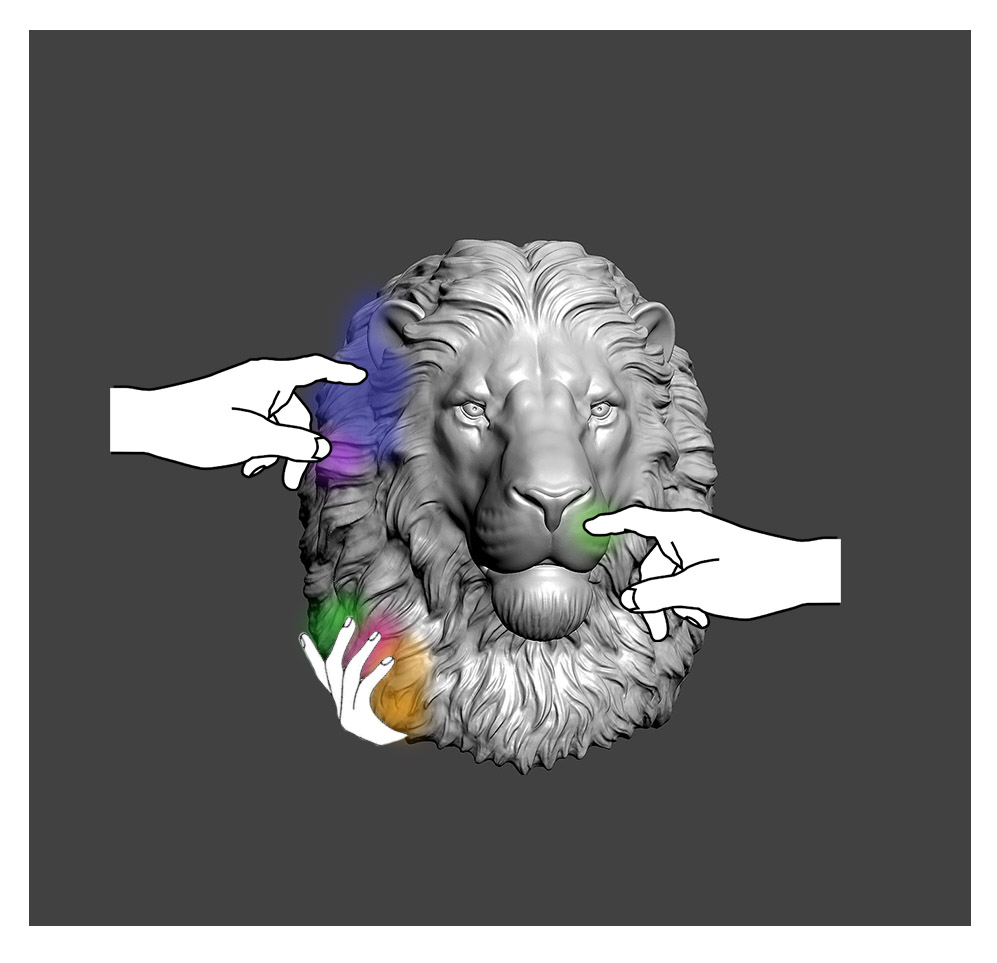
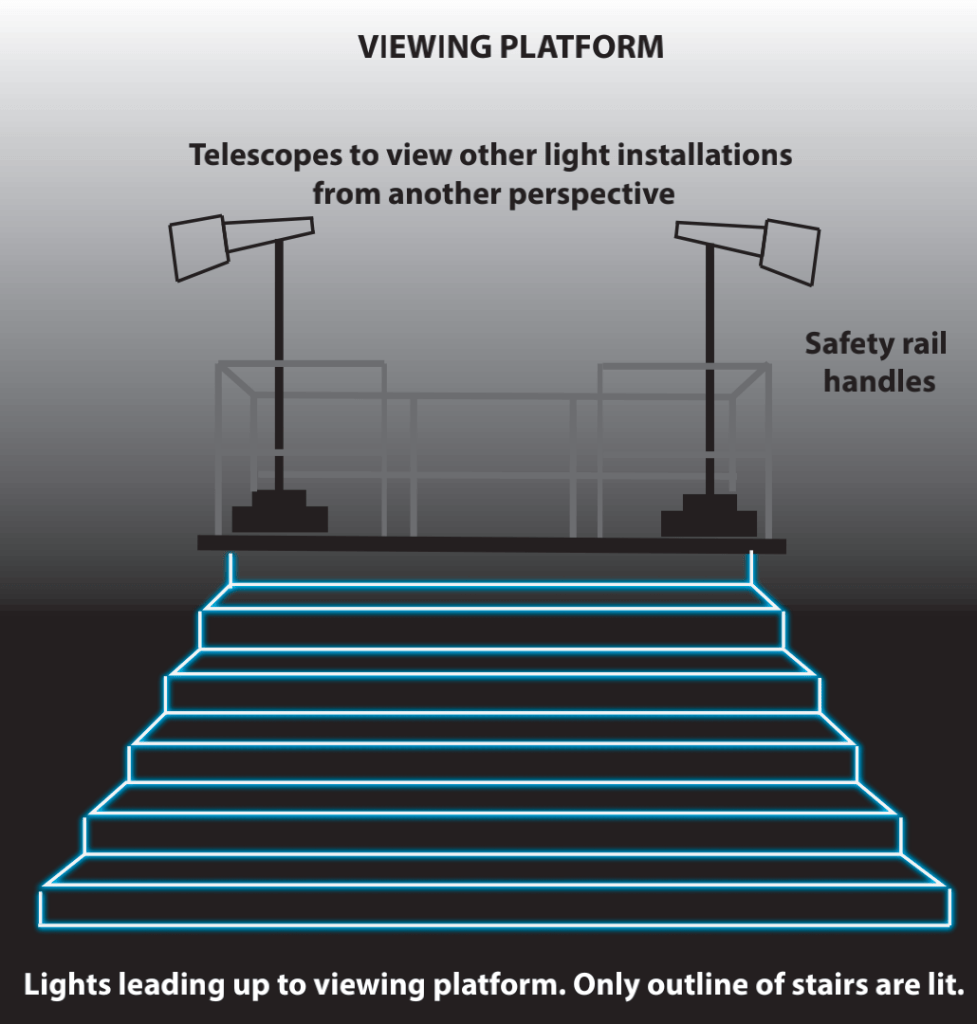
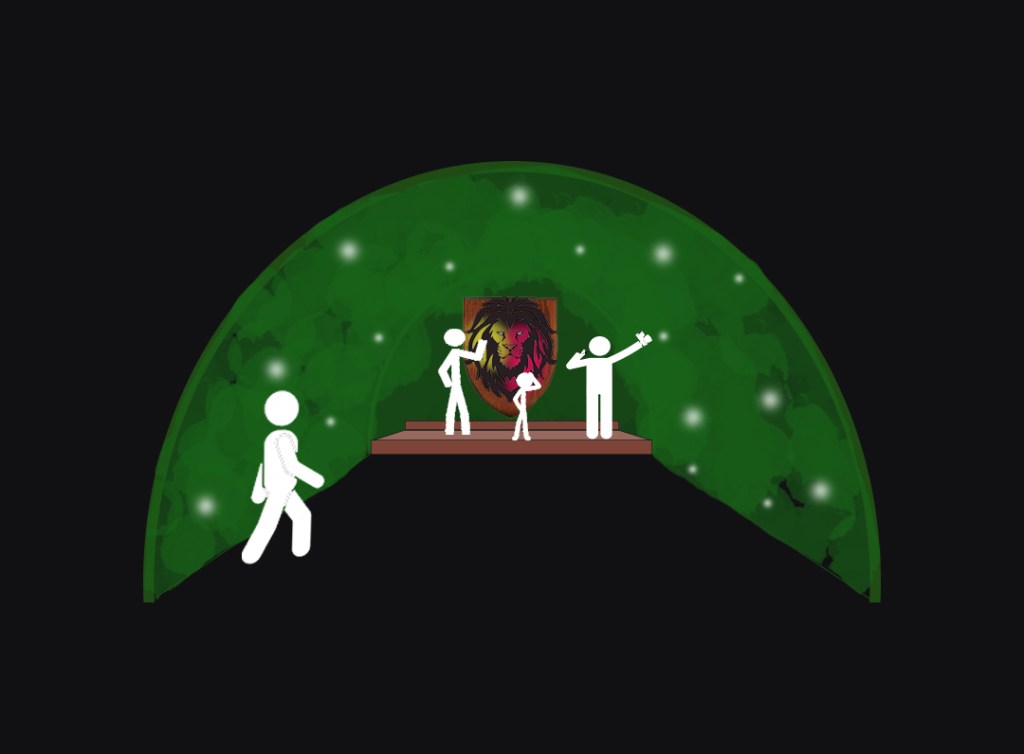
When considering the target audience, I thought about how (when I went to the festival myself) I saw many families with children who wanted to touch and interact with the installations. Continuing on this idea, I considered creating a motion sensor Lion head which would glow in different colors when touched. The dimensions of the head would be relatively big so many can gather around, and the colors could change depending on which part you touch. 

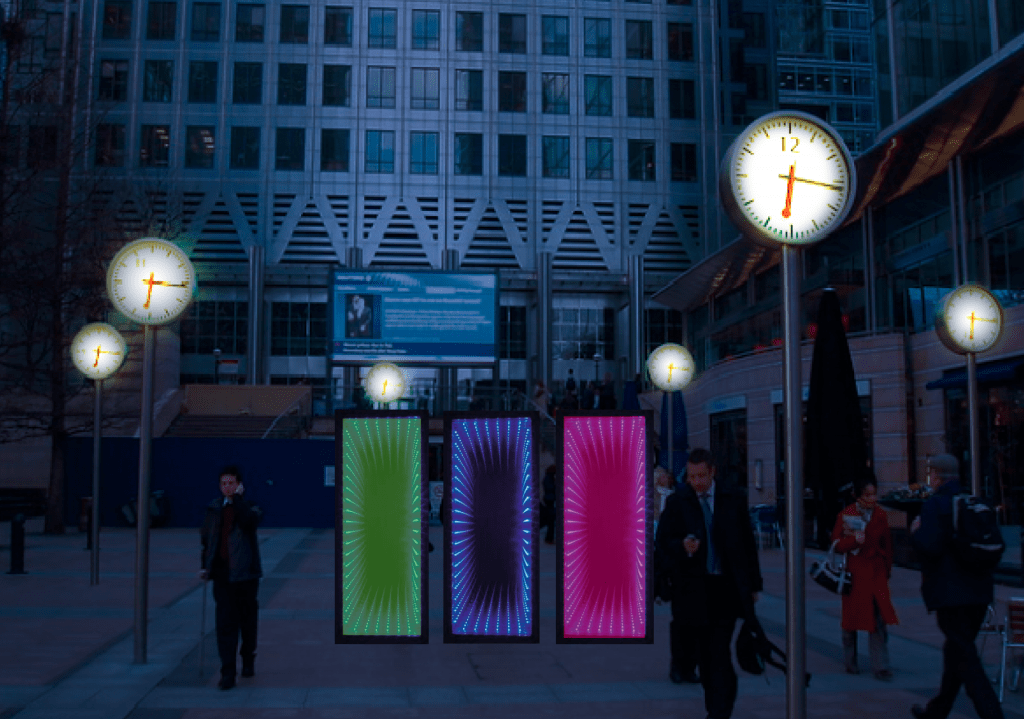
To present this idea, I found a 3D Lion head online and edited it using Photoshop, creating the interactive scene. I placed hands around the object to show the proportion of prototype and drew the glowing colors underneath to represent the cause and effect of the touch sensitivity. 

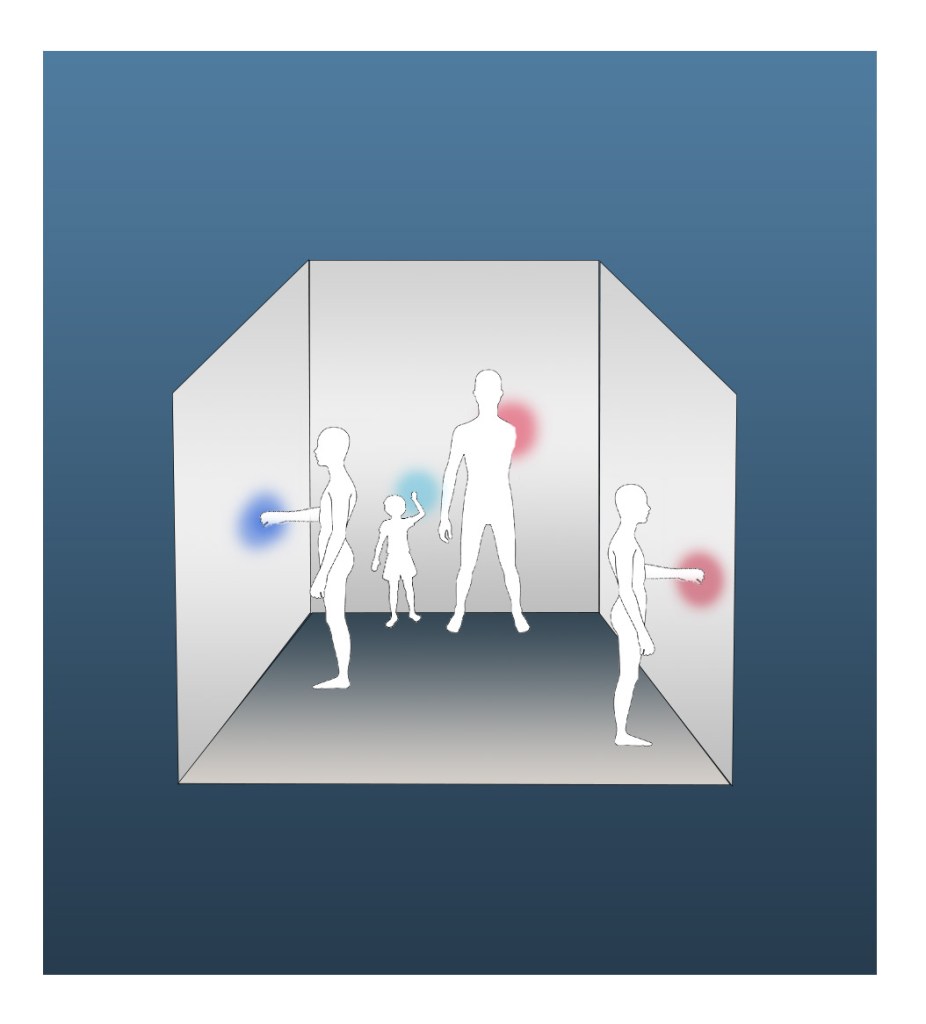
To further my development, I created another possibility for the installation using Photoshop. The idea for this piece stemmed from the previous idea, continuing the idea of a touch sensitive piece. When researching online, I came across an infinity room in Denmark using mirrors to create an ‘infinite’ effect. Ideas like this inspired me to create a heat sensor mirrored room. When the mirrors are touched, the mirror will glow in the touched area revealing a shade of color which changes depending on the temperature of your hand (blue – cold, red – hot). 

Productive Feedback

After having prepared the visuals, each member of the group pitched their two ideas to each other, and then afterwards to the class. The feedback sessions were constructive and encouraging to have, and helped us as a group move onto a final idea. The feedback for the Mirrored Room was mostly positive, however a classmate suggested that it might be very unhygienic (also considering children). Lion Head had great reviews and was rated the best idea, so we decided to run with it. Another idea from one group member was to include a donation point for the Food Bank in Canary Wharf. This was a great idea, so instead of using the Food Bank, we chose WWF (World Wide Fund for Nature) which is more relevant to our animal theme. 

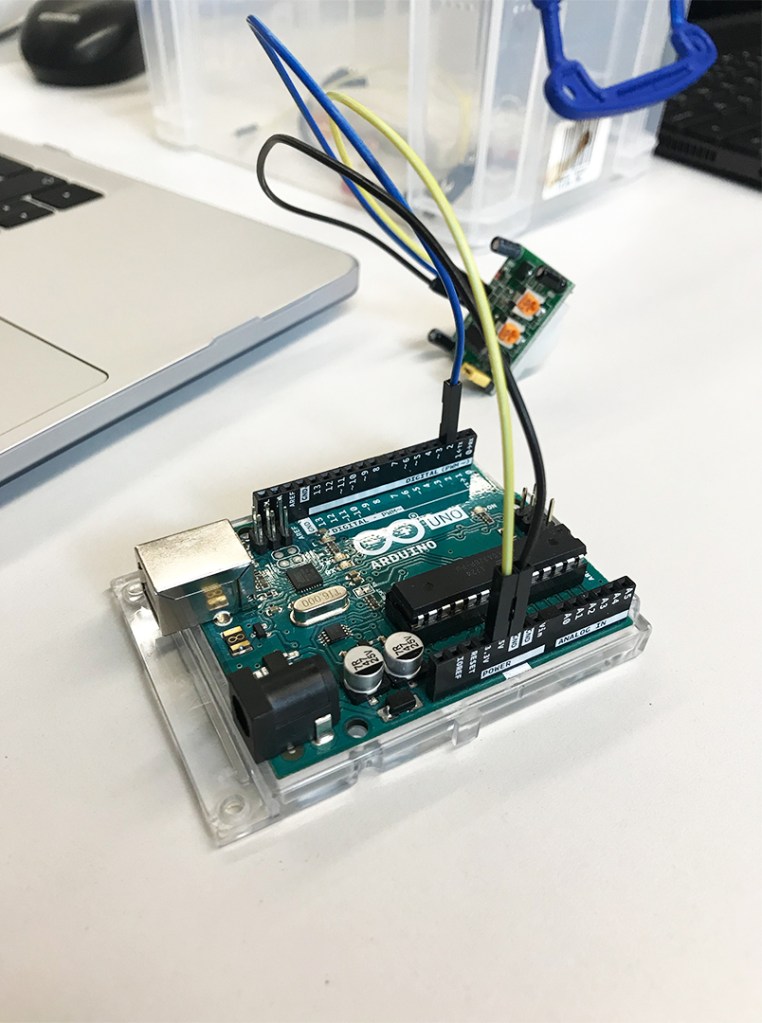
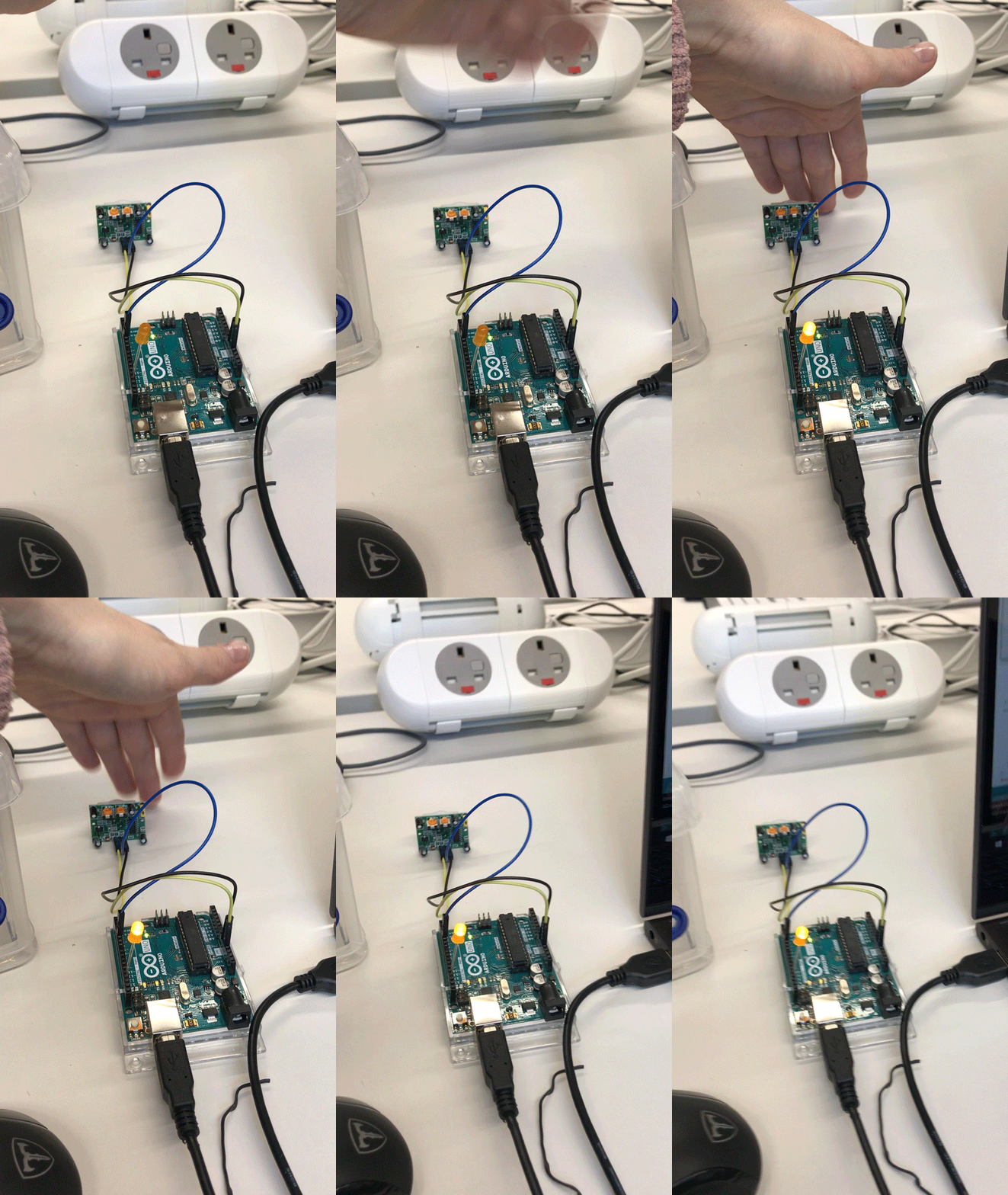
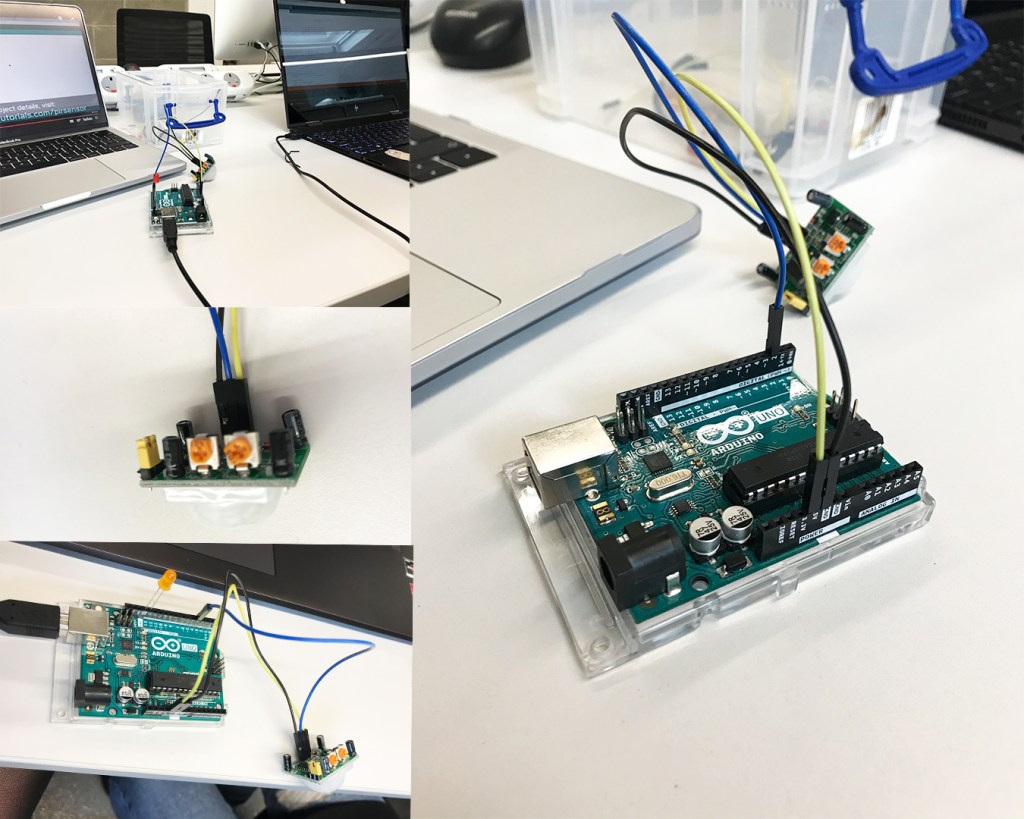
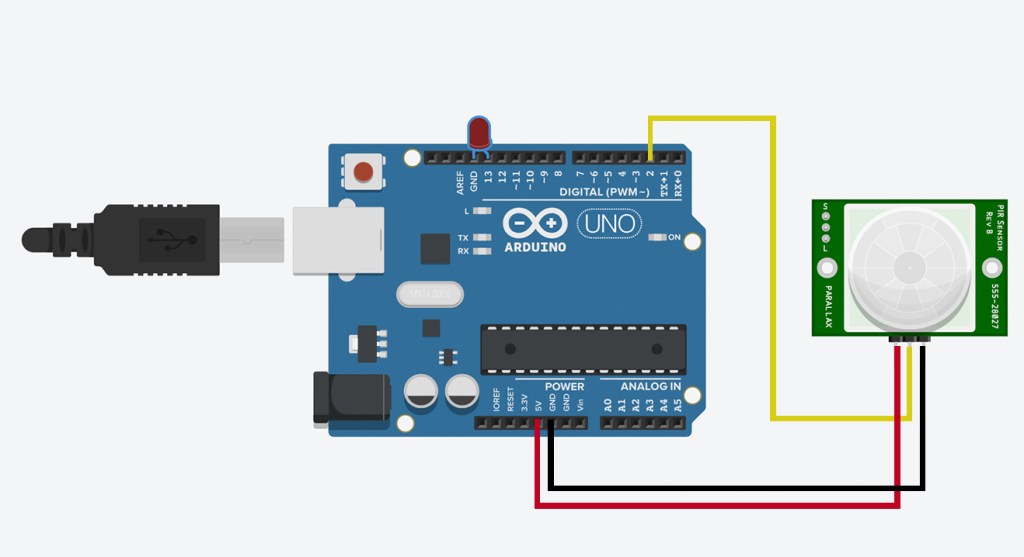
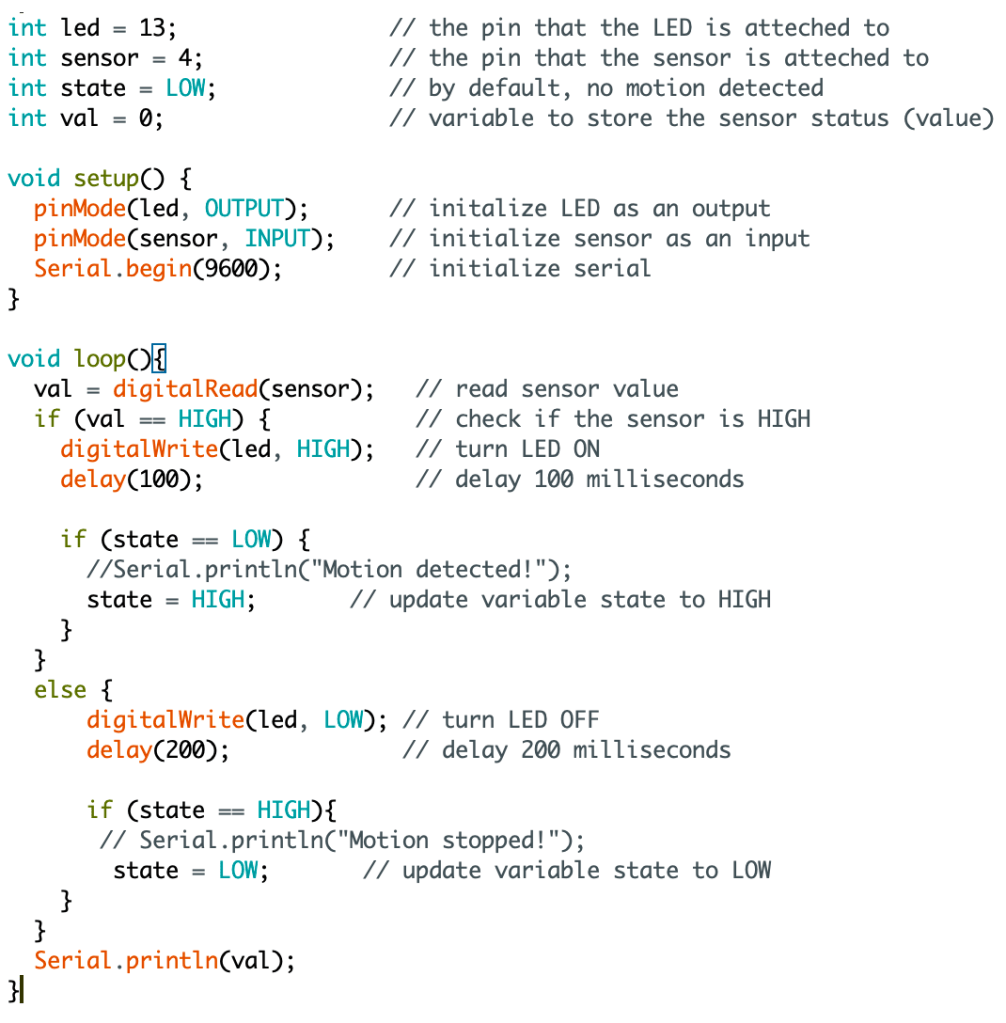
The Arduino had to have a motion sensor, so I searched online to find a similar code we could use to program the installation.  

The necessary items needed were: 1x PIR Motion Sensor (HC-SR501), Arduino UNO, 1x LED, Jumper Cables.  

The reference link we used – https://randomnerdtutorials.com/arduino-with-pir-motion-sensor/ 

Further Development/ Final Decision 

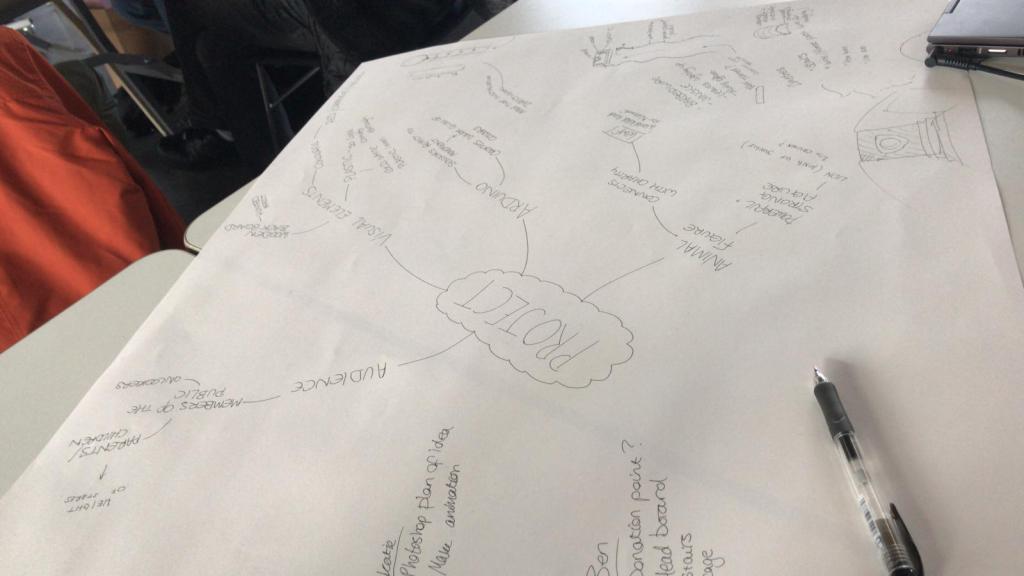
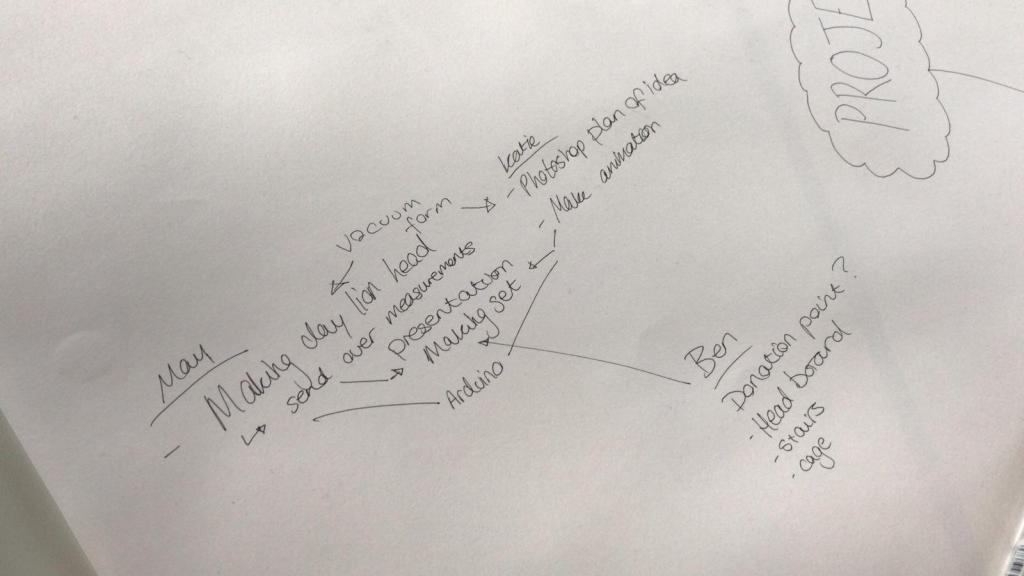
As a result of the feedback, we created as a group a big mind map to bring clarity to our vision, and then created further mood boards with gathered photos and ideas for the Lion concept. Ideas began to flow, so we decided to plan our next steps 

  • Booking rooms – 3D vac form Lion Head, woodwork workshop (wooden installations) 
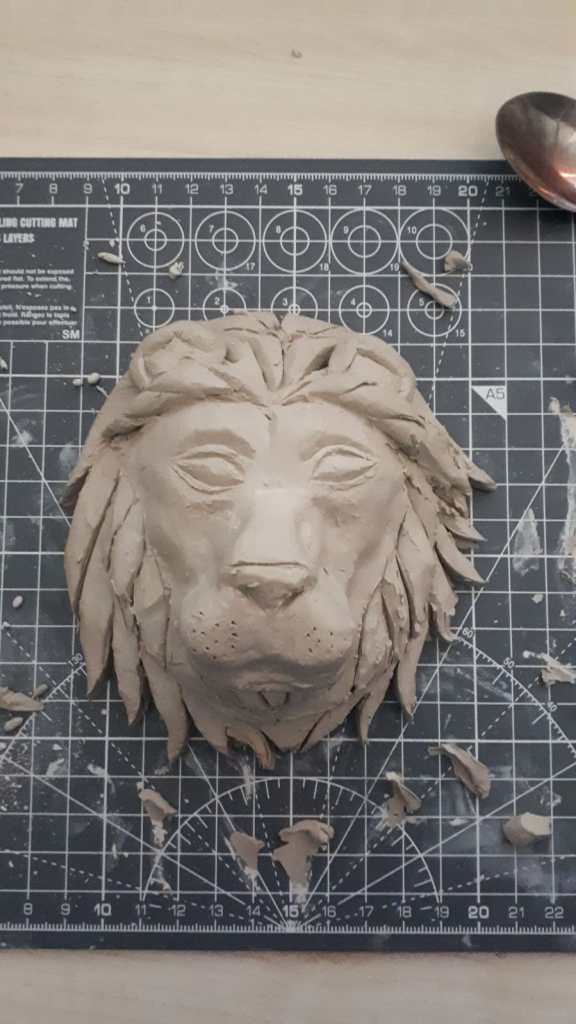
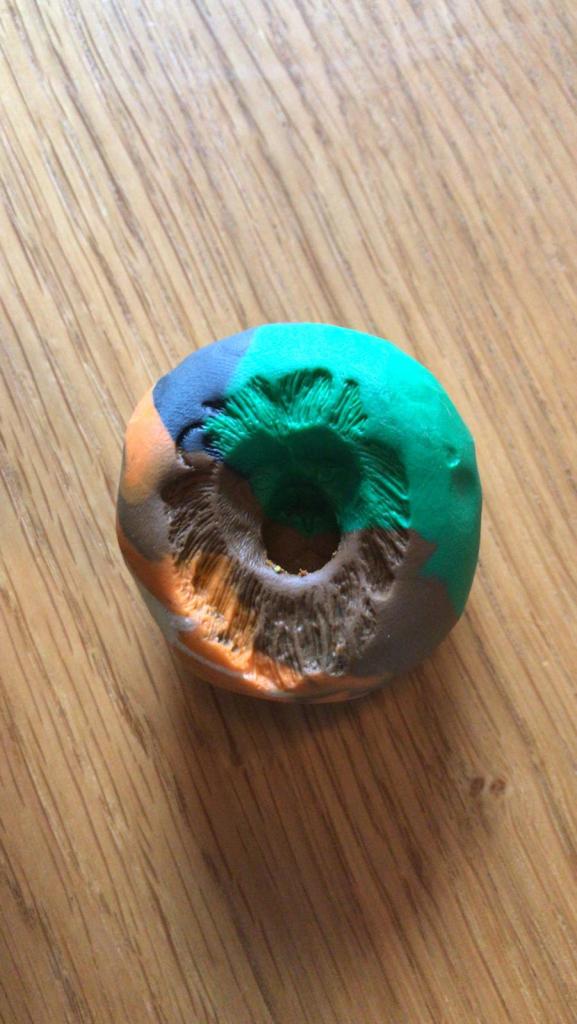
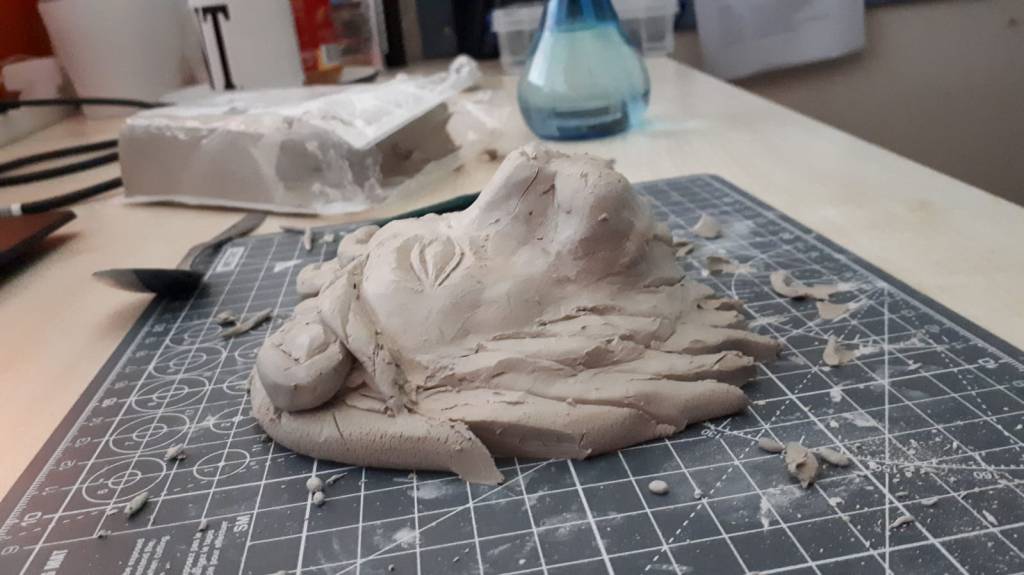
  • Creating lion head out of clay 
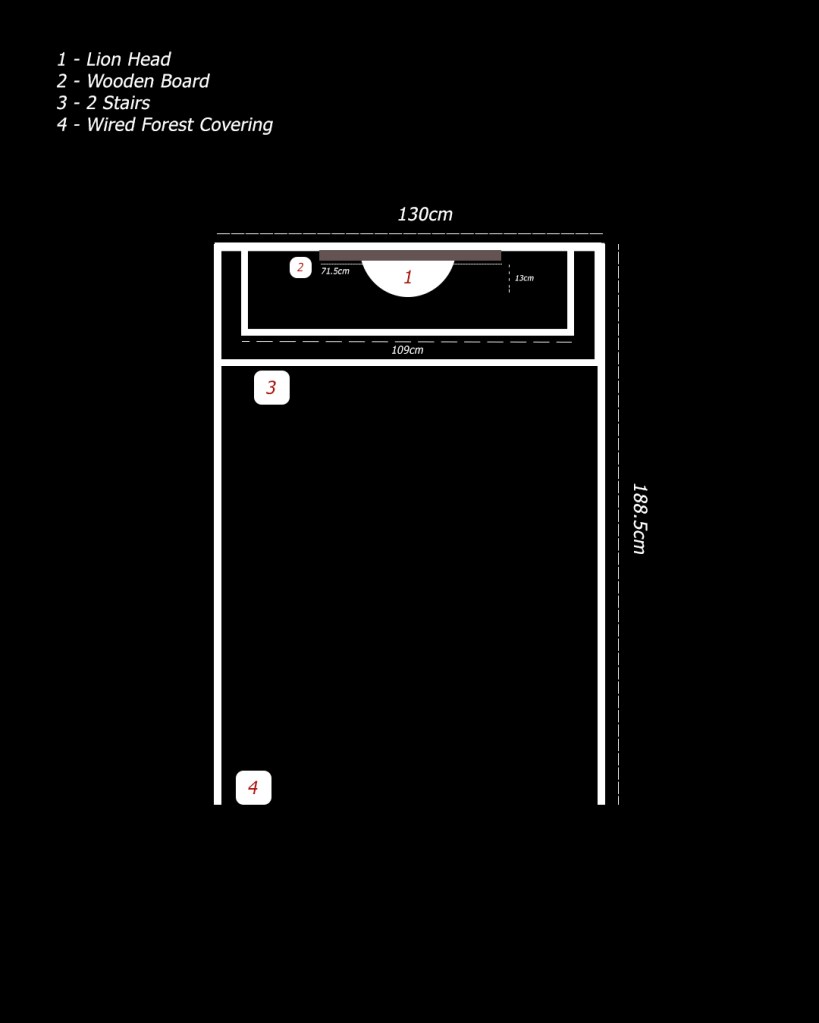
  • Photoshopping visuals – showing final product in environment/ annotated diagram 
  • Programming Arduino – further testing 
  • Visual of Arduino model diagram 
  • Putting together presentation (with 3D model) 

Working in a group meant we had to consider splitting the work-load between us, and working with our strengths. We also chose unfamiliar software and resources to work with in order to stretch our abilities.

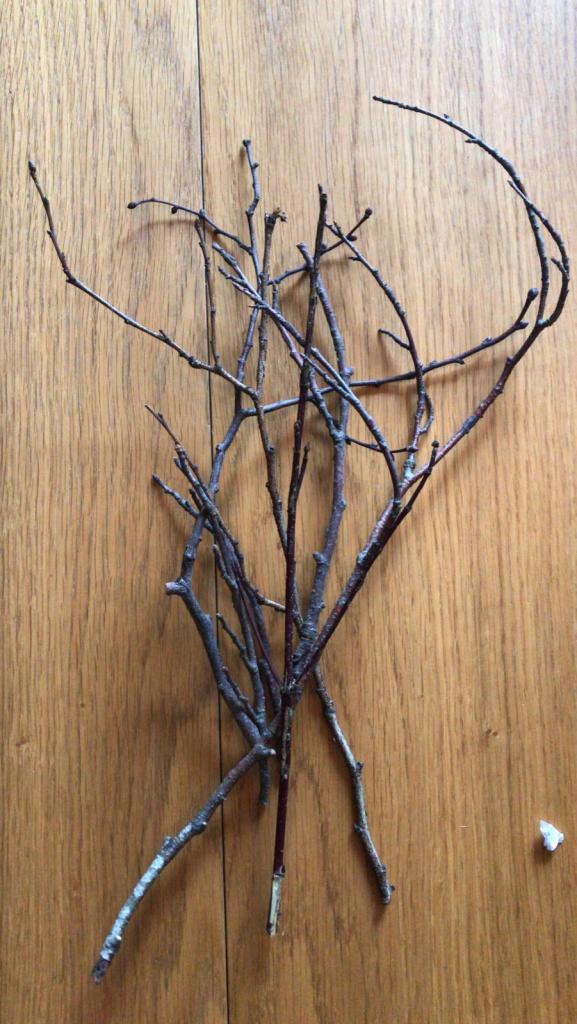
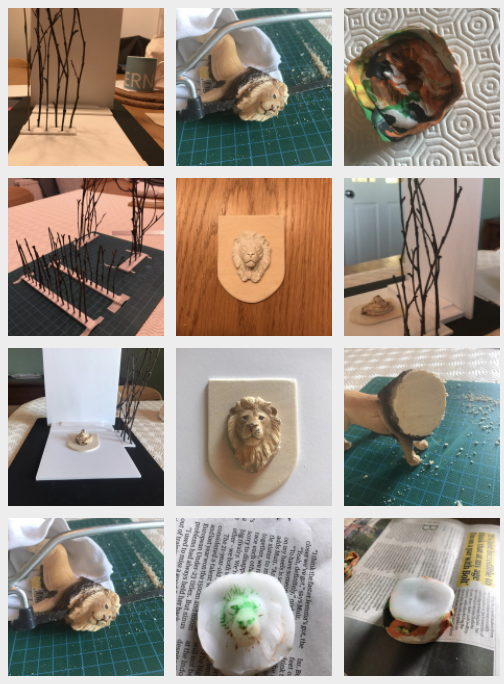
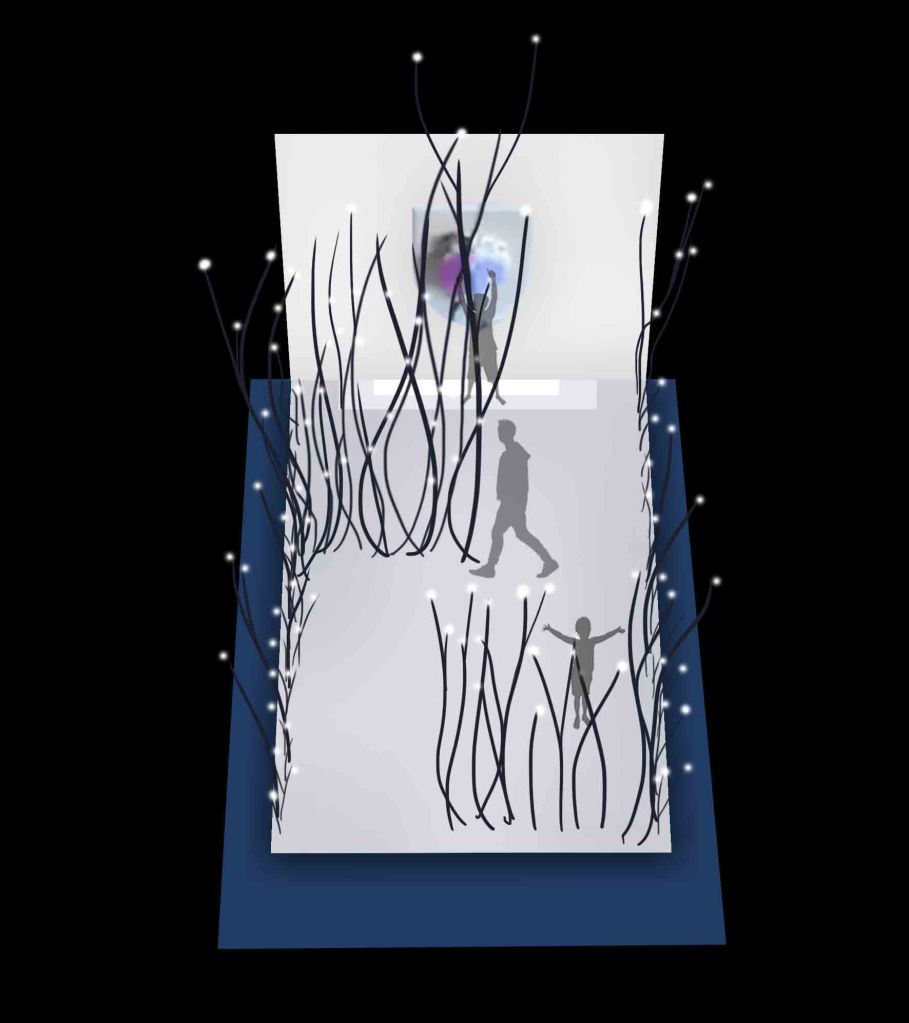
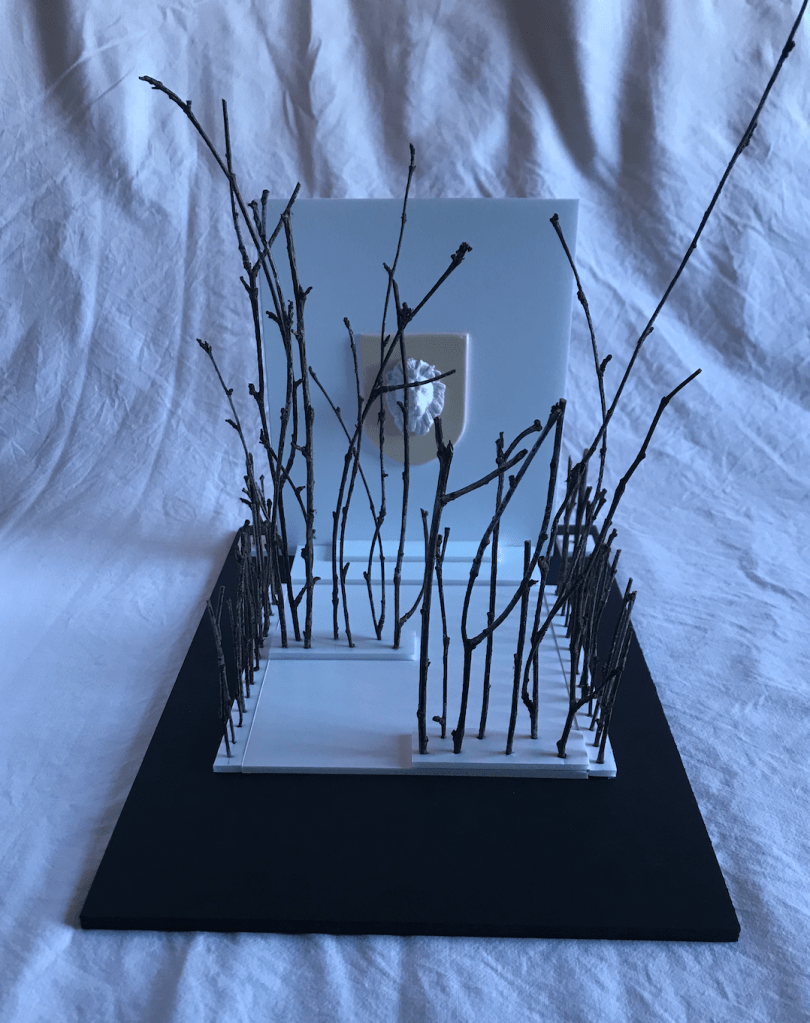
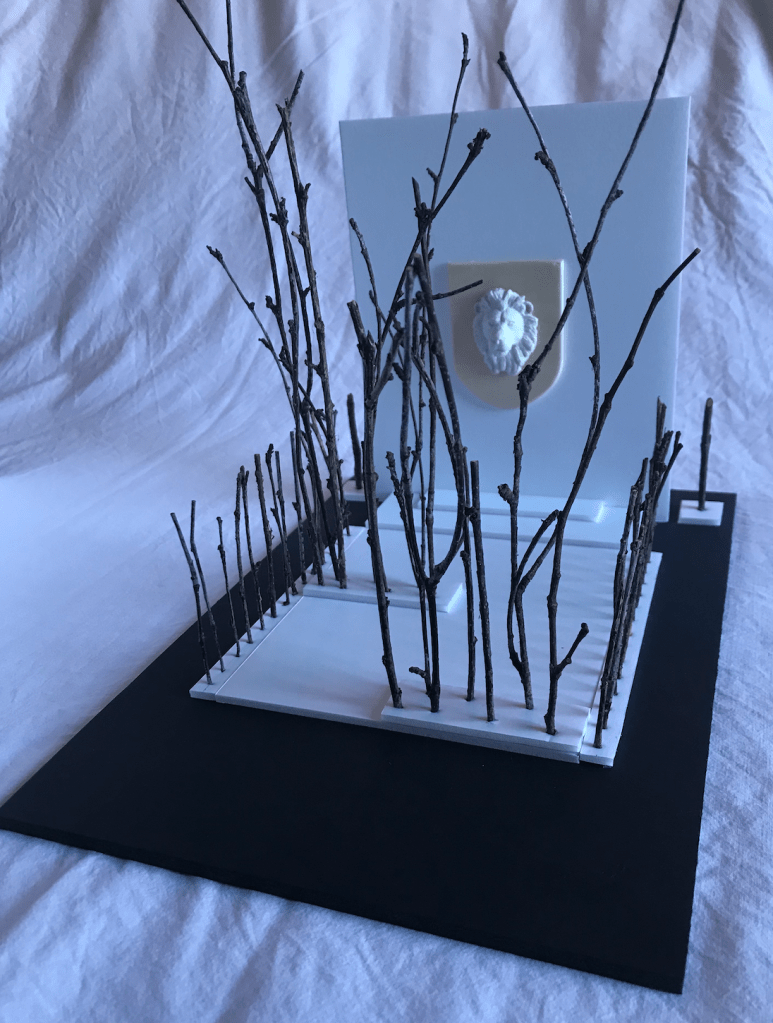
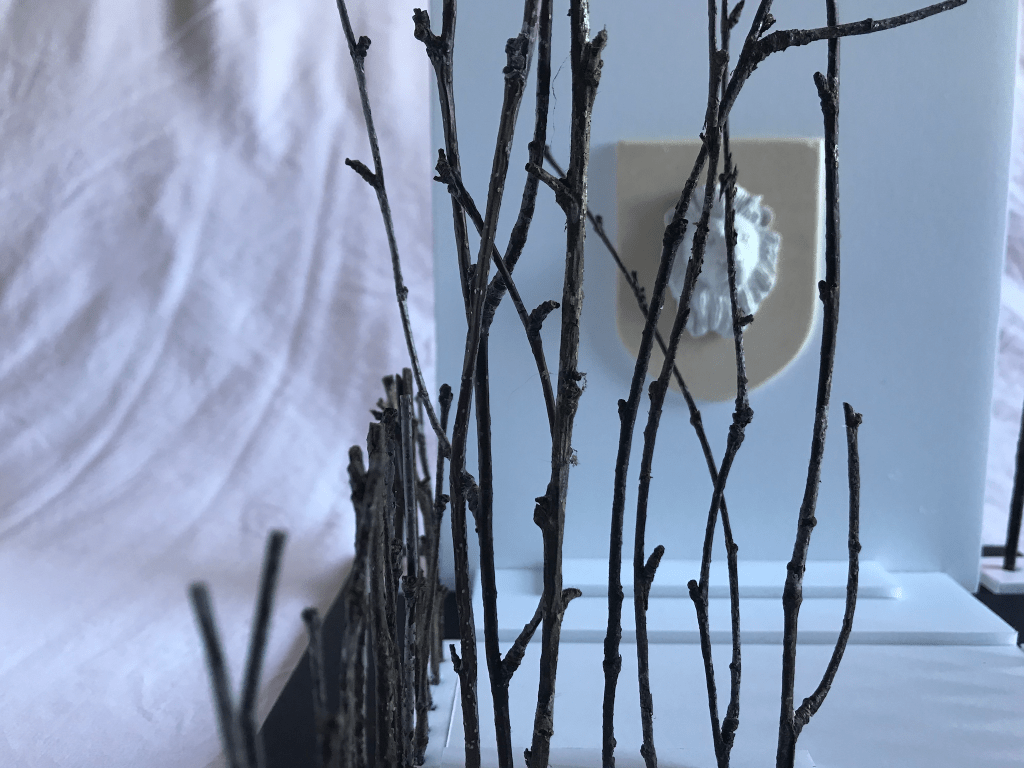
After having further feedback, we decided that there needed to have more ‘direction’ in our work – so having a pathway to direct the viewers. For a pathway, we initially thought of having a cage covering the lion to represent being in a zoo-like environment. Then after careful thought, another member of the team came up with the idea that we could use dark wooden trees to border the path instead of a cage. This idea creates a jungle-like journey for the viewer, and immerses them into a lions habitat. 

Due to the COVID-19 outbreak, our plans for working with Arduino and creating the full installation wasn’t possible. However we managed to experiment and find the correct code for the Arduino while the resources were available and program the circuit. We had to address some problems with the circuit (due to some problems with the elements) and have a technician work with us in order to resolve the issues. 

Final Code

Individually we created the clay head and set of the installation, photoshop visuals to support how the model would look, a 3D animated video showing what the walk through process would be like, and basic technical sketches such as creating the Arduino framework and functionalities. 

Finalising Installation/ Summary + Reflection 

By communicating over chats and video-calls, we brought all of our work together and created a presentation with the high-lights of our project. Our project is bright, modern, creative and interesting. We believe that this installation can be considered by the festival, and we are considering to apply for the year 2021. With the issues from the COVID-19 outbreak, we were unable to fully complete our 3D model, however the idea is very strong and the development shown expresses this in its entirety.  

To conclude, this project has been an eye-opening experience. I have enjoyed working with my team-mates, and despite the circumstances we have managed to create a strong project with an interesting concept. 

The Winter King installation is colourfulinteractive, and visually beautiful. It is accessible for all members of the public and has the potential to be a key part in the Canary Wharf Winter Lights festival 2021. 

Extra Project Links (Group References)
http://www.artnet.com/artists/iv%C3%A1n-navarro/
http://www.artnet.com/artists/dan-flavin/
https://www.designboom.com/art/firewall/https://vimeo.com/54882144
https://www.theguardian.com/society/2019/dec/23/a-tale-of-two-cities-londons-rich-and-poor-in-tower-hamlets
https://www.theguardian.com/us-news/2018/nov/28/new-york-fearless-girl-charging-bull-wall-street
https://www.theguardian.com/artanddesign/2015/feb/26/banksy-gaza-palestine
https://www.trendhunter.com/slideshow/interactive-light-features
https://www.vice.com/en_uk/article/z4q384/walk-through-a-digital-house-of-mirrors-in-this-interactive-installation
https://kuflex.com/filter/photobooth/Symbiosis
https://www.tate.org.uk/whats-on/tate-modern/exhibition/unilever-series/unilever-series-olafur-eliasson-weather-project-0
https://www.iowapublicradio.org/post/photos-brighten-dreary-winter-nights-festival-lights-london#stream/0
https://www.alamy.com/london-britain-22nd-nov-2018-a-lion-shaped-light-installation-is-seen-during-the-launch-of-christmas-at-london-zoo-at-zsl-london-zoo-britain-on-nov-22-2018-the-christmas-at-london-zoo-is-held-here-from-nov-22-2018-to-jan-1-2019-during-which-over-one-million-pea-lights-200-visual-displays-including-giant-illuminated-animal-installations-will-provide-visitors-a-magical-after-dark-experience-credit-han-yanxinhuaalamy-live-news-image225793083.html

Manifesto on Silence

What does silence mean to you? 

If you can answer this question, you have already started the journey. 

Questioning the silence in our lives creates an endless cobweb of discovery, trapping our thoughts and gathering up our deepest understanding of consciousness. 

Many people would instantly connect the concept of ‘meditation’ with silence, which is perfectly natural. However, if we simply take the raw word and meaning of ‘silence’ and analyze its existence/ impact on our lives, we might just unravel more than we think. 

Coming from a scientific standpoint, researchers following the Attention Restoration Theory have stated that silence has many positive affects on our brain and general health. Essentially the brain heals itself in a low levelled sensory state, recovering its cognitive abilities.

You might be thinking… ’silence is boring’ or ‘a waste of time’, but actually our productivity can be increased and improved by including a short time in silence in our daily routines. 

‘Studies show that noise has a powerful physical effect on our brains, causing elevated levels of stress hormones. According to the Attention Restoration Theory, when you are in an environment with lower levels of sensory input, the brain can ‘recover’ some of its cognitive abilities.’

Azriel Reshel – Author at Uplift

‘Soon silence will have passed into legend. Man has turned his back on silence.  Day after day he invents machines and devices that increase noise and distract humanity from the essence of life, contemplation, meditation… tooting, howling, screeching, booming, crashing, whistling, grinding, and trilling bolster his ego. His anxiety subsides. His inhuman void spreads monstrously like a gray vegetation.’  

Jean Arp – Sculptor/ Painter/ Poet

Research 

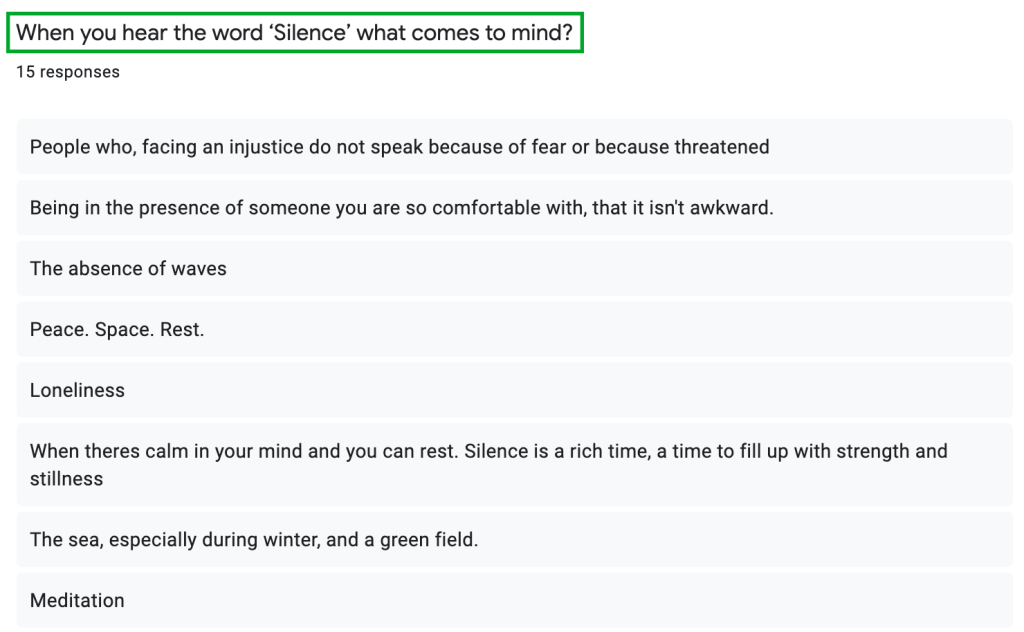
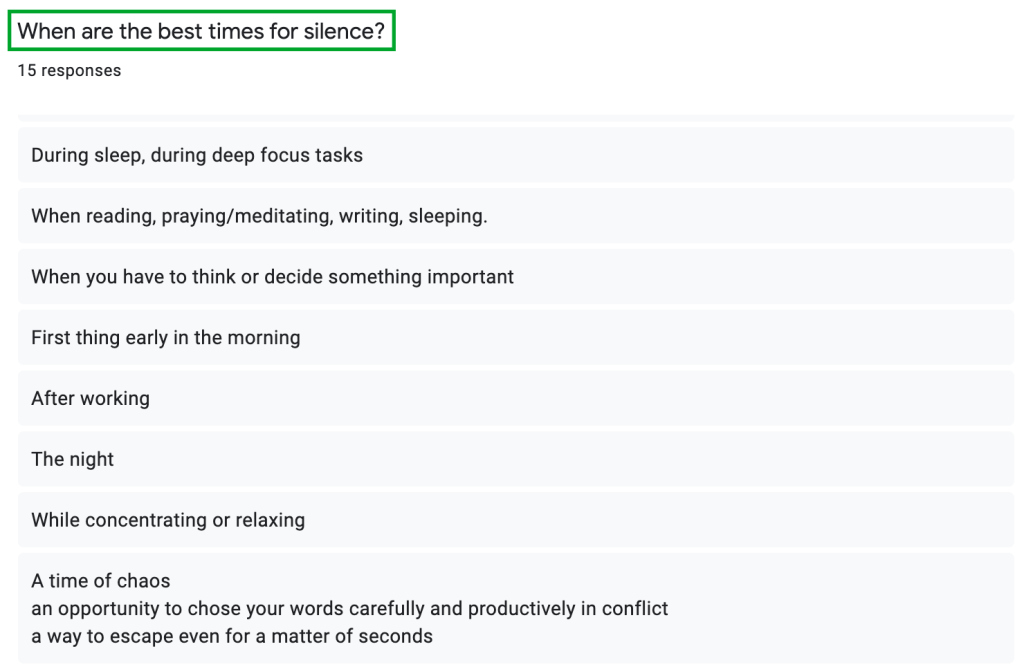
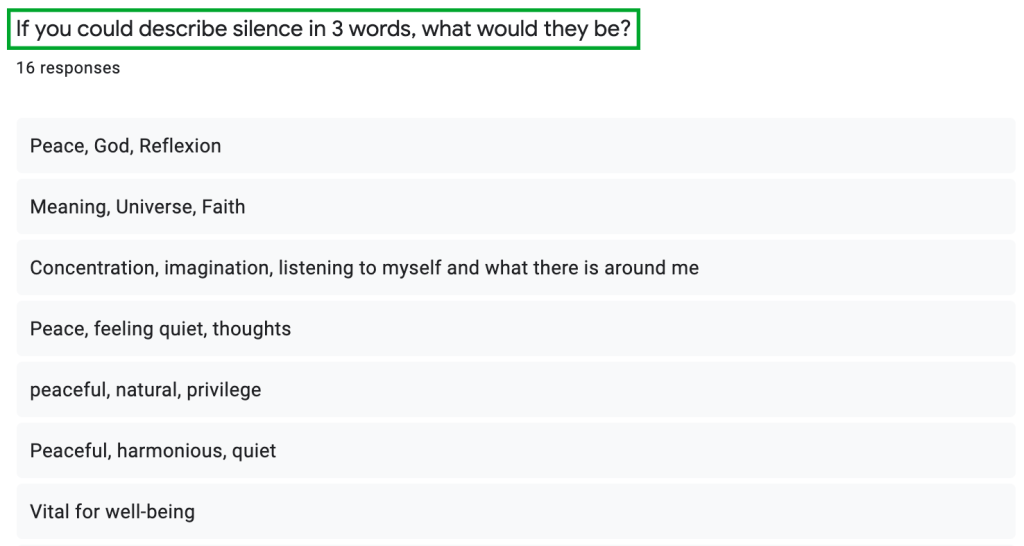
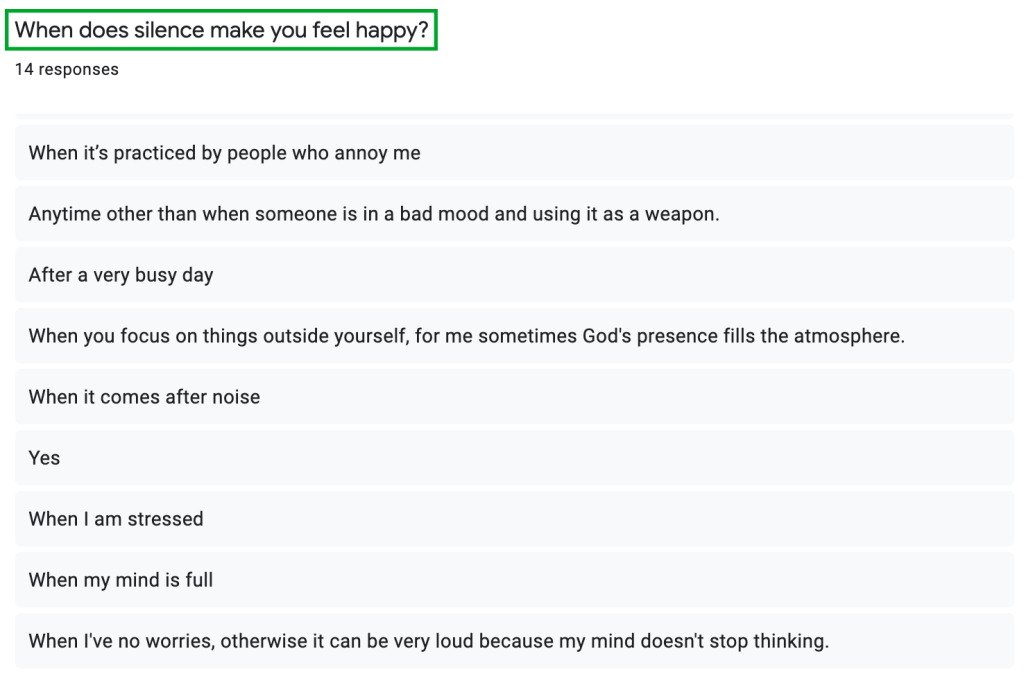
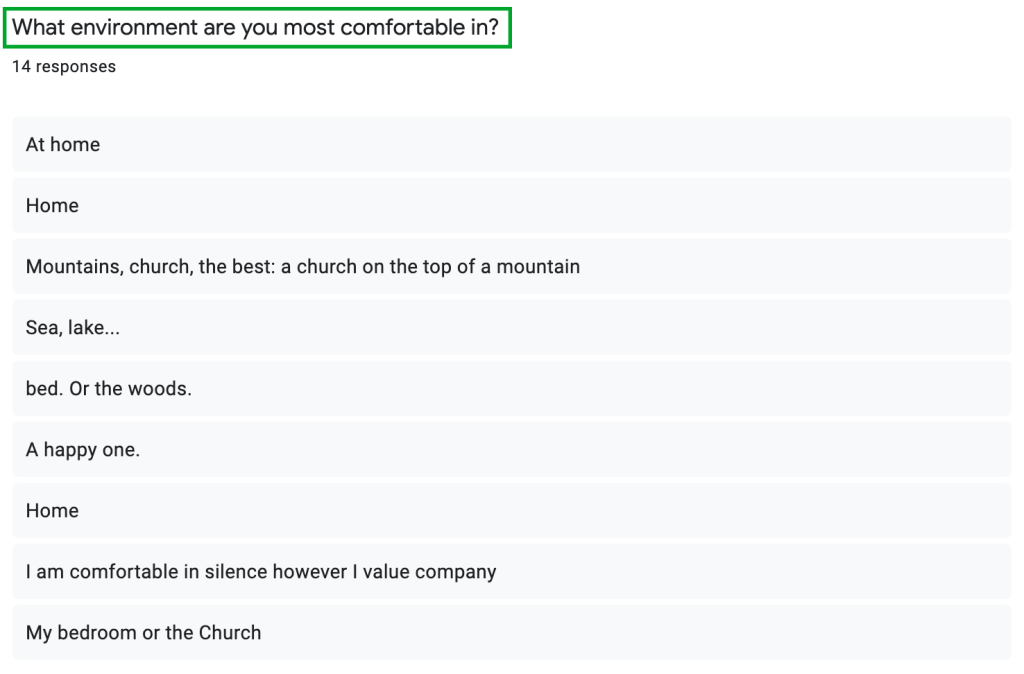
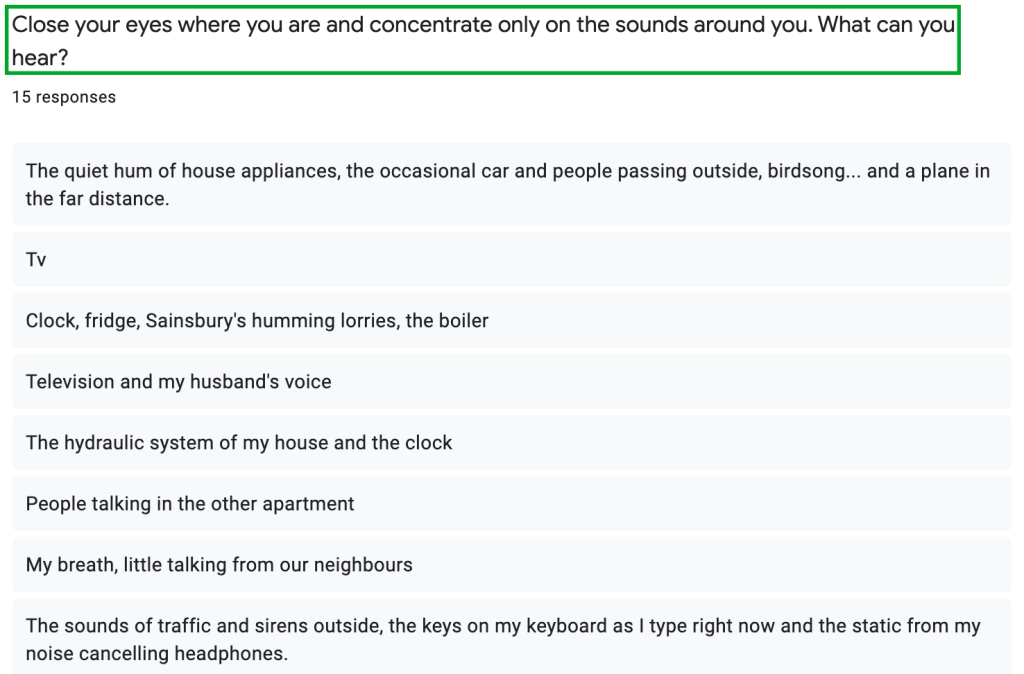
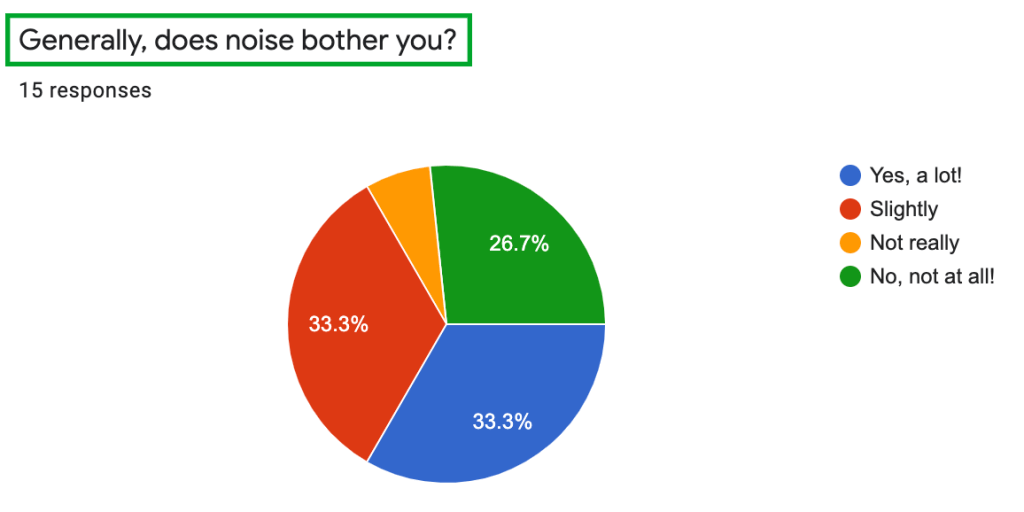
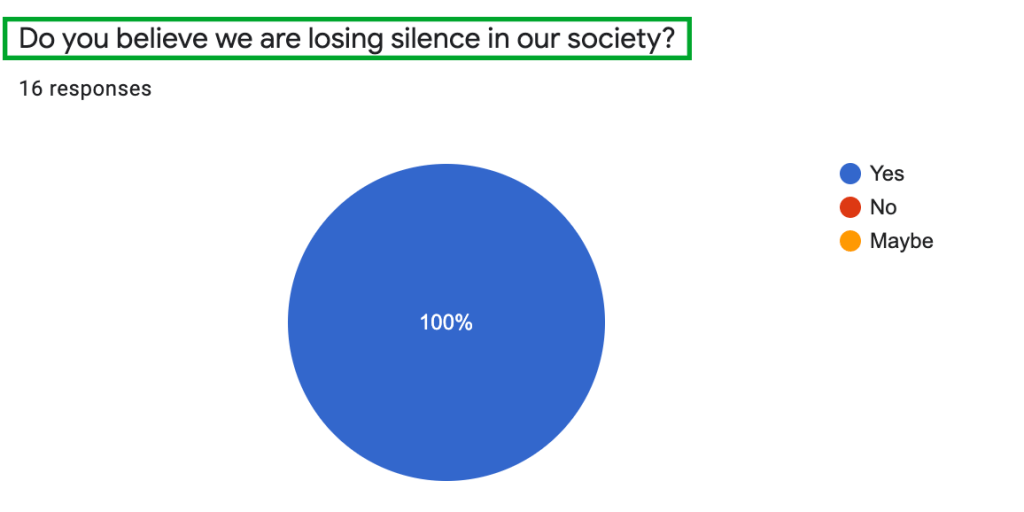
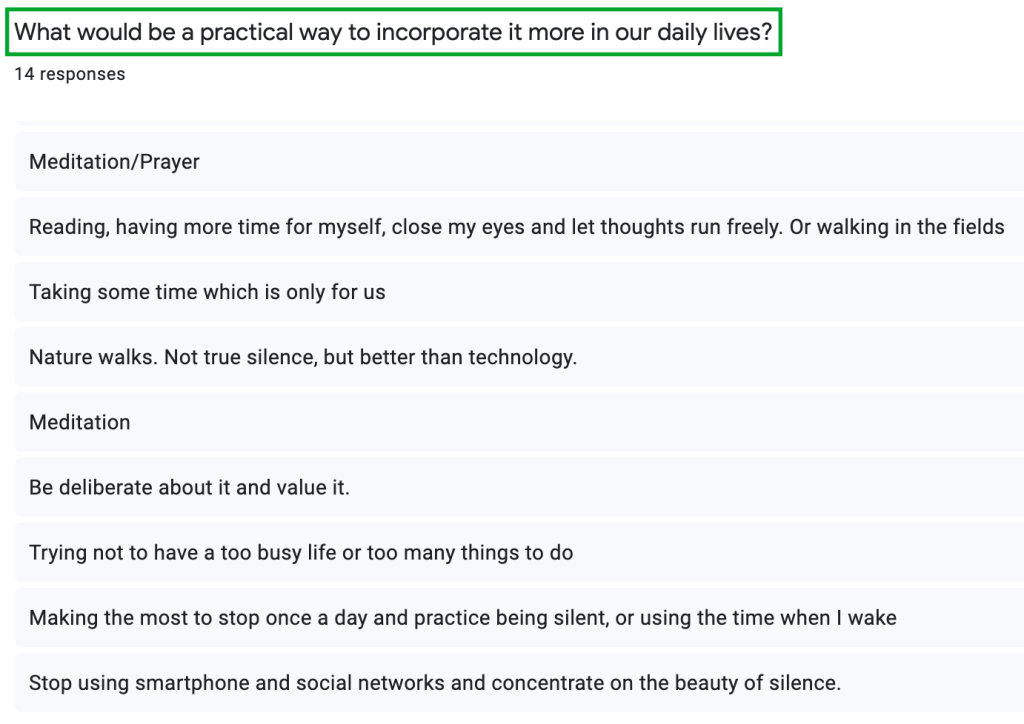
As a part of this manifesto, I wanted to understand what other people thought about silence. To do this, I created an online survey with multiple questions and a test (which involved staying in silence for 5 minutes). 

Survey – https://forms.gle/cfYBSRBMuVVVod3p9  

The Results

The motive behind this questionnaire was to initiate the discussion of what silence means to us and to explore the mindfulness behind it of it. 

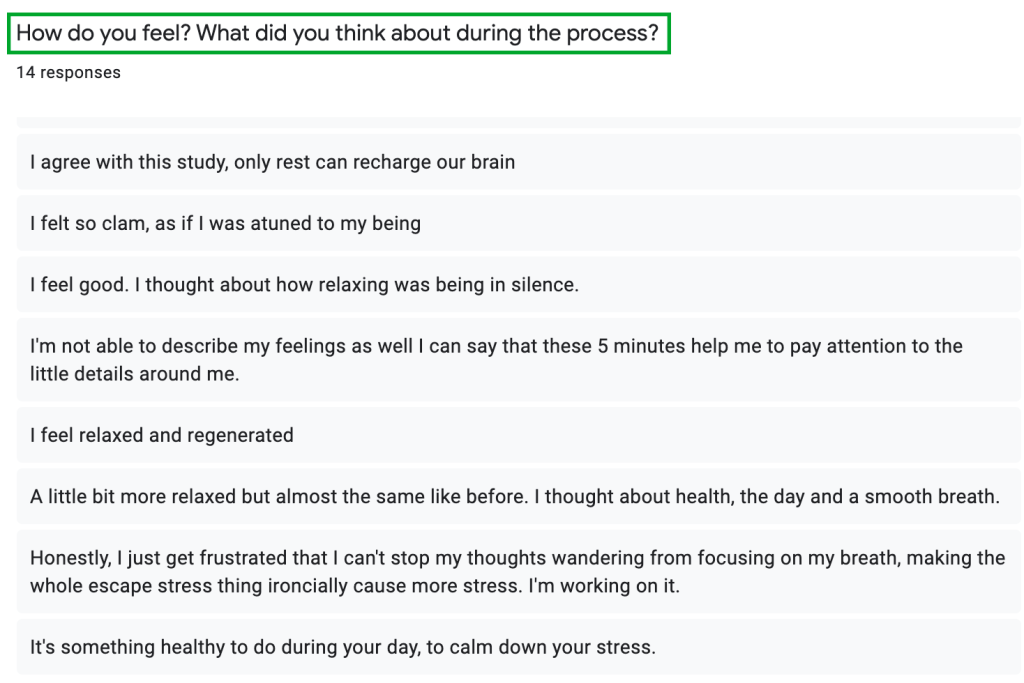
5 Minute Test 

The participants were told to… 

  • Find a silent place 
  • Get rid of any distractions 
  • Close your eyes and enjoy the silence (calm down any initial frantic thoughts and listen, remember to breath in and out slowly) 
  • Finish with a deep inhale and exhale 

Keeping in mind that this test isn’t rooted in meditation, only examining our reaction to silence, many fed back saying how meditation came to mind when taking the test. 

This survey contains very insightful data, as we can see that the majority of people find silence peaceful, but also many fear it due to the worry of listening to the reality of their thoughts etc. 

Even as I am writing right now I can hear many different things such as scraping noise outside, crashing of dishes downstairs, people talking, the tapping of my fingers against the keyboard. All these little sounds create the reality in our minds today. When they are completely taken away, it’s down to us to deal and manage with the silence. 

Personally I have a huge struggle to find silence in my day-to-day life due to living in the city, and living with other people. But when I manage to find it, I treasure it as much as I can and feel a cleansing from the experience. 

Video Documentary 

To continue this manifesto, I created a 10 minute video documentary focusing on the argument of silence. A few of the participants who took the questionnaire were asked to take a short clip of themselves giving their opinions on silence and how it affects their everyday lives. Due to the COVID-19 outbreak, the video footage wasn’t taken by myself but by the participants, so this meant they also could feel more relaxed and free to talk about the topic in a familiar environment. At this point the outbreak in Italy was very high, so many were in self isolation. Therefore some of the participants were able to really immerse themselves into thought on the discussion, and spent quality time preparing what they wanted to say. 

Behind the Scenes

Creating this video has been an insightful experience. I used Premiere Pro to create an engaging video, and used audio clips and eye-catching images to give a narrative to the manifesto. When editing the video clips of the participants talking, I had to consider which parts were the most important and use the clipping tool to make the flow and momentum more consistent. 

I main purpose of this piece is so that you can also reflect on your opinion and sentiments on this topic. The video is informative, but ends in a question – reflecting everything back to you as the audience. 

Written Manifesto 

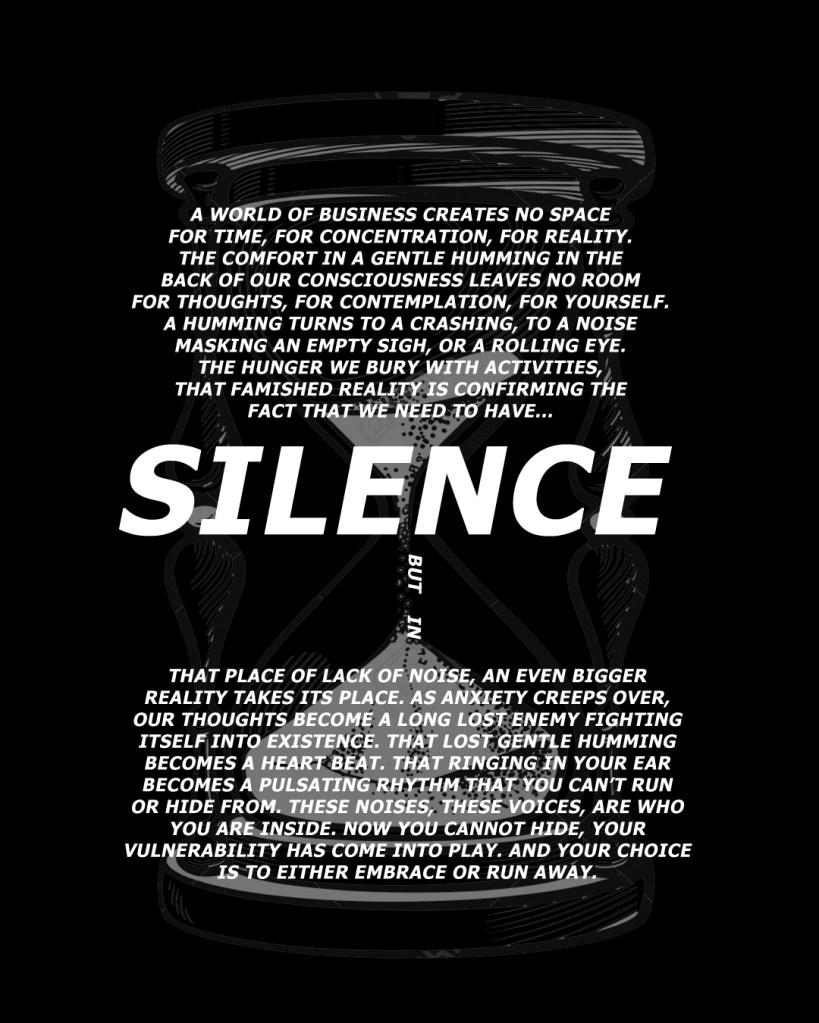
A world of business creates no space
for time, for concentration, for reality. 
The comfort in a gentle humming in the 
back of our consciousness leaves no room 
for thoughts, for contemplation, for yourself. 
A humming turns to a crashing, to a noise 
masking an empty sigh, or a rolling eye. 
The hunger we bury with activities, 
that famished reality is confirming the 
fact that we need to have… 

Silence. 

But in that place of lack of noise, 
an even bigger reality takes its place. 
As anxiety creeps over, our thoughts become 
a long lost enemy fighting itself into existence. 

That lost gentle humming becomes a heart beat. 
That ringing in your ear becomes a pulsating 
rhythm that you can’t run or hide from. 

These noises, these voices, are who you are inside. 
Now you cannot hide,
your vulnerability is what’s come to life. 
And your choice is to either embrace or hide… in the silence.

This is a written piece that I created at the beginning of the project when exploring my initial thoughts on silence. When creating this project, the biggest battle was to find a place without noise.

Do you ever have the sensation there’s too much noise around us? 

If you listen carefully, you can hear a constant droning of noise in the background. Many of us are used to naturally tuning out noise, which could have been due to having a noisier, and busier upbringing. That tolerance and disinterest for it could be seen as a god send, or instead an insensitivity. 

The constant sound of chattering, and noise coming from the TV can make us feel less lonely and more accompanied. Whereas others of us, like myself, find the constant humming slightly irritating, and at high noise levels somewhat unbearable. Many go to lengths of buying noise-cancelling headphones, or purposely finding a silent space to escape to in order to find some kind of peace. 

Noise experts state that noise causes stress and damages our health. Article ‘Science Daily’ explains how noises from aircraft or traffic while we are sleeping can increase hypertension (even if in deep sleep). This means noise could act as a ‘silent’ killer in our society. 

“I think 99 times and find nothing. I stop thinking, swim in silence, and the truth comes to me.” 

Albert Einstein 
Extreme Examples of Living in Silence

In history, there have been groups of people who chose to live in silence.

The Desert Fathers, from around the third century AD, were Christian monks/ hermits who lived primarily in the Scetes desert in Egypt. The desert they inhabited was one of the most silent places in the world. The constant silence and dry, warm environment it has would be seen as a challenging place to live nowadays. These Desert Fathers prayed and seeked inner peace centered in their love of God. It drove their whole sense of being, and they are known to have been welcoming, friendly people. The Desert Fathers by Helen Waddell talks about this very society and discusses how living in silence could act like in our lives today. 

If we could cut out the unnecessary noise in our society, such as using silent electric cars, or creating machines with lower noise immission, we might begin to see our effectivity and health improve. 

If you can, try to stay in silence for 5 minutes, and see how it impacts you

References + Media Used 

https://www.youtube.com/audiolibrary/music?nv=1
https://pixabay.com/videos/search/running/
https://docs.google.com/forms/d/1pw6jtTAuvzS2GEy0eOJrkej3Nf19ZJg4jglPiflAjZU/edit#responses
https://upliftconnect.com/science-says-silence-is-vital-for-our-brains/
https://www.oxfordlearnersdictionaries.com/definition/english/silence_1
https://www.sciencedaily.com/releases/2008/02/080213090530.htm
https://upliftconnect.com/science-says-silence-is-vital-for-our-brains/
https://www.lifehack.org/377243/science-says-silence-much-more-important-our-brains-than-thought
https://en.wikipedia.org/wiki/Attention_restoration_theory
https://www.premiumbeat.com/blog/free-ambient-background-tracks/

Instagram Video Campaign

Introduction

For this project we had to create six 4 second videos which would be posted on Instagram to advertise our course ‘Creative and Cultural Industries’ i.e. ‘CCI’. The videos had to represent the course in its best form, using a theme to express its core values.

The visuals needed to be vibrant, engaging and pleasing to our target audience. Our viewers are future national and international students who are interest in studying the arts at university. In the initial brief for the project, the word ‘creativity’ was repeated often, so our ideas had to be bold and follow an imaginative theme.

Video Specifications

Each video had to have a unique art direction and animation technique. As a reference, we were given the ‘Skittles Pride Day campaign: https://blinkink.co.uk/projects/skittles-compilation‘. The Skittles videos are wild and memorable, which consequently sparked initial ideas for our project. Each video needed to be one of the following: stop motion, cartoon animation, motion graphics, animated collage, motion type, etc.

Group Selection/ Brainstorming Process

As a class we were given the choice to work alone or in small groups of two/ three. When considering potential work partners, I thought about the requirements given and how I’d like to work with new people to explore fresh perspectives etc. I chose to work with two teammates from the class who proved to have a proactive mentality and a number of interesting initial ideas.

To begin, we had a meeting to brainstorm our thoughts and rough plans for the project. Our lecturer instructed us to work on the logo and slogan for the project, so we spring-boarded from this and ideas began to flow.

The Theme/ Slogan

After filling pages of possible routes to take, we decided to follow the theme of ‘growth’. Words like ‘growth, creativity, exploration, boldness, culture and risk’ were discussed, but we believed to the concept of growing was the strongest topic to explore. In this course, we are having to grow and to step out of our comfort zones to complete tasks and assignments. Creativity is the key to CCI, and the willingness to grow comes with it.

Continuing on from this, our group also mentioned how creativity comes with being bold and ‘out there’, so we wanted to include another word to compliment this idea. The world ‘wild’ came into mind, as we thought about flowers and growth. Flowers are wild and are difficult to tame, they are beautiful and unique. They also need their space, and time to bloom. We began to write the many possibilities for our slogan with these words and eventually we concluded with ‘Grow wildly’. The slogan is short, bold and represents our depiction of CCI.

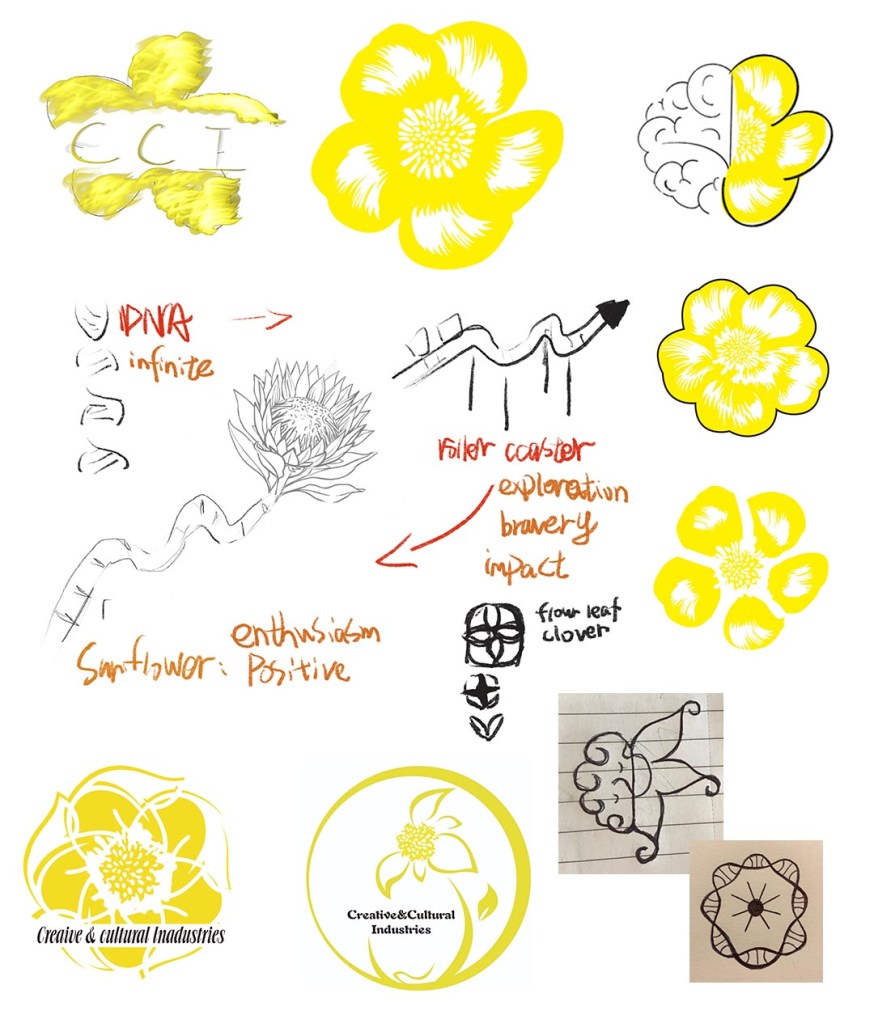
Logo ideas

Following on from deciding on our main theme and slogan, we drew our ideas for the project logo. Considering the theme of flowers, growth and being wild, we researched online/ in books for artists who have explored the ideas.

On my side of the research I looked at references from websites such as https://99designs.co.uk/inspiration/logos/flower and https://www.freelogodesign.org/logo-ideas/Floral-logo-design.

The artist ‘Rotred’ on 99designs has created the logo ‘sentiment’ which is a very simple yet effective design. The colour orange is eye-catching and visually pleasing, which is what we wanted for our logo. For the artist alexmyth™, I appreciated the positioning of the text with the logo. The layout is clear, professional yet engaging.

After looking at numerous examples of possible logo layouts, each member of the group designed separate ideas along the same theme. We came together to consider each idea, and chose the best aspects of each design to create the final logo.

The process continued on into our later stages of the project as we were indecisive about the final idea, however eventually we created a strong final product.

Our final logo is a combination of all of our previous ideas, and reflects the main purpose – to express growing wildly. The colour yellow, taken from the main Kingston University logo, connects the course to the university. The wild-flower was taken from experimenting different ideas together, and the decision to place the text next to the logo was inspired by artist research (such as alexmyth™).

During this process we had constructive feedback from our lecturers, and they gave promising responses to the ideas and extra help with the layout of the piece. They mainly emphasised the point of making it SIMPLE and to not over complicate the idea. The struggle we had in this process was with the simplicity of the logo, we wanted the flower to connect with the course and not with another, e.g. a gardening/ science course. The lecturers could understand our difficulty regarding this, but they said as long as we stuck with the concept of growing wildly, then the overall product will be strong.

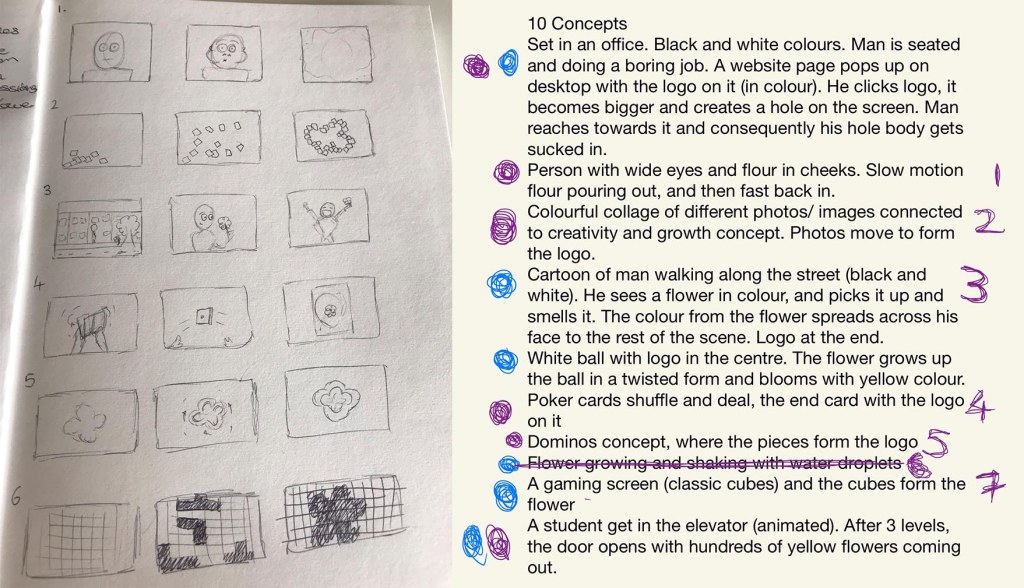
Storyboarding 10 Ideas

In the grouping process at the beginning of the project, we were informed that due to being in a group of 3 we would have to create 6 videos (2 each). Other class members didn’t have this challenge, so we had to think of ideas quickly and efficiently to make the project a success. Considering the video specifications, we brainstormed initial ideas for our 4 second videos. Always following the theme of growing wildly, we wanted to incorporate flowers and movement in each piece.

Each member of the group wrote propositions and references for each idea. I was particularly interested in making a stock frame video using pictures to create a narrative. Prior to the project, I explored the many facilities Kingston University has to offer. The new section to the KSA campus has 3D workshops, photography studios etc, so this helped in opening-up the many possibilities for our video creations.

Inspiration List of Books and Artists

Our initial ideas were good, but not great… as our lecturer pointed out, and we wanted them to be great! We needed to push the idea of being ‘wild’, so we researched more whacky techniques to support our narratives. For our stock frame video, I was particularly inspired by Peter Gabriel’s music video from Sledge Hammer (https://www.youtube.com/watch?v=OJWJE0x7T4Q ). The technique from this isn’t realistic, but believable and interesting to watch. This sparked new ideas for the project, following the route of ‘not realistic but effective’.

During our brainstorming process we thought about how they would practically be achieved. We considered the facilities needed, and began to decide our plan-of-action. I was accountable for booking the studios and organizing meetings for the group. This process was very enjoyable as I find organizing people and planning schedules rewarding. We managed to book two days in a motion graphics room for our stock frame animation projects, and two days in the video/ photography studio for our other projects.

The 6 Videos

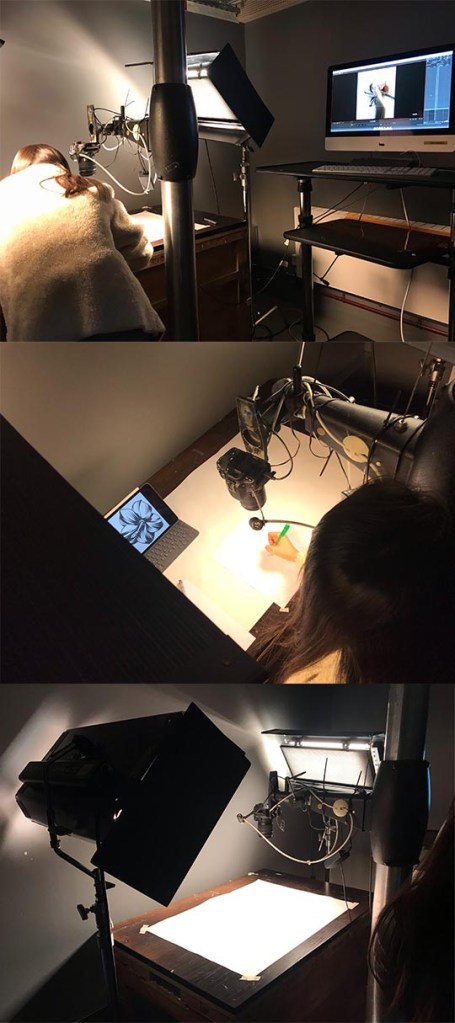
1 – Flower Stock Frame Animation (SHIRLY)

Plan: Create a stock frame animation clip of a flower being drawn wildly.

Action: Set up the stock frame equipment, draw the flower whilst recording frame by frame (25 frames per second), and save the video. Then edit video on Adobe Premiere Pro with special effects.

Duration: 2 hours

Reflection: Due to the video being our first stock frame animation project, the process took longer than anticipated due to learning about the facilities and familiarising ourselves with the tools.

The group member who drew the flower used a previous sketch as a reference in the video. We initially wanted the drawing to look fluid and wild, but in the end we chose to use a more ‘shutter-like‘ style to play with the gittery stock frame movement.

After the filming, my teammate edited the file on APP and gave the video its finishing touches. She said the process was challenging yet rewarding, and as a group we believe the piece overall has proven to be a success.

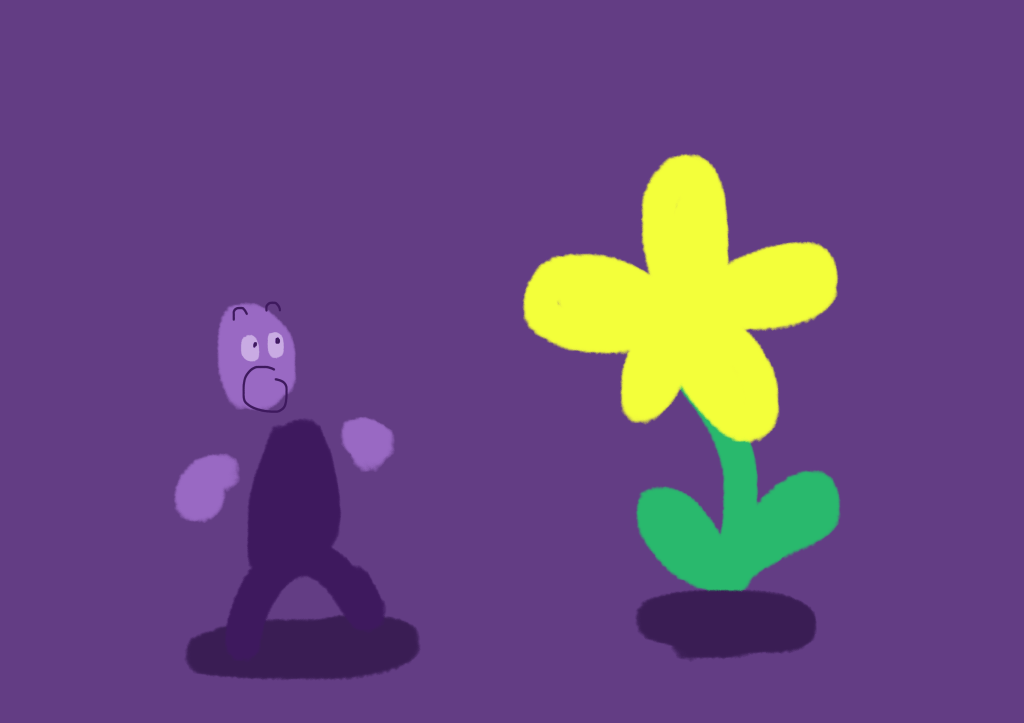
2 – Animation clip, man with flower – adobe illustrator (KATIE)

Plan: Create an animation clip on Adobe Illustrator (AI) and Adobe After Effects (AE) of a man interacting with a flower, and as a result grows dramatically

Action: Draw initial sketches on Photoshop of scene, then import file into Illustrator and create shapes over (so file is in vector form). Import file into Adobe After Effects and research method in order to create a moving animation clip of man interacting with flower growing. Render file into MP4.

Duration: 2 hours

Reflection: I was responsible for this project, and it was a big learning curve in my development. I was offered help by a motion graphics designer who walked me through the animation process. I pitched my idea and explained my expectations for the final result.
The designer explained how to use the different tools on AE, and left the creating to me. So I initially designed the scene on IE and put each element/ shape on different layers. I carefully considered the colour palate, and the size of the character and the flower. After this I imported the file onto AE, and continued the process on the program.

Using the program AE was quite mind-boggling at the beginning as there are many processes to take in order to create movement in the scene. Each shape had to be connected to another in order to link parts together. For example, with the character I created, I had to connect the legs and arms to the main body, the eyes, nostrils and mouth to the face etc. I did this to ensure that when I commanded the shapes to move, they would move together and not separately.

The time-line was fortunately only 4 seconds long, so the animation was short and effective for that amount of time. There were 3 main seconds of the mini-clip: the man with a flower, then sniffing the flower, then the flower growing dramatically with the character reacting in a shocked way.

The end result was rewarding, and I am pleased with what was achieved. The feedback from lecturers and fellow classmates was positive. I would like to further my knowledge of this use of animation in the future.

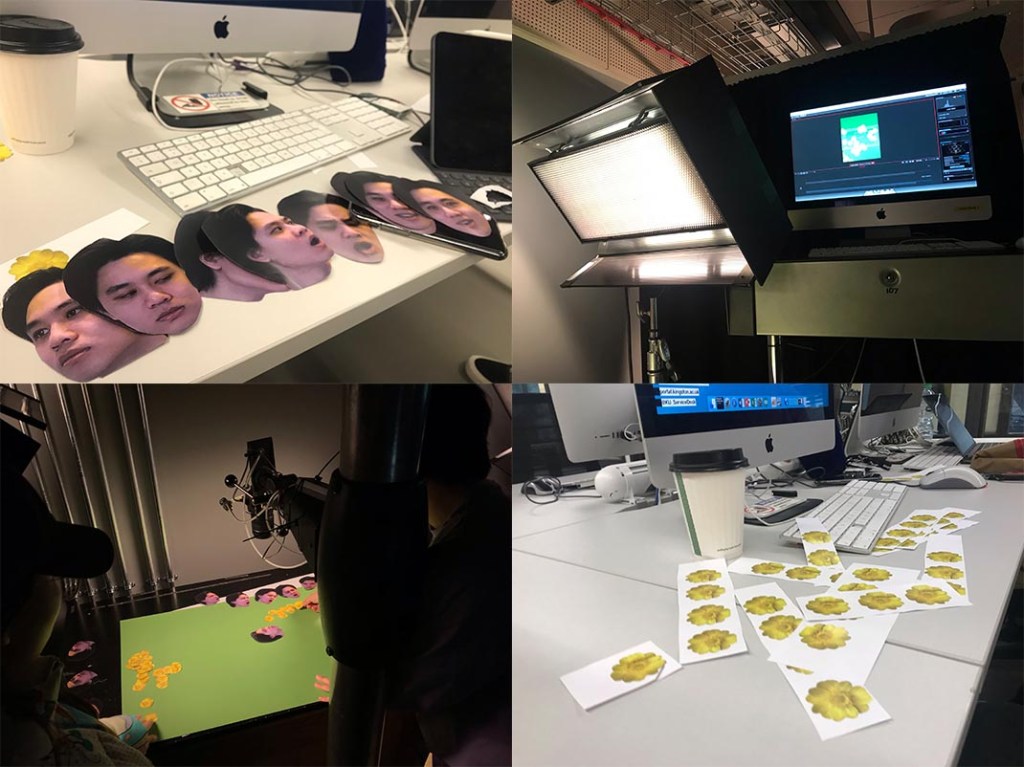
3 – flower invasion – stock frame animation (LUKE)

Plan: Create a stock frame animation clip of a person being invaded by flowers. Then edit video on Adobe Premiere Pro with special effects.

Action: Take initial photos of a persons face with a sequence of different expressions reacting to the invasion. Print and cut-up photos of face and of yellow flowers.
Set up the stock frame equipment, move photos of mans face reacting to the flowers taking over whilst recording frame by frame (25 frames per second), and save the video. Edit work on Adobe Premiere Pro with special effects.

Duration: 3 hours

Reflection: As a group we found creating this video the most interesting as we were testing out different techniques with combining photography, stock frame animation and editing on APP together. Our main reference, as mentioned before, was from Peter Gabriel’s music video from Sledge Hammer (https://www.youtube.com/watch?v=OJWJE0x7T4Q ).
When taking the initial photos of the model, we had to ensure the expressions were adequate for the movement of the flowers. We took many different sequence photos and ended up with a strong selection. The preparation for the stock frame animation section took a while as we had to print, cut up and place the images in the right positions. Overall the primary stock frame video turned out successful and we worked well as a team.
My teammate wanted to use a similar technique to our previous stock frame animation piece by playing with the staggered movement of the photos. He chose to use a filter on APP that accentuates this effect.
The final video looks well put together, and shows the narrative that we aimed for.

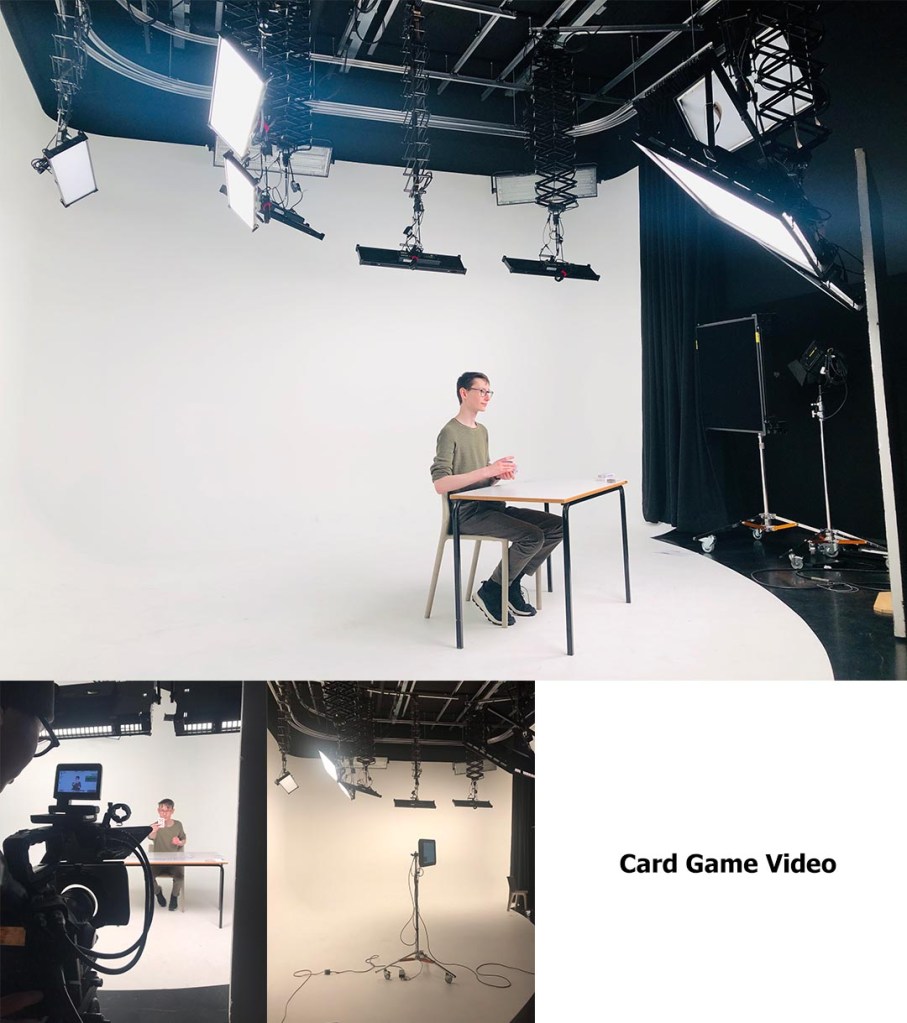
4 – Card Game – Live video + AE (KATIE)

Plan: Create a black and white video of man playing with deck of cards who eventually deals a card with an animated yellow flower growing from it.

Action: Book photography studio and set up equipment to film. Take film of  man playing with cards on a table and lifting a final card to the screen. Export the video into MP4 and edit the file on AE. Import yellow flower logo into AE and create a path so the flower follows the card when lifted, and grows quickly. Render file into MP4.

Duration: 3 hours (filming and editing)

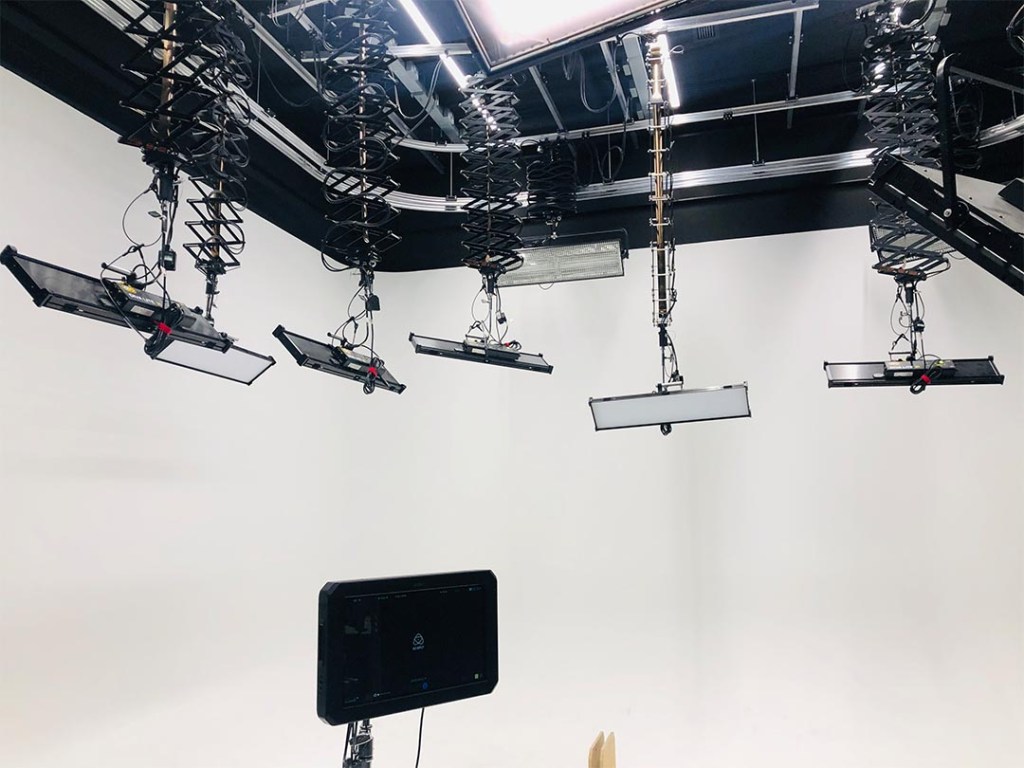
Reflection: This has been an interesting challenge combining two techniques together (filming and editing on AE).  The initial filming was an eye-opening experience as we were working with new equipment and had to think about light levels, size of the frame and other factors. We worked well as a team, and the videos we took were a success.

When we went through the video selection phase, we had to filter the videos with the cleanest shots and strongest narratives. During the videoing process we tried using comedic facial expressions and shuffling – but in the end we kept to a cleaner narrative by making the models expressions basic and not over complicating the video.

Due to the videos length being 4 seconds, it was challenging to include the exact visual we wanted. For instance, the flower animation had to be very short and instant whereas initially we wanted to have it grow in a more gradual impacting way.

Challenges aside, we think over all the visuals are effective and clearly represent the main theme and message we are promoting.

5 – Flower Shot – Live video + adobe (LUKE)

Plan: Film a visually impacting video of a person acting like James bond, eventually shooting flowers at another character to represent creativity.

Action: Book photography studio and set up equipment to film.
Take film of a person with gun in front of them, in a ‘James Bond’ angry pose, making sure gun is almost directly in front of the camera creating tension. Follow on the scene with another person getting shot, but with yellow flowers and reacting in a shocked way.

Export the video into MP4 and edit the file on APP. Choose an appropriate effect to emphasize drama and colors. Using editing tools, create a path for the flowers to hit and fall off model. Finally render the file into MP4.

Duration: 2 hours

Reflection: Before the practical filming process, the brainstorming ideas showed to be positive and impacting, however the overall visuals were not as shocking as I had imagined. Due to this being our first time using AE, the ideas in our heads were difficult to practically achieve. The flowers were meant to shoot out of the gun and bounce off of the character.
My teammate who had the initial idea for this video wanted to follow a James Bond style with the camera angles, and I fed back to the group how I believed the colourful editing takes the drama away from the video. However in the end we pursued the colourful images when considering our youthful student target audience, and taking into account that colourful visuals are more enticing for the age group.

6 – Flower Mouth – Live video + adobe (SHIRLY)

Plan: Film people with flower exploding from their mouths

Action: Film multiple people with air in their cheeks, and then blowing out dramatically. Edit videos on Adobe Premiere Pro with flower coming out of the mouth.

Duration: 2 hours

Reflection: This video is visually appealing and shocking at the end (with the short audio clip). Initially we wanted to edit the videos so that a puff of flour came out of the mouth, but unfortunately our team member wasn’t able to achieve the technique after trying it out many times on Premiere Pro. So we decided to keep the idea simple and use our iconic flower instead of flour.
In the end the video has proven to be a success and the sequencing of each clip flows well together.

Audio Recording and Editing

For our jingle, we booked a recording studio and experimented with different sounds in order to find the perfect accompaniment for the project. We previously brainstormed what sounds were appropriate. Sounds such as water-droplets and rustling leaves were considered in this process as they connect with growth and nature. During the recording session we worked together to create many different samples to choose from using different materials such as buckets, paper, noises from the mouth, water. It was an enjoyable experience as we bounced off creative ideas, and worked on the software together.

After filtering through the audio clips, we eventually chose the water-droplet sounds. Water is the element that feeds plants, so we believe that it symbolises how CCI feeds us with knowledge that we need to grow wildly.

Final Editing

After we edited two videos each individually, we came together for a meeting so we could refine and and put all of the work together.

We structured the videos in size order as we had 3 portrait and 3 landscape videos. This made the video clearer and more digestible for the viewer. At the end of the 28 second video we added a slide with our flower logo, slogan and jingle, and then a second slide with the KSA logo and our call to action ‘Check us out @CCI_KSA’.

After this process we began to prepare our powerpoint slides and planning a brief idea of how to present our work. As a team we were able to give an equal amount of effort into this project and the communication building up to the pitch was very clear and constructive.
‘Flourishing into your true colours takes risk and courage. We believe CCI offers a solid foundation for students to grow from through WILD experimentation and working for professionals in the industry.
Our concept follows the GROWTH (development) in a students life using the symbology of a yellow flower.’

A section from the presentation

Link to Instagram story

Summary and reflection

This project has been an insight into using new software and editing programs. It has been very beneficial learning about how to create different types of animation.

Surrealism, Bauhaus, New Objectivity

Movements stem from situations and changes in history. In the 1920s – 30s, movements such as Surrealism, Bauhaus and New Objectivity came into play as artists began to rebel and express themselves through new, and perhaps disturbing art work.
Each movement holds a weight of sadness, and enlightened discovery with the use of colours and shapes. This time held the aftermath of WW1 and the hidden anticipation for the following war to come. The public was in mourning for the experienced death and trauma, yet many wanted an escape from the tragedy. Many artists used this time to counter previous art trends by creating refreshing, and distorted pieces which changed the course of art history

In this post, we will be discussing how these specific movements have impacted and are very much a part of art today.

BONOBO – NO REASON

DIRECTOR –  OSCAR HUDSON ​
SURREALIST MUSIC VIDEO 2017

Surrealism in Music Videos

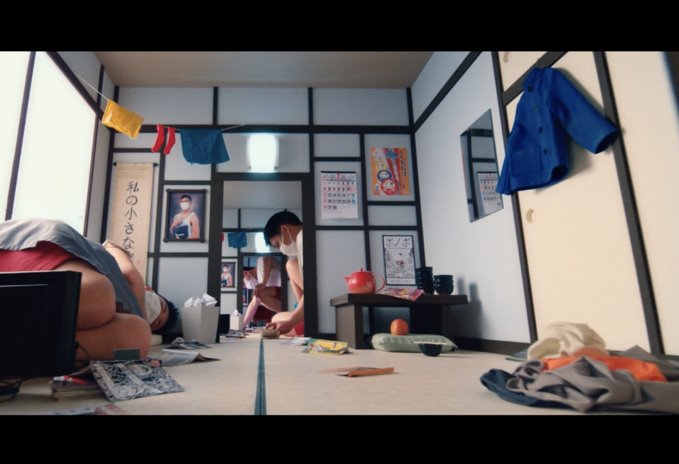
Bonobo’s music video ‘No Reason‘ 2017 takes the audience through a series of scenes from a boys bedroom. We travel through doors following a straight line, seeing the surrounding scene change as the boy and objects around him grow increasingly bigger.​

Director Oscar Hudson takes us through this surreal narrative watching a supposedly happy which becomes increasingly more trapping and uncomfortable. The character plays with the audiences emotions by having a mask on his face and acting normally while touching and moving different objects in the room.​

At the end of the music video, the boy reaches out toward us for help from each room. The pace of the music increases and the melody intensifies.​

This is an example of surrealism in music videos and how we grasp the concept of making a surreal reality to express inner emotions – in this case feeling trapped.

NAM DAS  – AS ABOVE

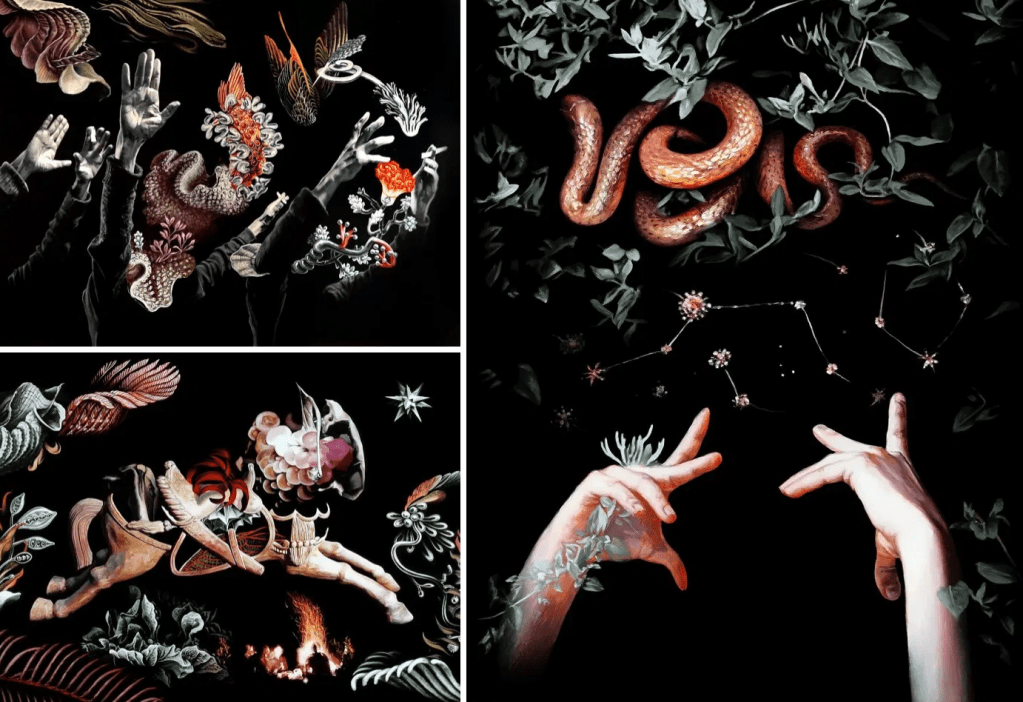
SURREALIST ARTIST 2019

Surrealism in Art

Nam Das creates visual narratives in his art by arranging complex scenes with diverse objects and symbolism to support a primary idea.​

Photos taken from website – https://surrealismtoday.com/nam-das/

He states his ideas  ‘play around the different archetypes of the collective unconscious or mythologems observed throughout history’​. The pieces of work are dark yet creatively mystical. They draw focus onto different objects with the use of light and positioning.

RZH – HONDA

DESIGN DIRECTOR 2017

Richard Hooker is a Designer / Art Director / Design Director who came up with genius ideas for the Honda advert 2017 in the Bauhaus style.

Image taken from – https://work.rzhooker.com/About-RZHhttps://work.rzhooker.com/Hondamentalism-SP

‘Design is much more than making thinks look nice. It’s helping narratives to make sense, and people’s journeys to be seamless’

MUGSHOTS – Elvis Presley

MUGSHOTS – Elvis Presley 

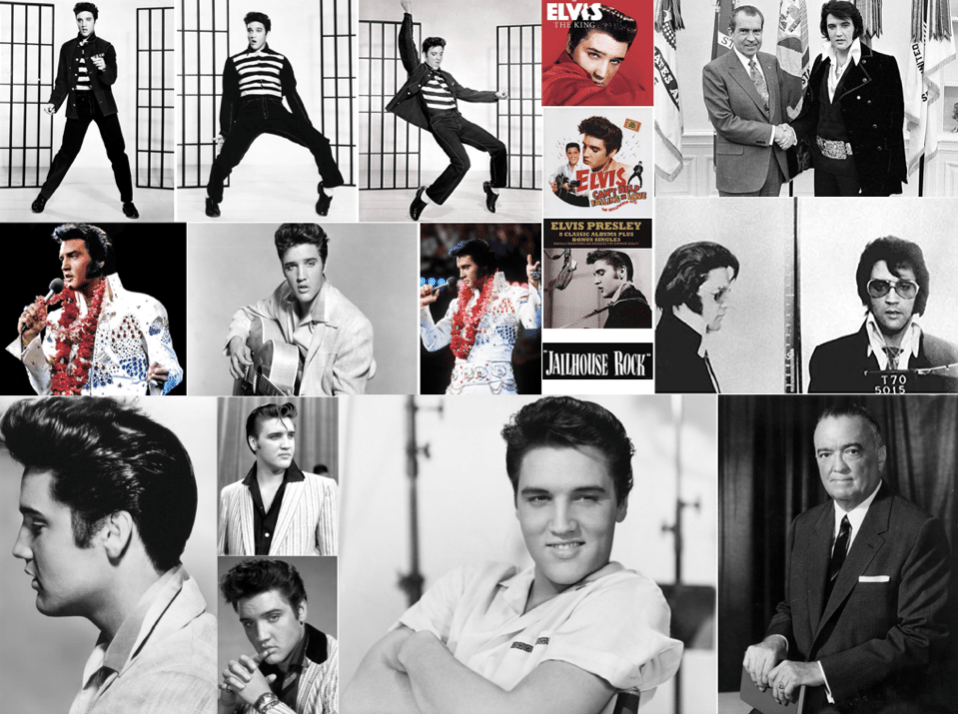
The brief was to organize a photoshoot based on the scene from a given mugshot of a celebrity. We had to initially create a logo based on the situation from the arrest, and then prepare a photoshoot also based on the scene of the arrest. 

‘Mug Shots: An Archive of the Famous, Infamous, and Most Wanted’ by Raynal Pellicer 

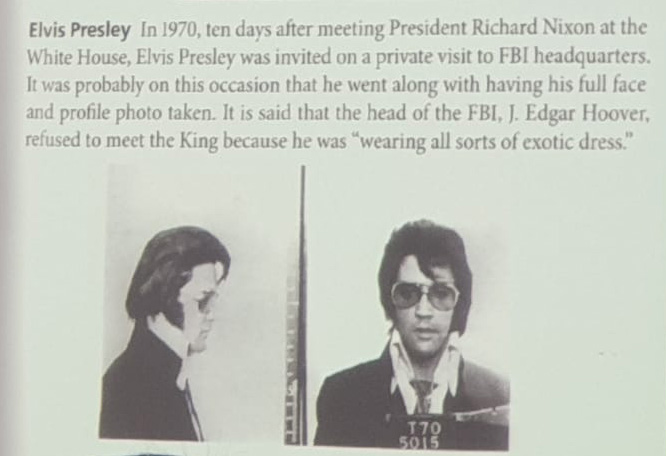
For this project, my partner and I were given Elvis’s arrest in 1970. This character was more challenging to work with than expected as he wasn’t actually arrested. Shown below is an extract from the book ‘Mug Shots: An Archive of the Famous, Infamous, and Most Wanted’ where the arrest is explained. 


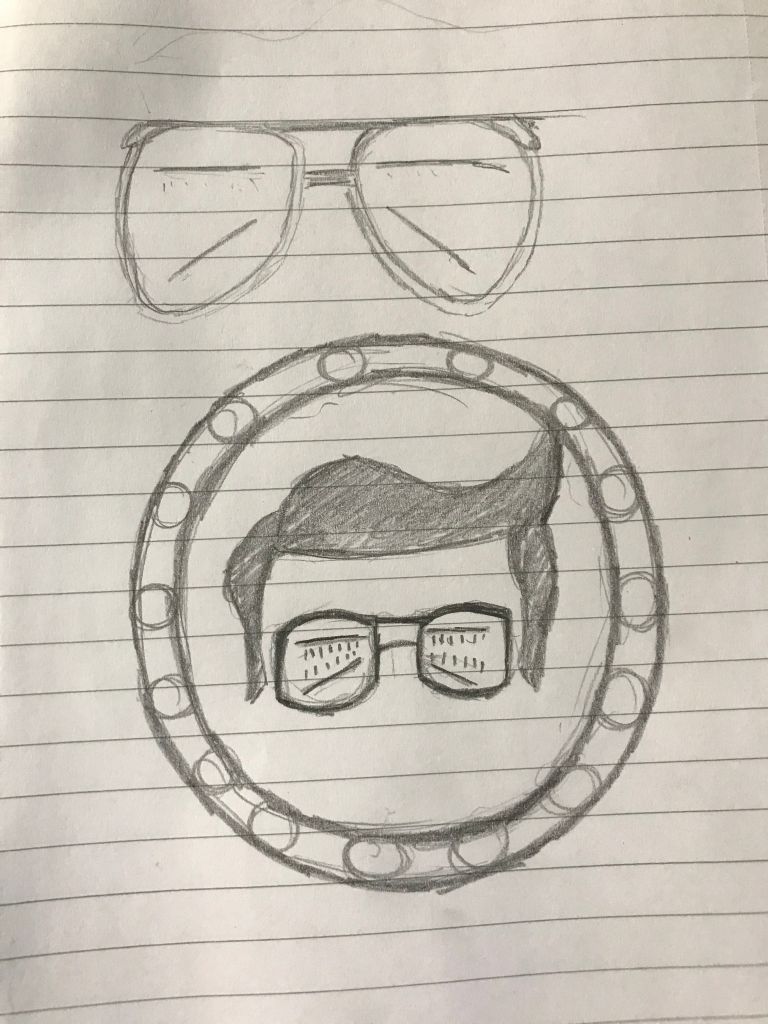
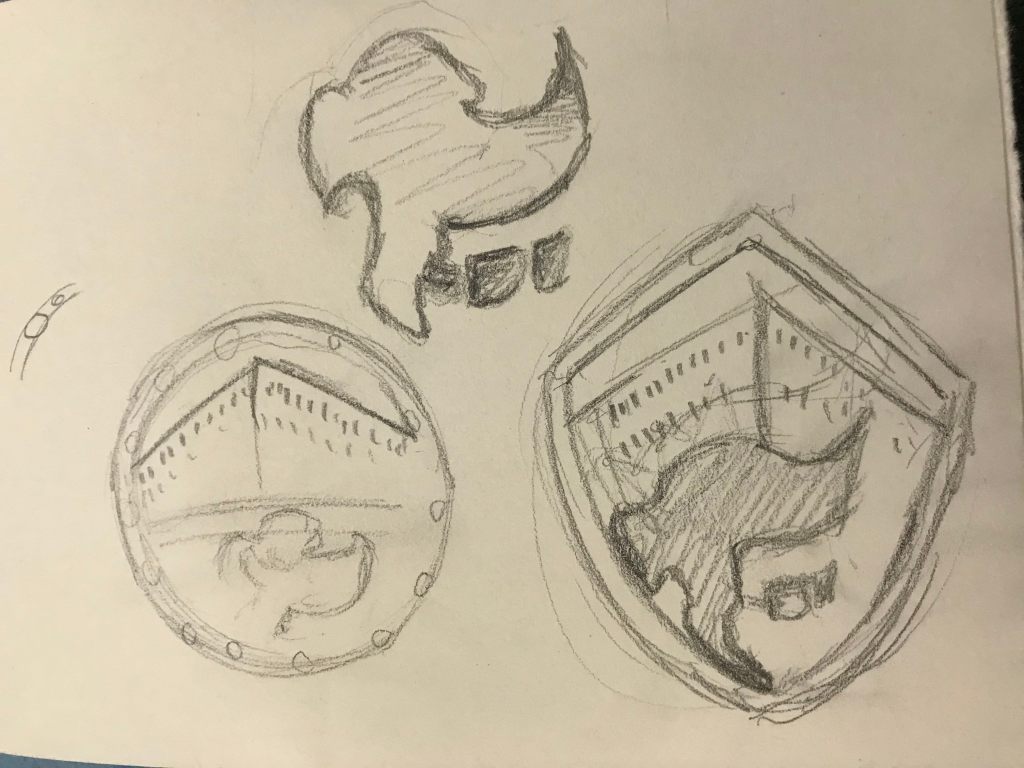
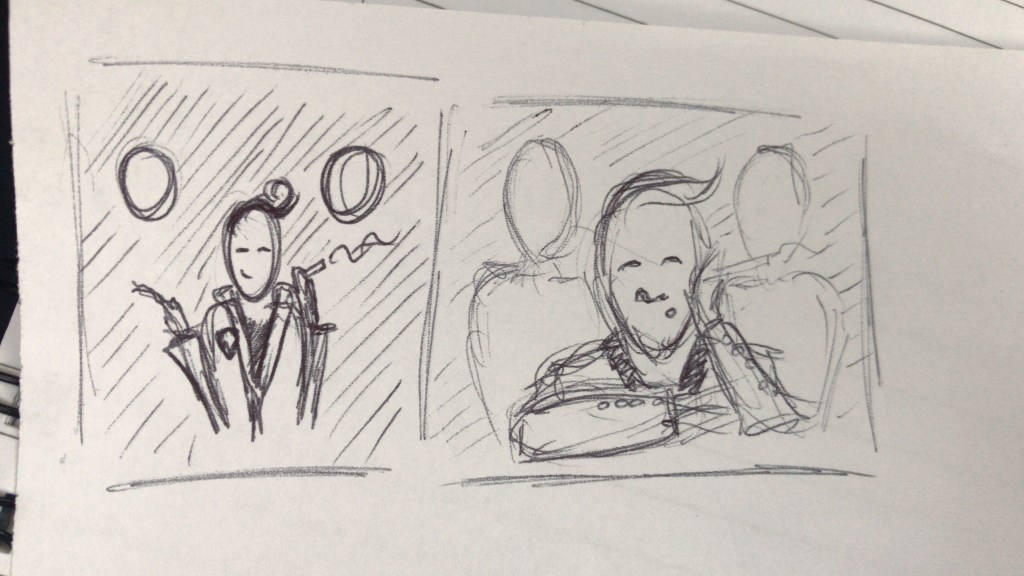
As we studied the given description, ideas came into play about the logo and potential photoshoot scene. Brainstorming and sketching possible routes to take helped us to move onto the next step – creating the logo. 

The Elvis Logo 

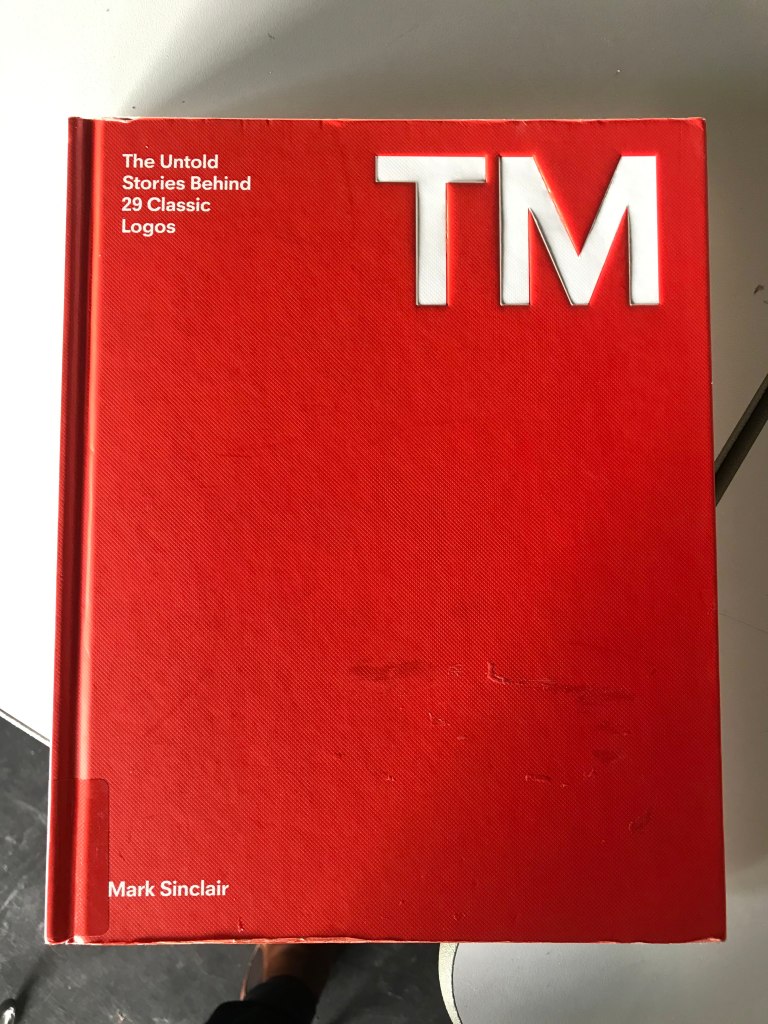
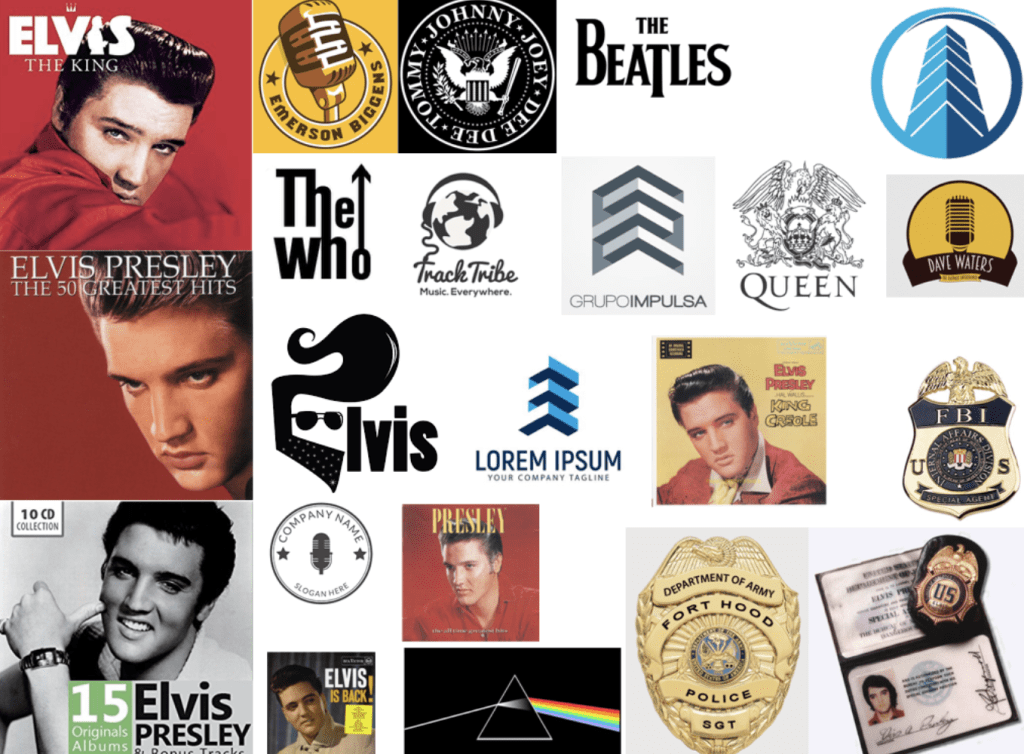
Looking through various logo books and searching online, we discovered how different shapes can represent different meanings. The circle typically is known for being ‘totality, wholeness, original perfection’, the triangle for being ‘gender, harmony, integration’ and the square for showing ‘basics, balance, and structure’. 

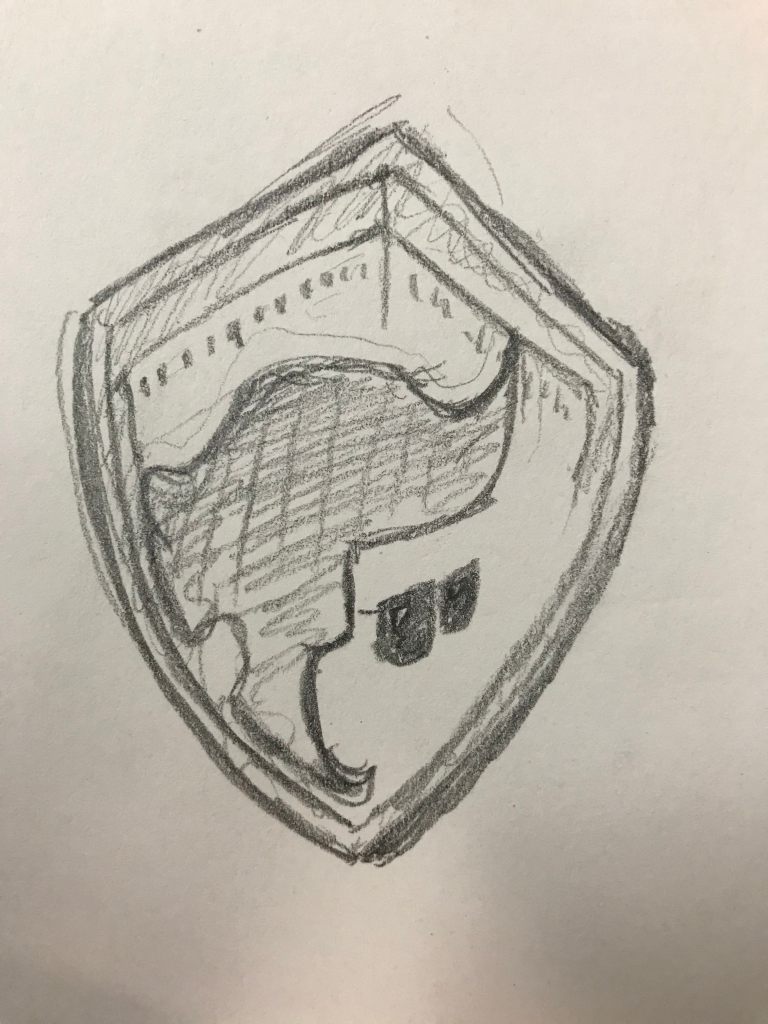
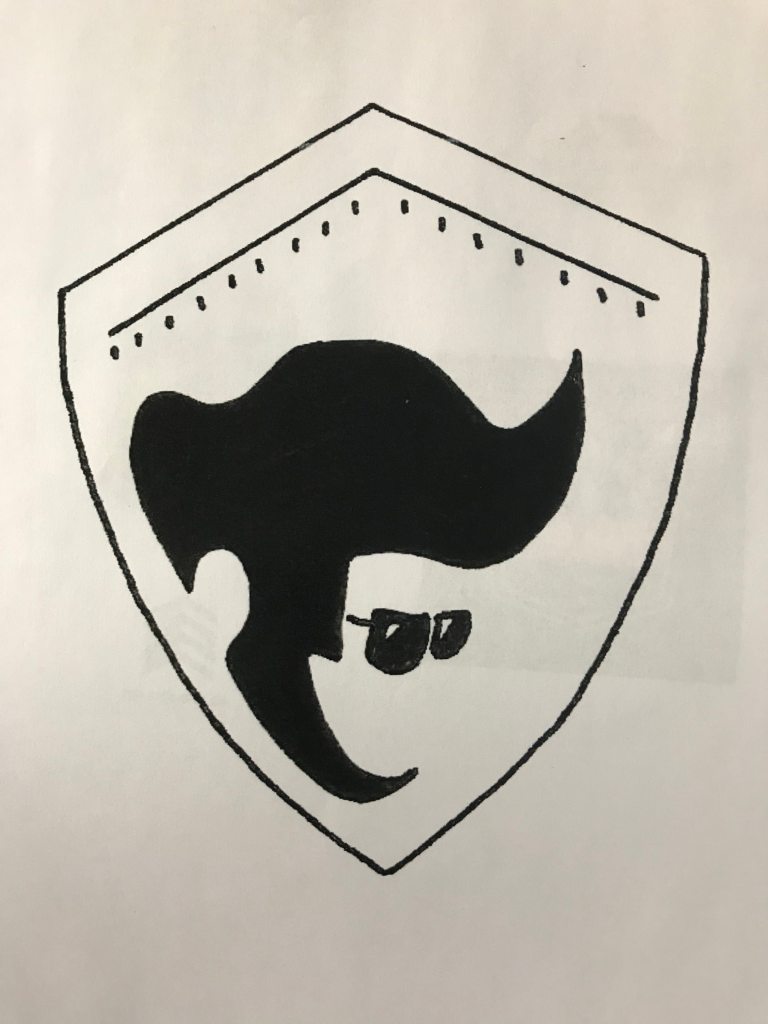
Considering this information, we began to sketch ideas for the logo. Initially we worked separately and then joined our ideas together to create a collaborative piece. I thought about how we could use the shape of a badge (thinking about the FBI theme), and build on the image within the shape, but by following the lines. We considered having the FBI headquarters in the background, with the silhouette of Elvis in the foreground. 

The idea of the logo being in a badge form inspired us to create a real badge made out of metal. New possibilities came to mind as we thought how our model for Elvis could wear the logo as a belt.  

After deciding on the strongest logo, we presented our work to the class and had feedback on our ideas. When we mentioned having the metal belt in our shoot, we had positive feedback and very little constructive criticism so we decided to create the belt buckle. 

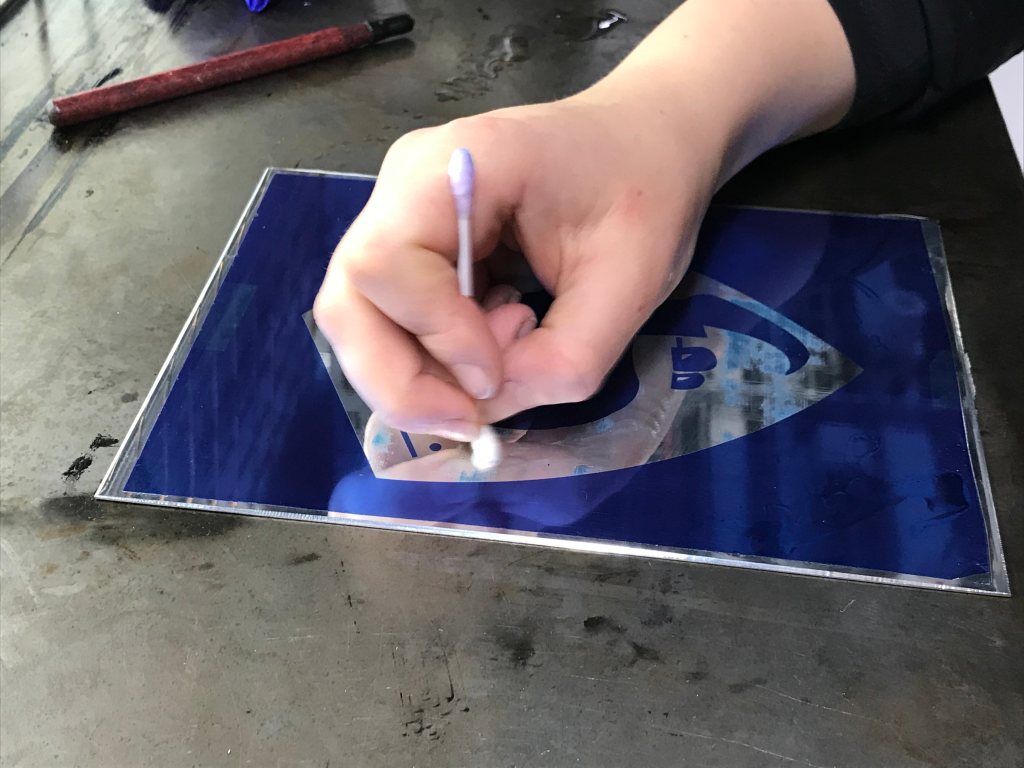
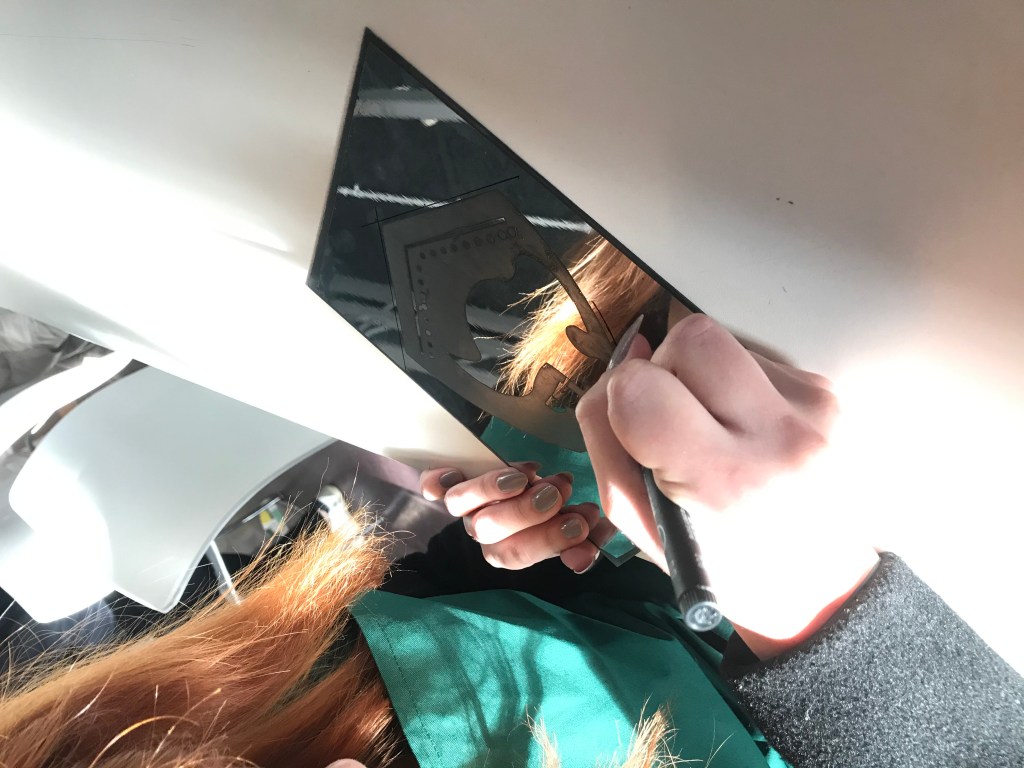
Creating the Belt Buckle  | Acid Etching

To begin with, we pitched our idea to a technician at university. He recommended creating the same design on Adobe Illustrator in a vector form so that when it came to developing the badge, the lines would be crisp and even. 

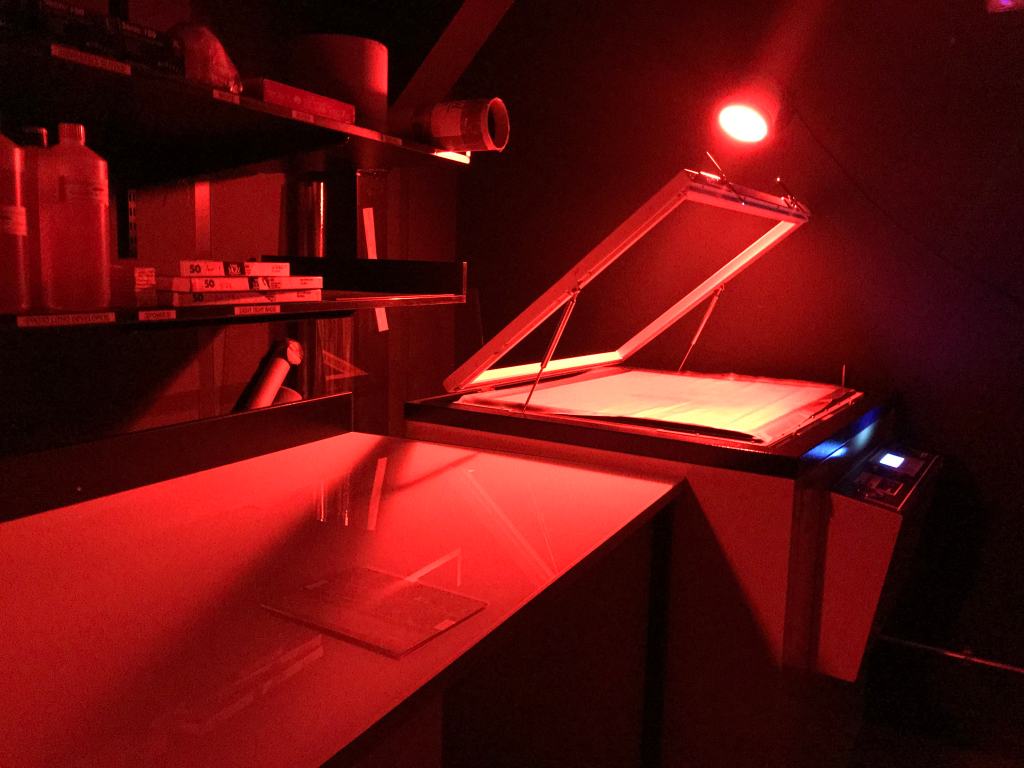
Once the vector file was created, we send it as a PDF form to the technician and started the process of printing the shape onto a laminated sheet and continuing the development in the dark room. Another teacher showed us how to use sodium bicarbonate to create the acid etching on our zinc buckle. The whole process took around two hours, and the final results were very positive. 

We had wanted the darker parts on our logo to be even more embossed with a more noticeable relief, however what we ended up with was just as satisfactory. 

After finishing the acid etching, we continued onto the metalwork room to cut out the outside of our shape. With a technician’s help, we sliced off the main excess metal pieces around the outline and then sanded down the edges to create a smooth finish. The end result was great, and also discovering new techniques working metal workshop and developing room was very rewarding. 

Preparation for the Photoshoot 

Before the preparation, we were given a class on how to set up the shoot using professional cameras and lights. There were some issues with the lighting in the class, but the tutor managed to resolve them. We were shown how different angles and camera settings can create completely contrasting photos. 

Model casting 

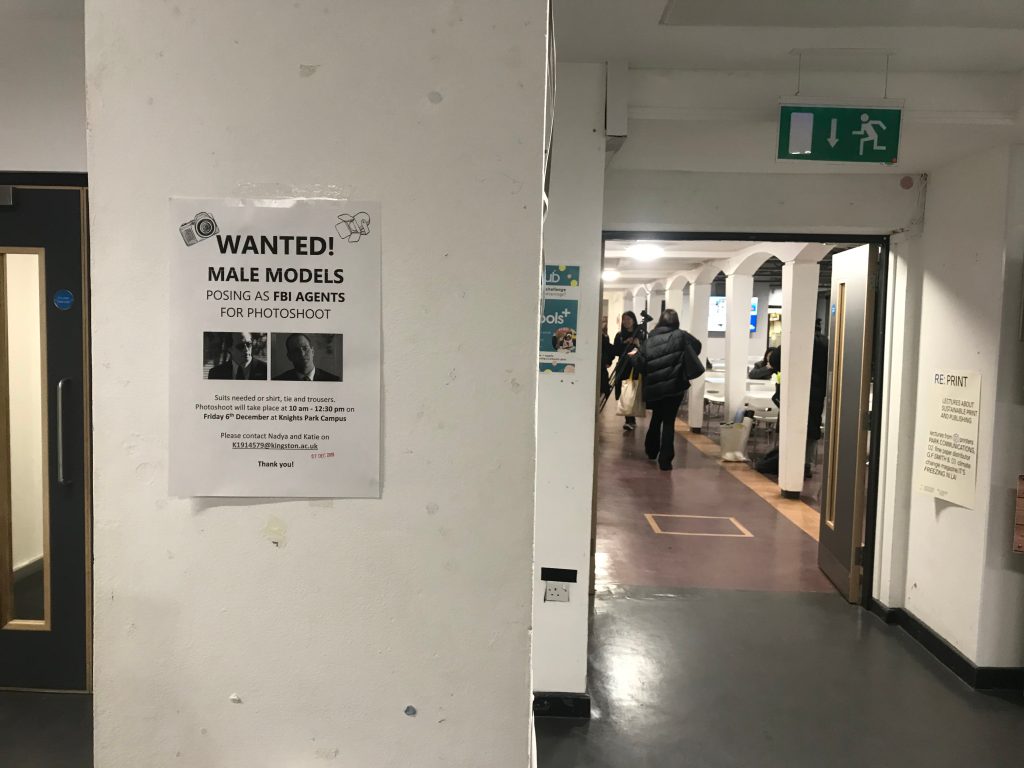
When we began to think about models, we had a few people in mind for the roles for Elvis and the FBI agents. We contacted each of them, and also posted verified announcements around the university searching for other possible candidates. The FBI agents had to be expressive, and able to pull disgusted and judgmental faces. Elvis had to be able to connect with the role and perhaps lift the side of his upper lip – which was proven hard to do. 

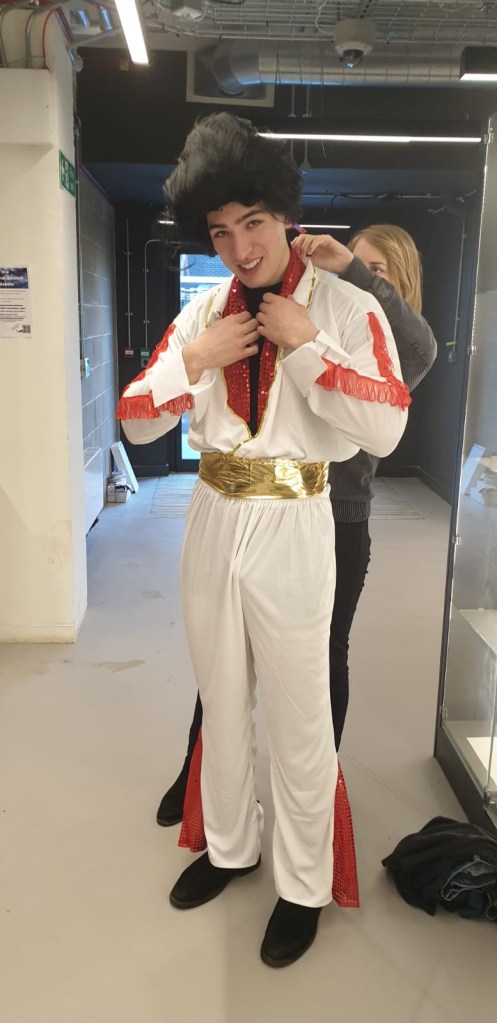
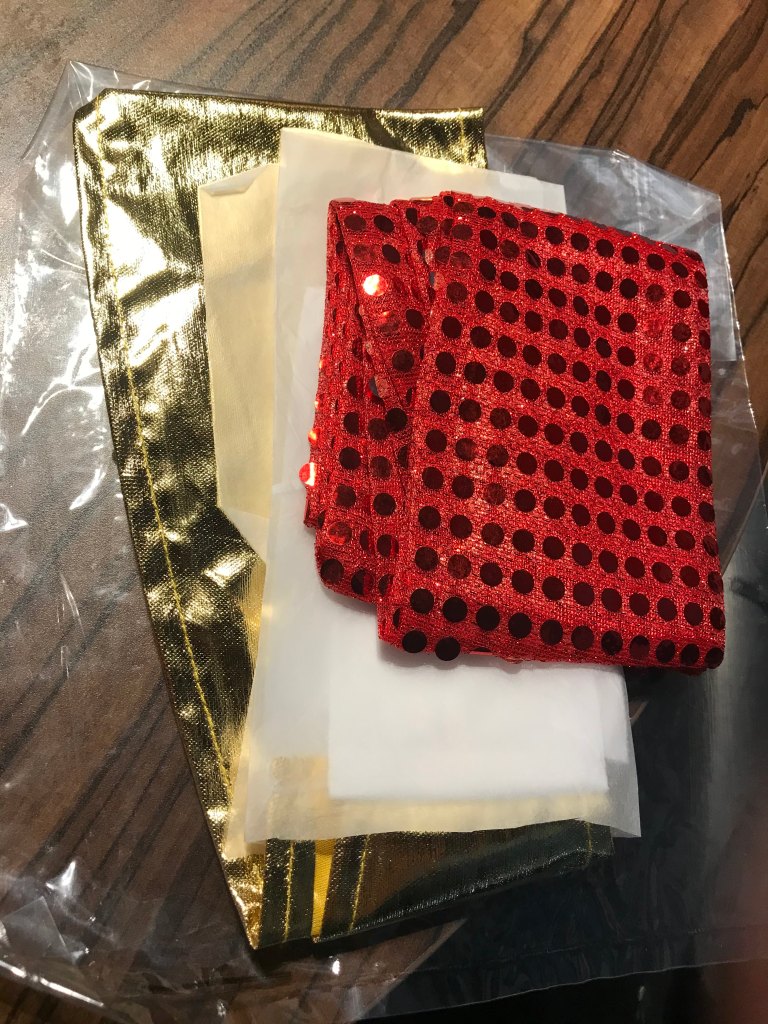
After securing our model for Elvis, we dove into the nearby charity shops to find the perfect outfit. Due to our model being very tall, we weren’t able to find the perfect glamourous costume for him. So, we browsed online and came to find the perfect discounted suit and wig for him. Having ordered the outfit online, we bought an additional two packs of gem stickers to place on the shirt and sleeve cuffs. 

For the other two selected models for the roles of the FBI agents, we asked if they could come in with a suit, tie and sunglasses as to which they kindly accepted. 

Once having tested the fitting of the Elvis suit and wig on the model, we were ready for the shoot. 

The Photoshoot 

The big day has arrived! 

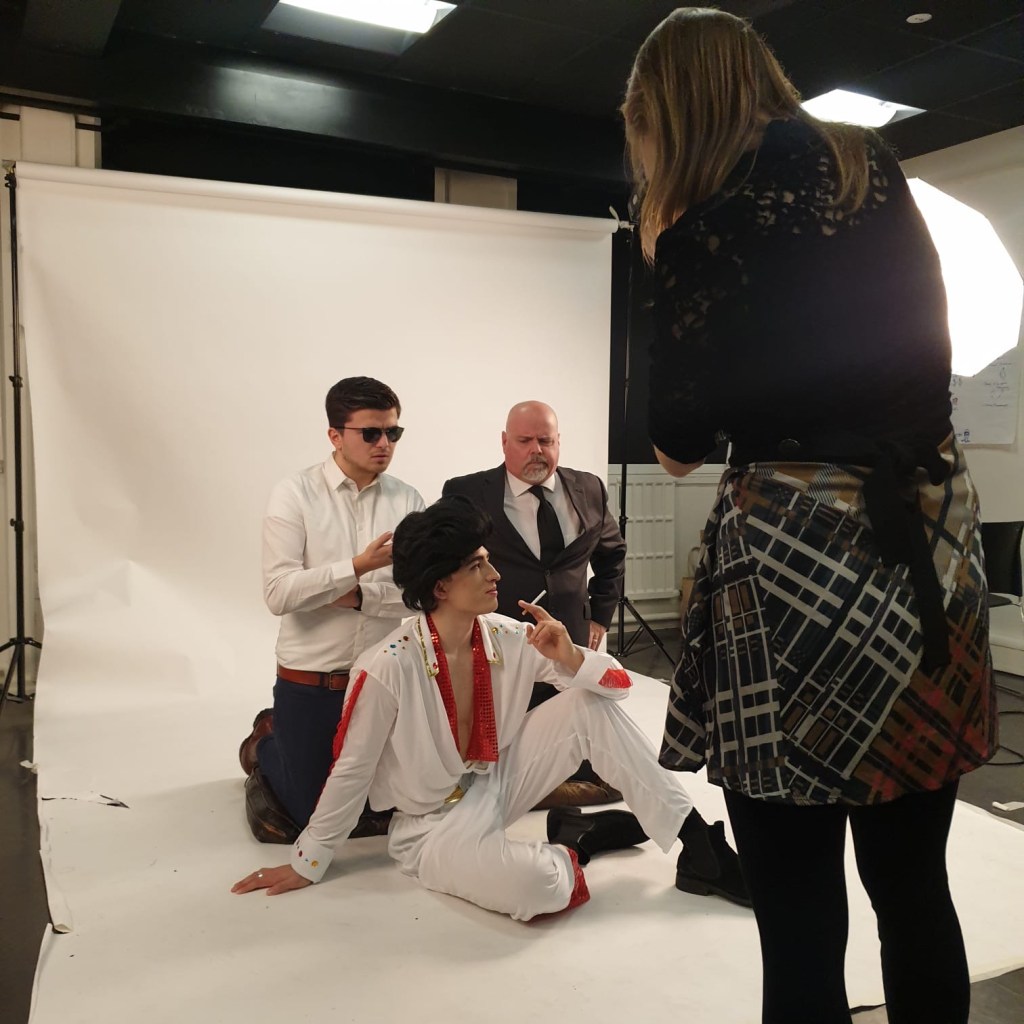
My partner and I met half an hour earlier than the scheduled time for the shoot and prepared Elvis. After changing into the costume, we applied makeup to his face to even out his skin colors. Then we proceeded to the studio where we set up the lights, the backdrop and seats. We found that adding background music helped to set the mood for the shoot. I find that the ambience is key to any setting, especially when creating art. 

As soon as the two FBI models arrived, the shoot began. We briefly set out our expectations for the photos, and the models quickly understood what was needed to be performed. 

At the beginning, the top lights couldn’t turn off, so we didn’t have the ideal lighting we were hoping for. To fix this problem, we tried to cover them with paper, but nothing seemed to block the light. The timer for the flash on our lights were connecting with the other lights in a nearby shoot, and therefore interfering with our photos. 

Despite these problems, we were able to move the portable lights close enough to the models to create a dark and light effect. 

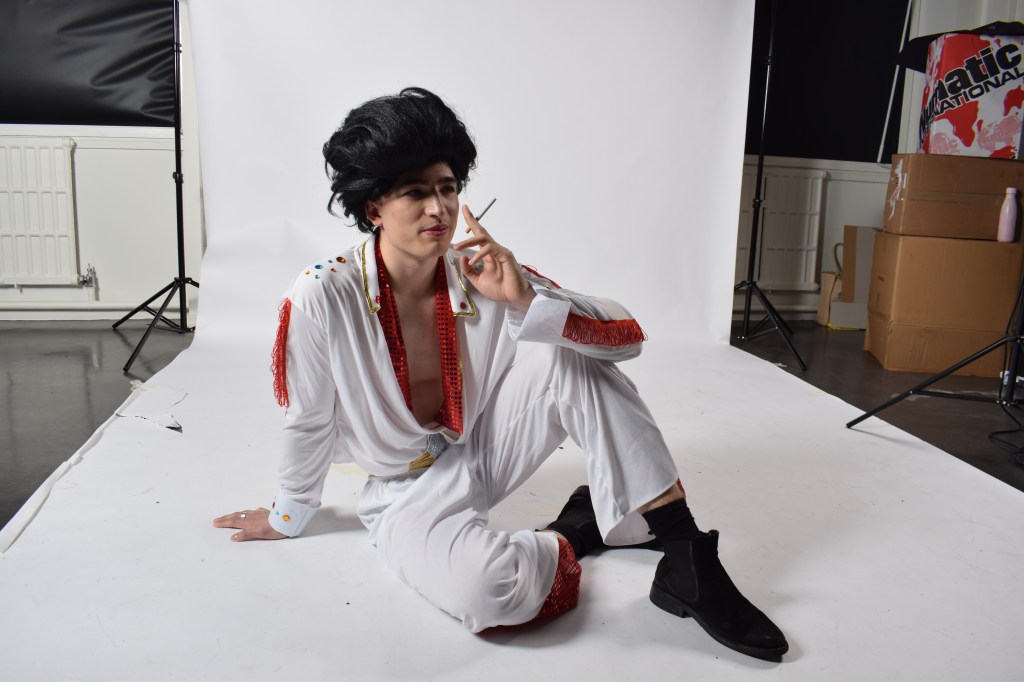
The agents were surprisingly expressive, and many strong photos were taken as a result. Elvis’s facial expressions weren’t as characteristic as we had expected, but we were able to change that in our post-production editing. 

As a team, we took it in turns to take photos and adjust the lighting, and overall the photoshoot was a success. 

Having reflected on the photoshoot, I would have liked to have had a black backdrop and better use of lighting in order to create more dramatic photos. Furthermore, the casting process could have been more affective if more men were willing to audition. However, the thought process behind this whole project has revealed new interests to further develop my photography and editing skills. Personally, I found the organizational side to the project very enjoyable, and combining two ideas to create a final outcome very rewarding. 

Post-production Photo Editing 

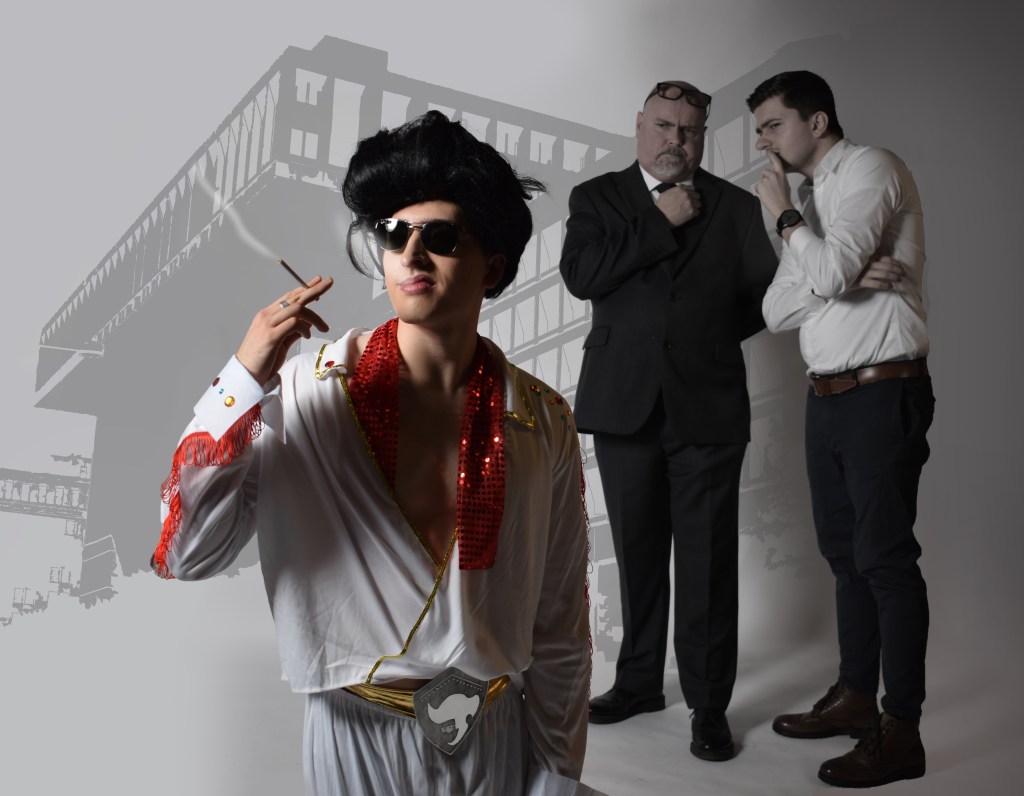
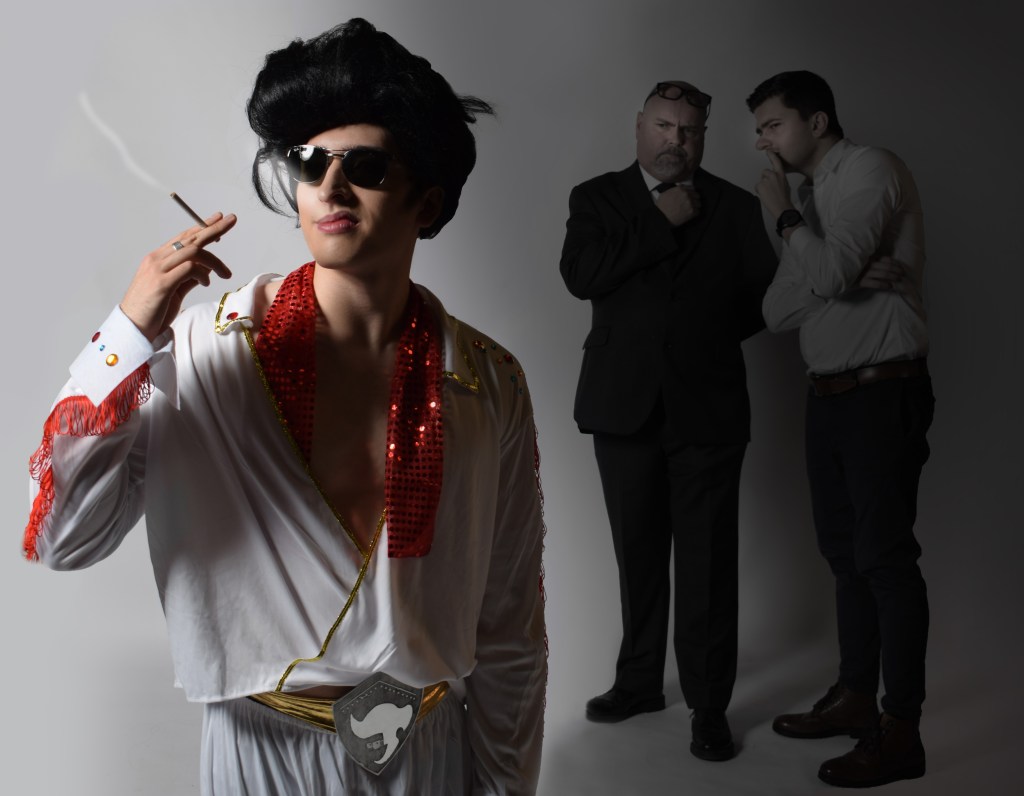
Having 300 photos to choose from, we began to identify the from photos from the weak. We discussed which photos we could work with and sketched possible ideas. The photos that particularly stood out were those with Elvis positioned in the lower left-hand corner and the FBI men in the higher right. This positioning creates a feeling of superiority with the FBI looking down on Elvis which is what we were aiming for.  


In the initial mugshot description, the head of the FBI (Edgar Hoover) refused to meet the king because of his clothing and exotic appearance. We played with this idea by having Elvis facing outwards towards the light, and having the FBI in the shadows to show how their judgements were inferior compared the king’s celebrity charm. 

On photoshop make the entire photo black and white, apart from Elvis, in order to accentuate his importance and ‘exotic nature’ in the scene. 

In order to create a sense of the setting at the FBI head-quarters, we placed a light backdrop of the buildings behind. 

The logo is an important part of the image, so we adjusted the brightness of the belt buckle in order to bring awareness to it. 

Using a morphing tool on photoshop, I was able to lift Elvis’s upper lip and left nostril to heighten the characterization. Then I elongated the FBI models noses to represent how they are nosing into Elvis’s business. 

Studio Exercise – Magritte

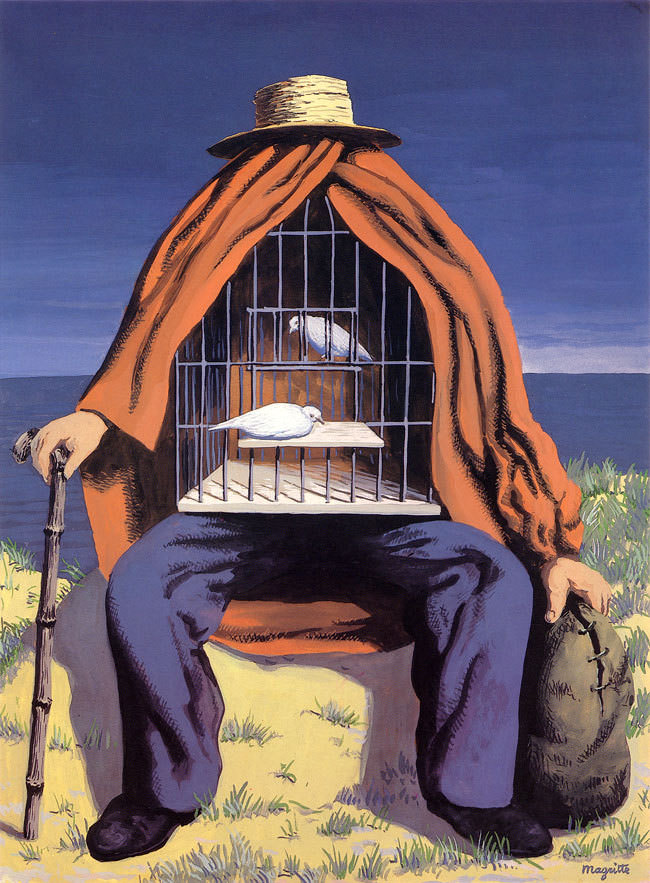
The Therapist (1937)

2My immediate opinion

1 – A traveller who is hiding his inner loneliness

2 – An old man escaping his working life and discovering a place of paradise

3 – A man bringing his baggage and solitude on holiday

3Objects I see in the painting:

Straw hat, orange towel, two doves, bird cage, walking stick, brown bag with clasps, shoes, blue trousers, hands, sand, grass, sea, sky

4 Five emotions:

Sadness

Loneliness

Uncertainty

Discomfort

Risk

5 A short description

There is a man seated on a bank of sand by the sea. He is wearing formal clothing on the bottom half and bright holiday wear on the top. His hand is clutching onto a brown bag to his left, and the other hand is leaning on a walking stick to his right (symbolising age). Resting on his legs is an opened cage with two white doves, one inside and one outside. On top of the cage is an orange towel being held in place by a straw hat resting on the top. The orange fabric covers all of the mans body apart from his hands and legs creating a hidden element to the piece. The light, potentially from the sun, reflects off the figure and the surrounding sand and grass. The body is positioned to be facing towards the viewer. 

6 Description of three things in the background

Sea – dark and still with slight ripples

Clouds – white and very subtle on a straight horizon line

Sky – dark deep blue with very slight texture changes

7 What I saw in the centre of the artwork

A white birds resting on a jutting out piece of wood outside a cage with its gaze facing down.

8 Reaction to right hand side of painting

The birds are missing and the ‘sleeves’ are crumpled.

9Reaction to left hand side of painting

Seems to be brighter and includes the birds, and sleeves are smoother

10 – Why…

Is one bird outside and the other inside the cage?

  • To symbolise the process of stepping out of your comfort zone (or cage)
  • To represent the travellers feelings of loneliness

Is the body not visible?

  • To bring emphasis to the bird cage in the centre of the painting
  • To focus on his lack of identity

Is he facing the light?

  • To represent change, and a new season (stepping out of his comfort zone)
  • To symbolise reflection, and contemplation on his journey

11 – 3 new titles

The Lonely Traveller

The Collision of Two Worlds

Commuter on holiday

12 – My analysis of the scene 

The Therapist is a colorful symbolic painting filled with mysterious embedded meanings waiting to be unraveled by the viewer.  

This visually intriguing artwork draws the viewer into looking for the hidden significance behind the composition and diverse objects displayed. 

Initially I thought the piece could be showing an old man escaping his work life to discover a place of paradise. However, when looking in greater depth, I sensed agitation and emptiness through the use of colour. The vibrant orange of the towel/ cloak generates a restlessness, and the flat blues of the sea express a loneliness and need for change. 

Then I considered how the figure seems to be looking toward the sun which could represent change or hope. This lead on to the thought that the man could be searching for change, but is still carrying heaviness within from his past. 

Furthermore, when studying the birds and the cage at the center of the piece, I found their underlying representation difficult to decipher due to their positioning within the cage. The fact that they are seated within the figures’ body shows to represent trapped emotions which are being covered, and yet open to the viewers eye. 

The open doors to their cage show that they have their chance of freedom, but they aren’t willing to take it. This could mean that they are either fearful of change, or reluctant to leave due to old habits or fear for their safety. The man with his straw hat and business clothing seems to be carrying, or in fact hiding, this cage which is preventing him from taking flight and enjoying his freedom. 

To conclude, I can see that the artist is very blatant with his use of objects and colours which could represent his openness to have the viewer think about what the meaning of the piece might be. It is an aesthetically appealing artwork, and yet saddening when considering the overall representation. 

Design a site like this with WordPress.com
Get started