In order to set the scene and start thinking about the VR environment, I immersed myself in learning about the city of Palermo, about its language roots, atmosphere and environment. The films I watched as a reference were Ficarra e Picone – Nati Stanchi, Alla luce del sole and Il 7 e l’8. Two of the films were comedies and one was a drama/crime, so it helped me to visualise the city from different narratives.
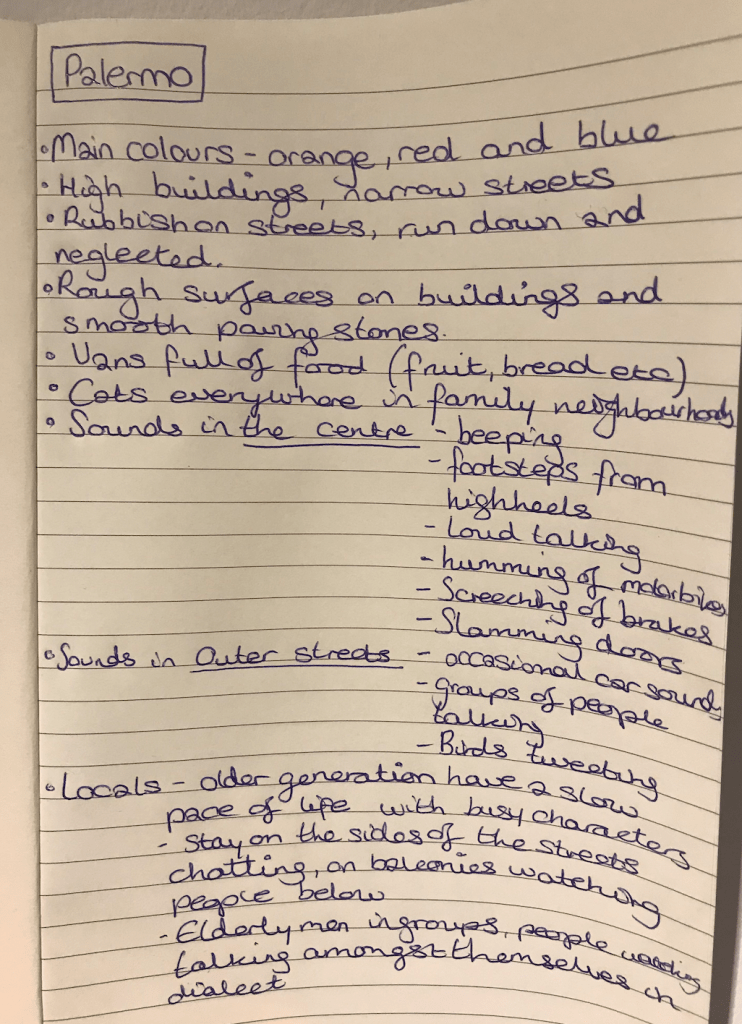
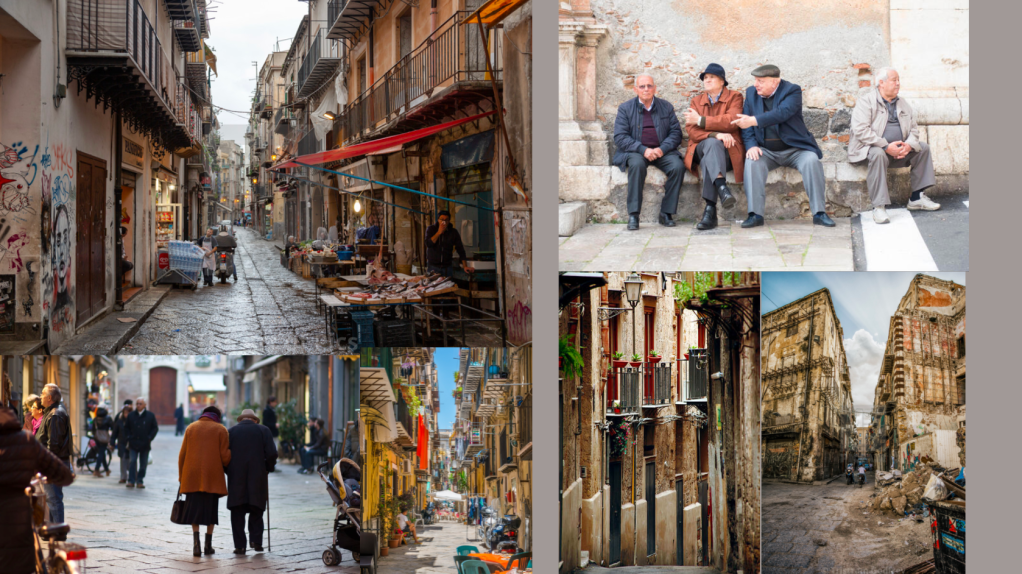
After watching the films, I wrote down key words to describe the scenes in order to summarise what I saw (as seen on the right). This helped me highlight what I needed to include in the VR environment and also identified the differences between the sounds in the centre of the city and the outer streets.
Creating environments in VR
On Instagram, I follow a Creative Director called @karenxcheng who creates regular posts where she explains in a few seconds her creative process behind her advert and video productions. One of her most recent posts at the time involved using a 3D scanning app called @polycam3d where she filmed herself on the steps of a building in 3D. This inspired me to download the app and try it myself.
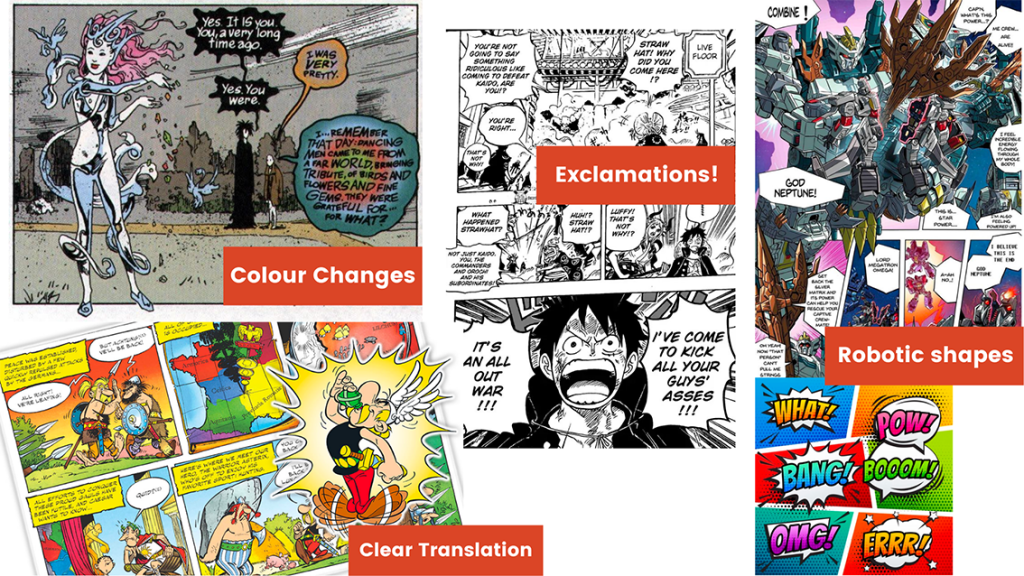
I spoke with a tutor about my thoughts and how I was concerned my exploration of topics around my final outcome was going too far from the main topic, and she gave me some very useful advice… ‘It’s not deviating, think of it as foraging along your path towards the destination’. Hearing this comment gave me the courage to keep exploring stem topics and playing with the concept of visualising languages. I was advised to look at the work of Dave Mckean and his illustrations of The Sandman. As we spoke together about his use of colours and shapes for the speech bubbles, I was inspired to look into this expression in the use of shapes and palette. Below you will find a few comics I was inspired by when moving onto the next step.
Asterix (translations on pages), One Piece, Optimus Prime and The Sandman
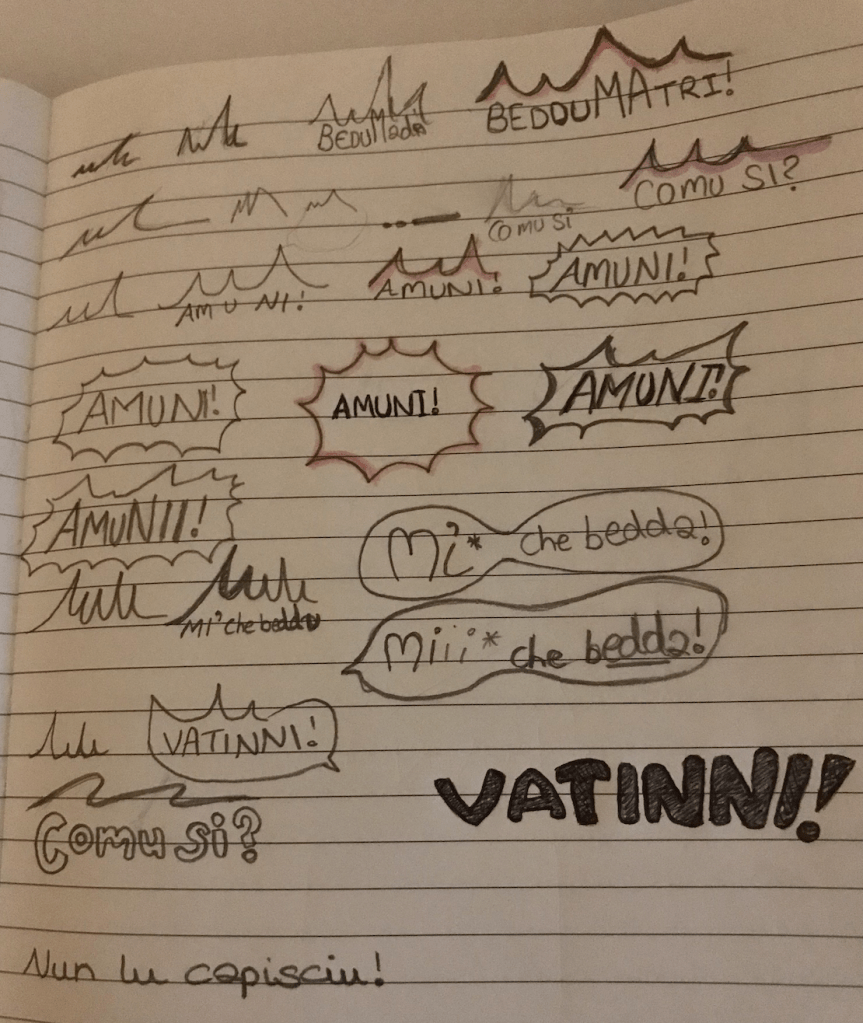
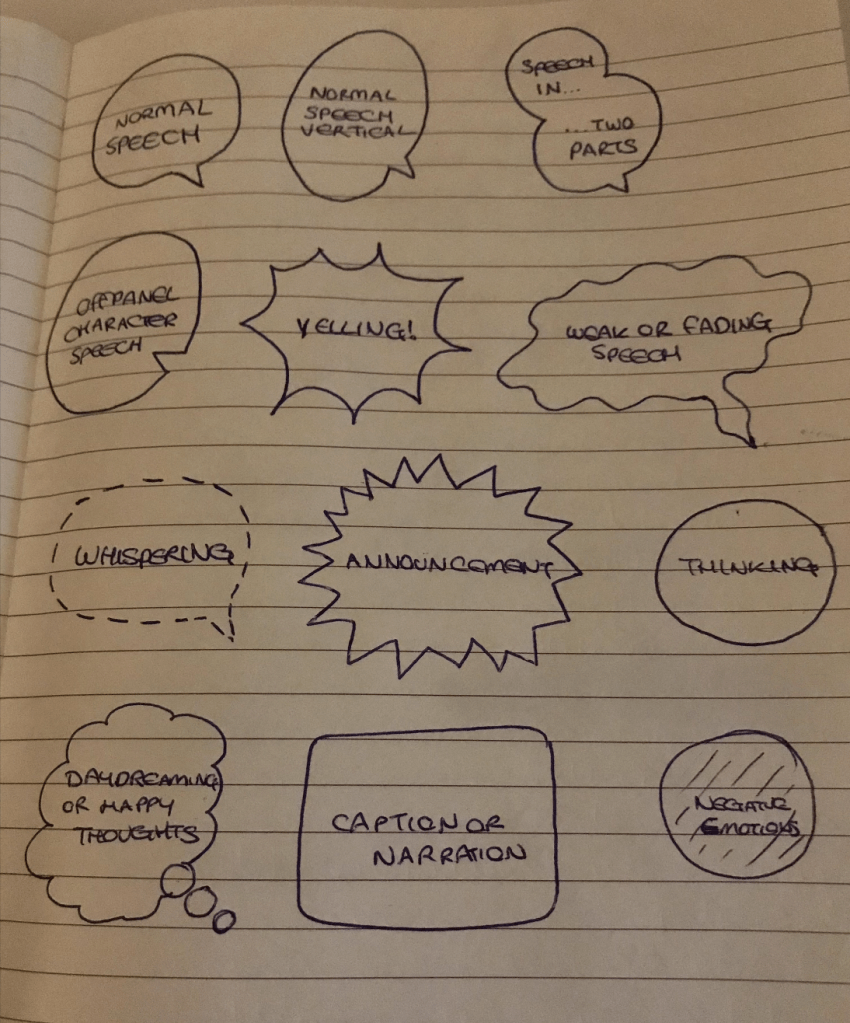
This lead me onto thinking about how I could transform Palermitano into expressive dynamic text. I looked into different types of ‘speech balloons‘ online, and brainstormed words I could use for the text. In order to pick out individual words and phrases in the sub-dialect, I watched a Youtube video of a group of locals talking about past events etc.
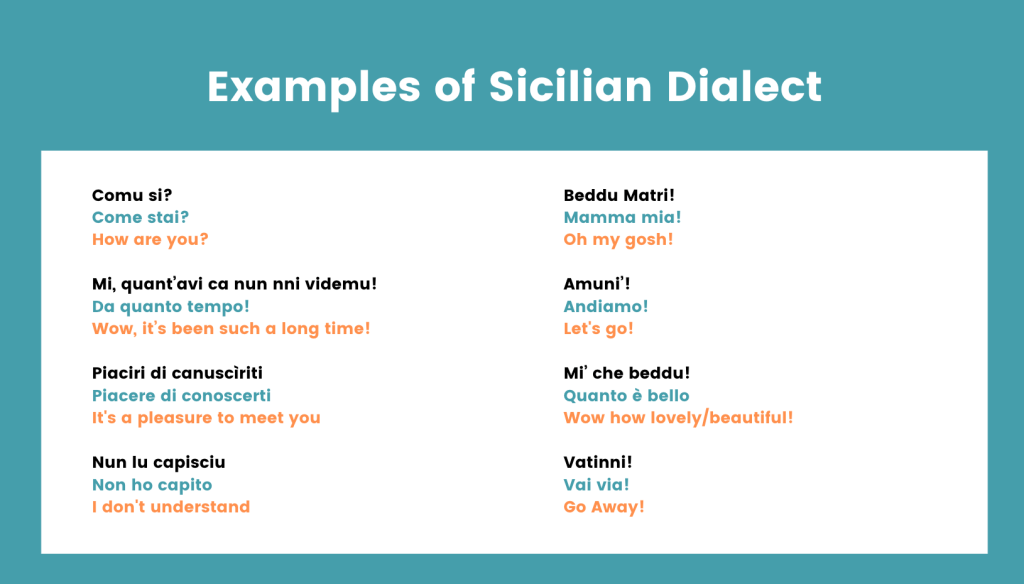
I looked into different forms of speech balloons online and discovered how each one served a different purpose depending on the text. I made a list of the different Sicilian phrases/ words I wanted to experiment with and played around with how they would look in the balloons. This was interesting to experiment with and it made me think about movement in text and how it can become dynamic with changing shapes.
A slide explaining the translations of the Sicilian dialect
Experimenting with 3D Environments – Blender and Mozilla Hubs
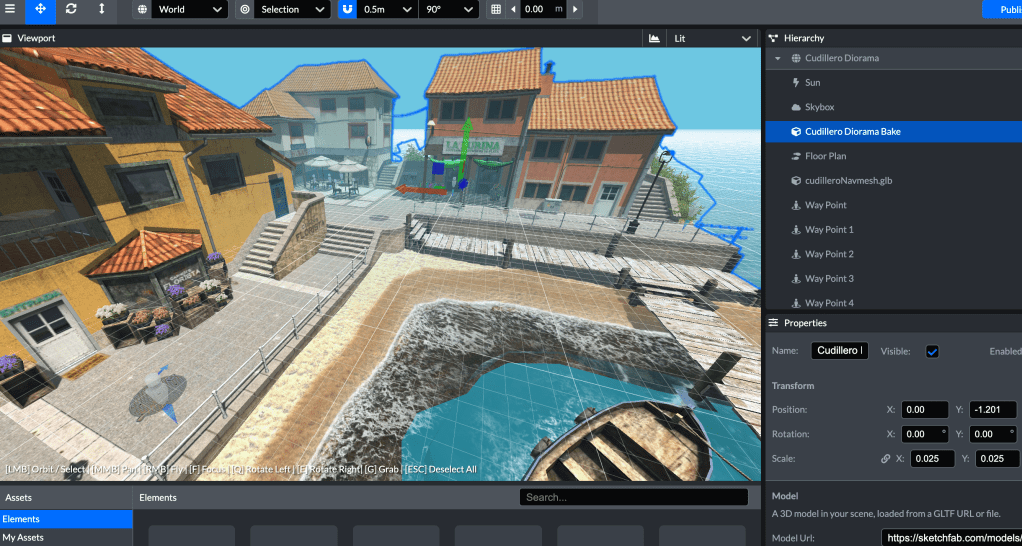
To better understand how I could set out my project in VR, I researched different examples virtual landscapes online (on platforms such as A-Frame VR, Unity and Mozilla Hubs). On Mozilla Hubs I discovered a fantastic example of a scene that was similar to the scene of Palermo I wanted to create. The Palermo scene would be very different in layout, however the colours and buildings helped me to image the scene.
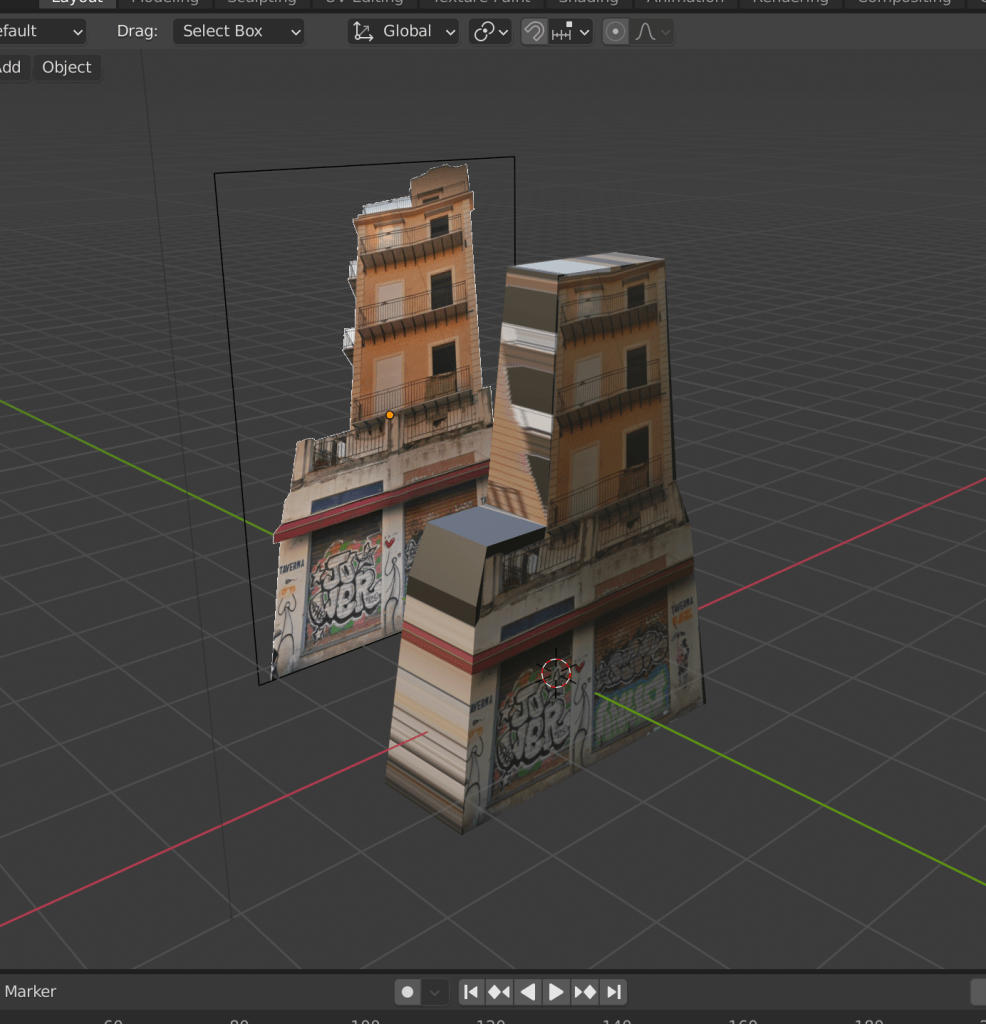
A building test on Blender
Due to my lack of knowledge on 3D modelling, I was unsure whether this could be realised. I started to follow some youtube videos and LinkedIn learning classes for Blender. I tried to create my own building, however it took me many hours to get to that point and I found myself spending more time on that than concentrating on the language side of the project. To the right you can see the building i created on blender with a photo that I took myself in the city.
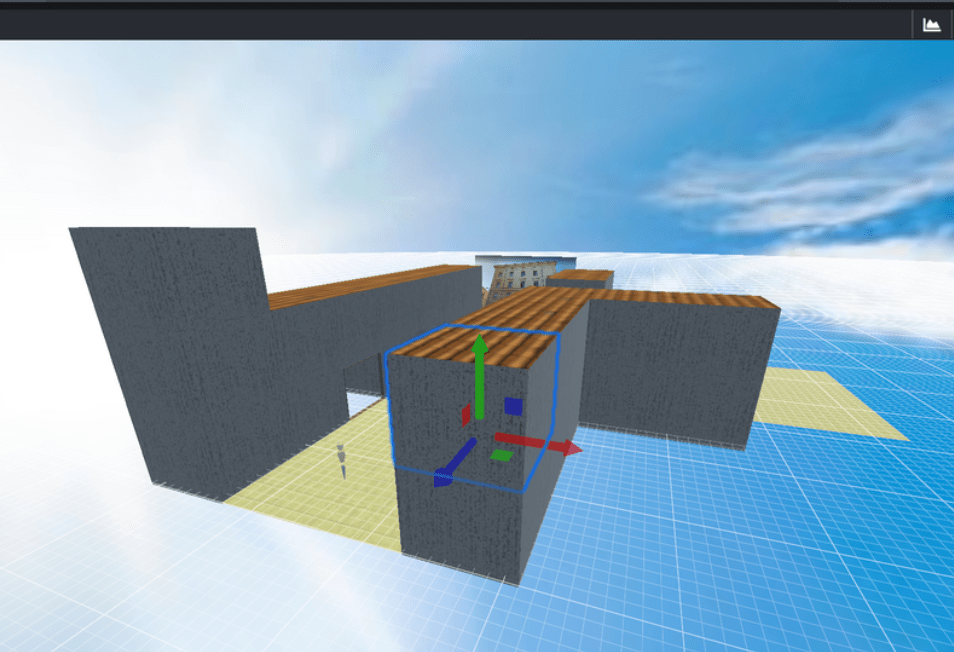
I thought back to previous projects I had done over the years and realised that I knew how to navigate Mozilla Hubs much better and it would take less time than on Blender. Below you can see the scene that I started to create on Spoke which took under an hour, and the idea was to place images on top of the buildings and build up the scene and environment of the city around.
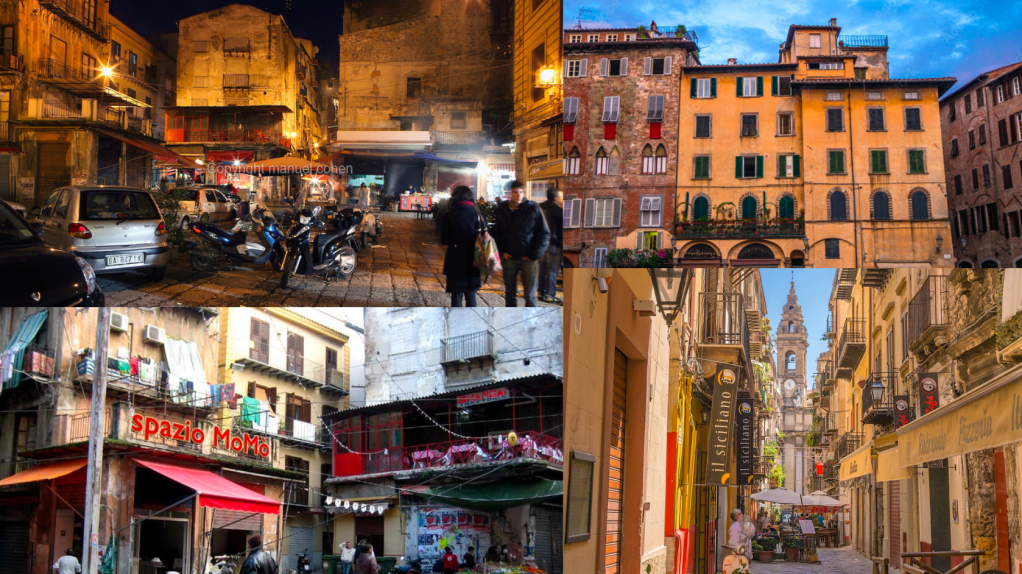
At this stage I also looked at which specific streets I would like to photograph and have in the VR environment. As I couldn’t be in Palermo in person, I searched on GoogleMaps for the streets I knew would be perfect for the project.
Places to consider: 7 Piazza Bellini, 11 Piazza Caracciolo
Inspiration for Potential VR Settings in Palermo
During a lecture I created a workspace on Spatial.iowhere I could eventually present my WIP. On Spatial you can also connect accounts such as Figma and Google Drive to it which could be useful.
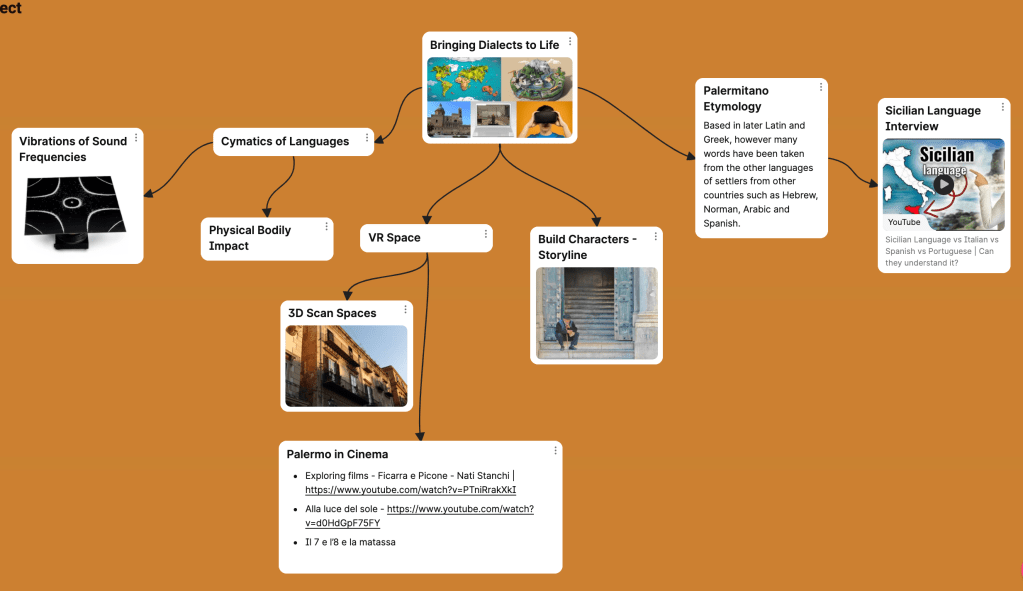
I then decided to create a mindmap of my ideas on Padlet so I could visualise my thoughts and topics I was exploring at that time.
Padlet Idea Mindmap
A Little Book of Language, David Crystal
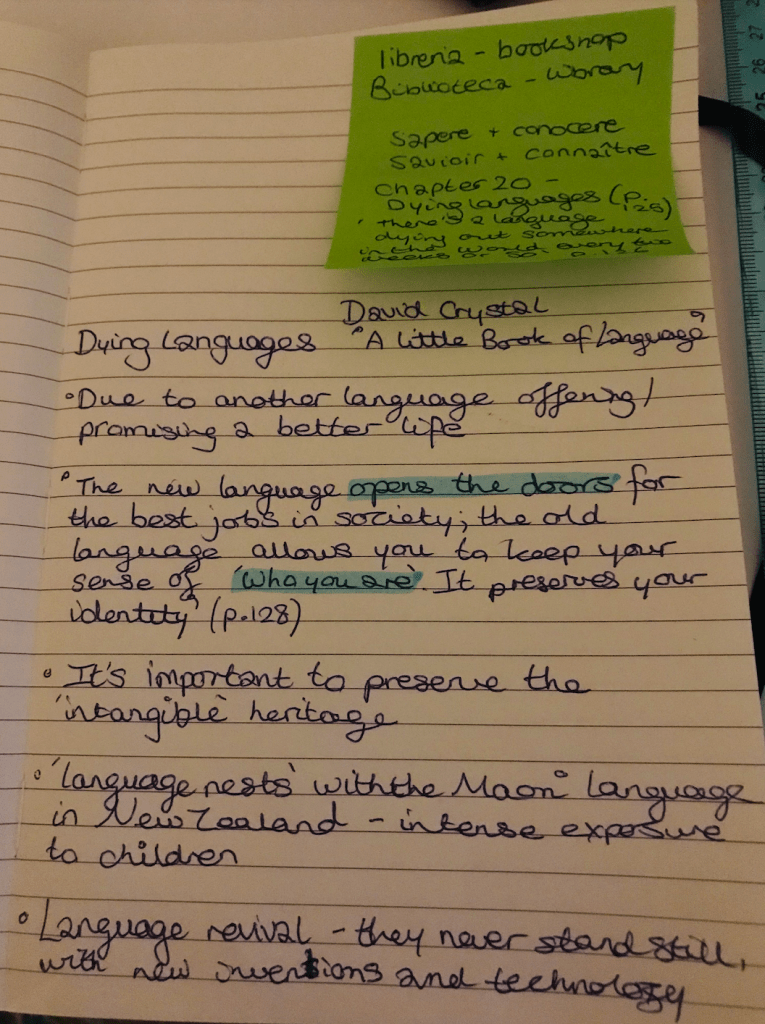
One of my lecturers leant me a book called A Little Book of Language by David Crystal. As soon as I started reading it, I knew that I would have learnt something from it. The chapters I read were Baby-Talk(1), Comparing Languages(19), Dying Languages(20) and Language Change(21). I found all of the chapters very interesting to read and managed to highlight the parts that stood out the most below…
Notes Taken from A Little Book of Language by David Crystal
Reading this book gave me inspiration to start the 100 words write-up due for the end of the month.
100 Words
A language dies every two weeks. Therefore culture fades along with it. Maintaining a grip on less used languages is a nightmare in this society with the world progressing quickly with technology and human connection. Thousands of languages are being lost every year due to more popular languages being learnt and used more frequently. Less spoken dialects and sub-dialects hold the keys to culture across the world. The question this major project targets is ‘What if we could bring dialects to life?‘. Learning a new language opens doors for your future, but remembering your old language reminds you of ‘who you are‘ and your cultural history.
Over the Christmas break, we were told to think about what topics we were the most interested in and to think of ways of making it into a major project. In the last term we were exposed to many interesting possible avenues to explore such as learning how to use AI, virtual reality, Cryptoart and more. Experimenting with these new mediums inspired me to research more about these innovate technologies and to find a topic or question to explore.
In the last term, I was exploring VR and learnt how it could be used as a tool to educate people. I knew that this progressive technology is being used in the Metaverse and therefore I wanted to explore this ‘realm’ at a greater depth.
We are advised to chose a topic that we were passionate about, so I brainstormed the many things I am interested in and decided on what elements I could apply to my Major Project. The main topic that came to mind was etymology and languages.
Etymology and Languages with VR
Learning the etymology of dialects and languages has been one of my main interests for years, so I wanted to find a way of linking this curiosity to the Metaverse and VR environments. I thought about creating a walk through experience of cities and towns where inhabitants converse in ancient dialects so linguists can experience the reality of other ‘languages’ that still exist today.
Moodboard framing initial visual and conceptual ideas
Having lived in Italy myself, I was exposed to many different dialects when I travelled through cities and small villages around the country (more than 100). One I have spoken in frequently was Palermitano, a Sicilian dialect which is made up of a mix of languages such as Arabic, Hebrew, Byzantine and Norman. The dialect reveals the islands history and personality of its culture.
This then posed the question ‘What if we could connect with ancient languages through VR?‘
Dialects are being lost in smaller communities across countries due to lack of passion and interest. Bringing a dialect to life through an interactive 3D experience would attract audiences to discover more about the roots of each sub-dialect/dialect in the area.
There is also a lack of accessibility to learning colloquial phrases and dialect in language learning online and in schools, so having an immersive experience in a 3D world would enhance learning and interest to ‘become a local’ and sustain culture in communities across the world.
By discussing my topic with other classmates, I was able to gather insight about external content others have been exposed to online regarding language learning in VR. One reference I found particularly valuable was a podcast called ‘Learning English in the Metaverse’ where Andy Johnson, the director of FluentWorlds, is interviewed about his experience of teaching english in VR and how it differs to the everyday in-person teaching we are used to.
This school explores learning English in virtual environments developed and created by the company. FluentWorlds has created a place where students can interact with the teacher and the environment while learning new vocabulary, grammar etc. Learning while doing is proven to have a lasting effect when remembering lessons learnt. Even though the student could be in a sedentary state in the physical, the movement in VR enhances brain muscle memory allowing the student to connect to an experience rather than just something they were told.
Considering I chose Palermo (the capital of Sicily, Italy) as the chosen city to start my major project research on, I looked into whether anything had previously been done in VR for the city. Online I could find only VR yours around the city but no games or experiences had been made so this was a gap in the market.
I also looked into the accessibility of learning Italian dialects online and found the UI and UX of the websites were very dated and difficult to navigate. Furthermore, the pages with the entire dictionary were mainly in Italian so people with no knowledge of the language would have difficulty in accessing it.
Google Translate is able to translate 109 languages, however has missed out dialects and less spoken languages which almost rules them out as forms of spoken communication in the western world.
In class I was able to share my initial ideas with a small group and the entire class. This helped me to verbalise and have feedback on my thoughts. The response from everyone was very positive and they thought the topic and ideas had great potential.
At this point I had many ideas to look into but wasn’t sure what to focus on first. I decided that I would blog each topic I was researching individually so my process wouldn’t be too intimidating. I decided I would look at two topics before my next lesson – researching into Palermo (the language roots, atmosphere and environment of the city etc), and how to visualise sound.
Research on Palermitano
When researching about the Sicilian sub-dialect (dialetto locale) Palermitano, I discovered how the roots of the language are mainly based in later Latin and Greek, however many words have been taken from the other languages of settlers from other countries such as Hebrew, Norman, Arabic and Spanish. After reading in greater depth about the dialect, I was inspired to set up an interview/ game where people who speak the derived languages can see if they understand the Palermitano dialect.
Game Idea Idea – Play the guess the object game by video call Outcome – Understand which languages could comprehend Palermitano the best! Languages – Italian, Norman French, Hebrew, Arabic, Spanish, Latin and Greek
Before creating this interview, I thought it would be important to understand the physical bodily impact each language has and how each linguistic sound differs. I also wanted to experiment with how these differences could be visualised.
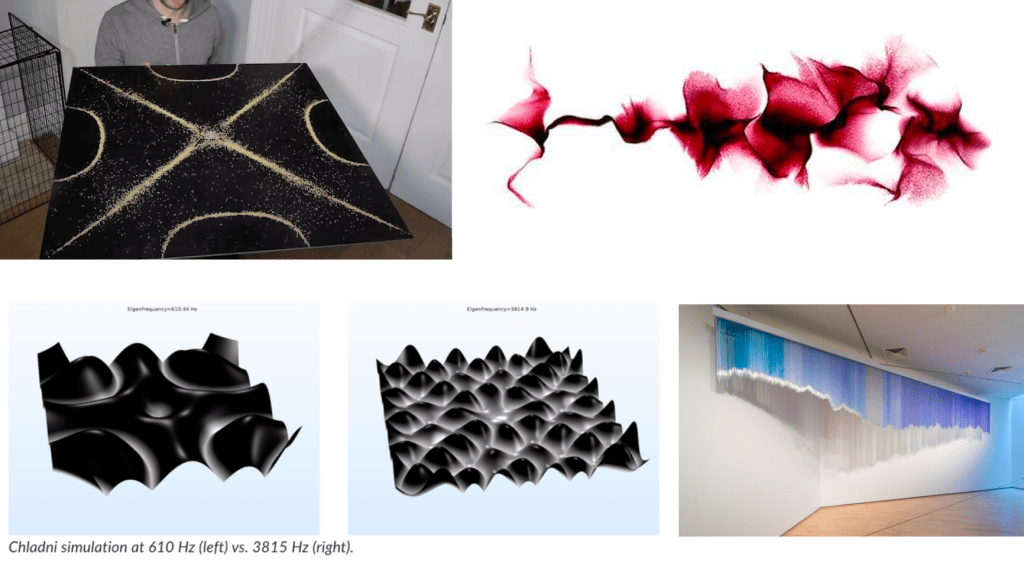
Sound Art
Learning about the physicality of frequencies of sound and how they can be formed into pieces of art inspired me to look into how languages can be created physically. Learning about Chladni Plates was one of the most fascinating parts of this research as it perfectly demonstrates how vibrations and frequencies create shapes.
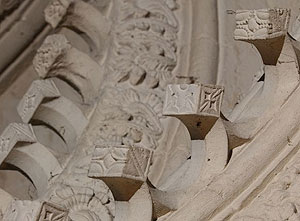
After speaking to a classmate about my idea, he mentioned how the Rosslyn Chapel has stone cubes on the arches which look like Chladni shapes. Each cube forms the shape of a frequency (therefore note) and once played, some say creates a melody.
I presented the progress I made over the last few weeks to my class and lecturer. This was a pleasure to do as I was more confident and immersed in my idea by this stage. The feedback received is summarised and listed below.
Use preexisting 3D models/ streets on Blender – you don’t need to make everything from scratch
Script option in 3 languages with 3 buttons
Create a Mockup with the audio placement in scene
Fight scene needs to be more comprehensible – more gaps between speech
The reveal needs to be more extreme – “Nonna!!”
Notes taken from watching over presentations
VR chat has plug ins
Add world into Unity not Blender (due to polygon count limit)
Thousands of languages are being lost every year due to more popular languages being learnt and used more frequently. Less spoken dialects and sub-dialects hold the keys to culture and history across the world. ‘What if we could bring dialects to life?’.
Native Walk is an immersive language learning experience in virtual reality where audiences can walk through different neighbourhoods across the world and hear the original dialects of the area. In this specific experience, the scene is based in Palermo where we will follow a comedic story-line while listening to the Palermitan dialect through its characters. The viewer will engage with the language while unraveling the story’s engaging narrative.
Group Feedback
For the first WIP of the final major project, we were asked to give feedback to our classmates on their work and at the same time receive pointers to work on our own projects. This session was very beneficial as I was able to see where other members of the class were at and be inspired by their processes. What I enjoyed seeing the most was that everyones ideas were different, so we will all eventually have very unique outcomes.
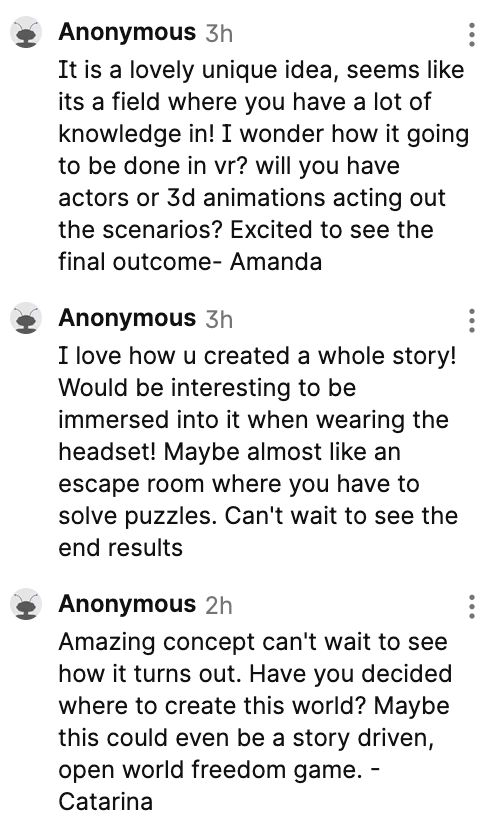
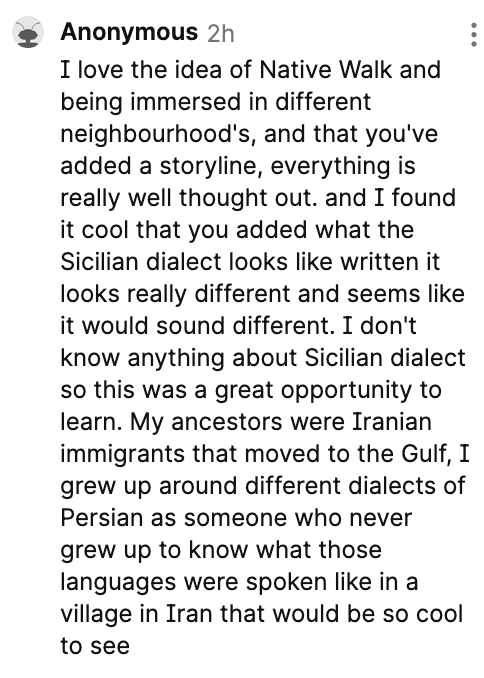
The comments below are some written advice I received during this WIP. Each comment was very useful and made me think about the next part of my project.
The first comment asked whether I would use 3D animations acting out different scenes in the final outcome. I answered the questions in the lesson where I mentioned I would like to keep the characters static so the language audio recordings would be the main focus rather than the business of the scene. This comment inspired me to look into using GIFS to bring static characters to life and to play with expressive faces and positioning characters in spaces.
The second comment mentioned whether the experience would have an escape-room layout (solving puzzles). The customer journey would guide the audience through ‘La Ladra Della Salsa) so the emphasis will be on the dialogue and story rather than a gamified approach.
The third comment mentioned how it could be an open world game and asked where it would be created. The experience will be created on either Mozilla Hubs or Spatial depending on its capabilities with adding audio and 3D elements. The open world aspect would be included as the audience can move where ever they like within the space but will be guided by the storyline. From this comment I was inspired to create a mock-up of a virtual space with audio clips on both platforms.
The fourth comment was inspiring as the class member was very inspired by the insight and possible outcome of the project as it connected with her experience with dialects growing up. This inspired me to continue preparing for the interviewing part of the project when I go to Italy and speak to the Sicilians in person.
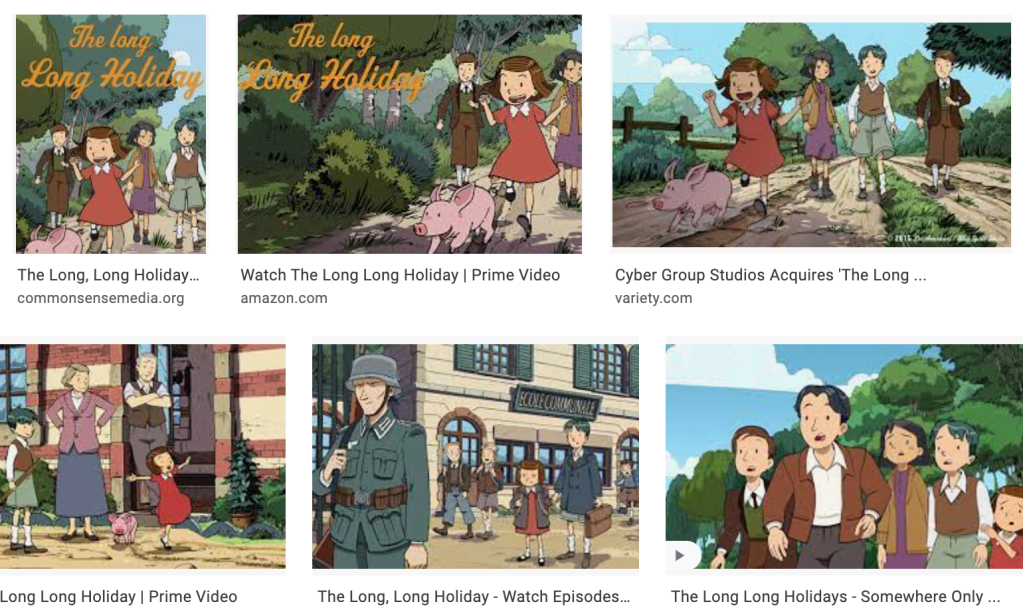
The fifth comment mentioned not sticking to a corporate style when creating the characters, but rather look into other unique styles such as the example below of ‘The Long Long Holiday’.
Other comments from the lecturers and students included: – ‘You only need to do one thing at a time’ don’t put too much pressure on yourself to do everything at once – The script is strong and idea and is making your project immersive through storytelling and theatre – Work with theatrical audio
After hearing these comments I was also inspired to look into surround sound and placing voices within a scene.
Later on in the week, I presented my pitch to my lecturers and classmates. The main feedback I received was positive and one lecturer mentioned to make the project more unreal (in surroundings) so it doesn’t become unrealistic. I considered this comment when I went onto the next stage of the major project.
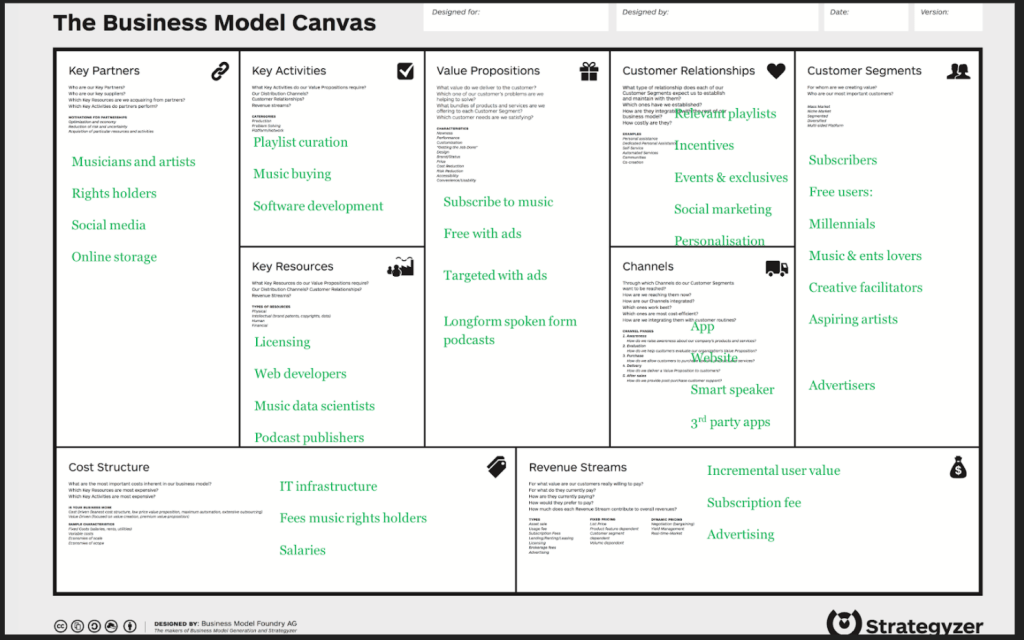
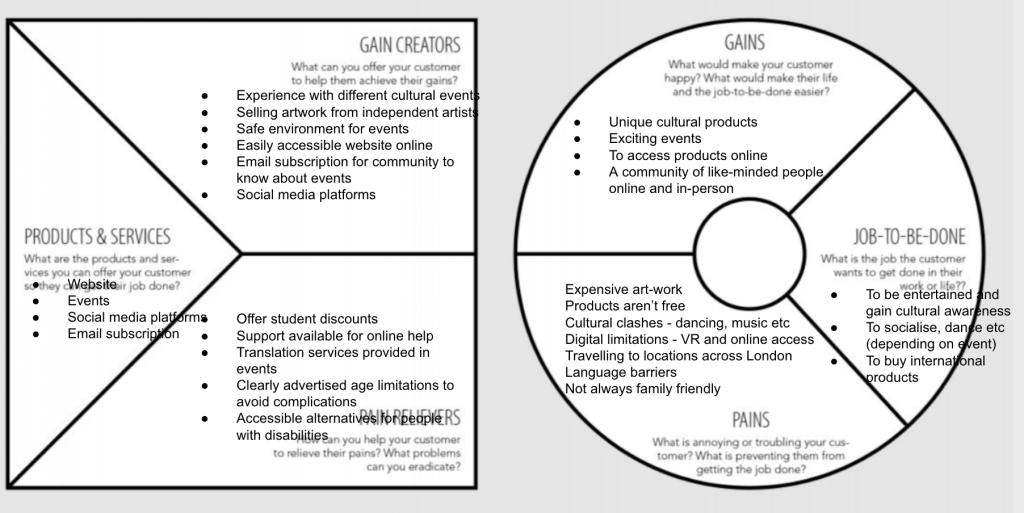
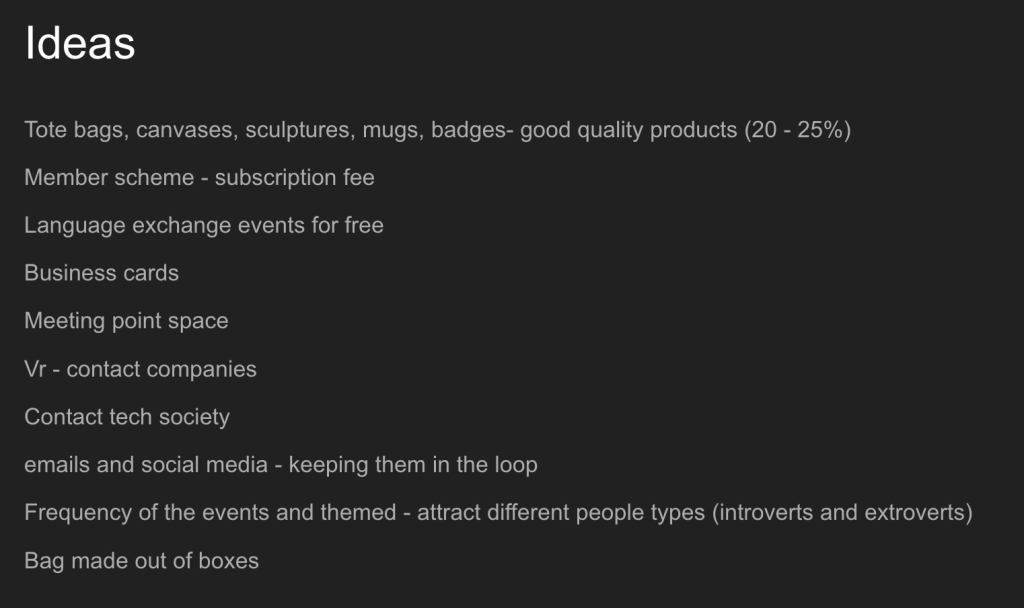
In this module I developed and created a business model for a new start-up company in a group. I worked alongside Luke and Esdras to complete this project and below is a weekly blog of how we created a business model and presented it within three months.
1st – 10th Oct
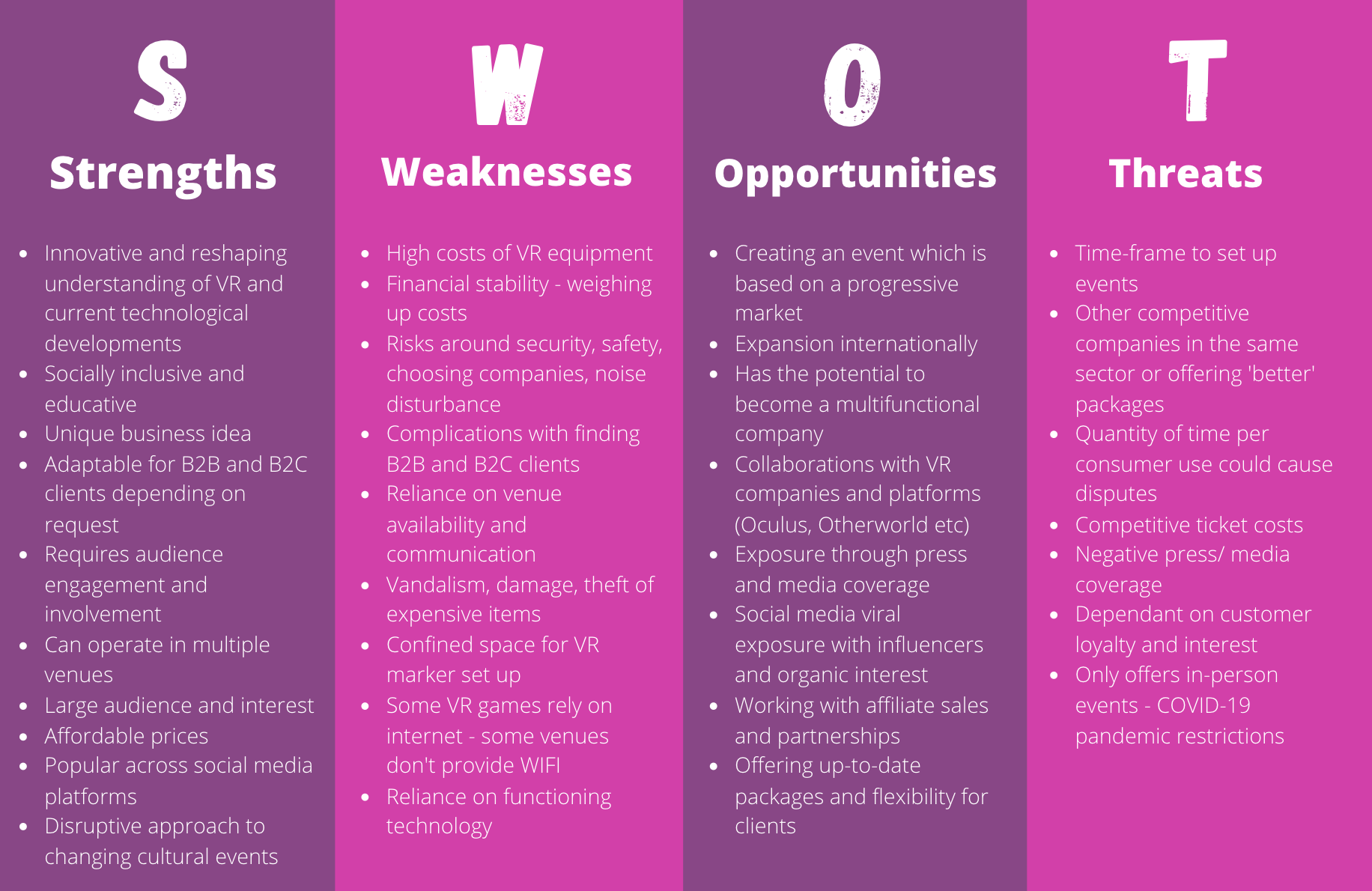
The first week consisted of forming the team and brainstorming initial ideas. We created our initial docs and folders to work from and started working on our initial ideas. The idea we decided on was to create an event style cultural hub where people could congregate and attend events where our venue would pop up. We held 3 teams meetings as a group and discussed our ideas. In the meantime we worked on the MVP – minimal viable product and SWOT analysis.
11th – 17thOct
The second week was when we staring building on our ideas while also trying to find a way of simplifying it. We discussed with out lecturer how achievable our project would be and further developed out SWOT analysis and first draft of business model.
I brainstormed names such as: Interwave, Hub on Wheels, Cultural Hub, Art Drop, Jigsaw Cultural Hub and the tagline ‘Connecting locations of the city together’. The team were enthusiastic but also not sure about our main business idea. We set tasks for following week to create a manifesto and visual board each to push our idea further.
By reassessing our company ideas, we decided to work simply on a VR event instead of over complicating the brief. We further brainstormed names (Jigsaw etc) but still weren’t convinced. Talked about having an online shop and music truck/bus. Had an appointment with Xavier to experience VR headsets and experienced VR properly as a group. We decided to focus purely on VR experience rather than a food truck concept.
25th – 31stOct
We started planning for our first event as a group and prepared for the pitch. Unfortunately I caught COVID-19 on this week so wasn’t able to participate in the event as planned. I worked on creating the post-event survey online and used Eventbrite to create the event and the tickets. As a group we were in constant contact helping eachother out with various tasks such as booking the room & lights, thinking of what to include in the pitch etc.
There were some problems when inviting people to come to the event as it was to take place on a Friday morning so most students had lessons then. I only managed to find one person who was interested, however the rest of the team did not which meant the eventual turnout was less than hoped for.
First VR Event
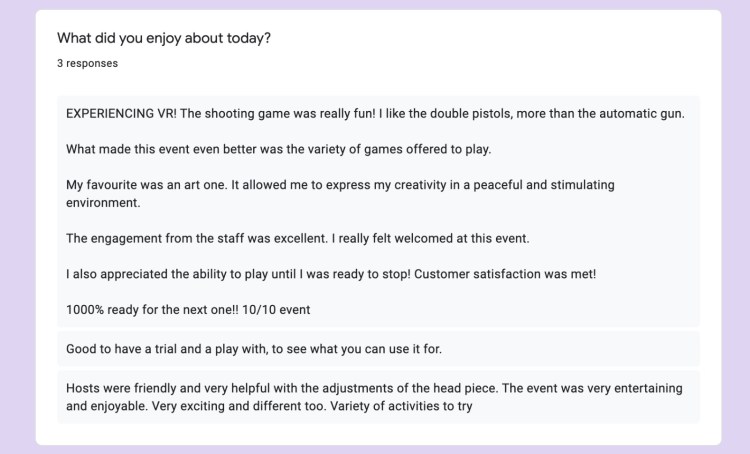
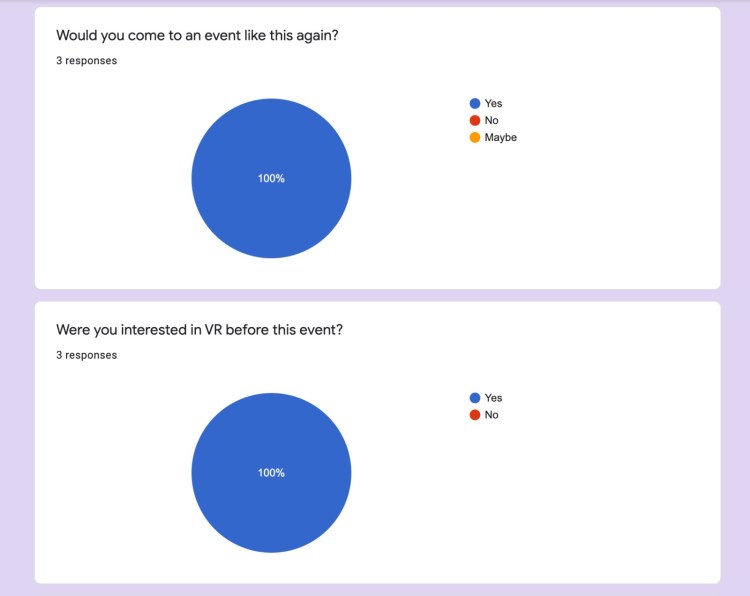
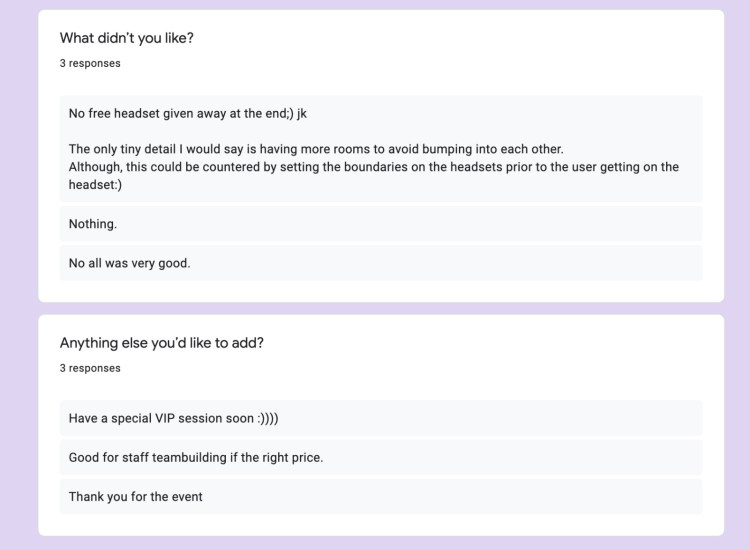
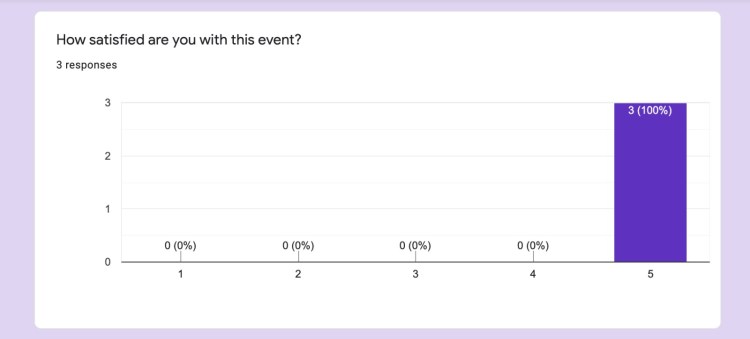
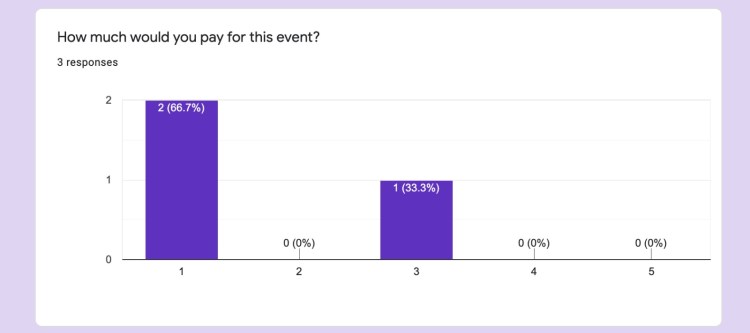
The event was held in a studio on campus from 10.30 to 12.00. We had a projector with a futuristic moving image on repeat to set the right ambience. In the end we had 8 people turn up which was more than expected thanks to word-of-mouth invites. The customers gave very positive feedback and they recorded it on the survey I created prior to the event.
5 Minute Pitch
The pitch was given by my teammates as I was unable to attend due to illness. However I watched online and was able to give feedback after the call. The presentation was a bit shaky and my team didn’t give off the impression they were confident in the events company.
Our feedback from Ash/Shannie: VR functions Pitch wasn’t clear but great idea Build it out to be specific, is it kids party or business events? Weddings? Where is your best market? Will help define costs, audience etc.
Following from this we noted what we needed to improve on for next time and what we needed to be more clear on and to develop in our updated event prototype.
1st – 7thNov
We had several group meetings to build up the business documents (SWOT etc). Discussed VR event, reflecting on our first prototype event and pitch and thinking about our target audiences.
We set tasks to complete throughout the week: Katie – Manifesto and SWOT analysis and add info collected in lessons Esdras – Business idea and model Luke – Marketing and social plan with relevant channels – gathering assets etc All – Create plan, template of event schedule and what to expect
Decided to document our meetings.
At this point we started to document our meetings better and began building up our Enterprise Plan document. We reflected more on the previous pitch and thought to have VR headsets in our hands.
We discussed locations for VR events, Argil sculpting, target Art/exhibits businesses, ‘Not my beautiful house’. Following on from this we bought tickets for a VR event called Other World in London Victoria.
8th – 14thNov
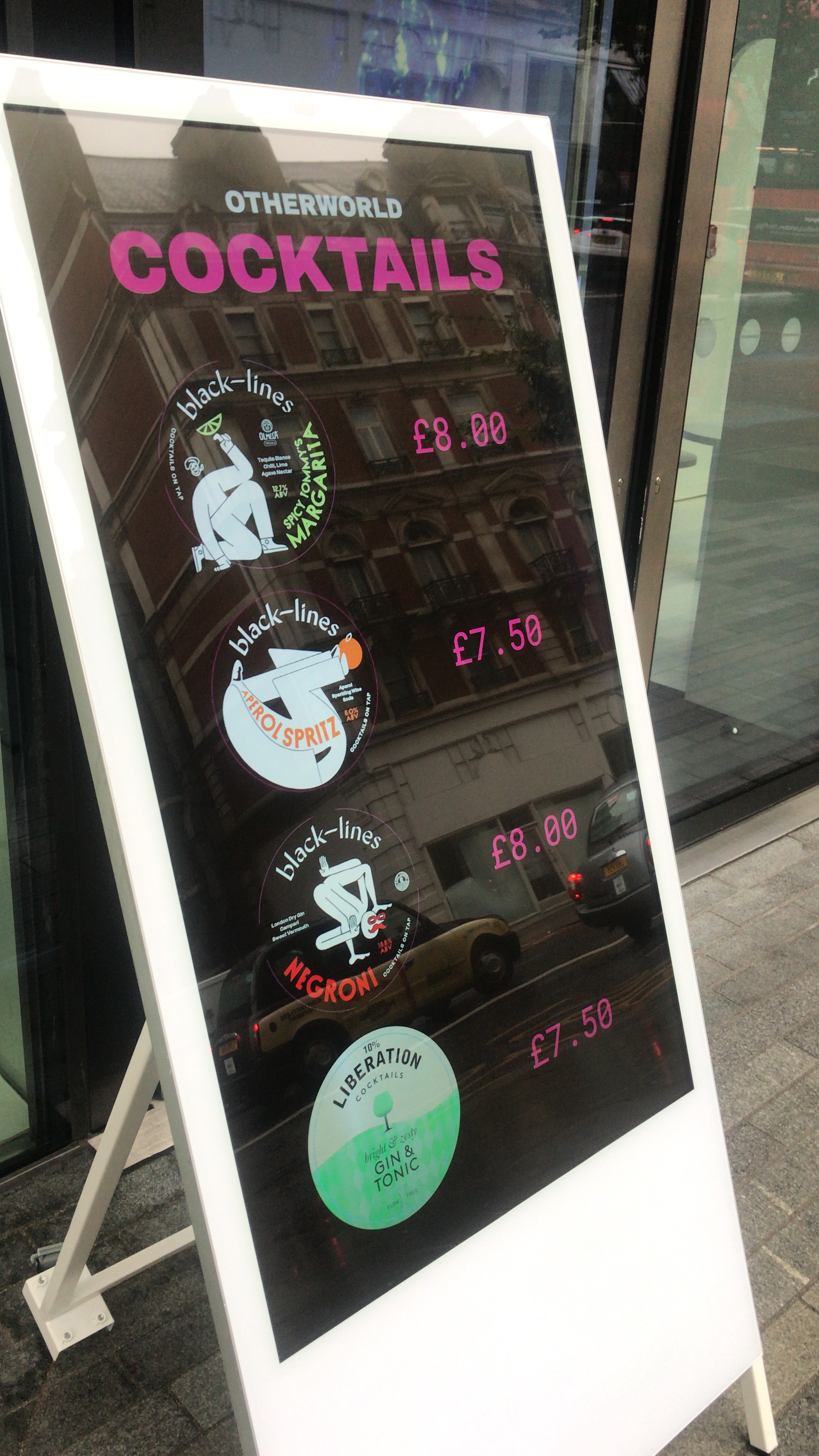
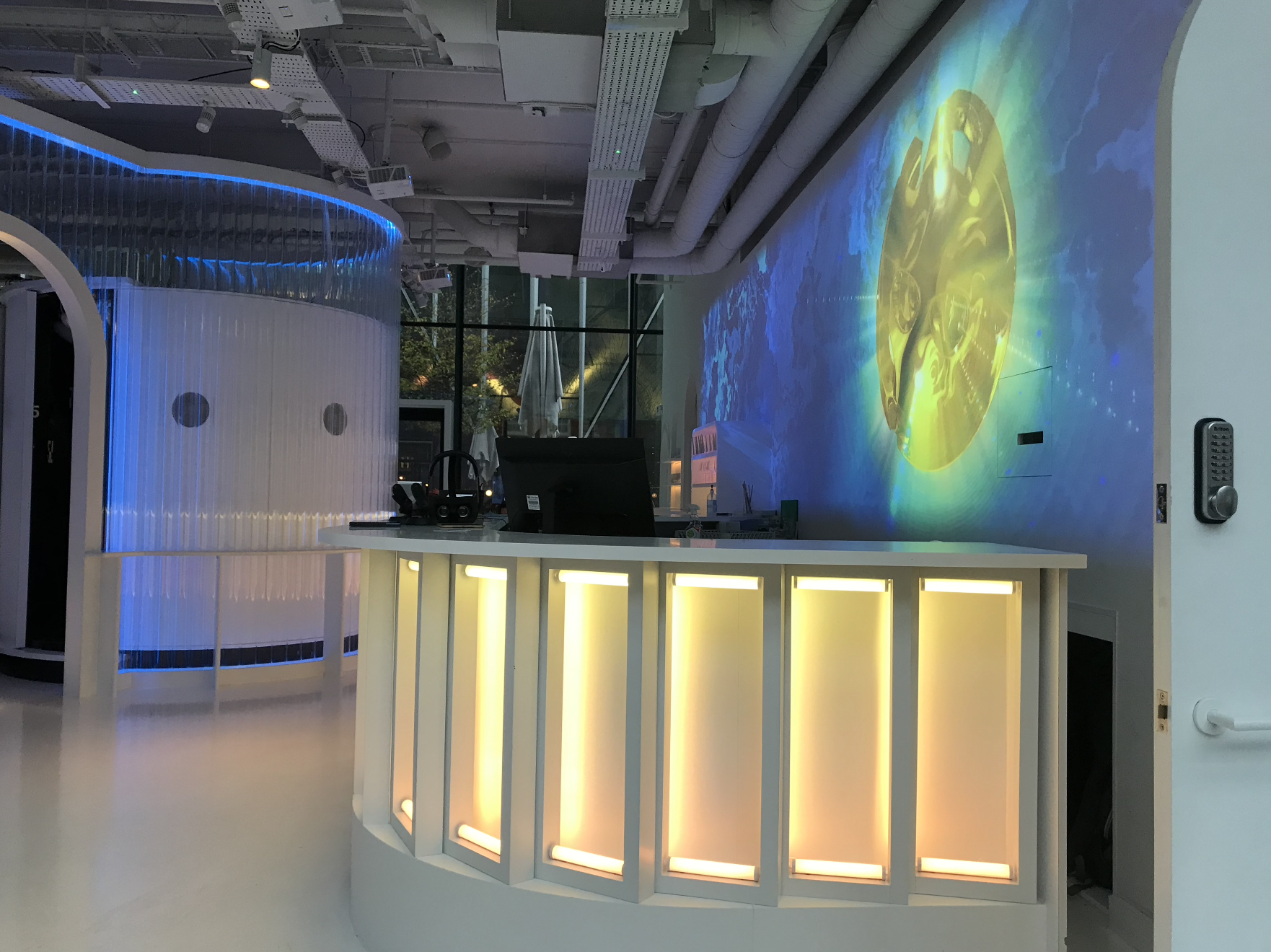
As a team we went to an Otherworld VR experience in London Victoria to experience VR in a joint game environment. It wasn’t as good as we thought it was going to be due to technical issues and lack of guidance by the company employees. However knowing these faults in the organisation helped us to know what to avoid in our events.
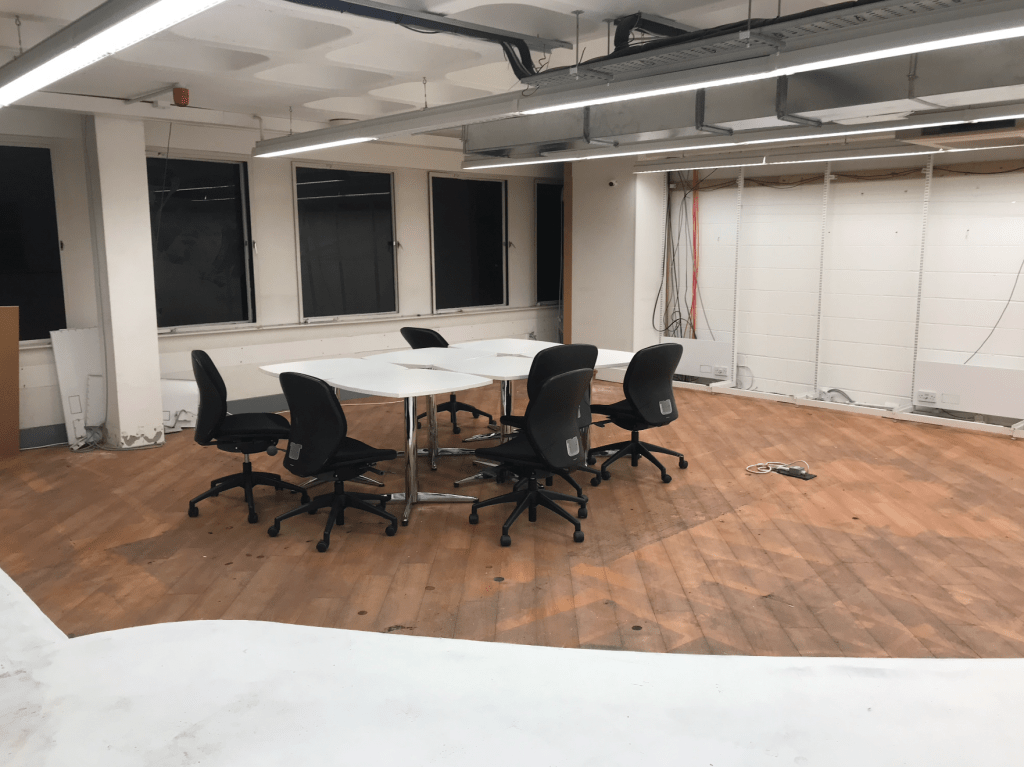
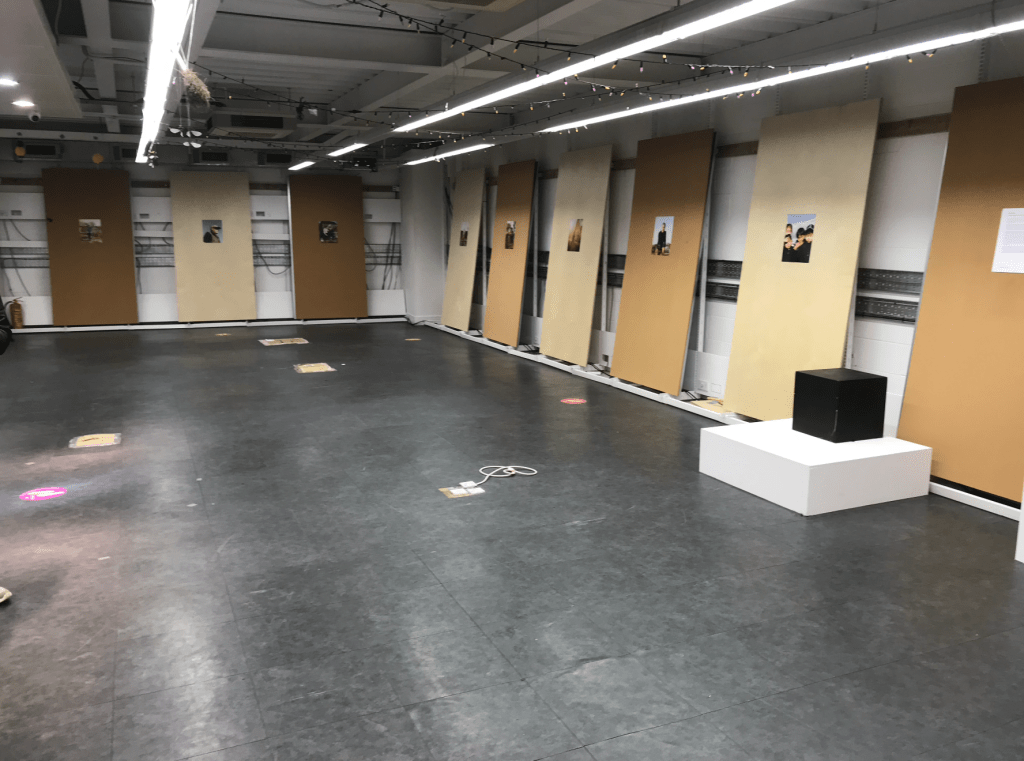
Talked with the lecturer about our business plan and VR event. We then planned next step and another event the following week. After the lecture we went as a team to visit the venue ‘Not My Beautiful Home’ to get an idea of the space we might be working with. While we were there we asked about availability, the use of space, lighting options etc. During out visit, I took pictures so we could refer to them after the visit.
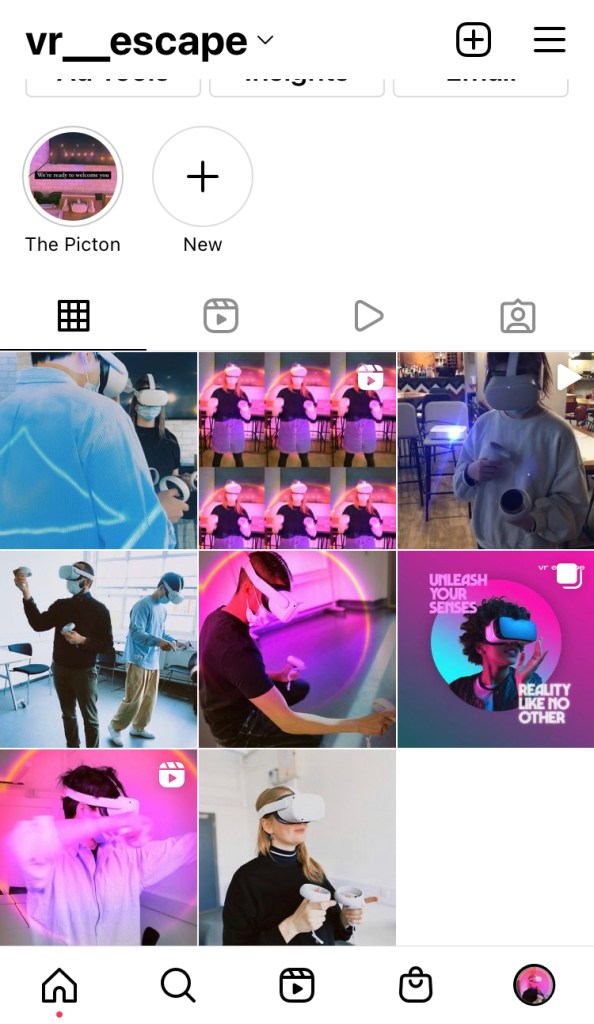
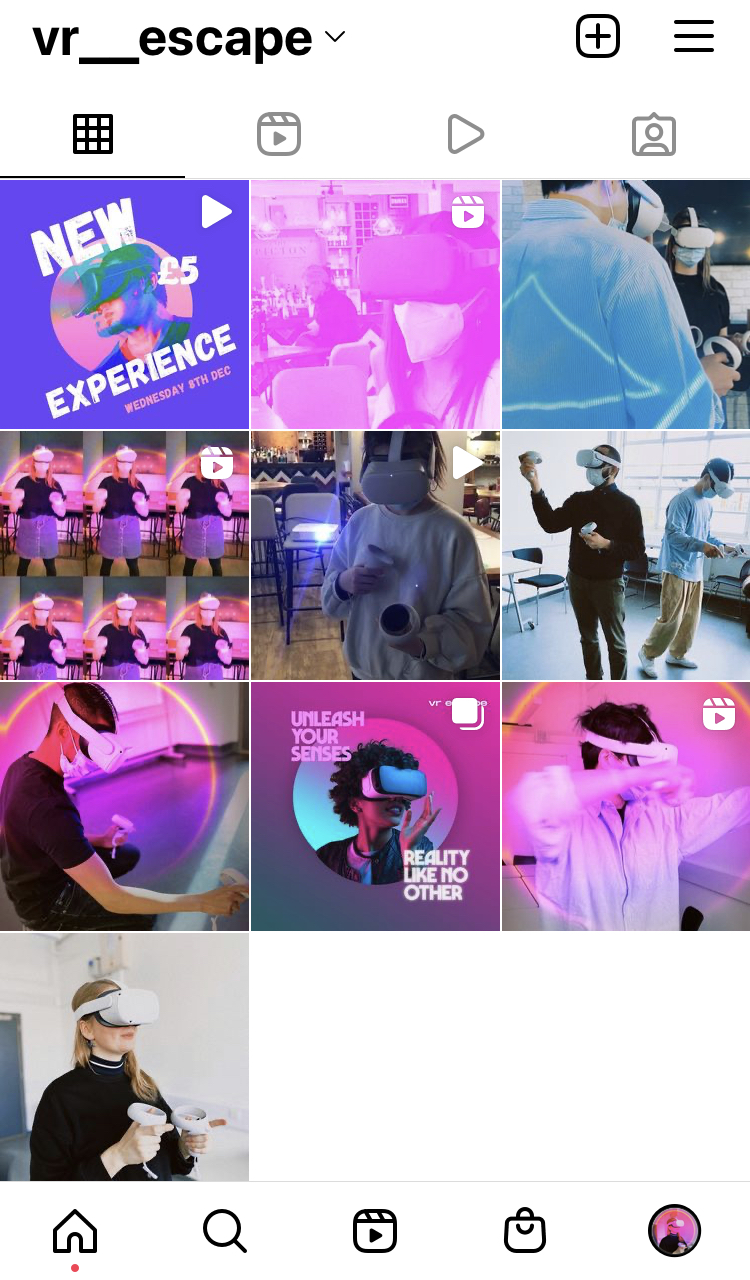
We set tasks for each of us to do over the weekend: Katie – Risk, email Xavier for VR headset, survey, tickets, QR code generate Esdras – Poster, marketing strategy (printing etc) Luke – Email claire and ‘not my beautiful home. for event, music for the day and speakers, ask if they have projectors or book them out, set up instagram account
15th – 21stNov
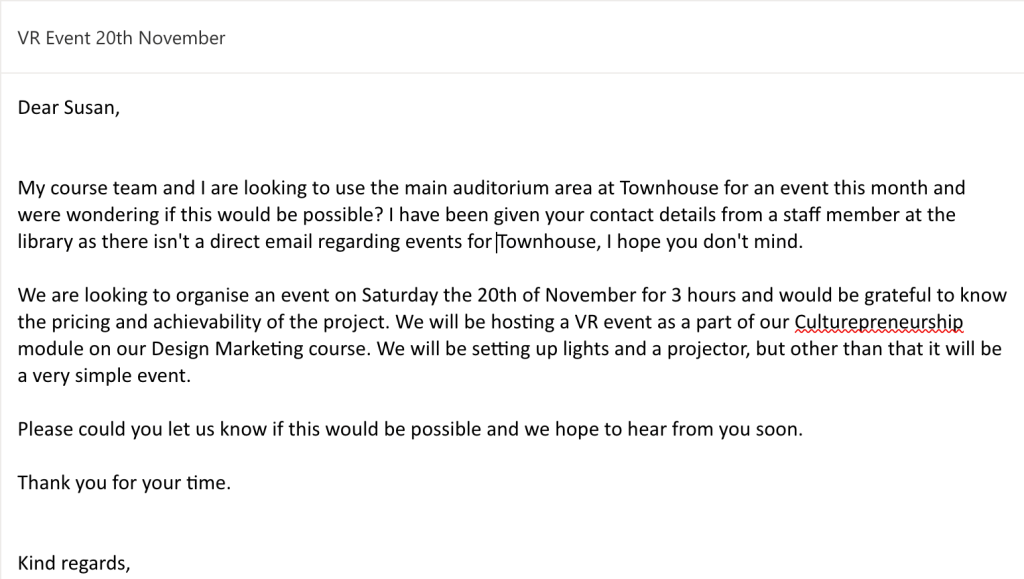
Over the weekend we hadn’t received any responses back from venues we had contacted the week before, this meant we were set back with out planning. I contacted the university and spoke to the Townhouse team who gave me the contact info for the manager of the venue. I sent an email to the library manager about the event.
After communicating via email with the library manager, I booked a viewing for the following day to see what facilities we could use.
On the 16th we had a VR session with our course tutor who took us through Rec Room on two headsets. We had difficulties with the internet connection so weren’t able to play any multiplayer games. To resolve this I suggested using our mobile hotspots, however we still couldn’t connect to group activities.
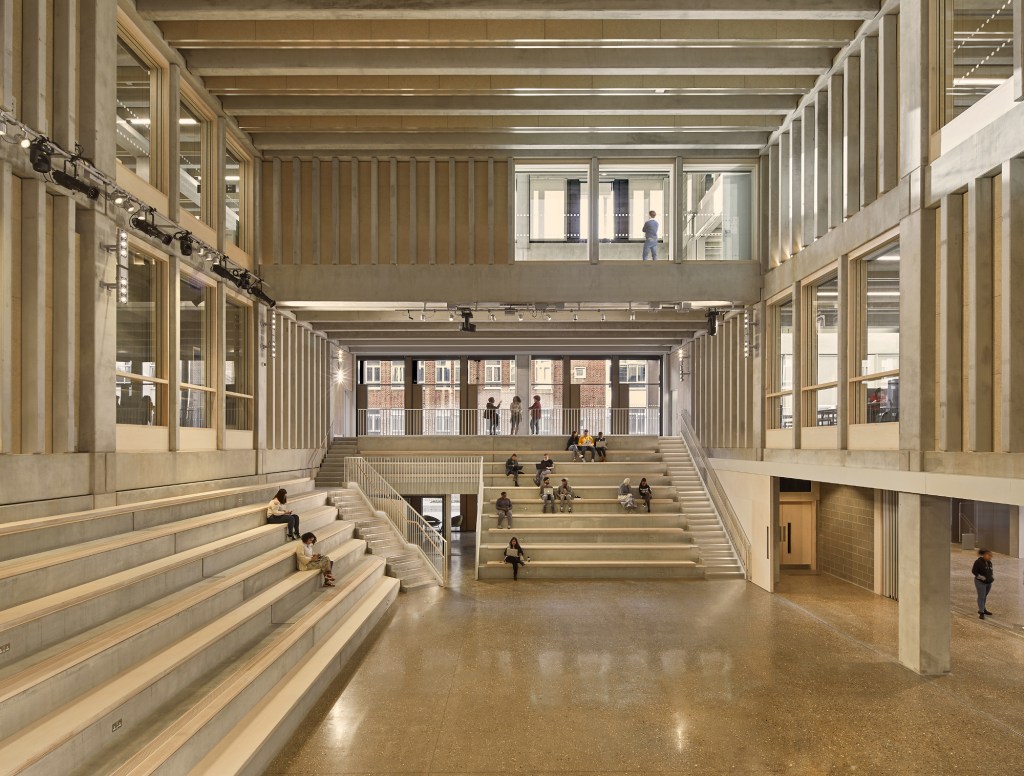
After this VR session, we went to meet the library manager who we spoke about the project to and who explained the facilities we could use for the event. Our preferred location was the Courtyard which is located near the entrance of the Townhouse building. It is an open space and was ideal for our event. We then forwarded a booking link to our lecturers to get permission to book the venue and then waited for news from the events team in Townhouse.
The Courtyard venue we requested for
Second Event
The event was successful, we had 5 customers over three 45 minute hour slots which was better than expected. As a group we worked well together and were able to work to each-others strengths and abilities. The event started at 10.00am and we finished at 13.00. The most customers came towards the end as they were finishing their lectures around that time. A friend of mine was able to help with promoting the event around the Townhouse by attaching a poster to his back and encouraging people to come along/ scan our Instagram QR code to be kept in the loop for future events. This was very helpful and we managed to find customers just by walking around and speaking with them in person. Our lecturers attended the event for a bit to see how everything was going, and they were impressed by the set up and organisation.
Planning and holding this event tested our organisational skills and pushed us to work with a last minute response from the venue and late bookings from customers. Our biggest challenge was not knowing whether we would have a venue or not, as all of the companies we contacted didn’t get back to us. We managed to get this space as we went to the manager and her manager in person and she confirmed the use of space there and then.
We agreed to focus on the marketing and TLS part of the event for the next one as the venues proved to be very unpredictable.
Our instagram at this point gained lots of new followers which boosted our customer interest for our future event.
22nd – 28th Nov
On the 22nd we had an online Teams meeting as a three, where we worked on our competitor document and continued working on our finance model. We contacted venues for the following week but still didn’t receive any replies. We then decided we would book out one of the CCI studios for our next event so we would be sure to have a place to work with.
Later on in the week we had another meeting where we gathered the games we can offer as a company:
Beat Saber
The Creed Boxing
Tutorial – First Steps
Goliath – Experience
Tilt Brush
Fruit Ninja
We agreed on having our next event on the 8th of December so we would have time to gain customers and interest prior to the event. We decided our main MVP would be B2C and we would eventually offer B2B packages. After this, we distributed tasks among ourselves and organised to meet the following week in person to work on the documents together.
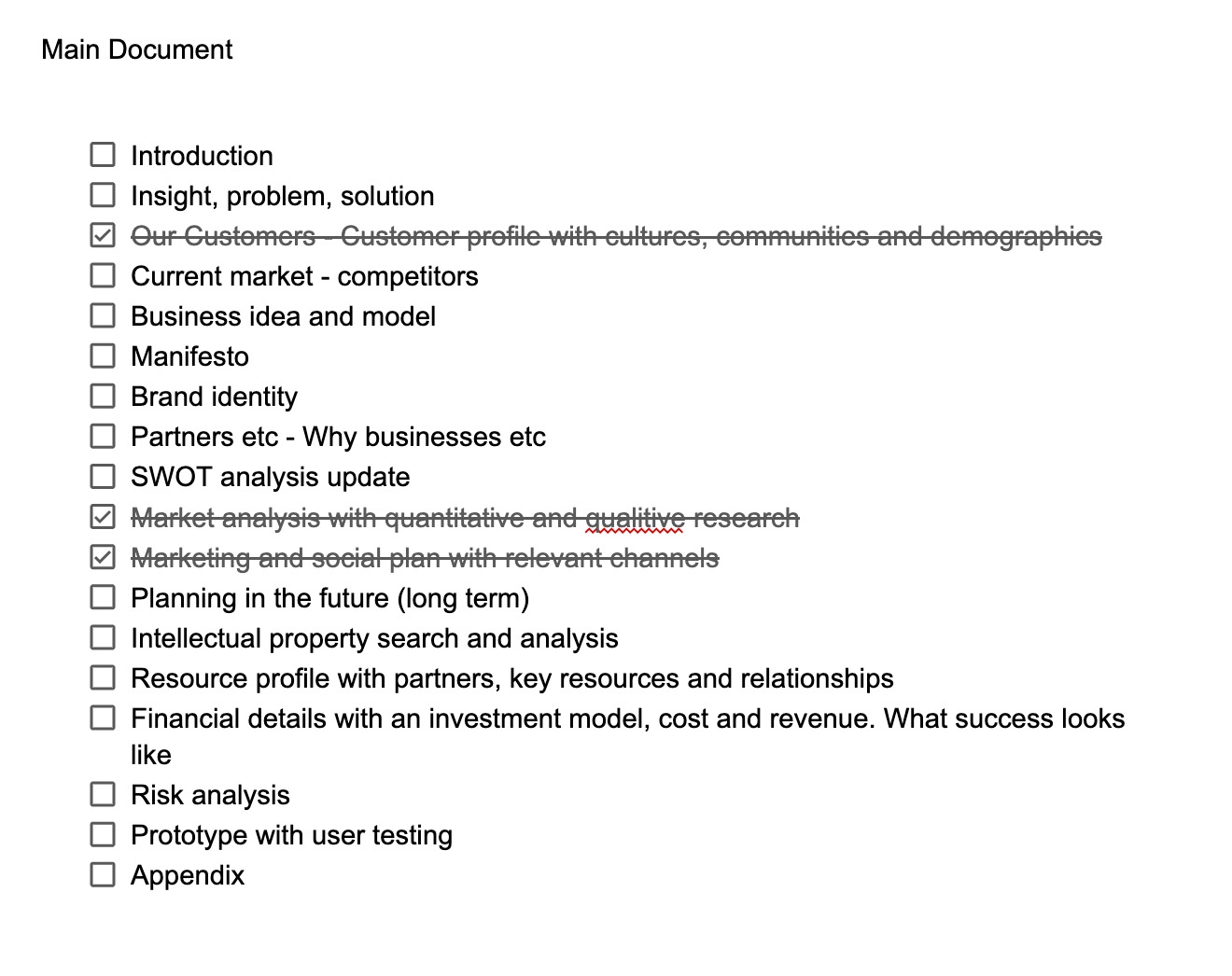
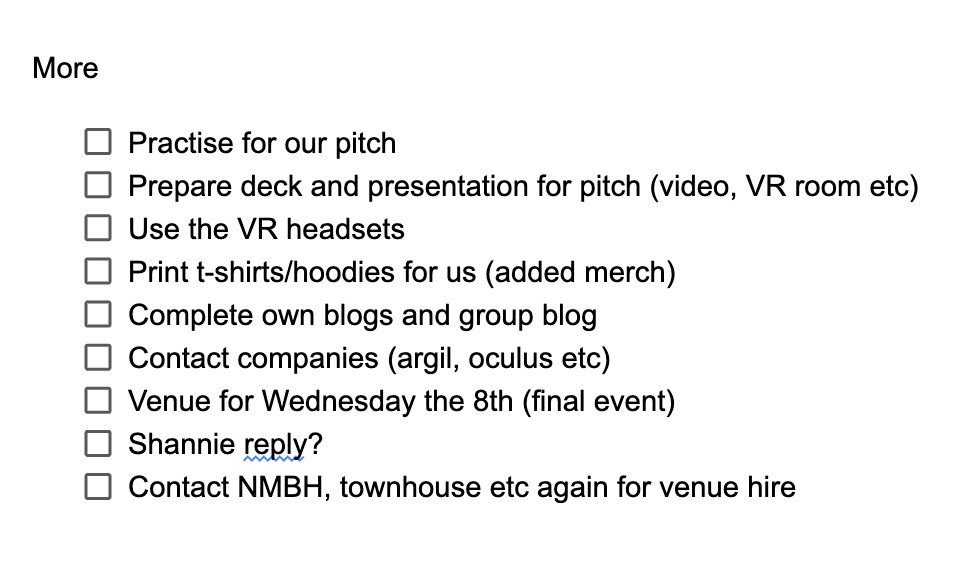
In the meantime I created checklists for us to complete over the next few weeks so we could see visually what we needed to achieve.
29th Nov – 5th Dec
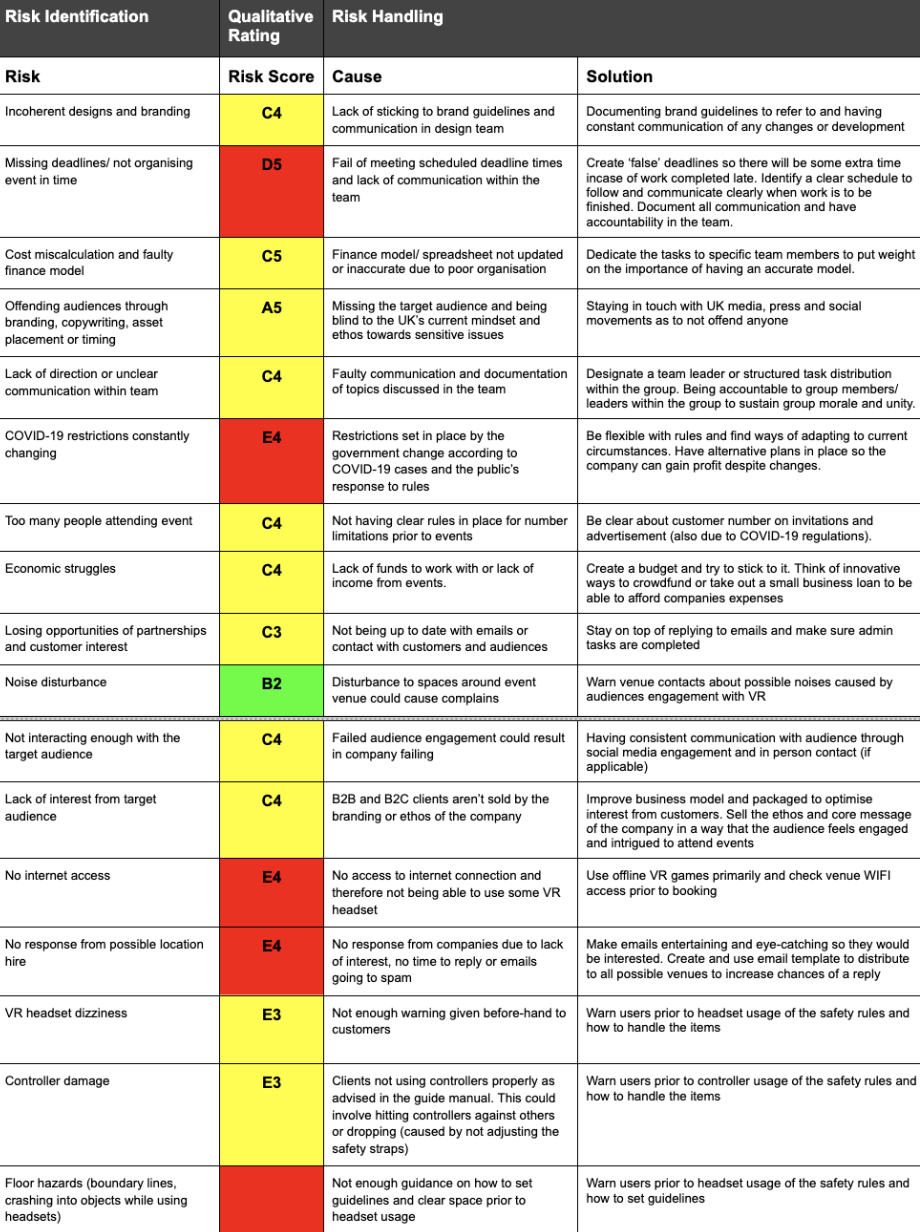
Independently I completed the Risk Analysis section of the document and finished/ updated the SWOT Analysis. Filling out these documents allowed me to reflect on what we offer as a company and gave me ideas to bring to the group about the Manifesto section in our following meeting.
In the meantime I was in communication with our lecturers and venues for our final event. Due to the lack of response from our ideal spaces, we requested to use one of the KSA rooms instead which was free of charge and available to use.
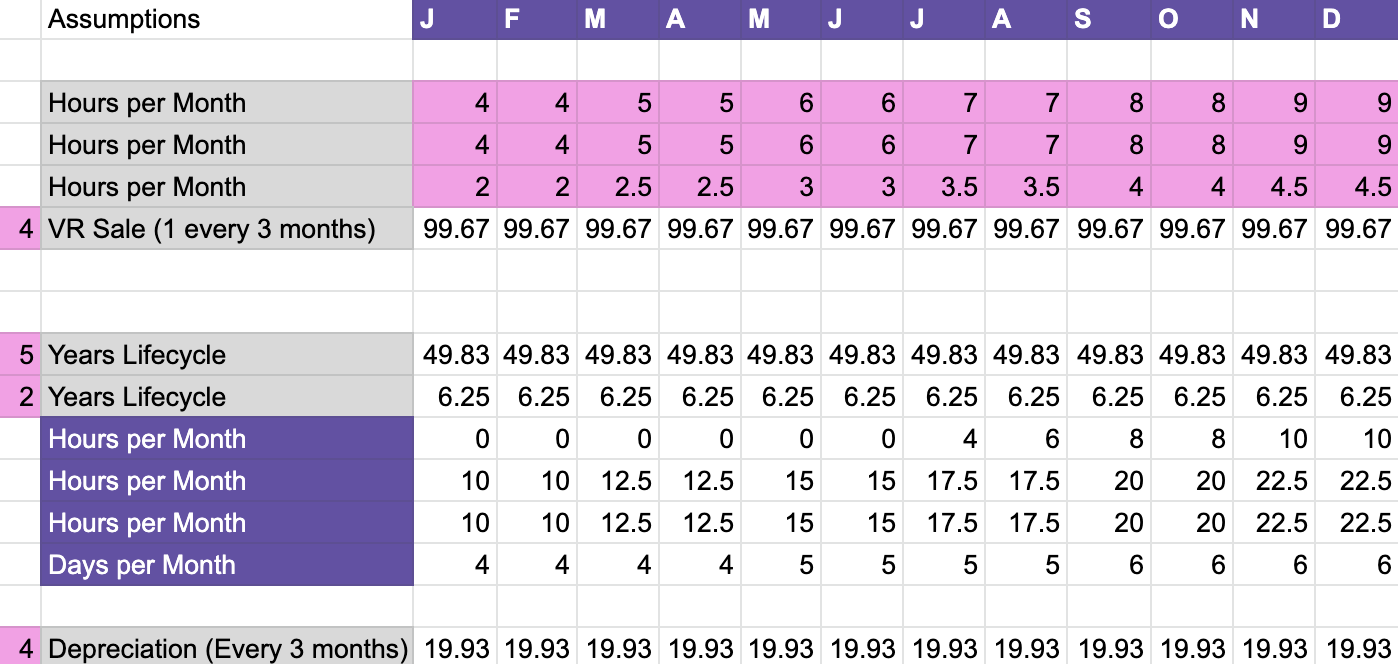
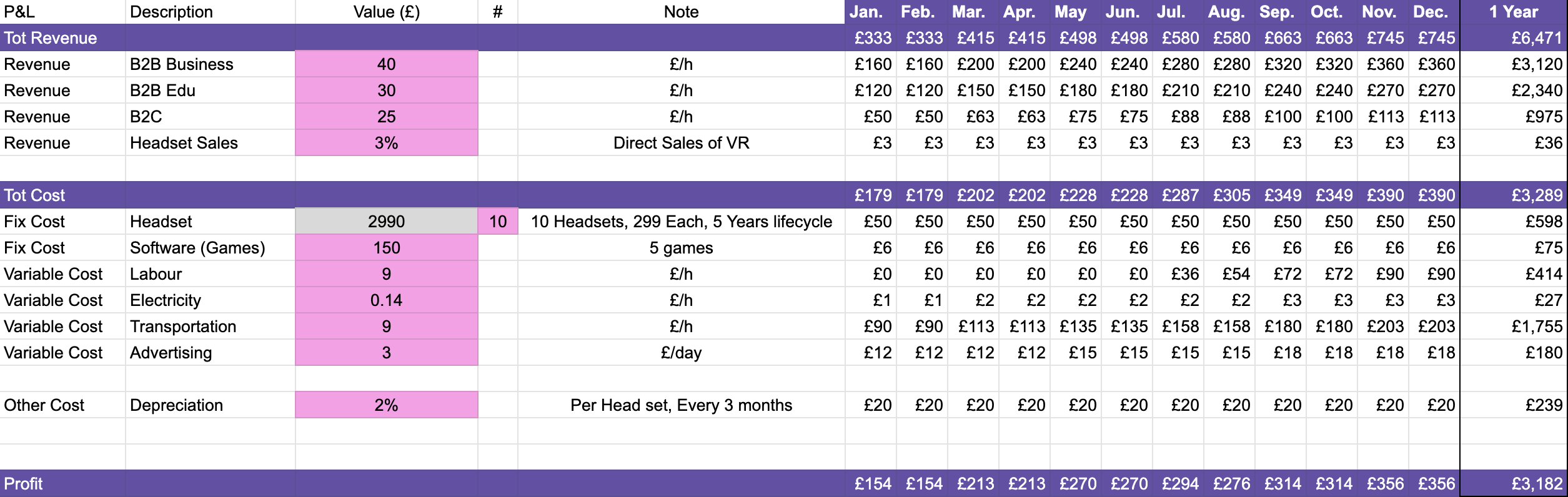
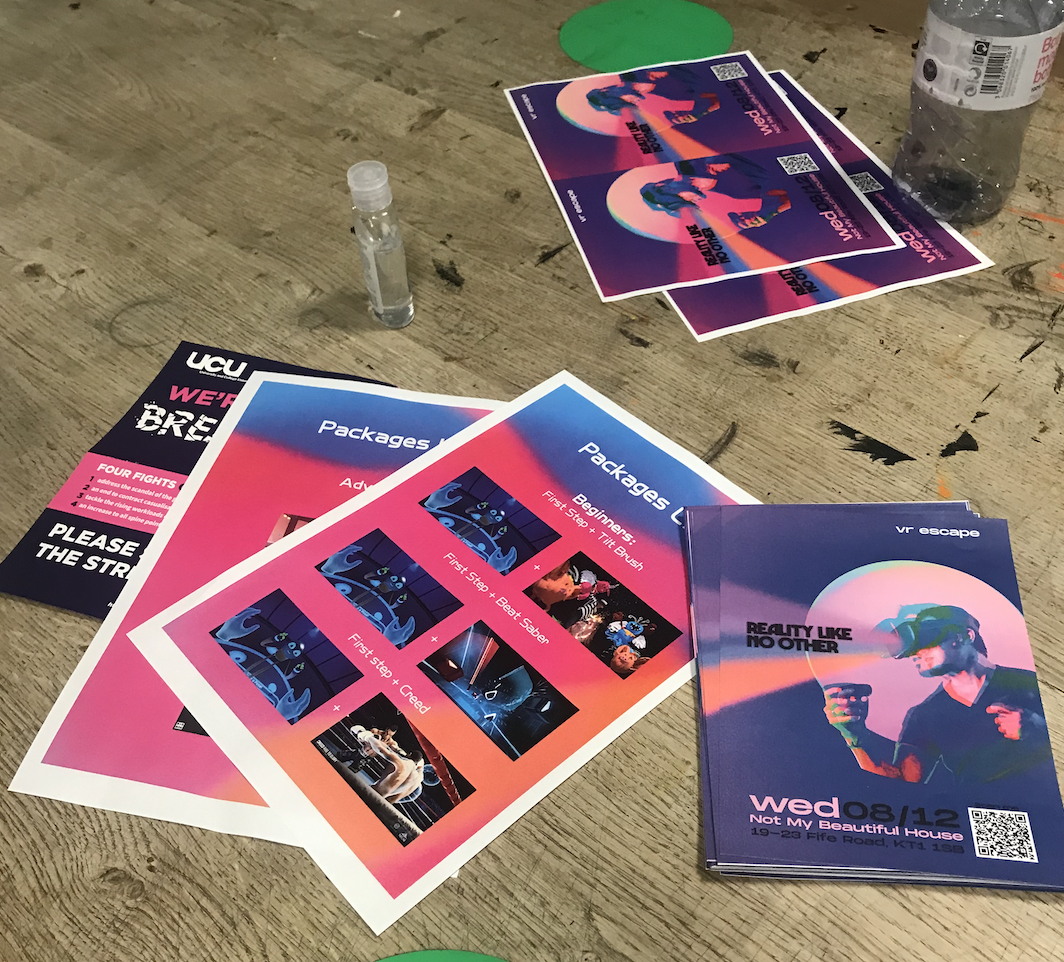
On the 2nd, we worked as a group to complete different sections of the document such as: -Insight, problem, solution -Manifesto -Packages -Expenses -Profit and Loss Spreadsheet -Prepared posters with QR code for following day
We started creating the final document on Illustrator and then realised it would be easier on Canva due to the collaboration option.
I reached out the my lecturer to see if it would be possible to present our pitch on VR Mozilla Hubs and he responded very enthusiastically. I thought it would be a good ideas as the ‘dragons’ would get a sense of what we have to offer as a company through experience.
The following day I went to ask the student union for a card reader, but they very abruptly refused saying we needed to be a society to book one out. This meant we couldn’t use one for our third event. We then printed the posters and leaflets to put around the university campus and worked on the document and created packages for the event as a team.
Throughout the project I have taken the role of organising tasks and making sure deadlines are met as we were on a tight deadline. I suggested we write a list of the tasks to complete until the event and it put into perspective the workload we had to do.
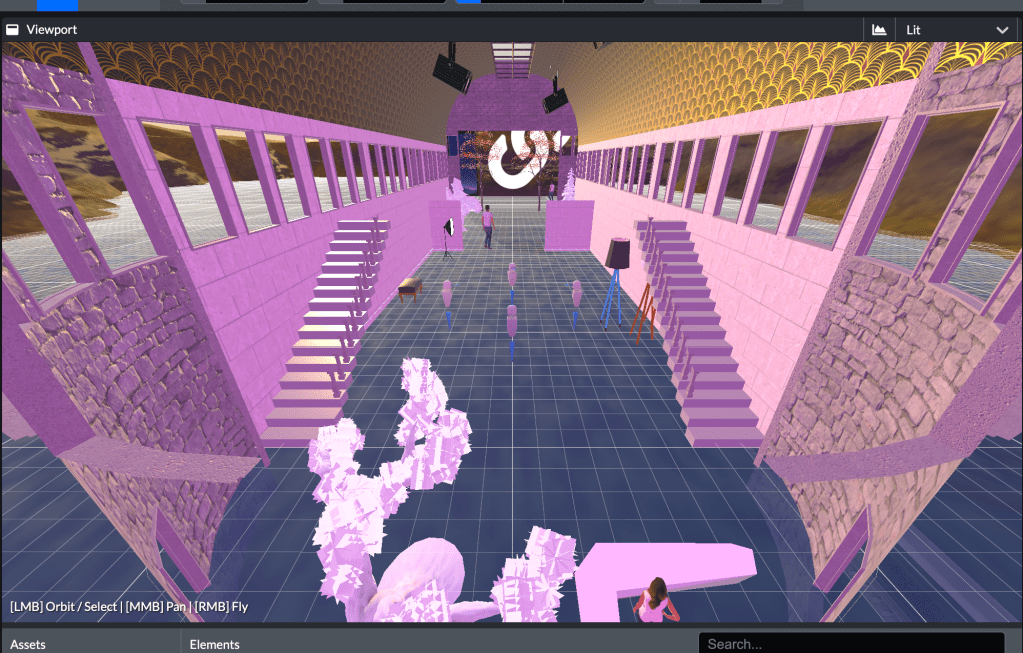
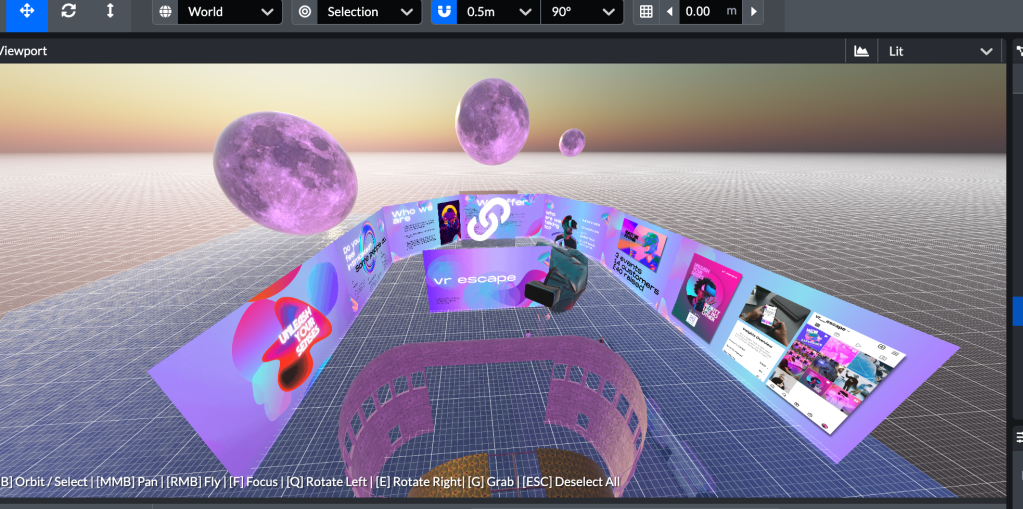
After distributing the workload, we got stuck into our tasks and one of my main ones was creating the VR room on Spoke Mozilla hubs. I used a room I previously designed, changed the lighting and started prepping for where our presentation deck would go. The best part about the space is that you can press gravity and go underneath the sea.
Spoke Mozilla hubs space I created for presenting
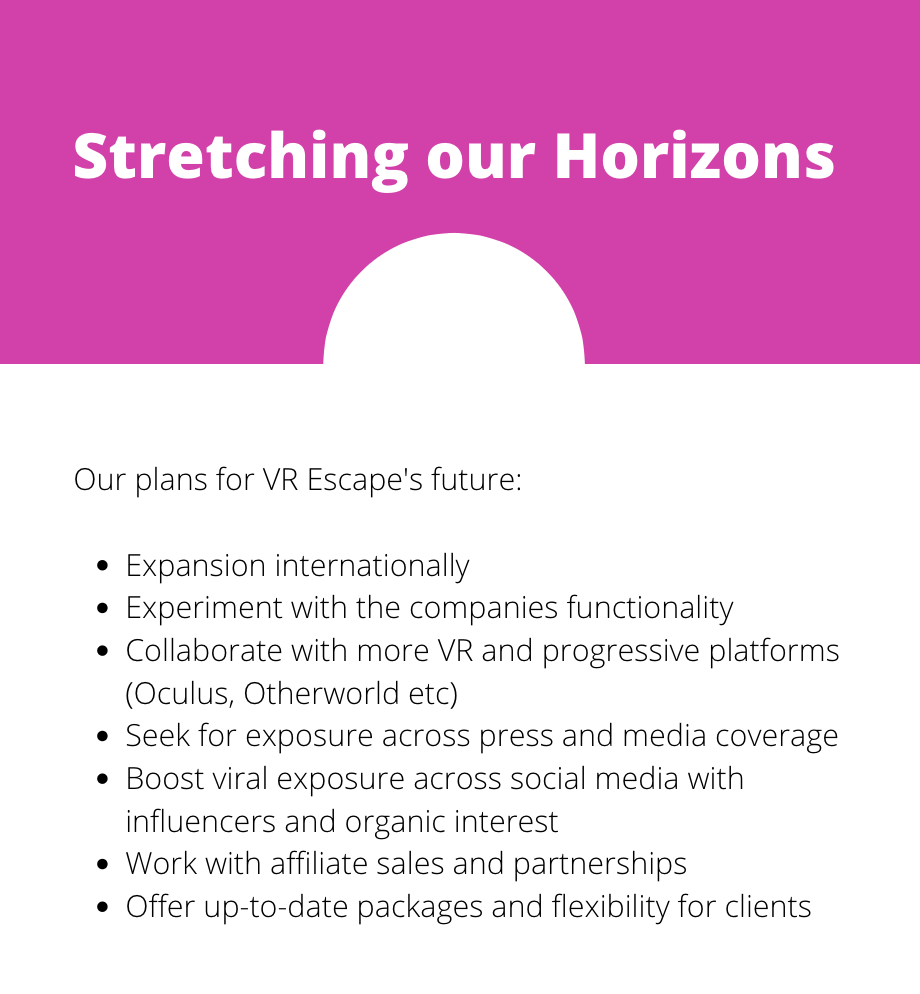
In the following days I updated the Risk Analysis section, adding the VR risks previously missed out. Then I created a sheet taking about long term plans for the company and then continued planning the room for the presentation. We booked out the headsets to use at home, so I also took advantage of this and downloaded the games for the event and practised navigating with the software. Both Luke and I struggled with some of the game features and with internet issues during this stage.
We worked on our financial Profit and Loss sheet and had external guidance from a business connection who advised us optimise our model.
6th – 12th Dec
Luke and I tested headsets functionality at NMBH – checking internet etc. We then printed more waiver forms for event day the following day.
Third Event
The event took place at Not My Beautiful House in Kingston where we were eventually, after a lot of emails, able to book out a space in the venue. We advertised the event across socials Instagram and Facebook, and put posters up around the KSA university campus.
The event was advertised a week before it happened where we contacted many people across social groups and platforms. Unfortunately, due to time period many people were too busy to come due to deadlines and work commitments. However some said they would come by word of mouth and they came, despite sending the booking link.
After an hour we started to attract attention from the NMBH visitors and had two initial customers. Due to Esdras unfortunately having issues with arriving, we only had access of two headsets with demo games. Then following this we had 5 more customers (7 in total). This event was successful with a good turn out and we attracted new audiences.
After the event we went through tasks to complete for the rest of the week and the weekend. This helped us understand the quantity of work we had left to complete and our timeframe.
Following the event we gathered and analysed the data as a team and made sure to update our appendix with the updated information. I suggested for us to write a list of tasks that were still needed to complete and distribute the tasks between ourselves. We used a shared task list throughout the start-up creation so we always knew what we needed to do.
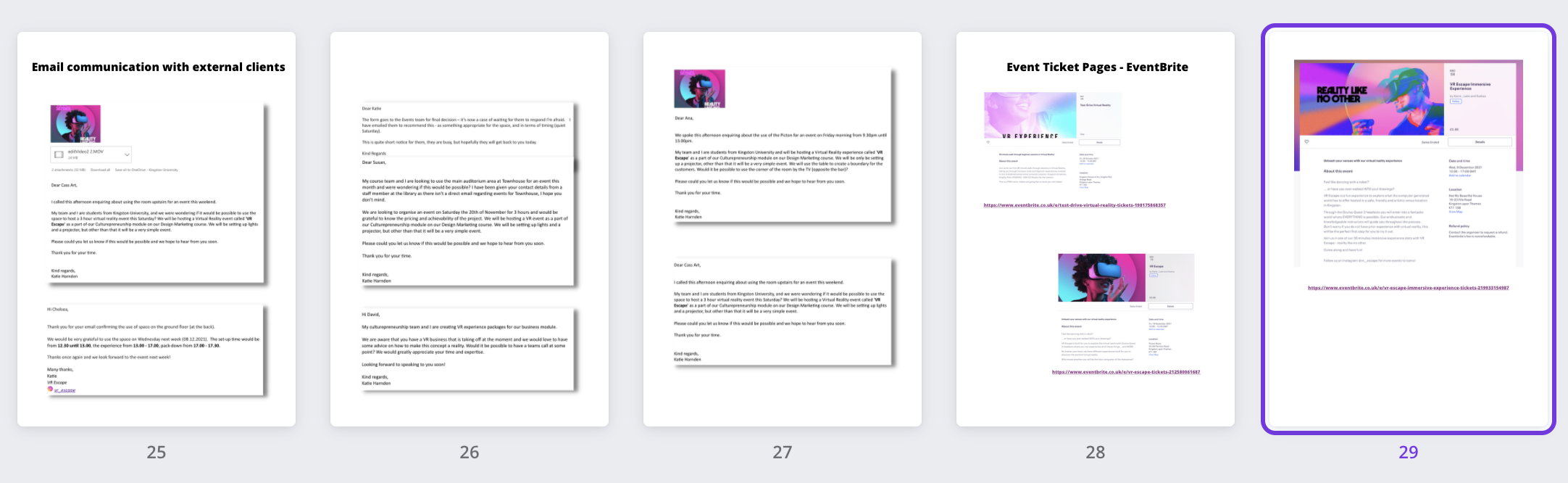
The tasks that I completed were updating the Appendix (added screenshots of communication with external clients etc), Market analysis with quantitative and qualitative research, updated Current market and competitors with a write-up and more.
13th – 19th Dec
While preparing the documents individually, we also met up as a team for regular meetings so we were aligned on the tasks to be completed. These meetings were also used to prepare and practise for our final pitch which was on the 17th of December.
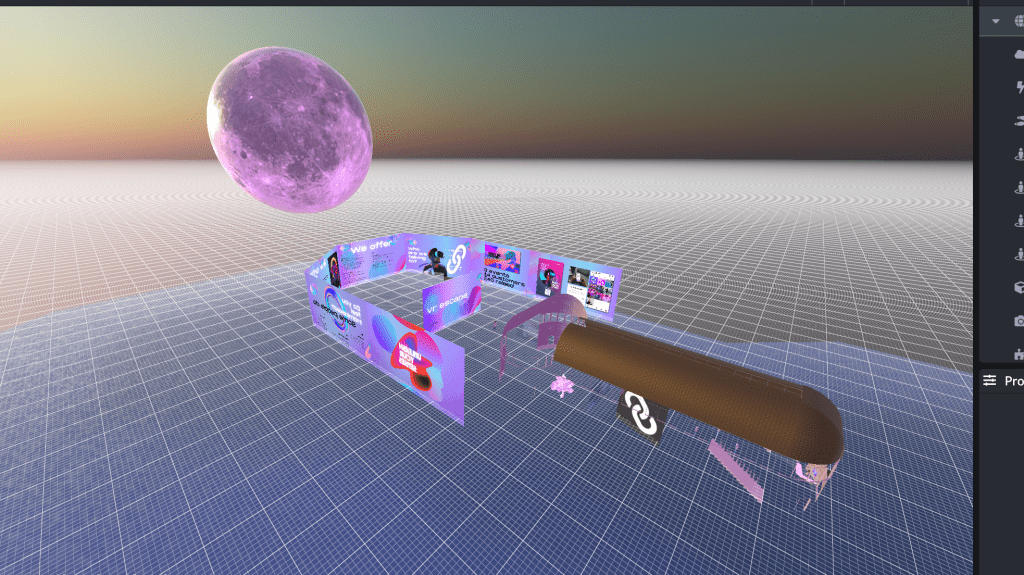
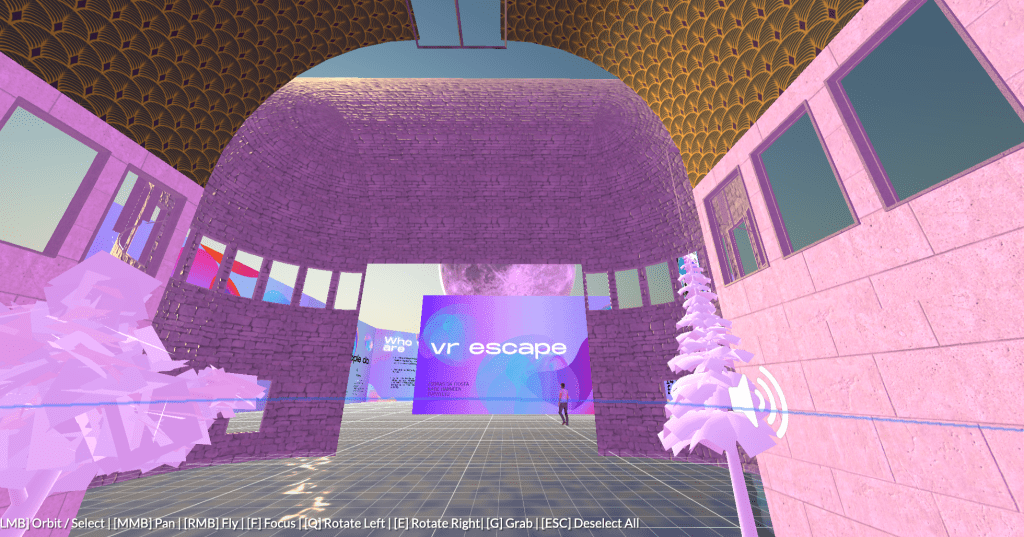
I primarily occupied myself with preparing the virtual space for the presentation on Mozilla Hubs. Below you can find the scene that I worked on which was an adaptation of a project I created on Spoke the previous year.
Initially I added many objects to make the scene immersive and space-like, however when it came to exporting the scene onto Mozilla, I realised the project size was too big so I had to reduce it by taking out many objects. This meant the scene was much more minimal that I would have liked it to have been, however my team said it looked better as it was less cluttered. When I showed my lecturers the scene they were impressed and loved how it had been transformed. I have greatly enjoyed using Mozilla Hubs for creating scenes such as this.
One of my tutors mentioned that with the VR Headsets some of the materials are compromised so the judges wouldn’t have been able to see the scene as we can see it on other devices. Apart from this, the VR Escape presentation looked very visually pleasing and immersive. I also worked on what the user would see throughout the experience so that the journey would be guided and easy to follow. Learning about these basic curation techniques was very useful and I have gained experience in thinking about the customer journey and object placement.
After this we prepared as a team for the pitch and gave each other constructive criticism in order to optimise our presentation.
Final Pitch
We arrived early to prepare for the pitch in VR, set up the headsets in advance and practised briefly what we were going to say. The pitch went very well and our tutor was impressed with what we produced and presented as a team. We were also very pleased with how it went and felt confident throughout the process.
The pitch lasted 20 minutes but we felt as though it lasted a lot less time as we had so much to say. Aside from this, we spoke very clearly and were able to cover the majority of the pitch within the timeframe.
Reflection
The VR Escape Culturepreneurship module was very exciting and rewarding to work on as I had the chance to work within a productive team while setting up an innovative and future-looking Start Up. This project tested my organisation and people skills especially while working with my team and communicating with external contacts. I learnt how when creating events, the more you contact venues the more likely they will reply. When I contacted multiple venues I had a better chance of getting the result I wanted. My administration skills came in handy when it came to communicating with multiple contacts. I also learnt to be flexible and being willing to adapt during different stages of the project and found that the more we held ourselves accountable to each other, the better organised and aligned we were.
Alongside creating this start-up we were also studying about the Metaverse and new technologies that are being used and integrated into companies today (such as the use of VR and 3D product creation). Learning about these innovations has allowed us to change our approach to VR and the technological world. Our start-up creation has shown us that it is possible to bring an idea to life and to bridge this gap in the market for our customers to be aware of and connected to the (not so distant) future.
This brief was called ‘Build Your Own Brief’ where we were told to choose a topic we were interested in, explore it and creative a ‘What if…’ speculative response (through a product or service). Our outcome had to be a 1 minute case study video that included: the problem, the product/ service (with branding), show how it works and a final slogan.
Researching Iris-scanning and Data-breaching Technology
With the partnership of artificial intelligence softwares and data collection becoming apparent in our daily lives, some may say we are essentially being stripped of our privacy rights. These subtle and inconspicuous security breaches are quickly developing digital profiles of the general public without their consent or knowledge. The ‘Black Mirror’ predictions could rapidly become our reality if we don’t rethink our approach to how big companies and powerful figures in society are using our private information/ data.
There are companies across the world that now have AI emotion-recognition systems that track your reactions constantly gathering data about your every move understanding your instability and ‘capability’ as a worker. They understand this by checking how ‘happy’ you are, and any change of the expression means you’re in danger of losing your job or being punished.
This lead me to question ‘What if we could wipe our digital footprint?‘
Data Clearing Apps and AI Tracking Prevention
While researching different ways current researchers are targeting this issue, I came across an article which spoke about programmer Jaan Tallinns essay called ‘Staring into the Singularity’ where Tallinn writes about what the world would be like if AI surpassed human-level intelligence. In an article called ‘Can we stop AI outsmarting humanity?‘, where Tallinn explains how he is funding strategies to try and ‘box AI‘ either physically and containing it, or by programming it to be limited to it’s functionality. Other programmers are trying to teach AI to respect and ‘adhere to human values‘. One of Tallinn’s researchers, Co-founder of ‘Aligned AI’ Stuart Armstrong, has full time researcher position at Oxford University where he focuses on AI safety. He has written a paper alongside his company co-founder Nick Bostrom, where they looked into boxing AI by restricting the resource to a structure, creating boundaries through coding questions into its thought process. These limitations create a safe net for machines and AI systems to not breach the ‘current world order’ and increases humanities chance of survival against overriding machines.
Armstrong has also written a paper on a physical or digital switch ‘big red off button’ to turn off all AI activities in an event of a breakout. One of his and his team’s biggest challenge was struggling with the issue of AI duplication across the internet. Hackers and internet experts are able to do everything with the right tools and equipment, so this button strategy would have to be very well secured and controlled.
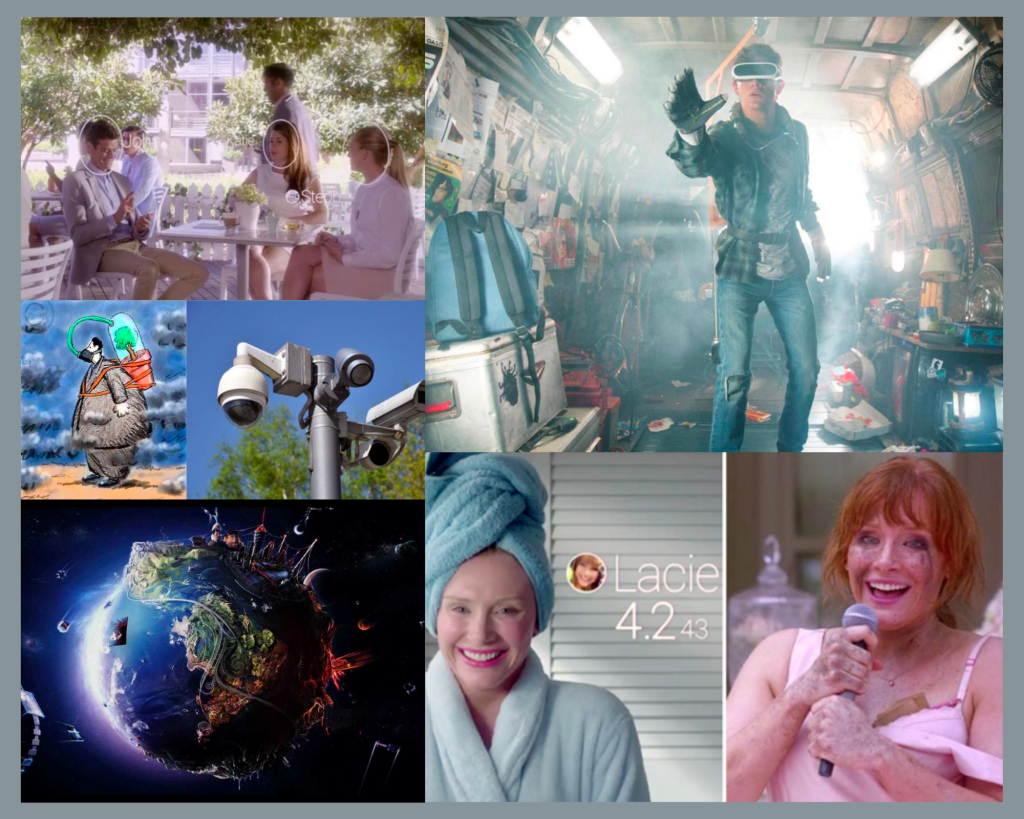
There are many films and TV series that predict what our world will be like physically and socially in the future, however two that I remember the most clearly are Ready Player One and Black Mirror. Both of them contain an element of fear around the future of technology and social structures, one ending up in a destroyed and neglected planet and the other being controlled by higher people in power and having their world centred around social ranking and status.
When exploring the question ‘What if we could wipe our digital footprint?‘ I referred to these two storylines when imagining the future of humanity. I created a visual reference board (as seen above) which helped me gather my ideas on how to face this question
Initial Response Thoughts and Ideas
From personal experience, I remember going on holiday in a country outside of the EU and having to have an iris scan as soon as I entered the airport. There was no option to refuse this scan, so I essentially was obliged to take it before going through. Furthermore, throughout the whole city there were cameras automatically tracking everything the public was doing. I knew this due to researching about the security and safety of the place prior to the trip. However, if I had not checked online before hand, I would have been oblivious to this intrusive and controlling technology.
There are other cities in the world with similar, if not more, invasive technology which is gathering data and algorithms from the general public without their consent, and sometimes knowledge. This invasion of privacy will most likely get worse in years to come with progressing technology and our lack of grip on controlling our own personal data. Why do we not get a say in the data the government/ people in power take from us?
Another segwaying topic I thought of was the intrusion of cameras in our homes and personal objects. Some families choose to place cameras inside their homes, but in places which examine and record movement throughout the day. This can be understandable, however we forget to truly pay attention to where this footage goes. Even in our laptops, mobile phones, I-pads etc we have cameras that (if not covered) have the ability to be hacked into and observe us. These small objects that have become a part of our daily lives are exposing us to unknown threats which we should be aware of.
The question ‘What if we could wipe our digital footprint?‘ means, what if we could restrict external data and privacy breaches surrounding us just with one action/ movement/ object?
If we could have the ability to CHOOSE to not be observed by street cameras, phone microphones, cookies etc, perhaps we will one day be able to maintain a level of privacy in the future.
Personal Privacy Range
I decided to create a range of objects which would protect your privacy by blocking device outputs that mobile devices use to record, film, sense etc. Future technology will most-likely involve holograms for items as we could steer away from using physical materials. Therefore this range of privacy would all be activated through one movement from the user. With a beam-ray, the user would activate anti-tracking technology (invisible to the human eye, but visible to machines) which will protect them from having their movement and data tracked by AI tracking in their daily lives.
In the future many people could be a part of a system which involves ranking of social status, likability and monetary wealth (in BIT coins or further advanced currencies). This society could be similar to Black Mirror (S03E01 Nose Dive) where people are ranked on their actions which then dictates their wealth and social status. Could you imagine if we could choose to switch this whole reality off and not be tracked and watched by cameras? This new Beam-ray invention would put peoples mind at ease when they decide not to be involved in the system and to just be human.
This is a speculative response therefore won’t have the typical implications that society now would have to question such as; criminal usage, government lack of control etc. Therefore this ideas is abstract and can be looked at as a way to be freely yourself without any implications.
BeamTap Functionality
The idea behind the name ‘BeamTap‘ came from thinking about how we can feel under the spotlight when having a camera on us, and spotlights are created by beams of light. Therefore BeamTap expresses the fact that the product would be tapped by the user to protect themselves from the attention of cameras and AI technology in their daily lives.
Beam Protect Prototype of Functionality
BeamTap can be used in any situation, and it uses invisible beam light technology which works to block AI technology breaches around body and objects used. The example in the photo above shows a person with and without this product. Sally is someone who doesn’t mind AI technology which face tracks, iris detects etc. Therefore she is exposed to the world and being analysed at all times on the streets and even at home if she has agreed to it. Whereas the other character (who we don’t know the name of) is anonymous to surrounding cameras and sensors as he is using Beam protect which is creating a digital wall around him to fend off external data breaches etc. He can browse the metaverse and be included in society, however he won’t have a digital profile customised with his virtual footprint.
Case Study Creation
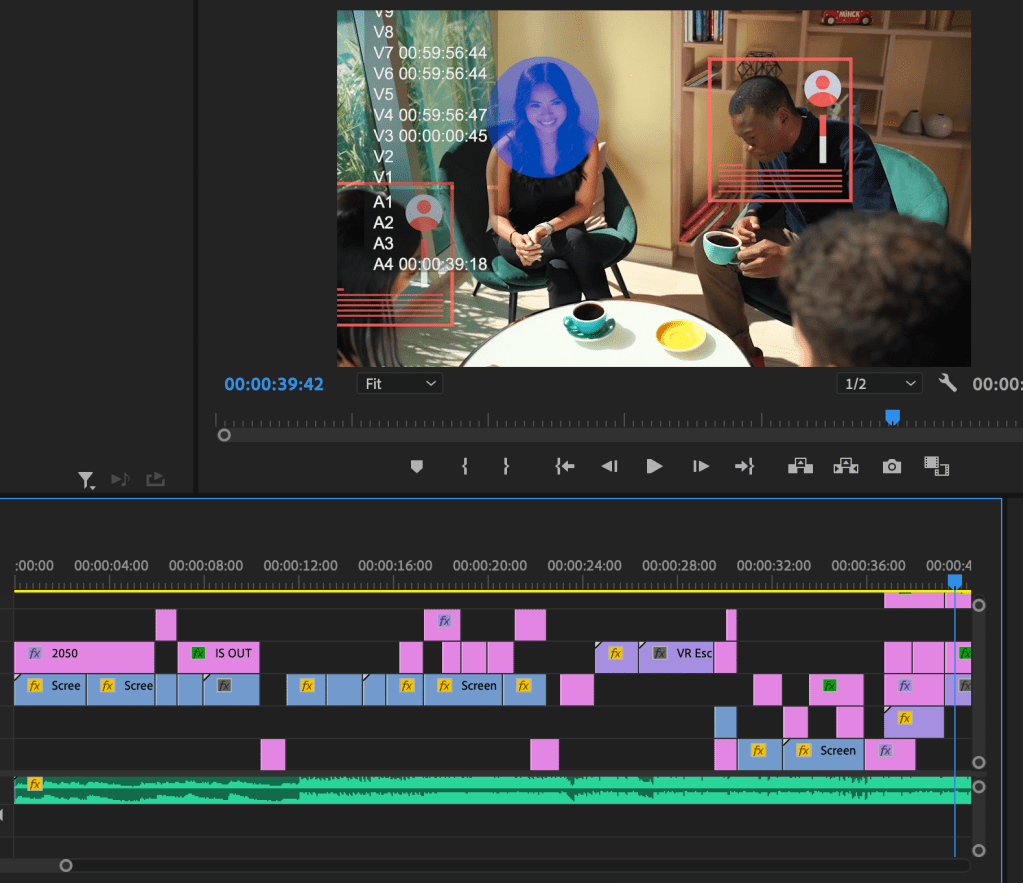
To begin the process, I sketched a brief story board and list to refer to when researching assets to build the video with. I then set up Premiere Pro with the timeline and the correct video size for Youtube.
Firstly, I wanted to set the scene of when and where the product would be used (2050). Then I built videos I collected from my AI research to express the problem the speculative response would target (cameras, social hierarchy etc). Following this the question was introduced ‘What if we could wipe our digital footprint?‘.
The video then introduces BeamTap as the speculative product response. The use is then explained through annotated clips of BeamTap users in different situations such as leaving the house, at work and socialising with friends. The first clip shows how the user activates it by tapping their palm hologram to instantly turn it on. I created each object separately on Photoshop and directly on Premiere Pro.
Text annotates the video throughout, so the viewer isn’t being distracted by a voiceover. The video then finishes with the city, the title and tagline ‘refract the chaos’.
Overall, I enjoyed this BYOB project as I was able to explore what I was passionate about and create a speculative response from it through a case-study video. This is the first time I have practised this response method and will use it again in the future. I have realised my video creation skills on Premiere Pro have become a lot quicker as I have had practise in previous modules. Knowing how to use this tool meant I was able to experiment more with transition techniques and studying about guiding the customers attention throughout the video experience.
AI is essentially intelligence demonstrated by machines. It acts as a computer which is able to imitate intelligent human behaviours. We learnt in this lecture about the history of AI and how the technology has developed until today. We covered how Alan Turing (one of the fathers of AI) questioned whether computers could think, which then let him onto creating the ‘Turing Test’ where a human would talk with a computer and a human and would have to distinguish them from each other.
We learnt how AI is made up of machine learning and deep learning – which as subfields of AI and deep learning is in machine learning. We watched a video example of machine learning in the link below.
The most shocking part of this session was learning about digital humans and how Deepfakes are created and often look as realistic as the actual person. Learning about Face Detection and Recognition Technology inspired me to conduct further research on the topic. Discovering more about AI and its capabilities showed me the positive side to the technology, which I wasn’t aware of before. Prior to this module I had negative views towards this complex discussion but now that I am more aware of how it works, I know that AI can simplify and correct bad algorithms in the internet. In my project ‘Build Your own Brief’ I explored the negative sides to AI and explored what’s being done about it.
Crypto art falls into the blockchain technology category alongside NFT’s (non-fungible tokens). They both can be created through algorithms and be sold online. Every new ‘piece’ of art created is stored on a digital ledger which is where you can collect your artefacts, and then are sold and your money is collected on ‘wallets’ such as Temple Wallet.
There are some rare NFT’s which are being sold at extortionately high rates, therefore now would seem the best time to get on board with this technology in order to earn money in the future.
Books mentioned in this lecture were Ready Player One and Snow Crash novel. Snow Crash explores the meta concept of language, coding and how the brain works and Readyplayer One also explored what humans will be like and how they will react when the world as moved to virtual reality, essentially abandoning the real world in the process. I have watched the film Ready Player One, however now I am interested in reading both books as a result of this lecture.
We also learnt that it is possible to live stream across multiple platforms on https://streamlabs.com/. These huge insights into how the world is working online today has been very eye-opening and inspired my topic for the ‘BeamTap‘ Build Your Own Brief project I created for an independent project.
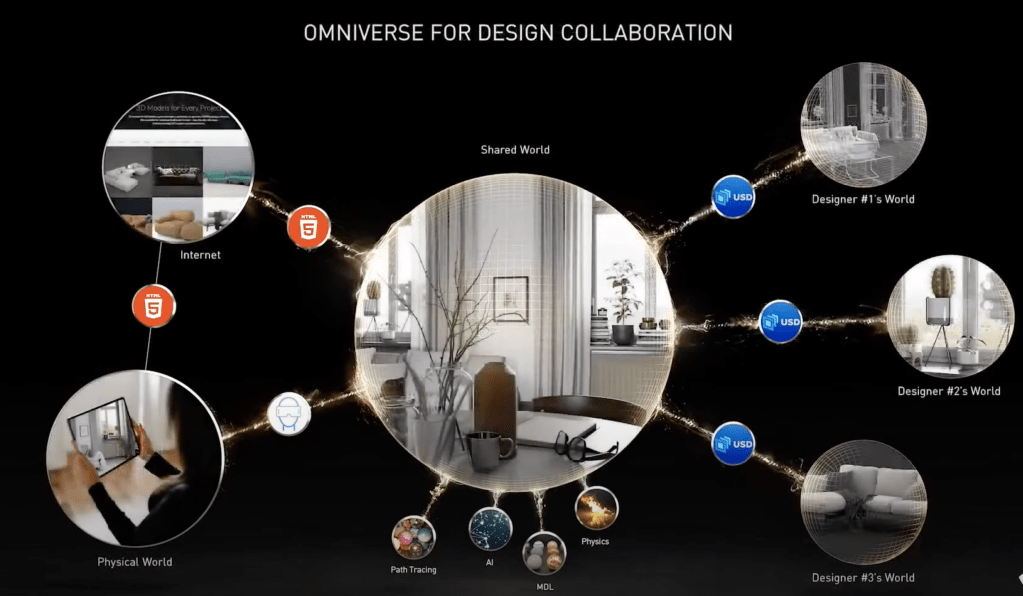
Our lecturer also explained the difference between omniverse and internet. The internet is a digital overlay on the world, presented through text, voice, video in 2D. However the omniverse is a 3D virtual world which can model our physical world. We will buy and sell 3D objects in this dimension, this is the ‘future’ of our online world. Below you can find a screenshot taken from a video I watched about these differences.
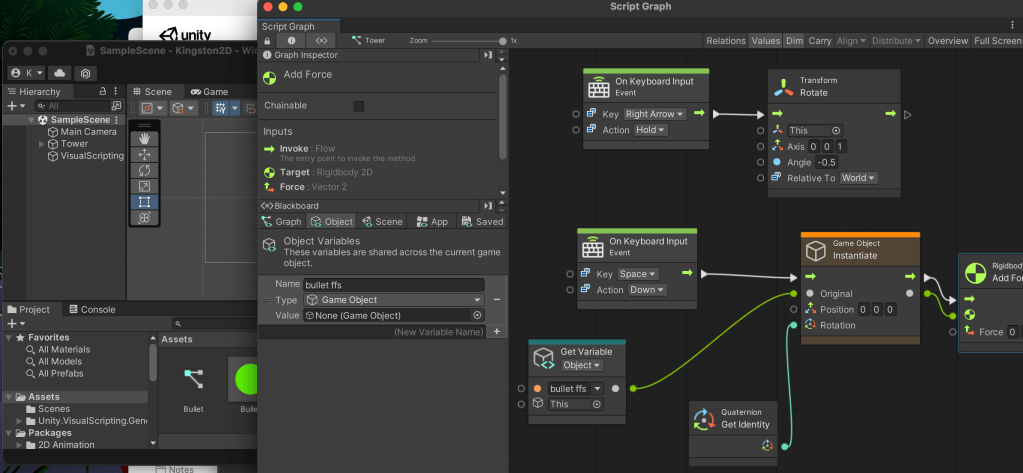
In this lesson we learnt how to visual script a mini 2D game on Unity. This session showed us how it is possible to code and create a script graph for a game scene.
This lesson required a lot of attention to keep up with the lecture, however once you got used to how to navigate in Unity it was easier to get used to. Unfortunately due to one error with the ‘Get Variable’ object box connected to the Bullet, I was unable to proceed with the game creation.
We learnt new vocabulary such as ‘Instantiate’, ‘Quaternion’ and ‘Graph Variables’. By listening and following the lecture we learnt how different inputs (objects, forces etc) affect other parts of the project. The whole class learnt how to problem-solve and be flexible in difficult situations. This taught me personally to have patience in the process and problem-solve throughout.









 KatiesBlog