Mozilla Hubs to Blender and Spatial
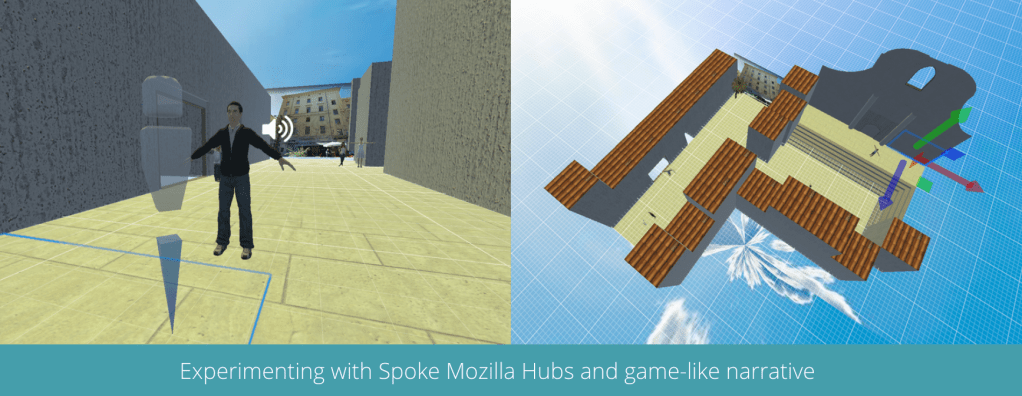
I created a prototype of the streets of Palermo in Spoke Mozilla Hubs and discovered limitations with poly count when inserting 3D characters and other objects to the scene. The audio clips I found online turned into videos instead of remaining sound clips. These issues led me to researching other ways of creating the environment on other platforms.
On twitter, I watched a video about Blender using geometry nodes and found it fascinating but then soon after realised how complicated it was to set up. The download link didn’t work for the version of Blender I have, however watching the clip inspired me to keep experimenting with the program.
Blender | Building Creation
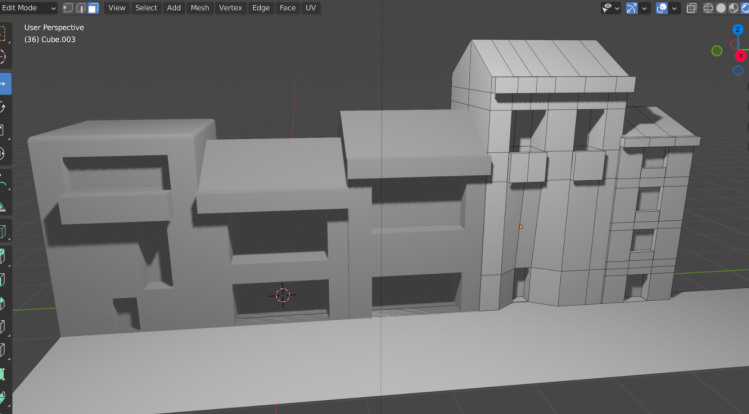
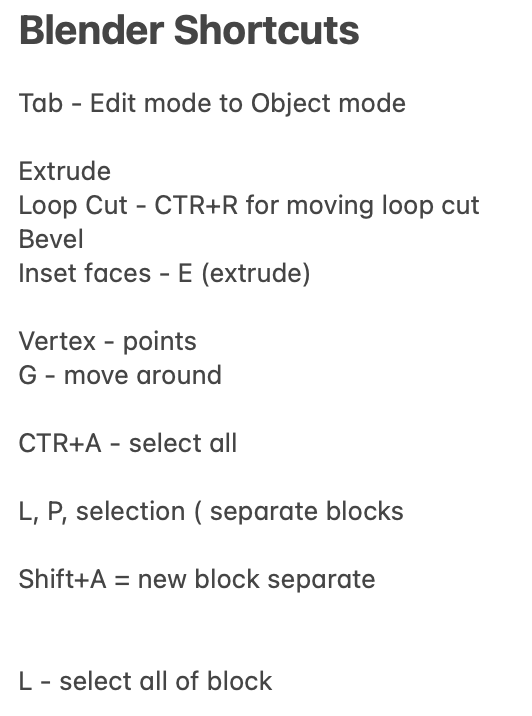
After learning about different shortcuts and navigation tools on Blender by watching a youtube tutorial online, I was able to create a mockup street scene from scratch. This was a very rewarding experience as I could slowly begin to see my thoughts become a reality.
Below you will find a few sketches I made when taking a break from the screen and to visualise the colours and scenes I wanted to create on Blender.

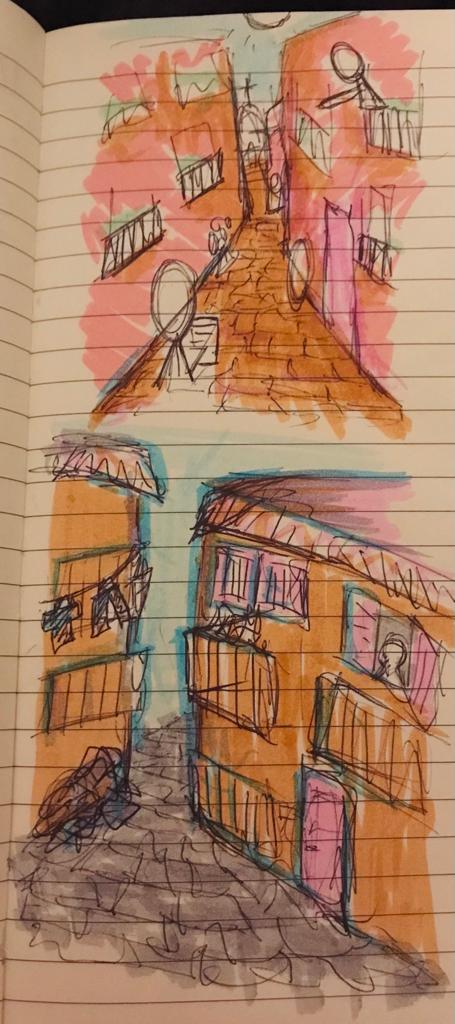
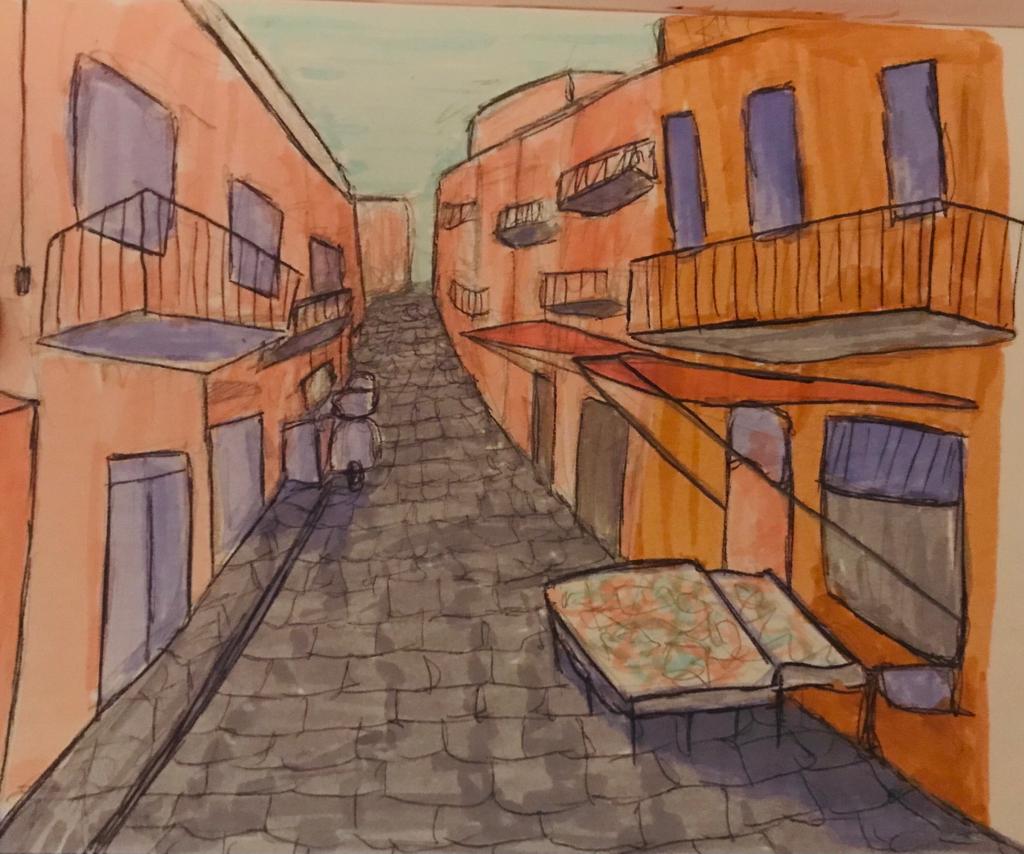
I asked a friend to take photos of Palermo so I could use some references when creating the buildings. On the software I had to think about the different tools and shapes I was using which required me to think in a very new way. When looking at my references, I had to look at them from an architectural perspective in order to accurately replicate them in the 3D software.

References:
Building Creation Tips – https://www.youtube.com/watch?v=CmBMcYVW9x8
After creating a row of buildings in Blender, I looked into how I could eventually put them onto a VR platform so the audience could engage with the scene and the language. I started by looking at possibly uploading the work onto Mozilla hubs and found out how to reduce the poly-count of the buildings to optimise the UX. Then I saw that Unity and Spatial were other possible options to use.
References:
http://www.keris-studio.fr/blog/?p=11966 – Setting up a custom environments in Spatial
https://support.spatial.io/hc/en-us/articles/360058728892 – Spatial Custom Environments and 3D Model Preparation Guide
https://support.spatial.io/hc/en-us/articles/360048451852-Changing-the-Virtual-Environment – Changing the Virtual Environment
https://www.youtube.com/watch?v=JqoIGxUrLbw – How to use the Decimate Modifier
VR Exhibition | Gazelli Art House
I went to a VR exhibition in Gazelli Art House where my friends and I experienced 10 different virtual reality experiences. Attending this exhibition revealed many potential avenues I could explore in the project with virtual world creation and also inspired me to think about the aspects I wanted to include in my virtual scene.
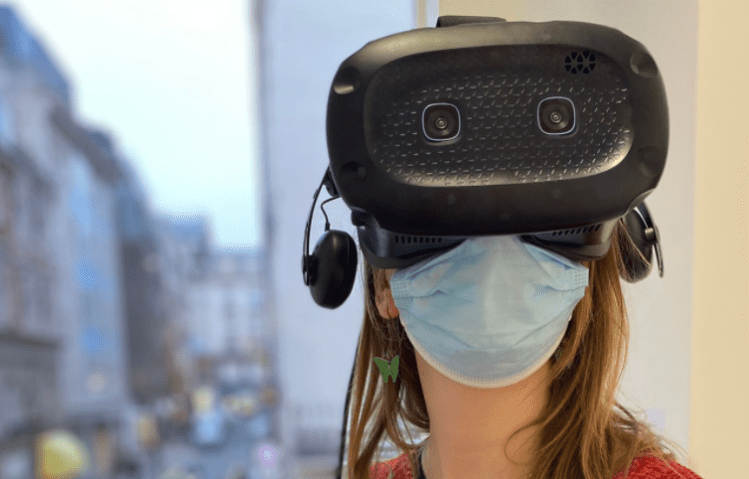
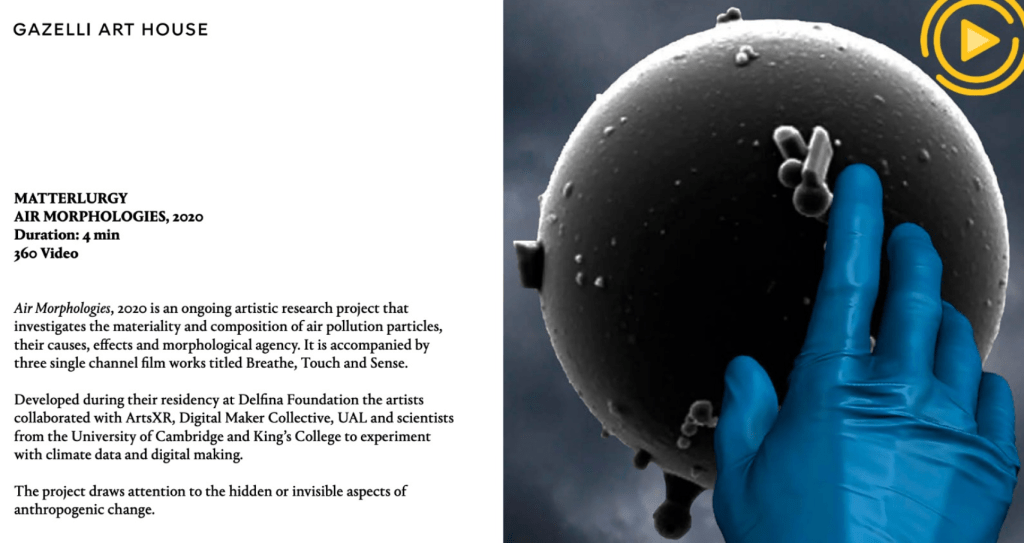
Sound played a very important role in every experience, turning visuals into a physical environment. Air Morphologies by Matterlurgy was the most impacting for me as I felt physically disturbed by the invasive sounds and objects surrounding me throughout the time. I knew I didn’t want this to happen to the viewers, but it inspired further research into sound recording for the languages.
The piece above by Zamagni was surreal and fascinating, blending different scenes and narratives into the virtual experience.
References:
https://gazelliarthouse.com/usr/library/documents/main/introductory-brochure_vr-library_2021.pdf – PDF of Gallery Experience
https://player.vimeo.com/video/432518472?h=5c636b2899 – Matteo Zamagni Nature Abstraction VR video
Spatial Studio
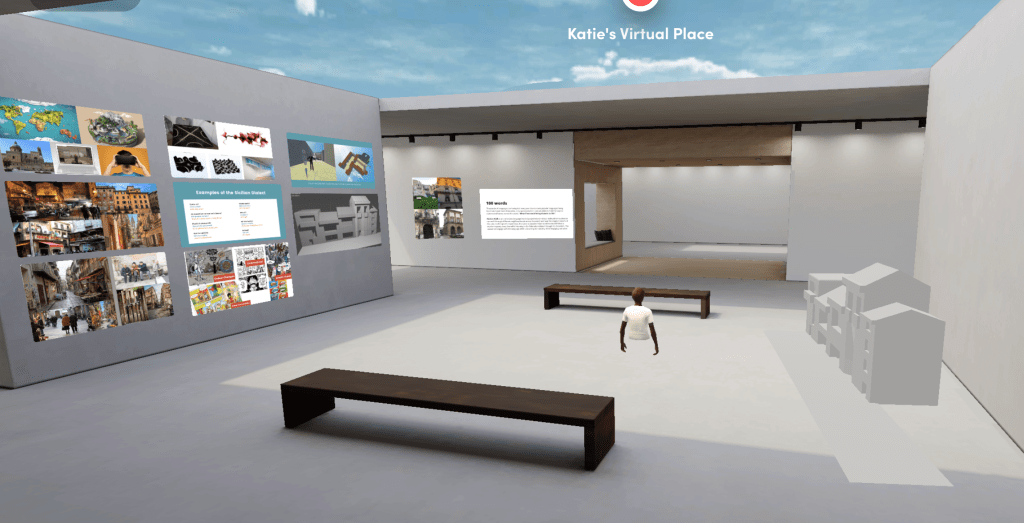
I updated my studio for the following week’s presentation.
Story-telling and Script Writing
I then looked into different Sicilian stories for inspiration and thought of looking into the stories of Inspector Montalbano and The Legend of Beati Paoli. I wanted to create a narrative for the story based around similar characters and organisations. The aim was to make it simple yet memorable so users can be immersed in the language without feeling overwhelmed.
References:
Inspector Montalbano https://en.m.wikipedia.org/wiki/Inspector_Montalbano_(TV_series)#Season_1_(1999)Beati Paoli https://en.wikipedia.org/wiki/Beati_Paoli
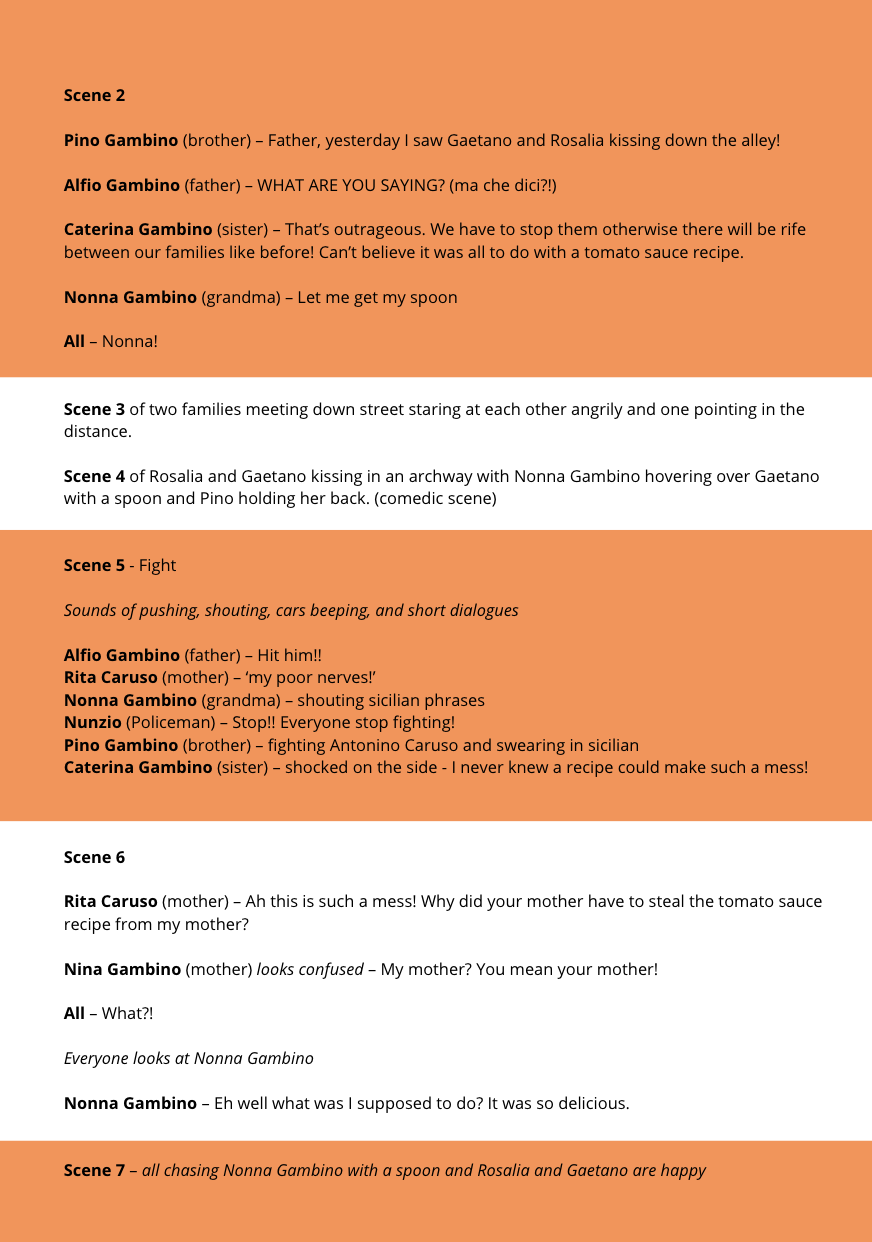
I originally wanted to create a murder mystery plot, but then after research and considering the use of colours and visuals in the scenes, I decided to create a romantic comedy in the style of Shakespeares Romeo and Juliet. Below you will find the scripts I wrote in English and then a translation in Italian.
English Translation

Italian Translation
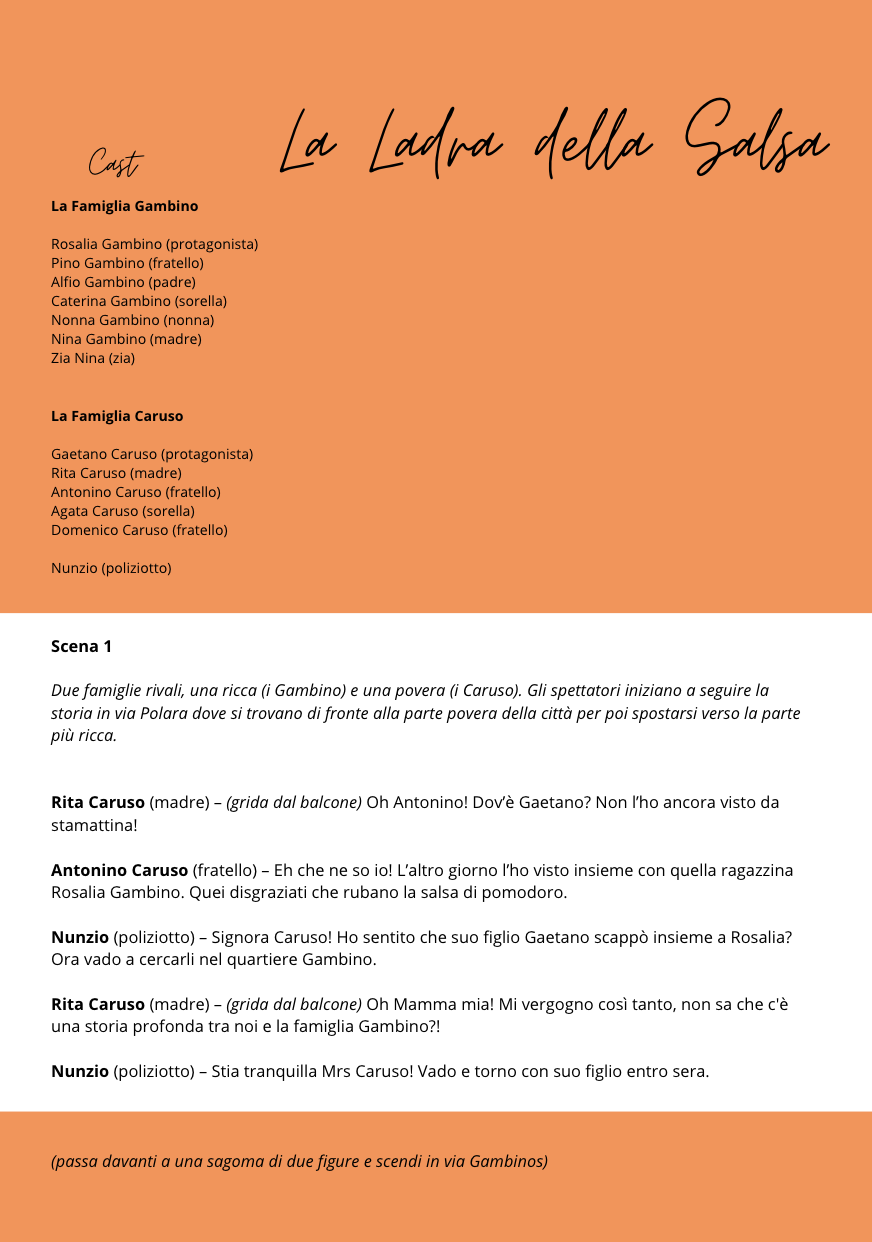
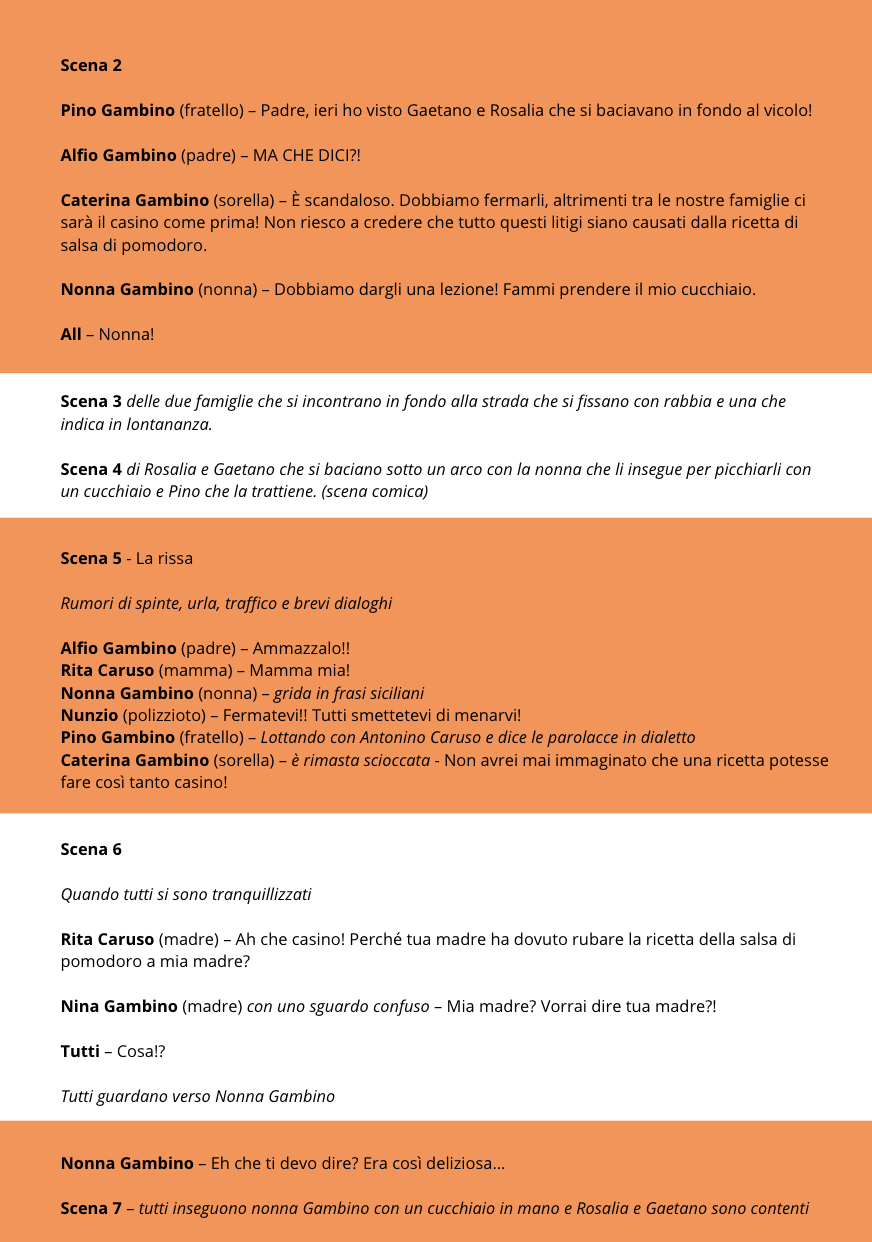
I contacted a friend from Palermo to help me brainstorm common names and surnames from the city. Creating this script helped me to better picture how I would like the environment to be laid out and having the scenes split up into 7 sections meant I could start to imagine how the layout of the streets would look etc.
The storyline is very simple and yet comedic which would engage the user to keep walking through the VR environment. I made sure to keep the Sicilian voices and personalities in my head so I could build the storyline purely influenced by the locals themselves.
Having friends from the Sicily and Italy helped me greatly in this section as I could ask them what they thought of the storyline in both languages and make changes accordingly.
The title ‘La Ladra della Salsa’ means ‘The Sauce Thief’ which perfectly lays out the comedy of the story. Following on from these translations, I had to find a way of translating the Italian language into Palermitano. I sent the script to different contacts to ask for guidance with the dialect and eventually I worked with a Sicilian lady who knew the dialect very well.
 KatiesBlog