Initial Ideas
Over the Christmas break, we were told to think about what topics we were the most interested in and to think of ways of making it into a major project. In the last term we were exposed to many interesting possible avenues to explore such as learning how to use AI, virtual reality, Cryptoart and more. Experimenting with these new mediums inspired me to research more about these innovate technologies and to find a topic or question to explore.
In the last term, I was exploring VR and learnt how it could be used as a tool to educate people. I knew that this progressive technology is being used in the Metaverse and therefore I wanted to explore this ‘realm’ at a greater depth.
We are advised to chose a topic that we were passionate about, so I brainstormed the many things I am interested in and decided on what elements I could apply to my Major Project. The main topic that came to mind was etymology and languages.
Etymology and Languages with VR
Learning the etymology of dialects and languages has been one of my main interests for years, so I wanted to find a way of linking this curiosity to the Metaverse and VR environments. I thought about creating a walk through experience of cities and towns where inhabitants converse in ancient dialects so linguists can experience the reality of other ‘languages’ that still exist today.
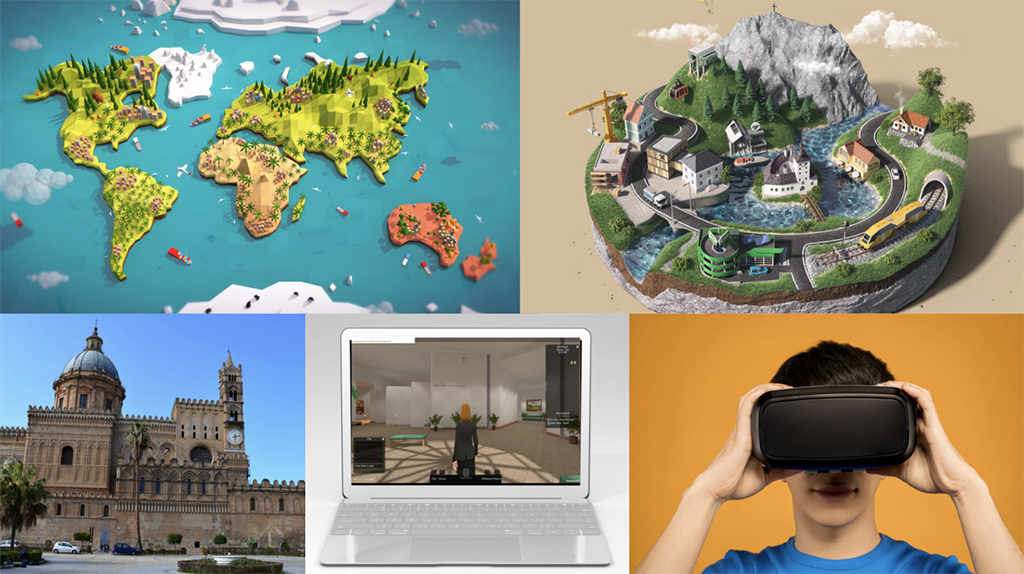
Having lived in Italy myself, I was exposed to many different dialects when I travelled through cities and small villages around the country (more than 100). One I have spoken in frequently was Palermitano, a Sicilian dialect which is made up of a mix of languages such as Arabic, Hebrew, Byzantine and Norman. The dialect reveals the islands history and personality of its culture.
This then posed the question ‘What if we could connect with ancient languages through VR?‘
Dialects are being lost in smaller communities across countries due to lack of passion and interest. Bringing a dialect to life through an interactive 3D experience would attract audiences to discover more about the roots of each sub-dialect/dialect in the area.
There is also a lack of accessibility to learning colloquial phrases and dialect in language learning online and in schools, so having an immersive experience in a 3D world would enhance learning and interest to ‘become a local’ and sustain culture in communities across the world.
References:
https://www.cgtrader.com/3d-models/exterior/landscape/cartoon-low-poly-earth-world-map – 3D Map
https://www.behance.net/gallery/121391959/Miniature-Salzkammergut?tracking_source=search_projects_recommended%7C3d%20world – Behance Environment
Teaching in the Metaverse
By discussing my topic with other classmates, I was able to gather insight about external content others have been exposed to online regarding language learning in VR. One reference I found particularly valuable was a podcast called ‘Learning English in the Metaverse’ where Andy Johnson, the director of FluentWorlds, is interviewed about his experience of teaching english in VR and how it differs to the everyday in-person teaching we are used to.
This school explores learning English in virtual environments developed and created by the company. FluentWorlds has created a place where students can interact with the teacher and the environment while learning new vocabulary, grammar etc. Learning while doing is proven to have a lasting effect when remembering lessons learnt. Even though the student could be in a sedentary state in the physical, the movement in VR enhances brain muscle memory allowing the student to connect to an experience rather than just something they were told.
Considering I chose Palermo (the capital of Sicily, Italy) as the chosen city to start my major project research on, I looked into whether anything had previously been done in VR for the city. Online I could find only VR yours around the city but no games or experiences had been made so this was a gap in the market.
I also looked into the accessibility of learning Italian dialects online and found the UI and UX of the websites were very dated and difficult to navigate. Furthermore, the pages with the entire dictionary were mainly in Italian so people with no knowledge of the language would have difficulty in accessing it.
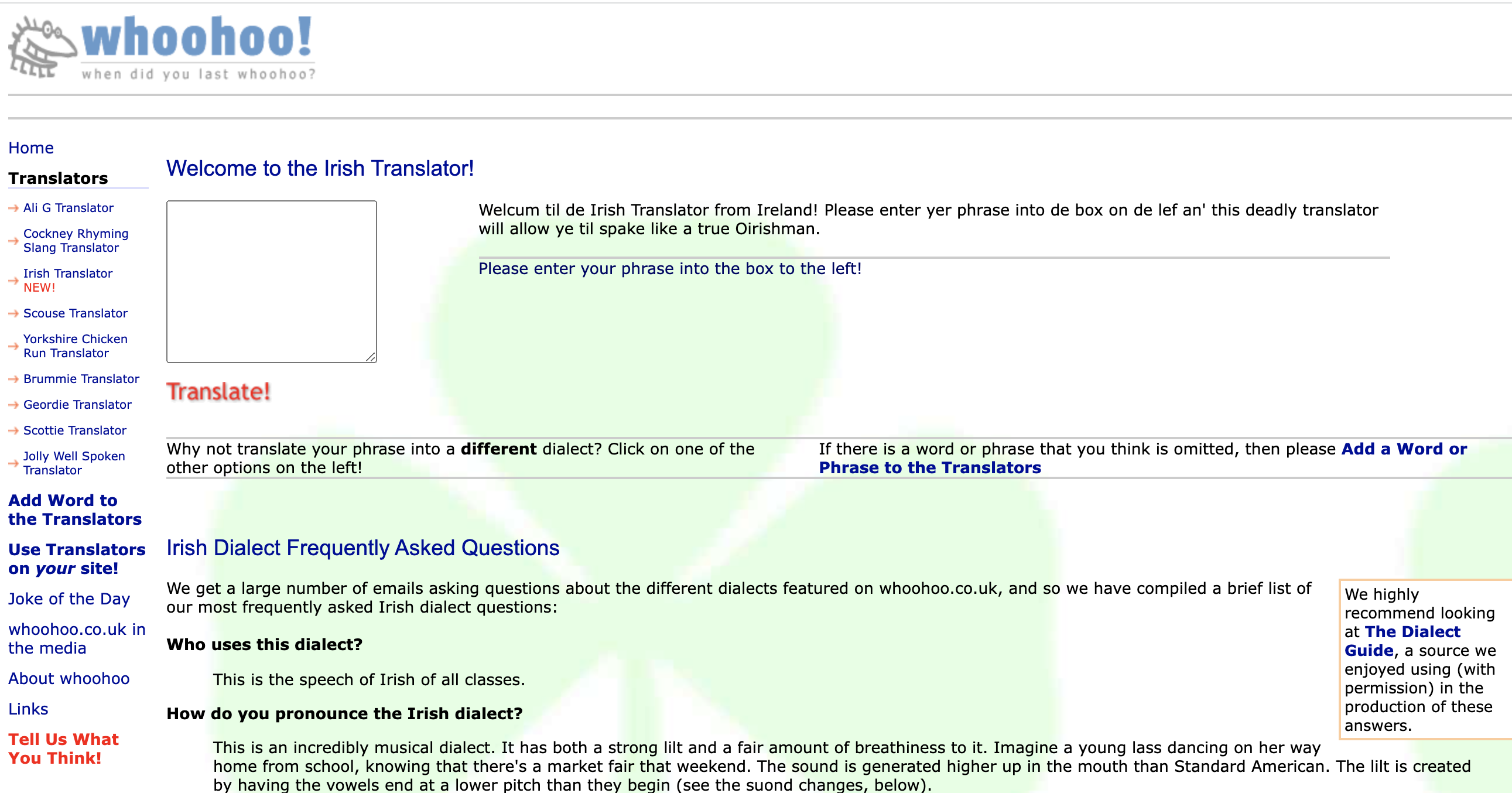
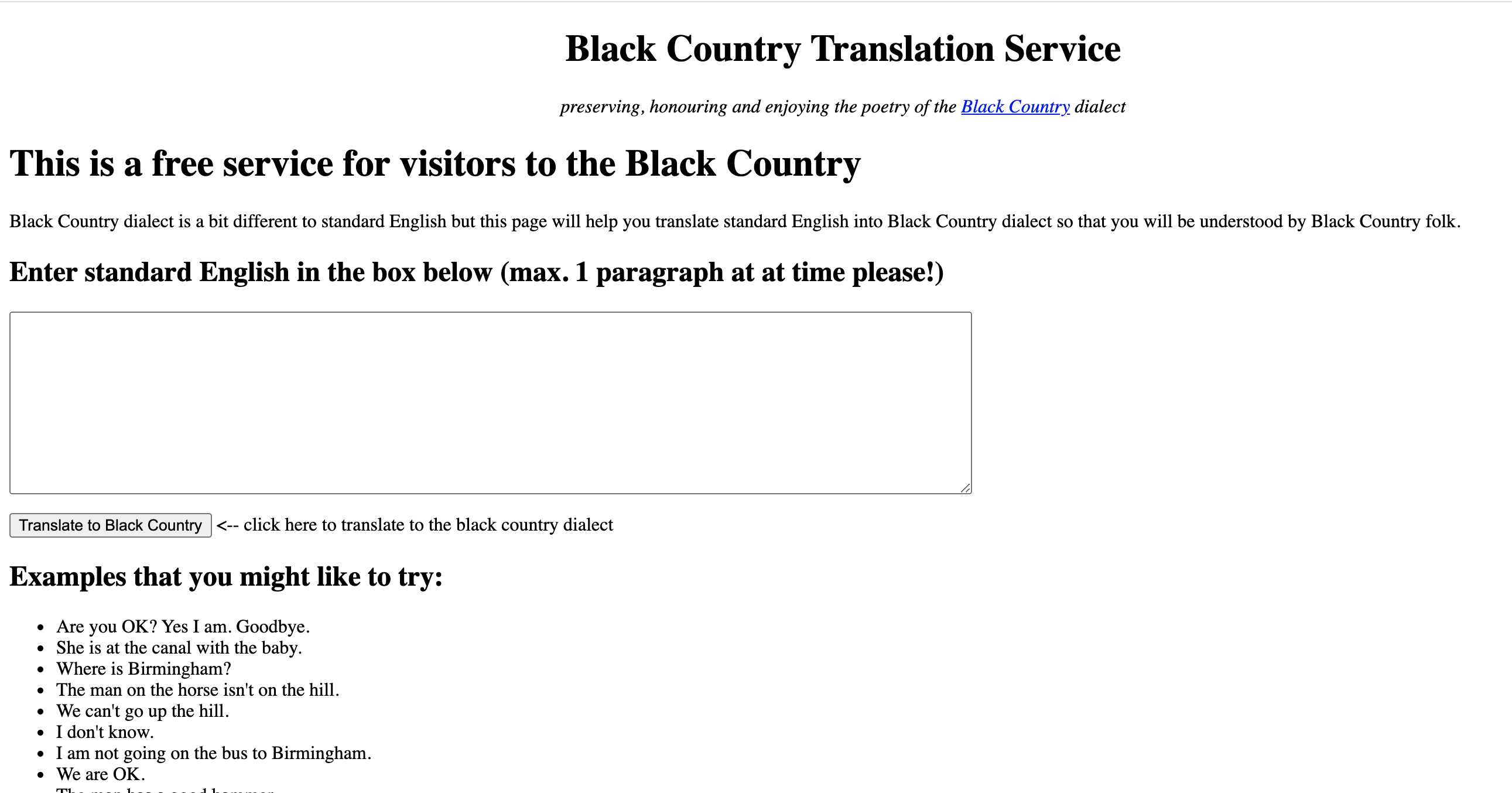
Google Translate is able to translate 109 languages, however has missed out dialects and less spoken languages which almost rules them out as forms of spoken communication in the western world.
References:
https://www.thoughtco.com/sicilian-english-dictionary-2011651 Sicilian dialect
https://dizionario.dejudicibus.it/ old version of Palermitano dictionary
http://www.whoohoo.co.uk/ – English dialect translator
http://cybermetrics.wlv.ac.uk/blackcountrytranslation.php – Black country translator
Feedback and Framing the Project
In class I was able to share my initial ideas with a small group and the entire class. This helped me to verbalise and have feedback on my thoughts. The response from everyone was very positive and they thought the topic and ideas had great potential.
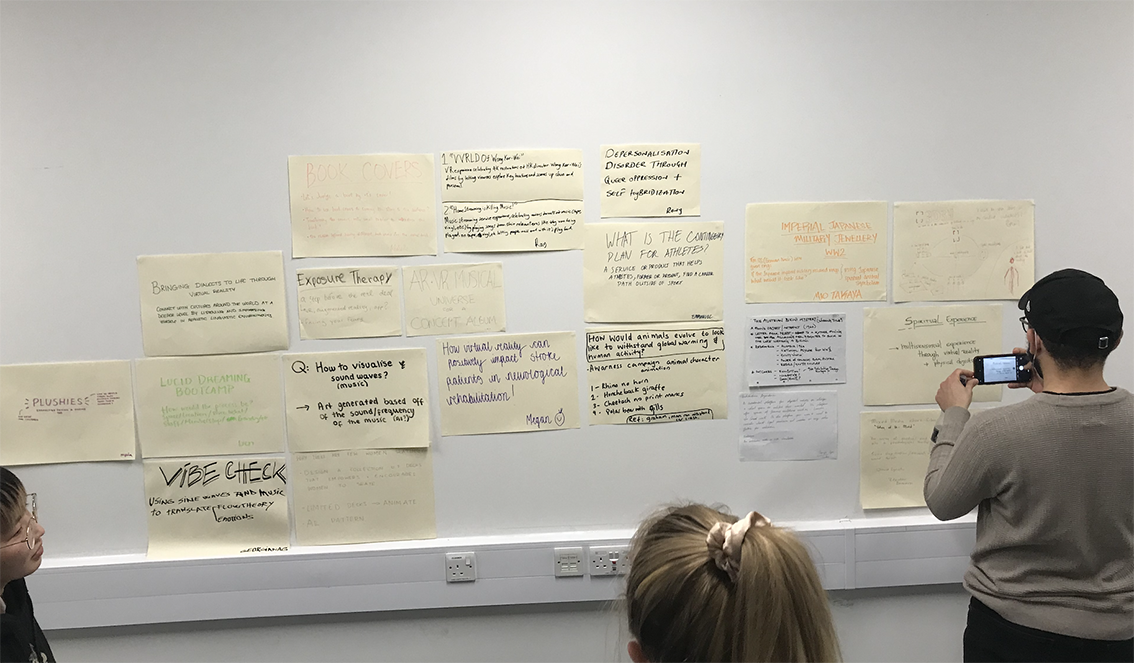

At this point I had many ideas to look into but wasn’t sure what to focus on first. I decided that I would blog each topic I was researching individually so my process wouldn’t be too intimidating. I decided I would look at two topics before my next lesson – researching into Palermo (the language roots, atmosphere and environment of the city etc), and how to visualise sound.
Research on Palermitano
When researching about the Sicilian sub-dialect (dialetto locale) Palermitano, I discovered how the roots of the language are mainly based in later Latin and Greek, however many words have been taken from the other languages of settlers from other countries such as Hebrew, Norman, Arabic and Spanish. After reading in greater depth about the dialect, I was inspired to set up an interview/ game where people who speak the derived languages can see if they understand the Palermitano dialect.
References:
Summary of modern Sicilian language – https://www.youtube.com/watch?v=r4LOpVkpfEU
Italian vs Sicilian – https://www.youtube.com/watch?v=FzPvqA8Gr1o
Sicilian Language vs Italian vs Spanish vs Portuguese | Can they understand it? – https://www.youtube.com/watch?v=1TL9YIJc-bk
How To Speak EVERY Language! – https://www.youtube.com/watch?v=NK71mg7Y-gE
Game Idea
Idea – Play the guess the object game by video call
Outcome – Understand which languages could comprehend Palermitano the best!
Languages – Italian, Norman French, Hebrew, Arabic, Spanish, Latin and Greek
Before creating this interview, I thought it would be important to understand the physical bodily impact each language has and how each linguistic sound differs. I also wanted to experiment with how these differences could be visualised.
Sound Art
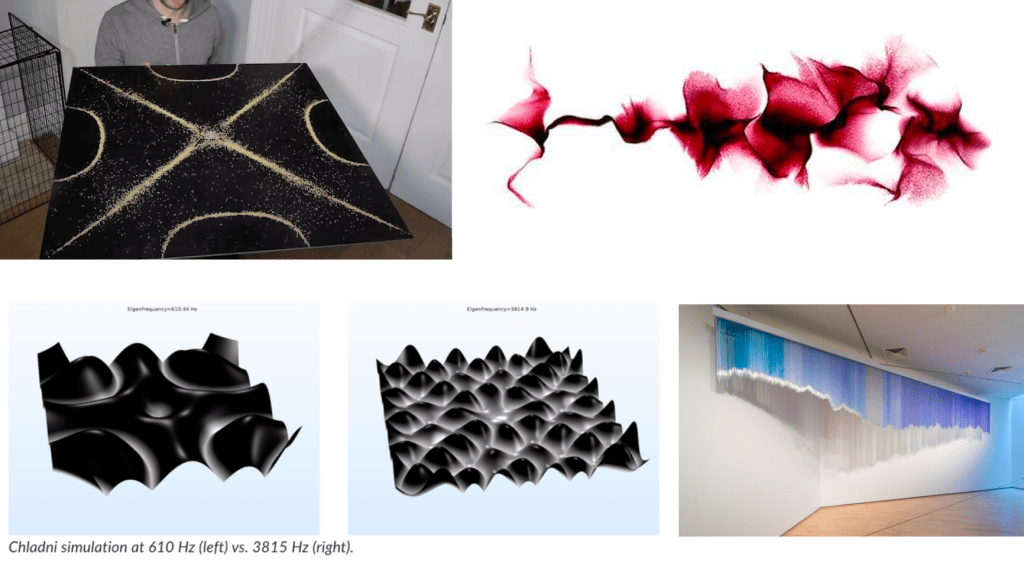
Learning about the physicality of frequencies of sound and how they can be formed into pieces of art inspired me to look into how languages can be created physically. Learning about Chladni Plates was one of the most fascinating parts of this research as it perfectly demonstrates how vibrations and frequencies create shapes.
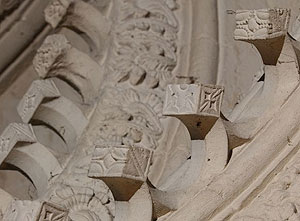
After speaking to a classmate about my idea, he mentioned how the Rosslyn Chapel has stone cubes on the arches which look like Chladni shapes. Each cube forms the shape of a frequency (therefore note) and once played, some say creates a melody.
References of research:
https://www.youtube.com/watch?v=PYkzJQhFNlA – ‘SOUND SENSOR DATA ON ARDUINO SERIAL PLOTTER’ Recording voices with Arduino
Visualising sound with Chladni Plates – https://www.comsol.com/blogs/how-do-chladni-plates-make-it-possible-to-visualize-sound/
Visual Vibration Art Created by Born Of Sound is Spectacular – https://www.trendhunter.com/trends/visual-vibration-art
An installation by visual artist Anna McKee – https://www.spsoundart.com/installations
https://www.youtube.com/watch?v=1KEjtcsZ4TI – Sound artist Steve Mould uses noise vibrations to create patterns on a Chladni Plate.
 KatiesBlog