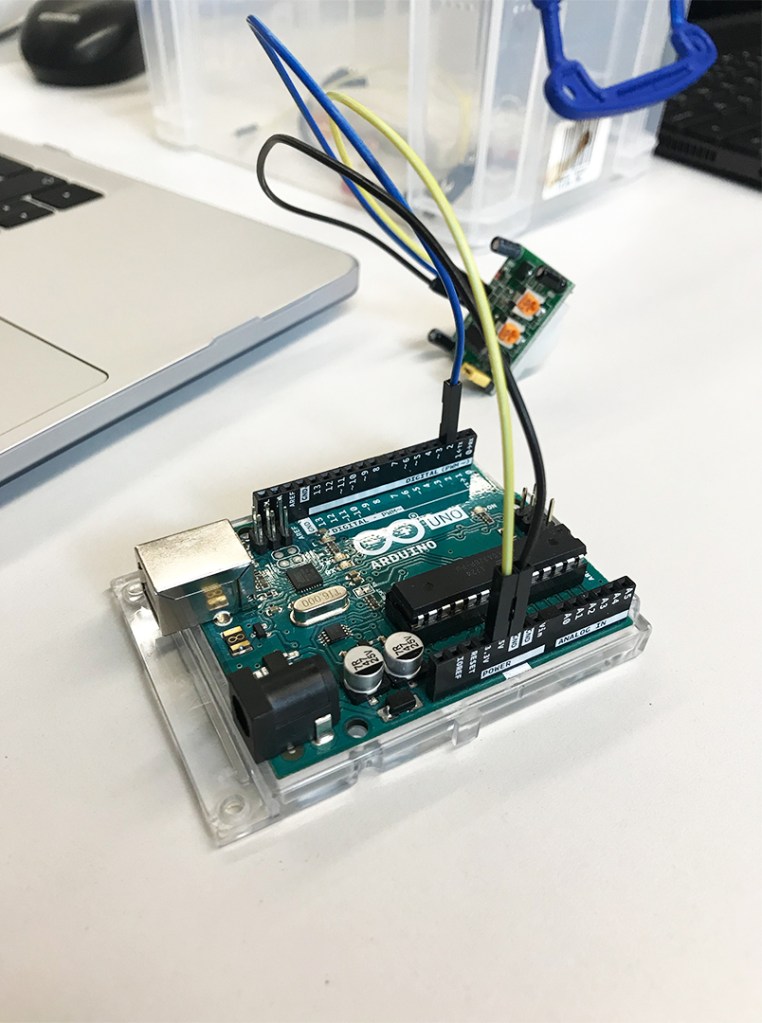
Arduino is an ‘open-source electronics board’ that you can program to create electronics/ installations/ environments and more.
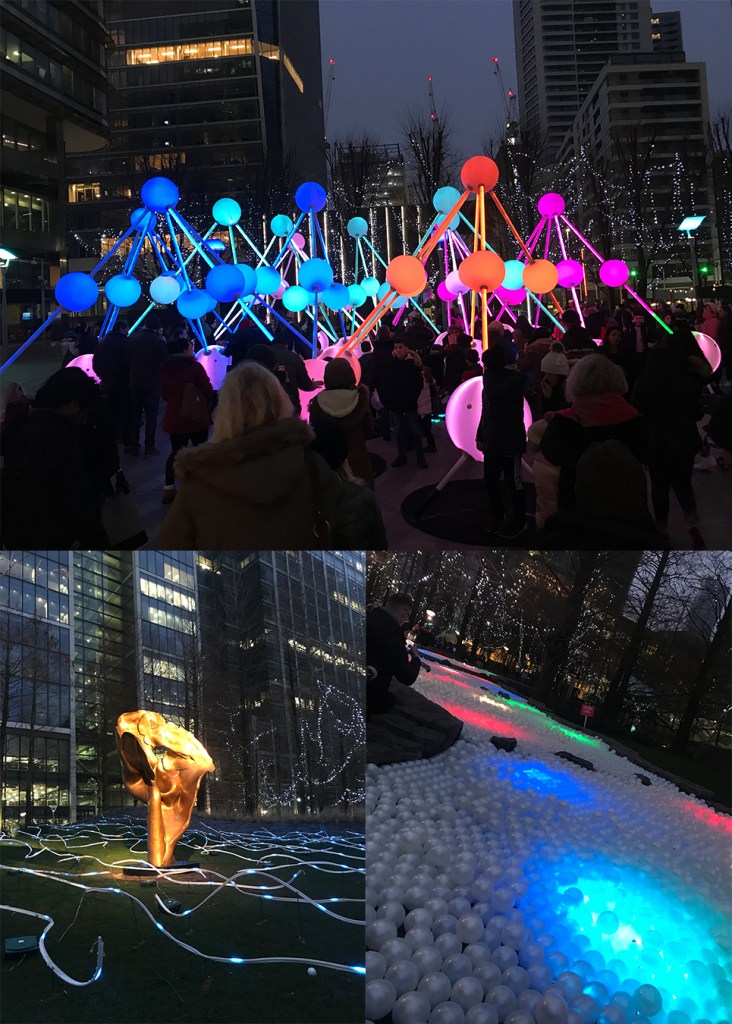
In order to experiment with this interesting and crucial tool, as a group of three, we have created a project built on the foundations of an Arduino circuit, whilst fueling the ideas and inspirations from the Canary Wharf Winter Lights display.
Every year this mesmerising festival surprises its onlookers with new and innovative installations with glimmering lights and diverse mediums of interactivity. These installations have been made with a vast range of tools such as sensors, LED lights, and most importantly… Arduino circuits.
To begin this project, we spent a period of time researching about the Winter Lights festival and looking at other similar events in the world. When we found projects that we appreciated, we looked into the anatomy of the pieces to examine how they were built and how they were used in their environments.
Brainstorming for the Project / Initial Ideas
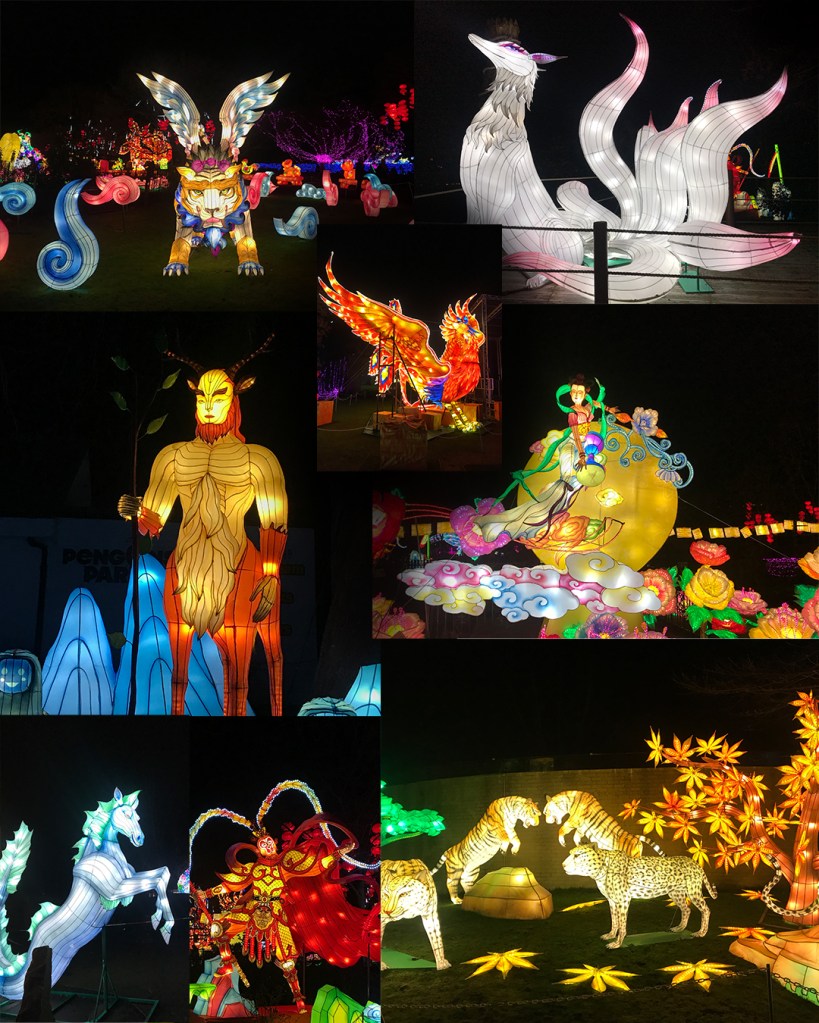
When creating my initial mind maps and notes, ‘The Giant Lanterns of China’ came to mind from a trip to Edinburgh. The whole experience was immersive and aesthetically fascinating, but more importantly very informative about Chinese and Scottish folklore, and also informing us about endangered animals across the world. Walking down an open path and taking in the beauty of these huge animals made out of translucent fabric was a breathtaking experience.
To take this idea further, I thought about how as humans we like to touch and stroke animals. So, I wanted to include this element of ‘touch’ in the project. When brainstorming different possible animals to choose from, a Lion came to mind. Lions are strong, ferocious creatures which humans also have a soft side for. In Books such as the Chronicles of Narnia, the Lion is portrayed as a heroic animal, with a tough yet personable character.
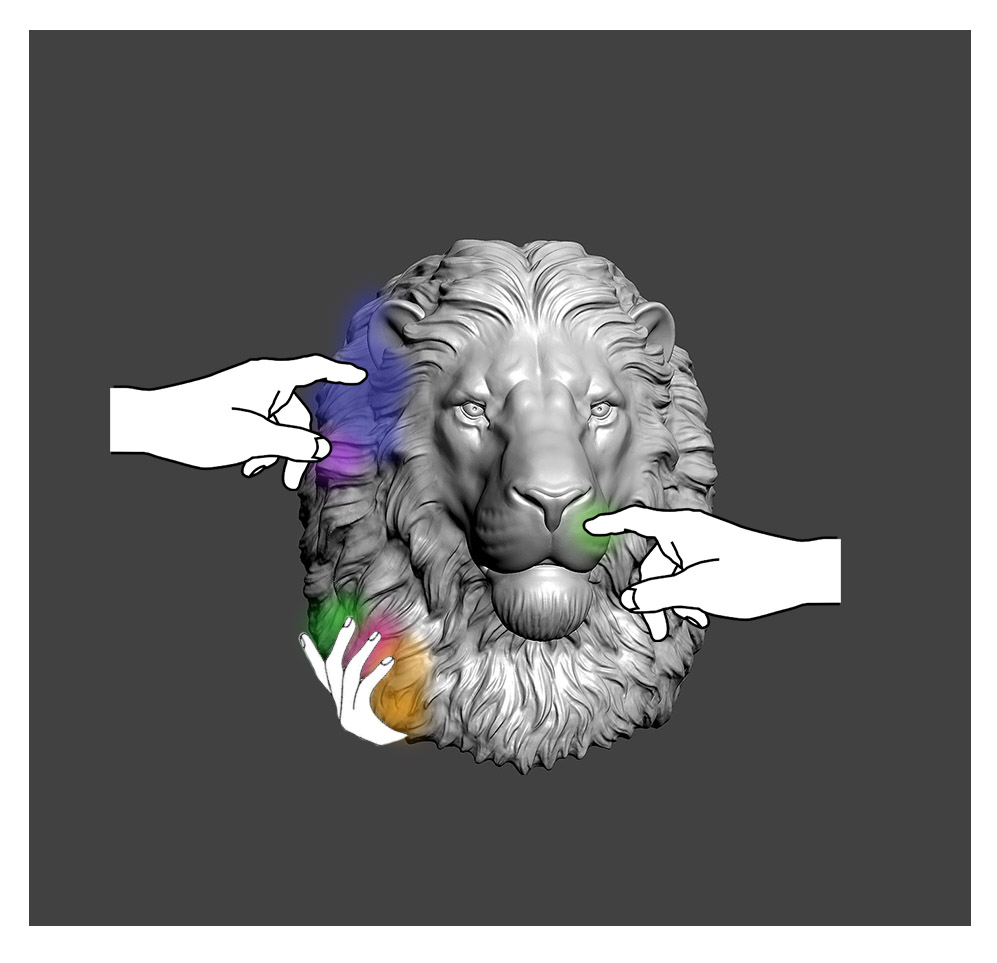
When considering the target audience, I thought about how (when I went to the festival myself) I saw many families with children who wanted to touch and interact with the installations. Continuing on this idea, I considered creating a motion sensor Lion head which would glow in different colors when touched. The dimensions of the head would be relatively big so many can gather around, and the colors could change depending on which part you touch.
To present this idea, I found a 3D Lion head online and edited it using Photoshop, creating the interactive scene. I placed hands around the object to show the proportion of prototype and drew the glowing colors underneath to represent the cause and effect of the touch sensitivity.
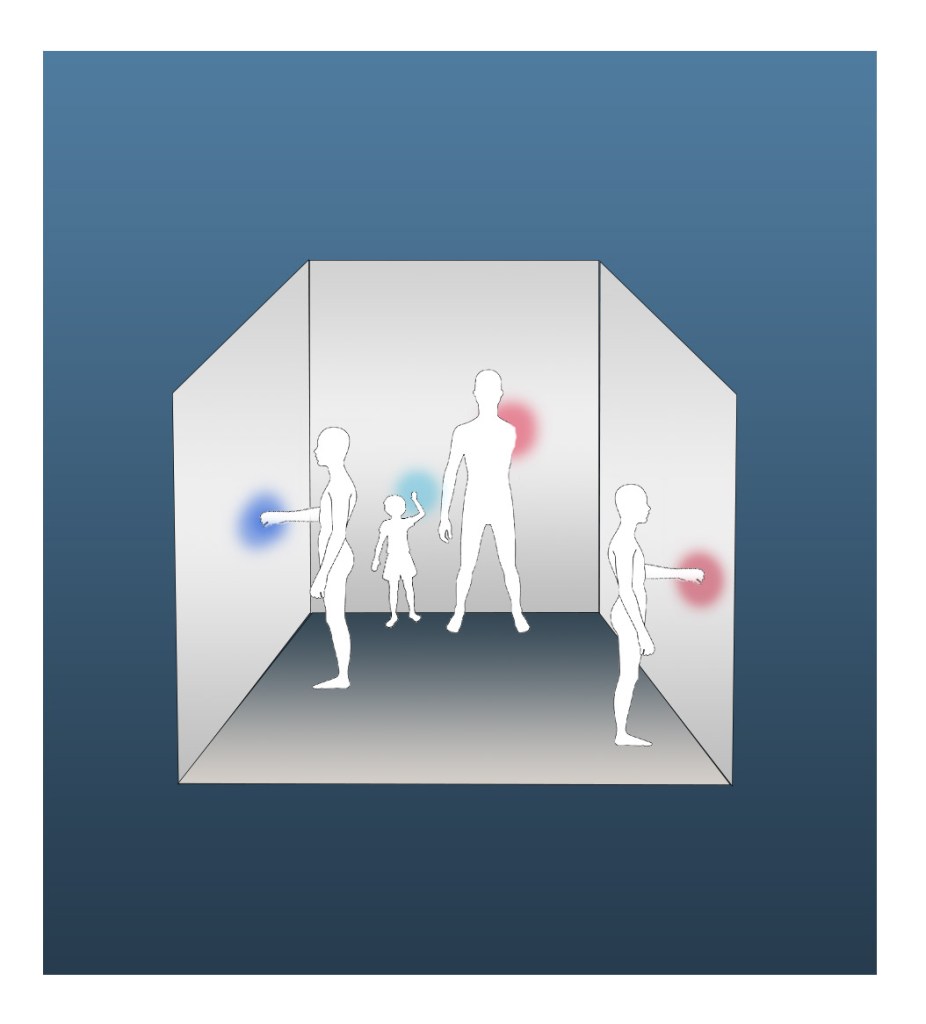
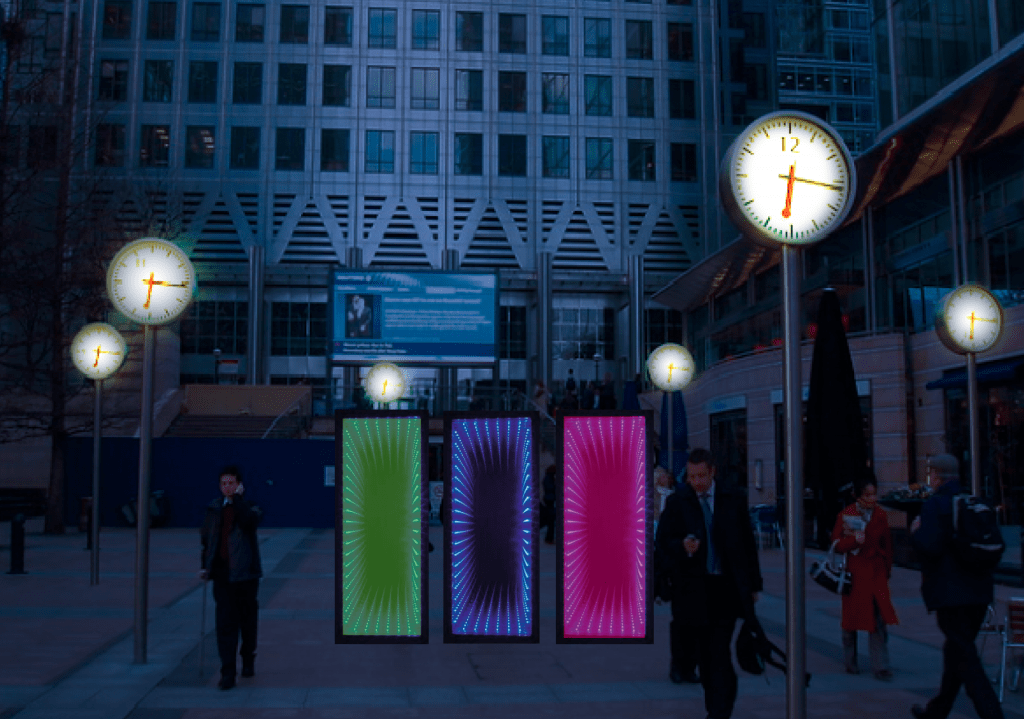
To further my development, I created another possibility for the installation using Photoshop. The idea for this piece stemmed from the previous idea, continuing the idea of a touch sensitive piece. When researching online, I came across an infinity room in Denmark using mirrors to create an ‘infinite’ effect. Ideas like this inspired me to create a heat sensor mirrored room. When the mirrors are touched, the mirror will glow in the touched area revealing a shade of color which changes depending on the temperature of your hand (blue – cold, red – hot).
Productive Feedback
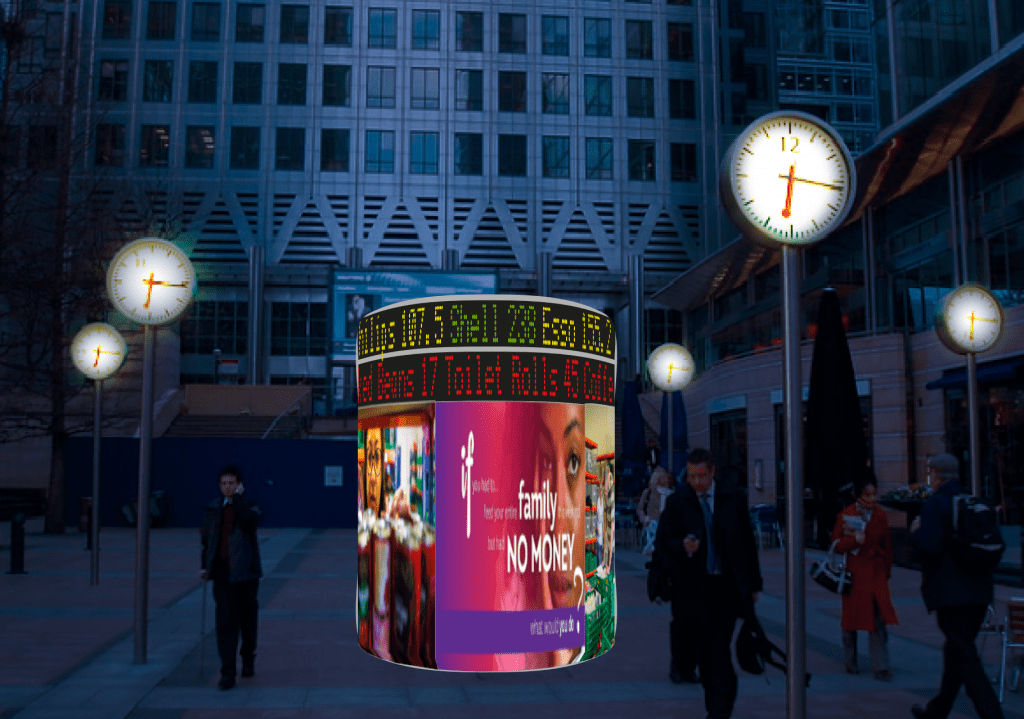
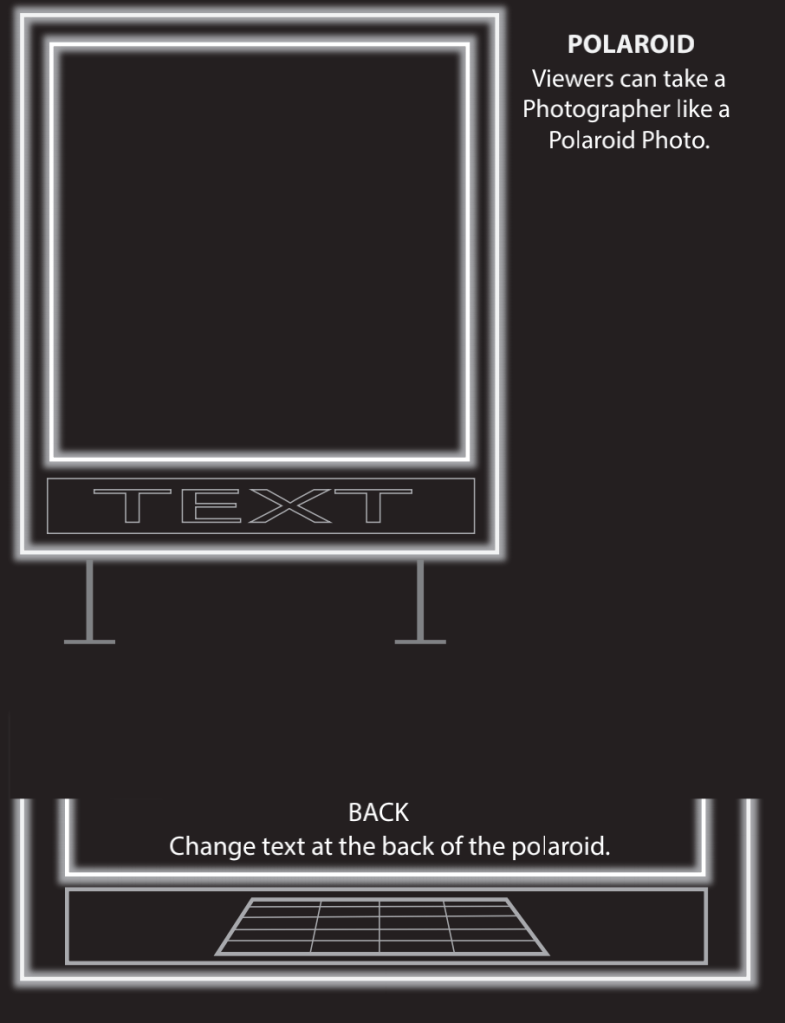
After having prepared the visuals, each member of the group pitched their two ideas to each other, and then afterwards to the class. The feedback sessions were constructive and encouraging to have, and helped us as a group move onto a final idea. The feedback for the Mirrored Room was mostly positive, however a classmate suggested that it might be very unhygienic (also considering children). Lion Head had great reviews and was rated the best idea, so we decided to run with it. Another idea from one group member was to include a donation point for the Food Bank in Canary Wharf. This was a great idea, so instead of using the Food Bank, we chose WWF (World Wide Fund for Nature) which is more relevant to our animal theme.
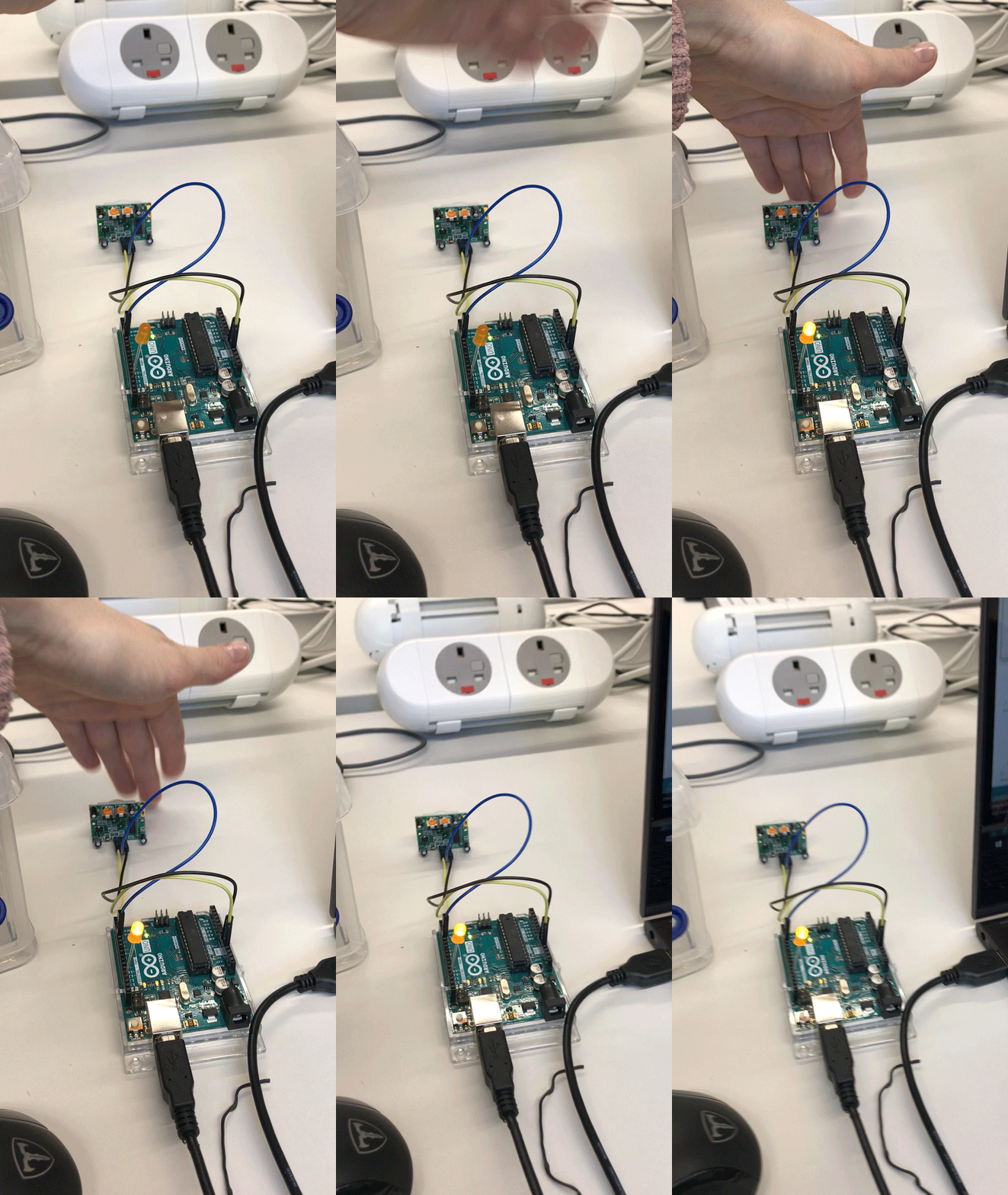
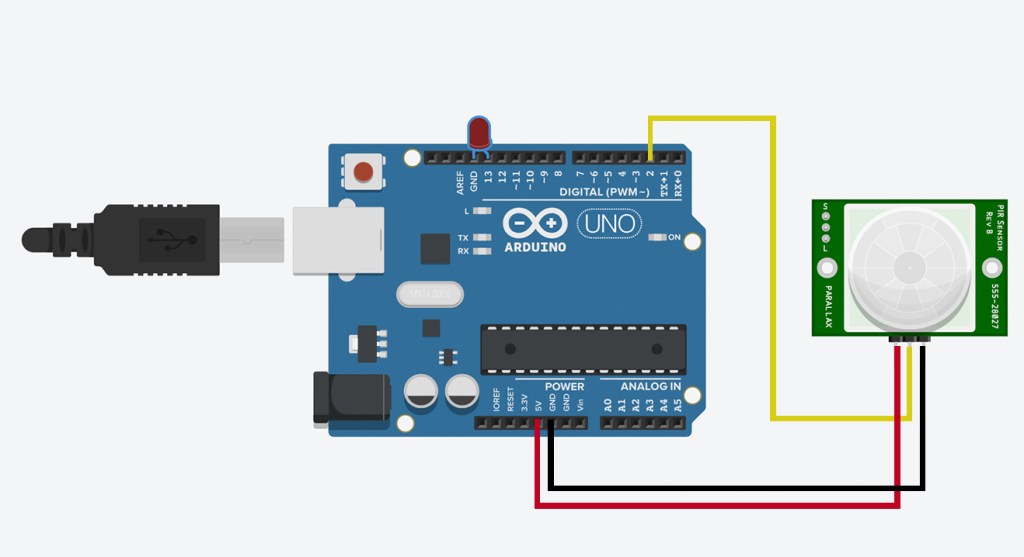
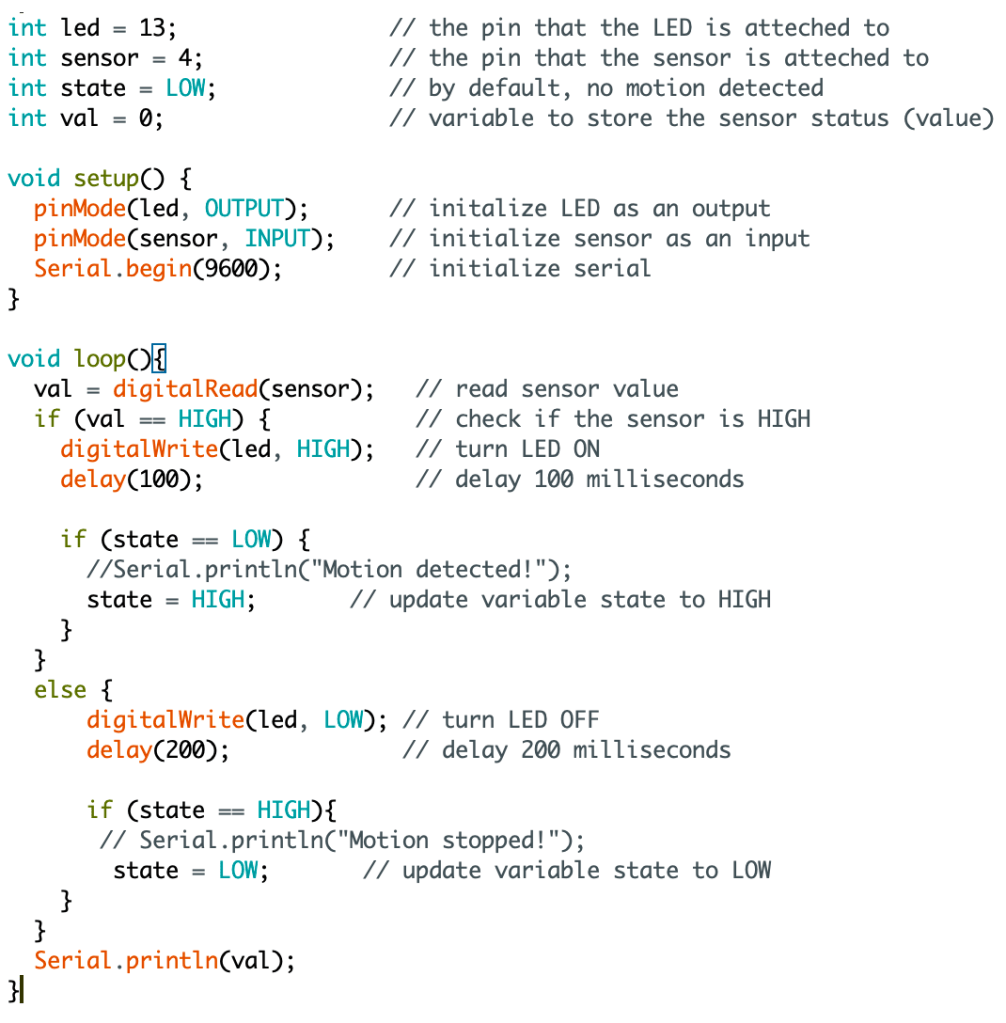
The Arduino had to have a motion sensor, so I searched online to find a similar code we could use to program the installation.
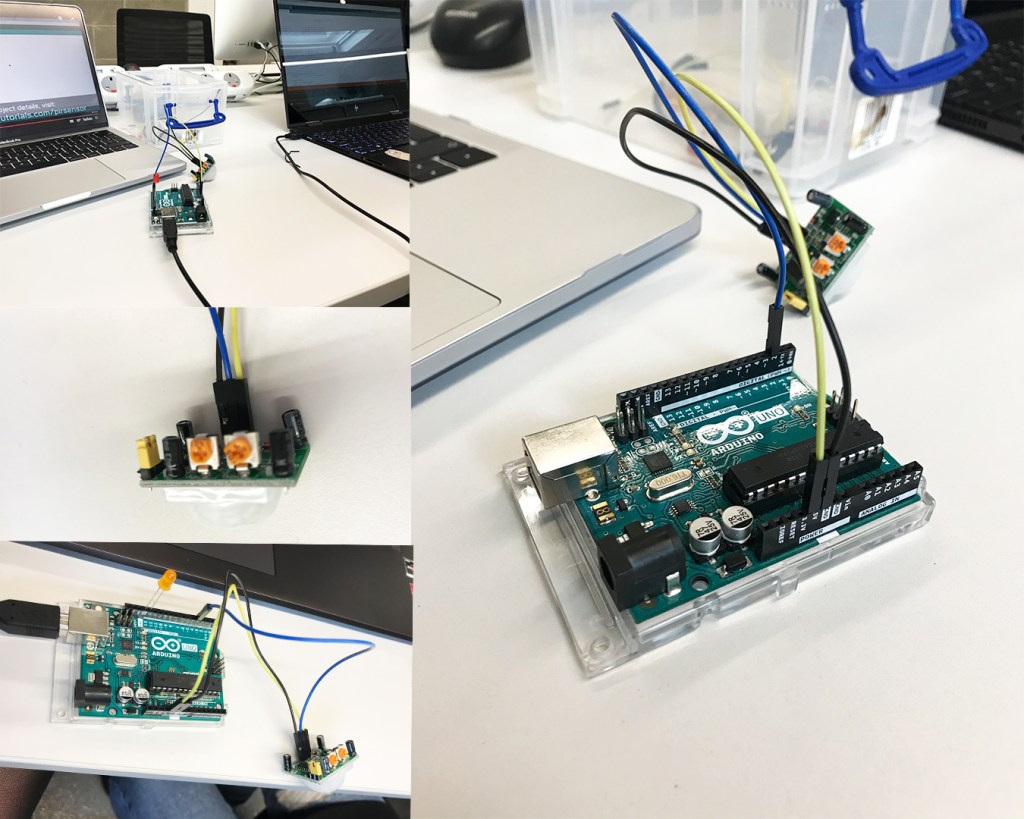
The necessary items needed were: 1x PIR Motion Sensor (HC-SR501), Arduino UNO, 1x LED, Jumper Cables.
The reference link we used – https://randomnerdtutorials.com/arduino-with-pir-motion-sensor/
Further Development/ Final Decision
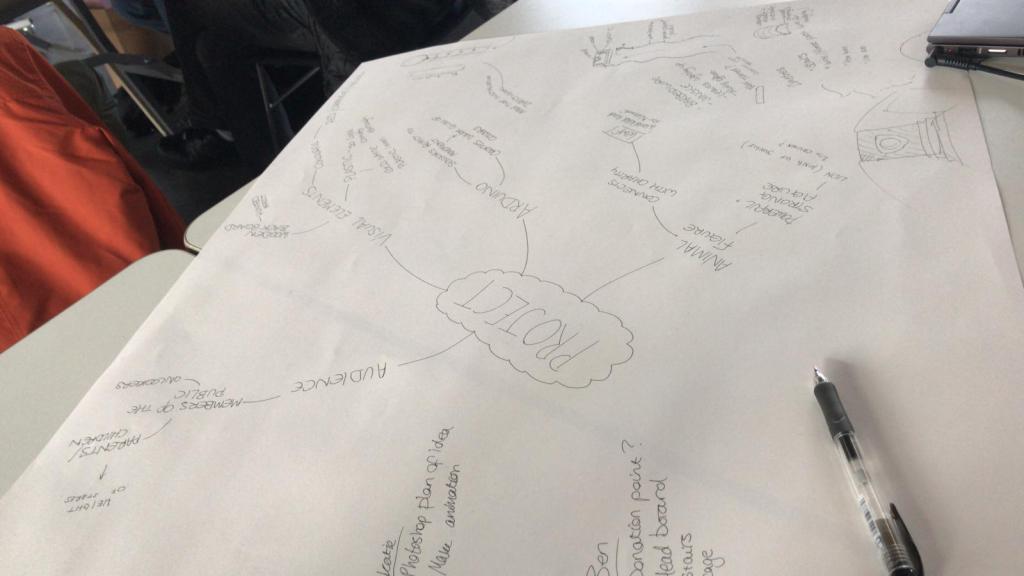
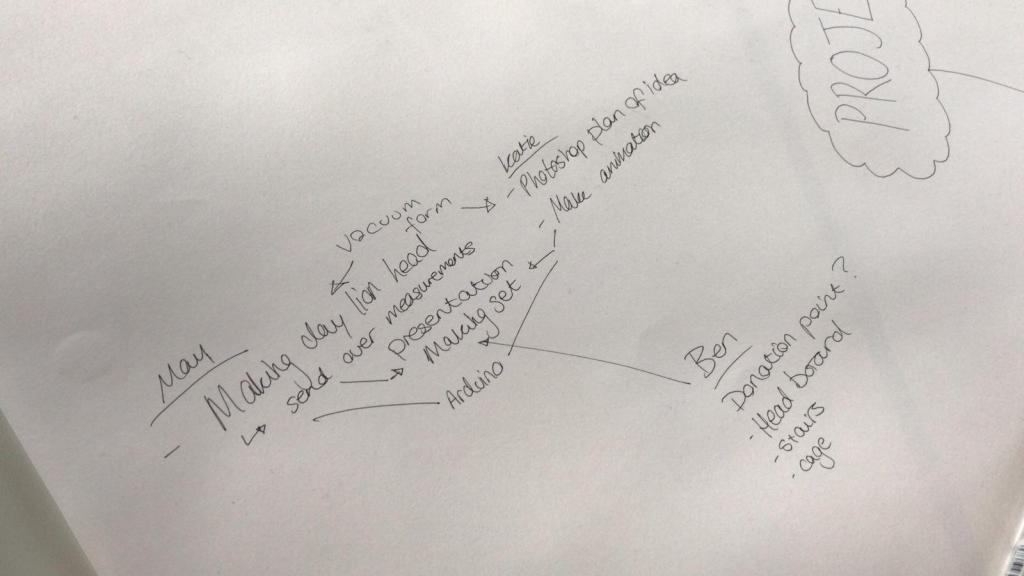
As a result of the feedback, we created as a group a big mind map to bring clarity to our vision, and then created further mood boards with gathered photos and ideas for the Lion concept. Ideas began to flow, so we decided to plan our next steps
- Booking rooms – 3D vac form Lion Head, woodwork workshop (wooden installations)
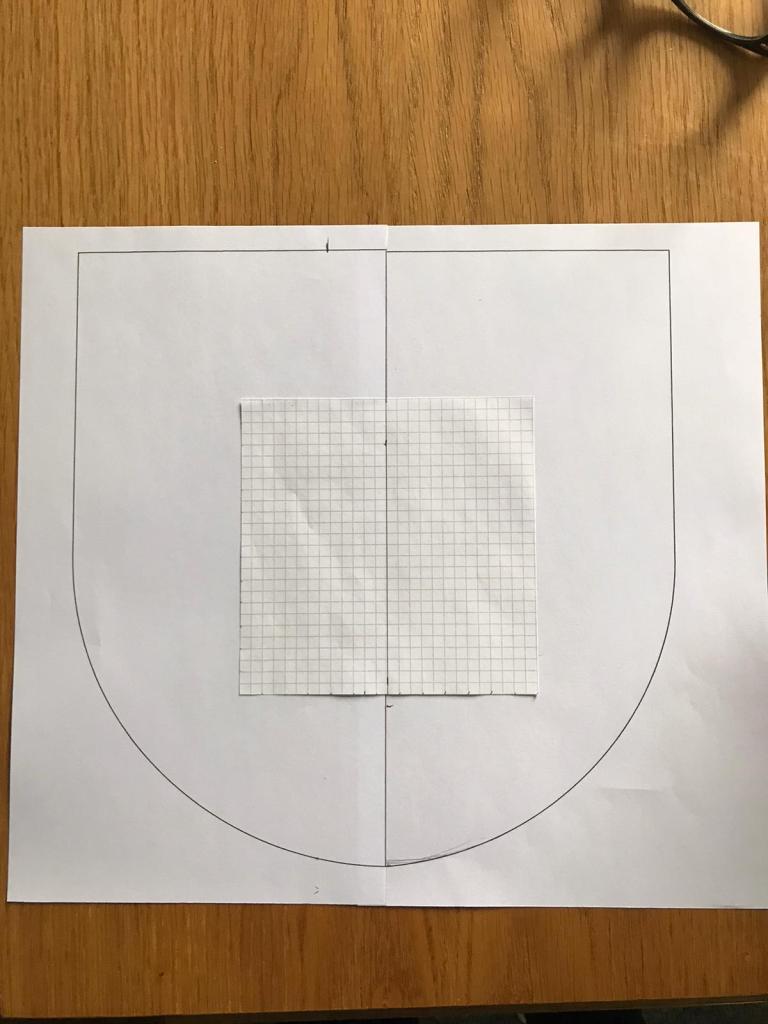
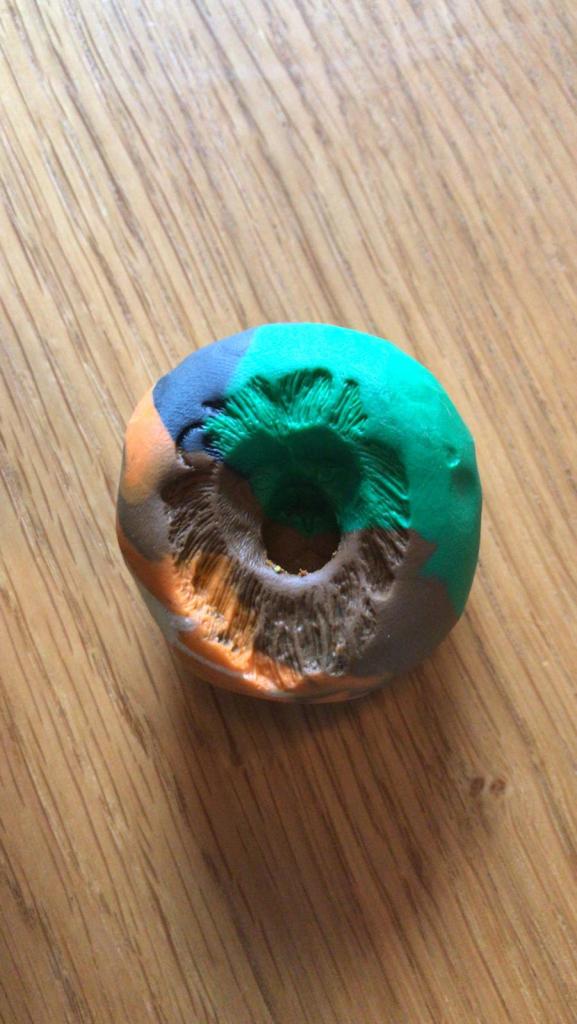
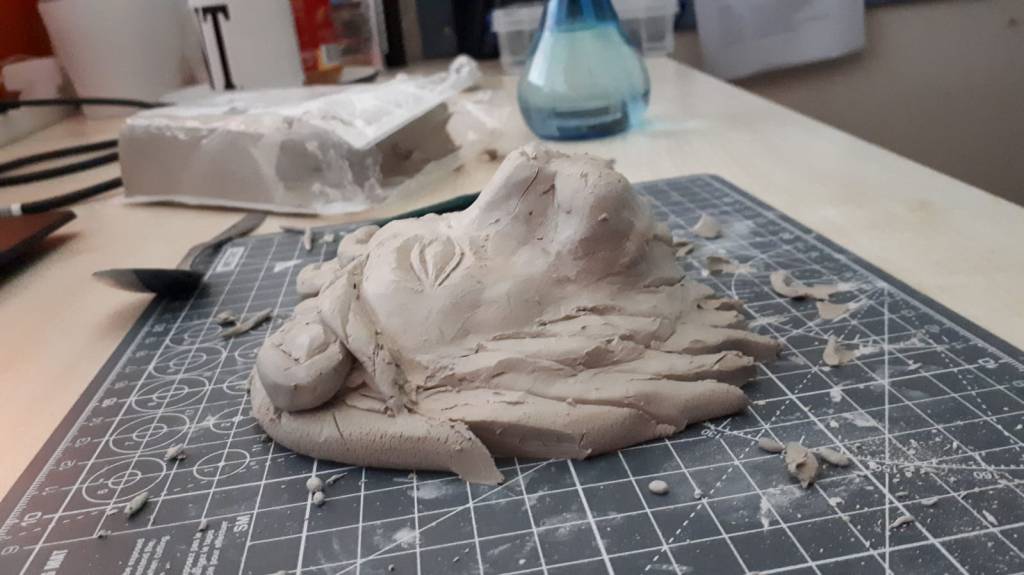
- Creating lion head out of clay
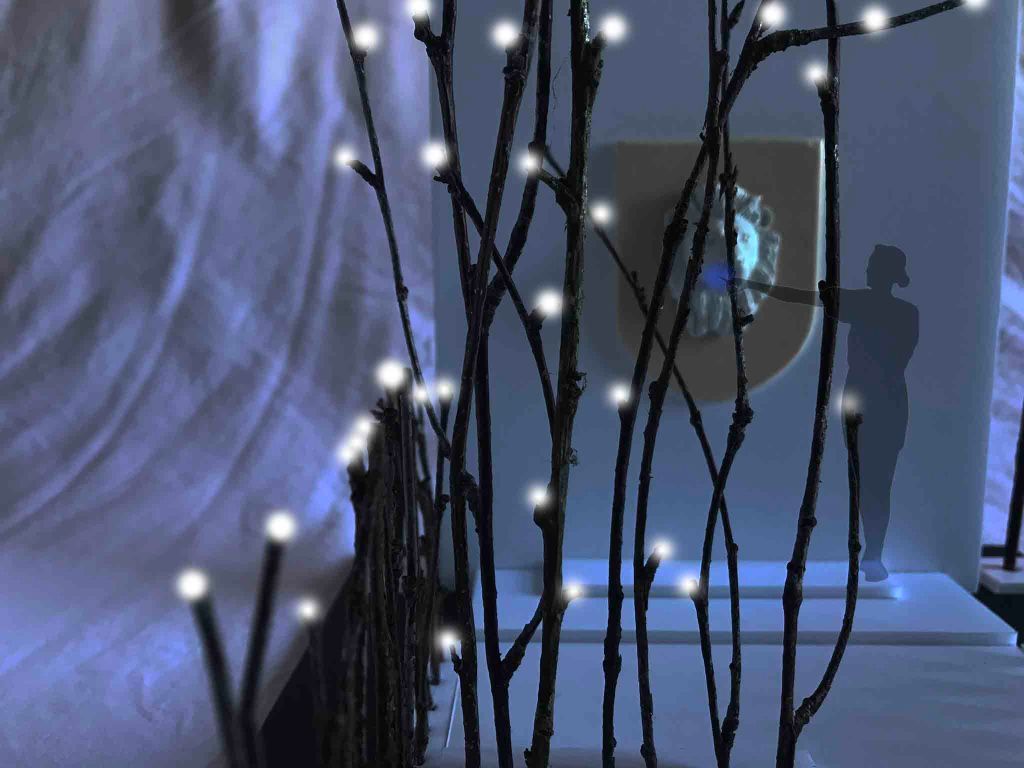
- Photoshopping visuals – showing final product in environment/ annotated diagram
- Programming Arduino – further testing
- Visual of Arduino model diagram
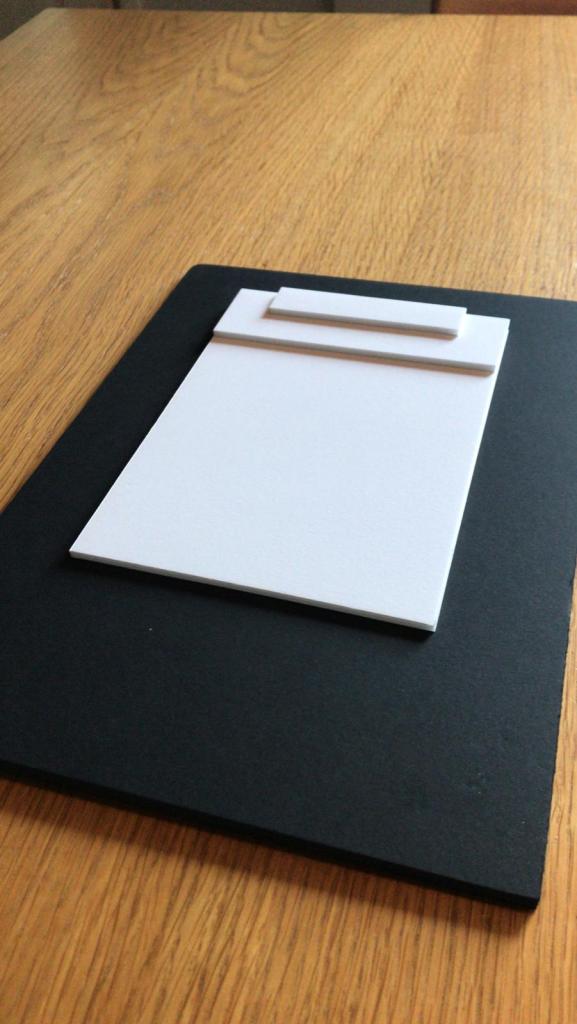
- Putting together presentation (with 3D model)
Working in a group meant we had to consider splitting the work-load between us, and working with our strengths. We also chose unfamiliar software and resources to work with in order to stretch our abilities.
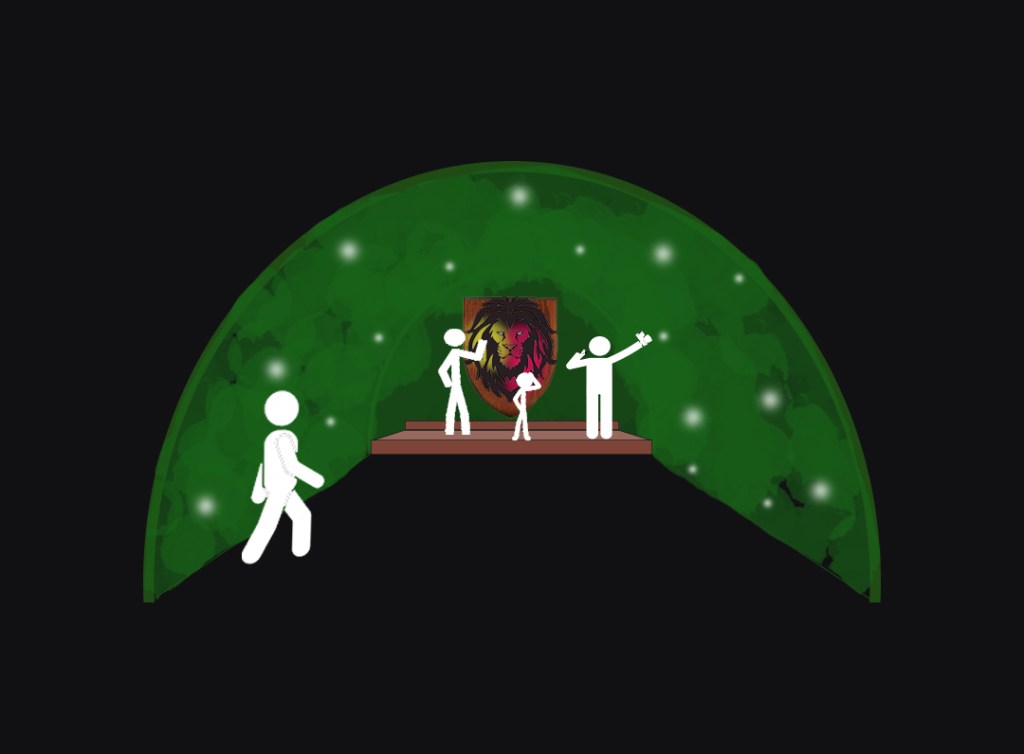
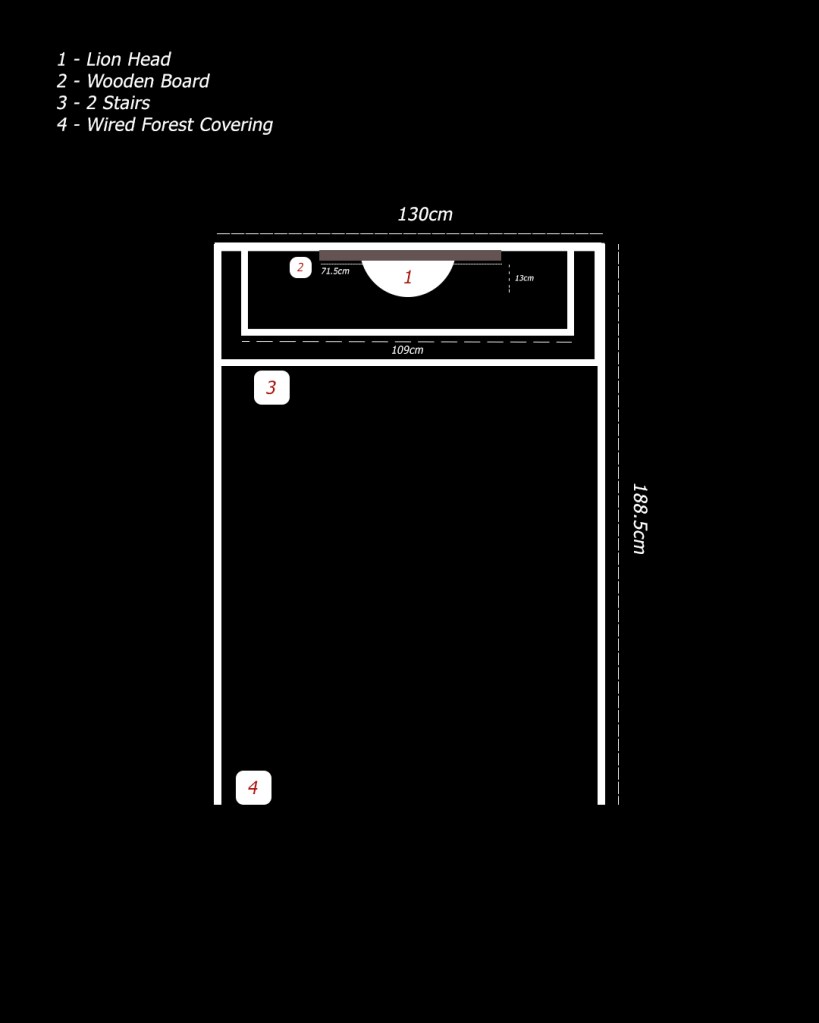
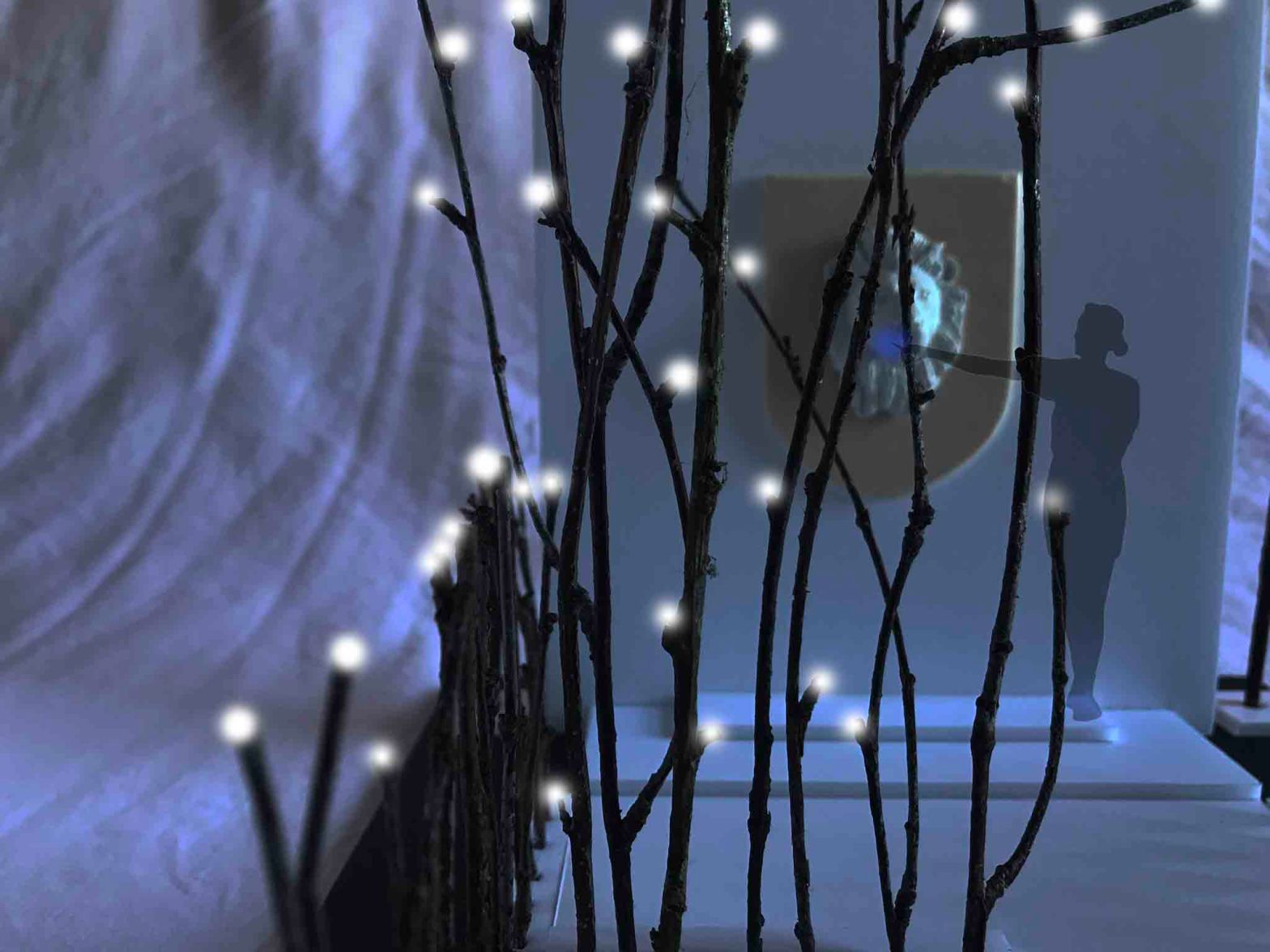
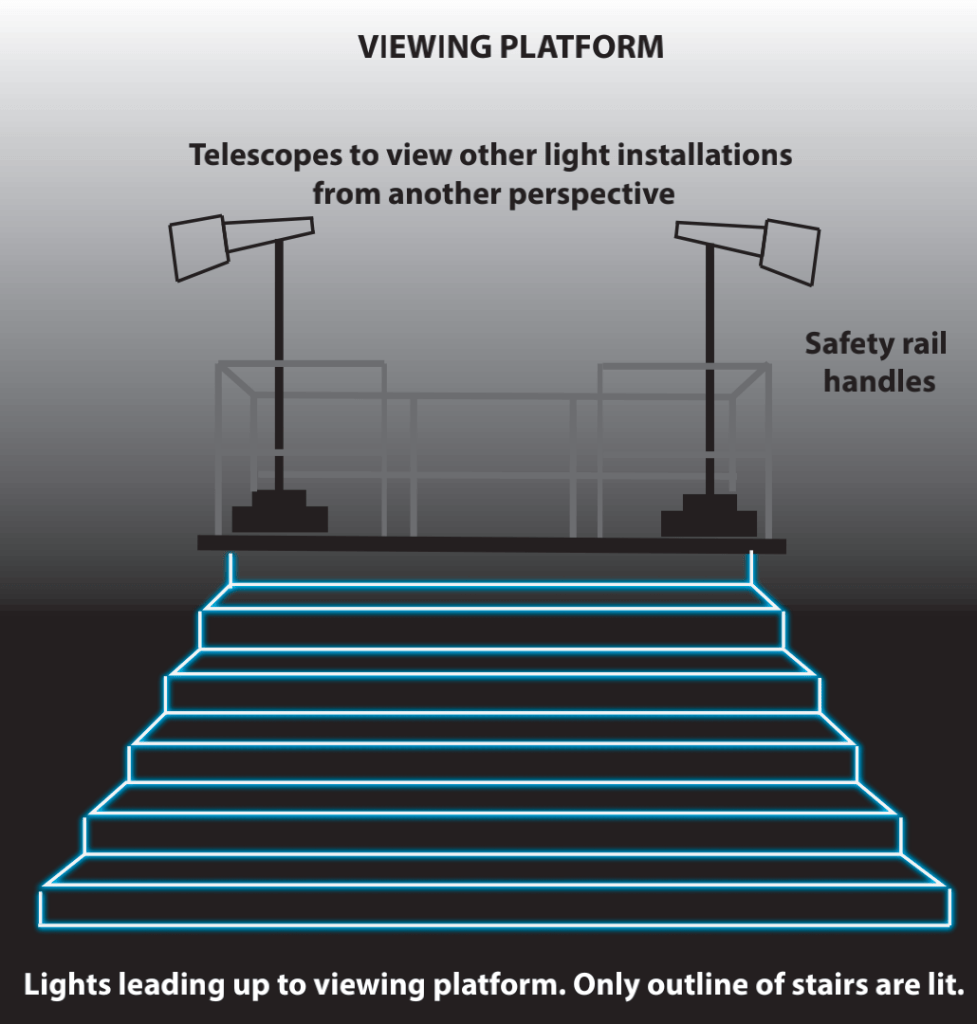
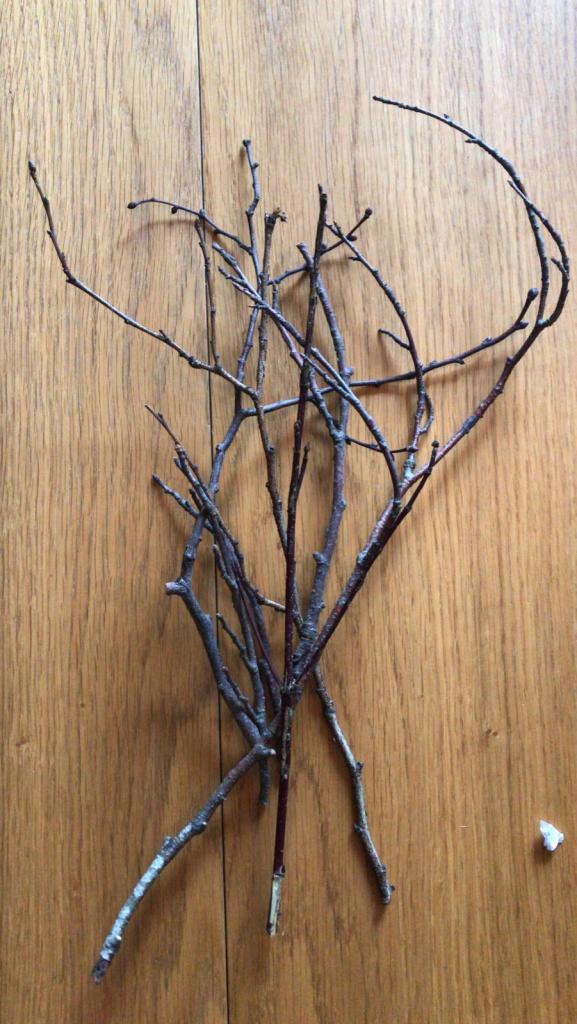
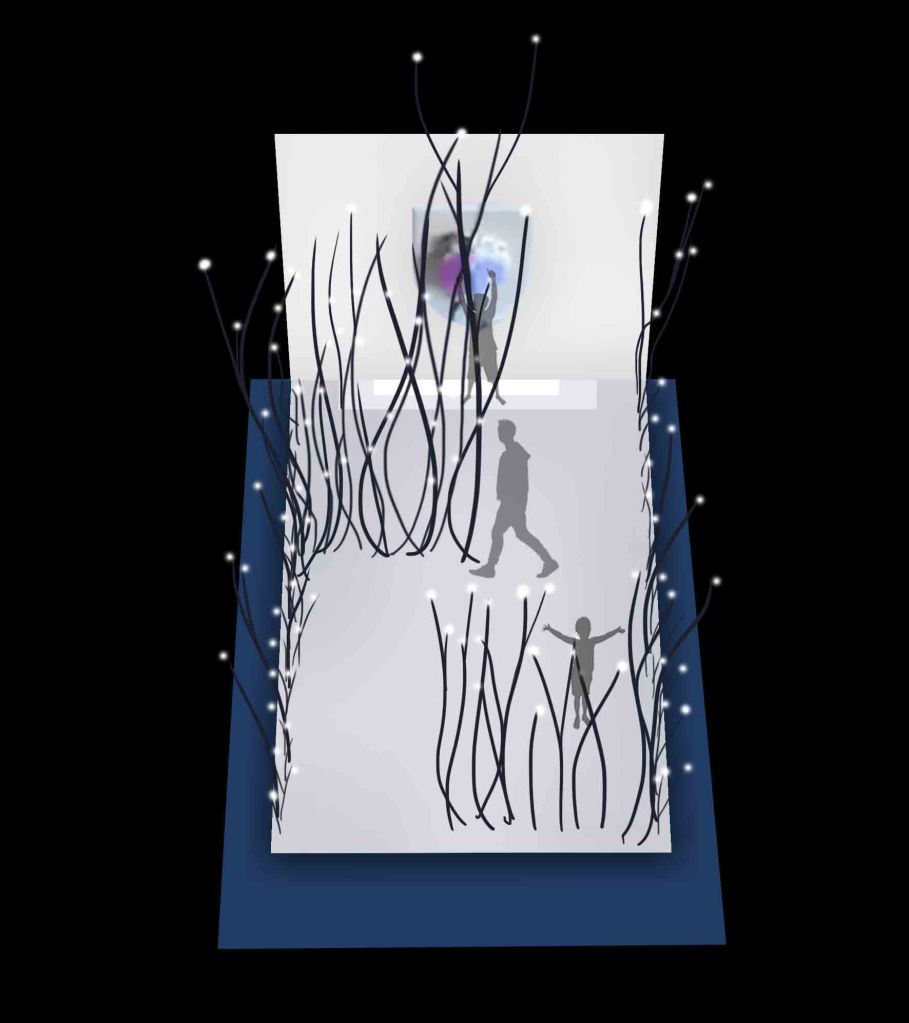
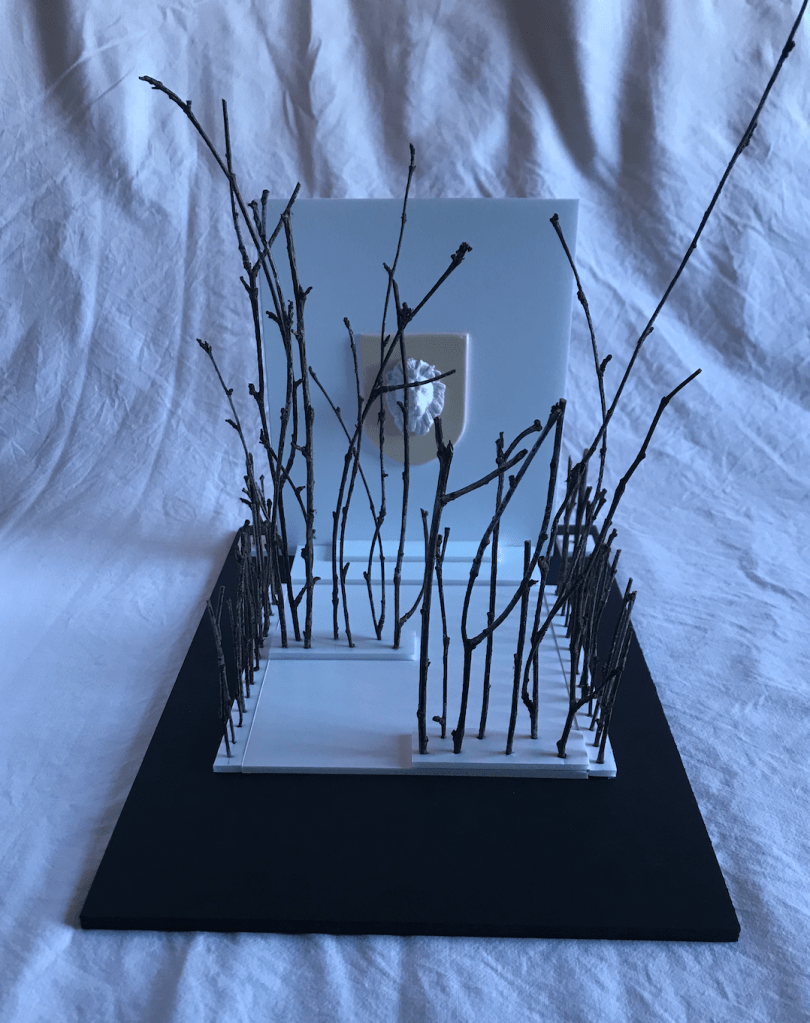
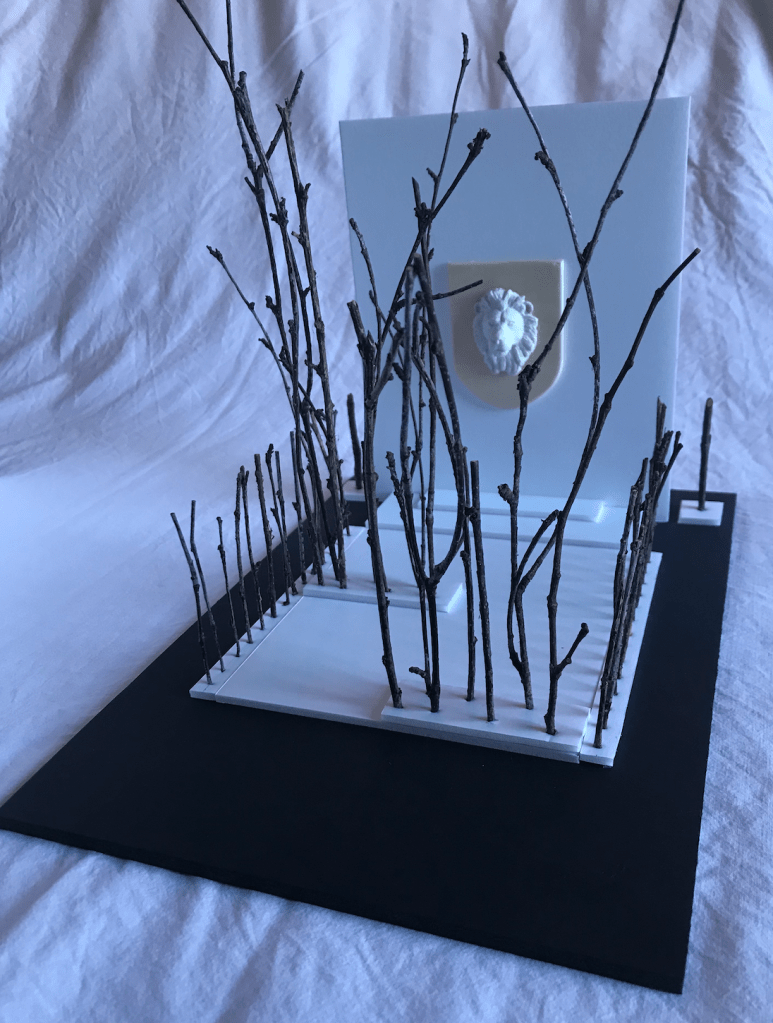
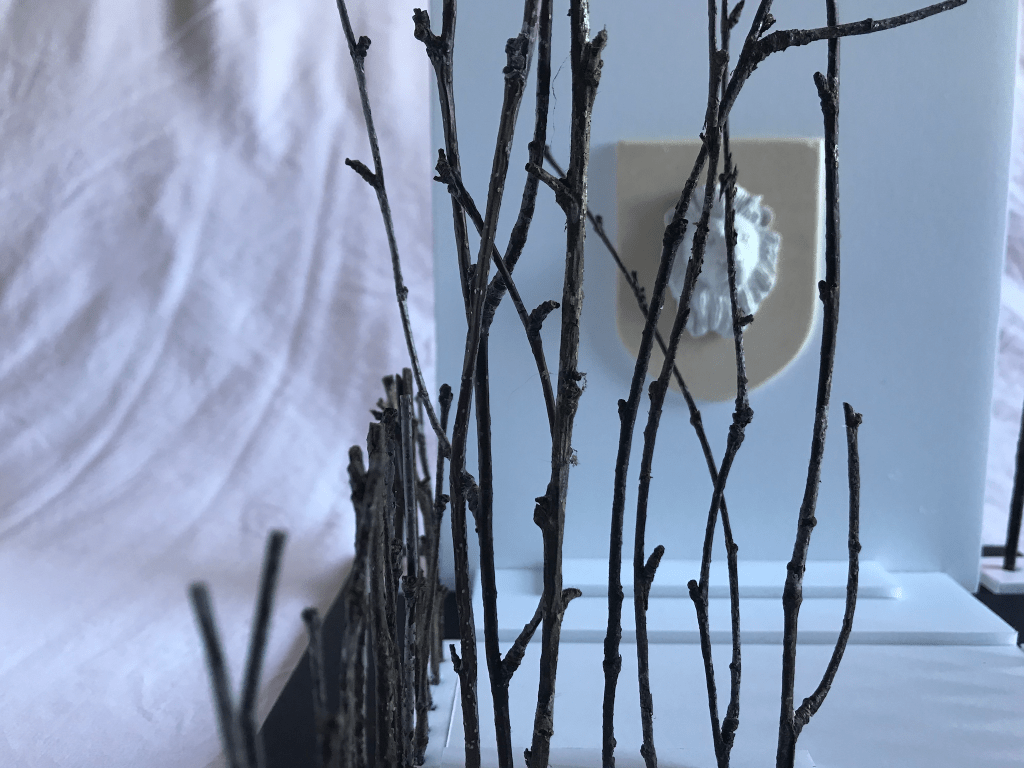
After having further feedback, we decided that there needed to have more ‘direction’ in our work – so having a pathway to direct the viewers. For a pathway, we initially thought of having a cage covering the lion to represent being in a zoo-like environment. Then after careful thought, another member of the team came up with the idea that we could use dark wooden trees to border the path instead of a cage. This idea creates a jungle-like journey for the viewer, and immerses them into a lions habitat.
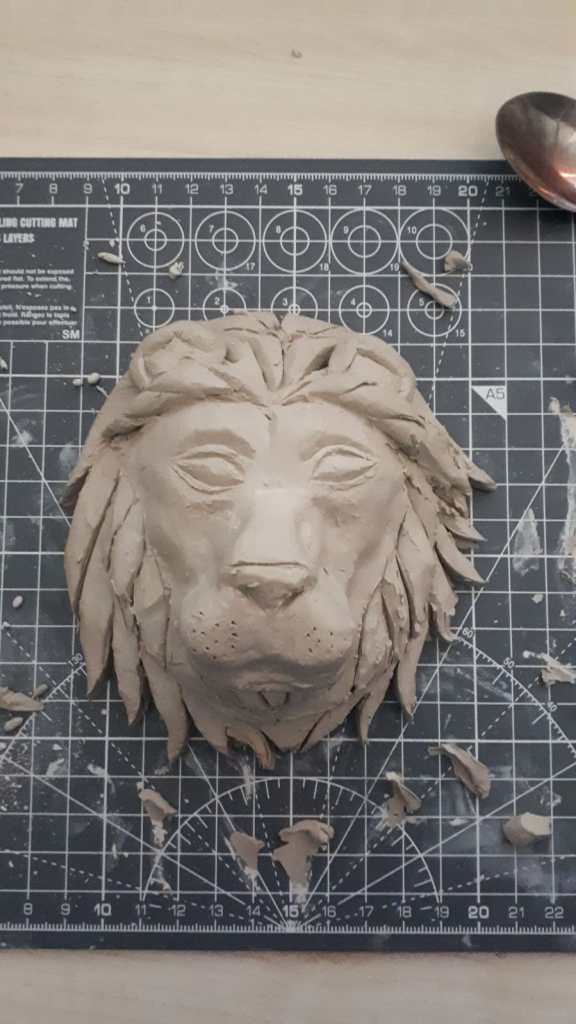
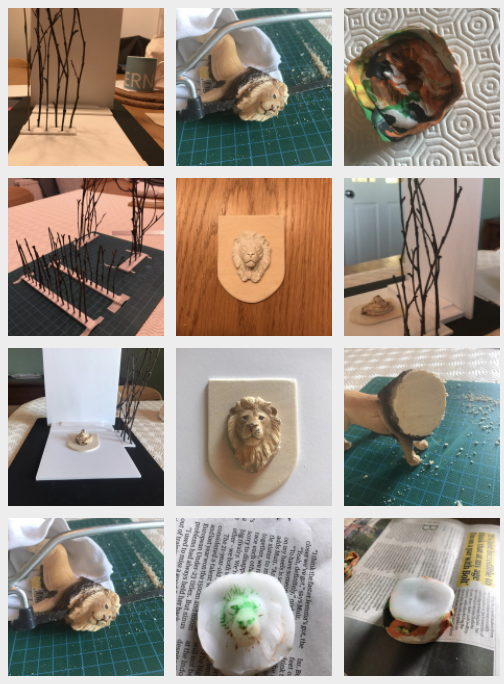
Due to the COVID-19 outbreak, our plans for working with Arduino and creating the full installation wasn’t possible. However we managed to experiment and find the correct code for the Arduino while the resources were available and program the circuit. We had to address some problems with the circuit (due to some problems with the elements) and have a technician work with us in order to resolve the issues.
Final Code
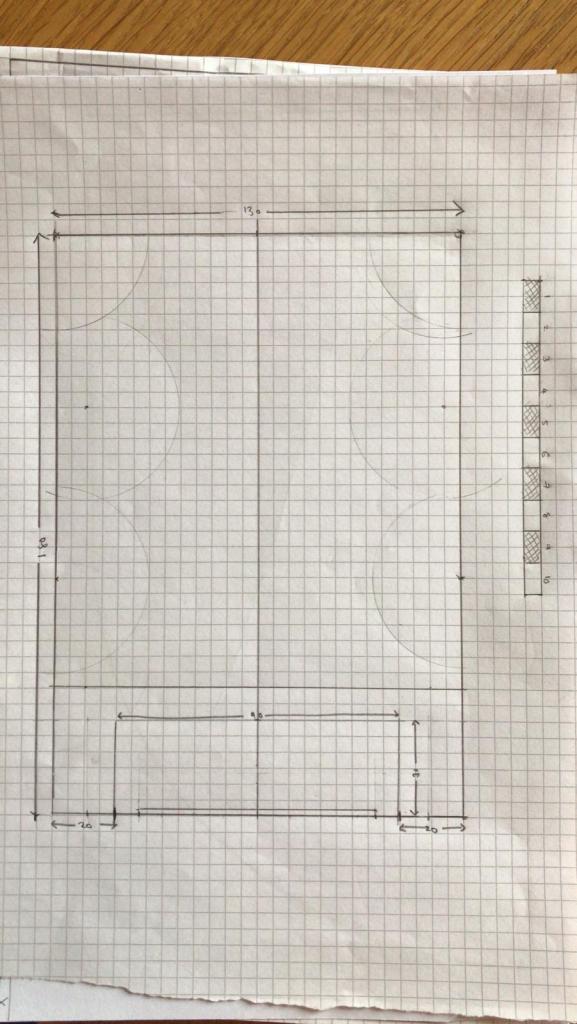
Individually we created the clay head and set of the installation, photoshop visuals to support how the model would look, a 3D animated video showing what the walk through process would be like, and basic technical sketches such as creating the Arduino framework and functionalities.


Finalising Installation/ Summary + Reflection
By communicating over chats and video-calls, we brought all of our work together and created a presentation with the high-lights of our project. Our project is bright, modern, creative and interesting. We believe that this installation can be considered by the festival, and we are considering to apply for the year 2021. With the issues from the COVID-19 outbreak, we were unable to fully complete our 3D model, however the idea is very strong and the development shown expresses this in its entirety.
To conclude, this project has been an eye-opening experience. I have enjoyed working with my team-mates, and despite the circumstances we have managed to create a strong project with an interesting concept.
The Winter King installation is colourful, interactive, and visually beautiful. It is accessible for all members of the public and has the potential to be a key part in the Canary Wharf Winter Lights festival 2021.
 KatiesBlog